See the Hunting Pictures a Texas Cheerleader Posted on Facebook That Have Some Calling Her ‘Scum’ and Demanding They Be Removed

A Texas Tech University cheerleader’s Facebook page is causing an uproar for photos she posted showing her with large game animals she hunted in Africa.

At the time of this posting, more than 44,000 people have signed a petition to have Facebook remove Kendall Jones’ page “for the sake of all animals.” The petition was started on June 22.

“Remove the page of Kendal [sic] Jones that promotes animal cruelty!” the petition reads.

Image source: Kendall Jones/Facebook

Image source: Kendall Jones/Facebook

When Jones started her Facebook page earlier this year, calling it “Kendall Takes Wild,” she didn’t hide what it was all about.

“I grew up in the small town of Cleburne, Texas where my hunting career started,” she wrote in the about section of her Facebook page. “As a child I would go with my dad on all of his hunting adventures watching him on our ranch, as well as, traveling to Africa to see him take his Big 5. I took my first trip to Zimbabwe in Africa with my family in 2004 (age 9) and watched my dad bring many animals home. As badly as I wanted to shoot something I was just too small to hold the guns my dad had brought…”

More: http://www.theblaze.com/stories/2014/07/01/see-the-hunting-pictures-a-texas-cheerleader-posted-on-facebook-that-have-some-calling-her-scum-and-demanding-they-be-removed/?utm_source=facebook&utm_medium=story&utm_campaign=ShareButtons

WWF Supports Sport Hunting

LION 28

WWF Supports Sport Hunting

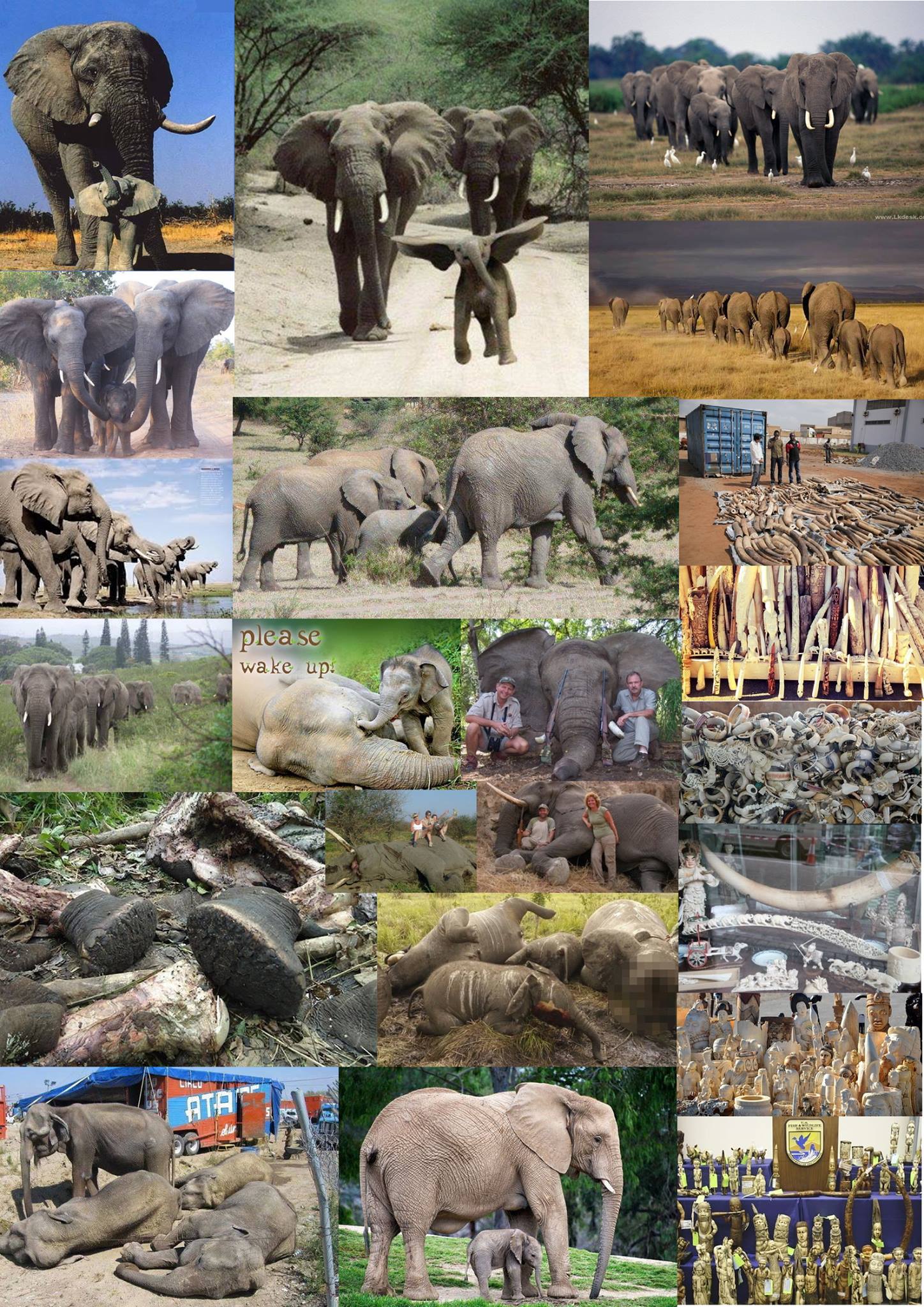
WWF Supports Sport Hunting – The International Marches For Elephants and Lions was a game changer around the world in that they created an incredible amount of awareness about wildlife sport hunting – and the people and groups who support it as a so-called viable means of animal conservation. Anyone with a brain knows that this argument is as old as the hills and does not pass the muster test. It is reminiscent of their claim that their “sport” is good for local economies – just not true! These hunters cry “crocodile tears” for the animals they murder – as they claim to love their victims.

Bradley Bergh – a former supporter of WWF has written a fabulous letter to WWF and he has kindly given me permission to share in on A Beating Heart.

Guest Writer – Bradley Bergh

Brad

WWF Supports Sport Hunting

It has just come to my attention that your organisation supports “sport” hunting as a viable means of wildlife conservation.

I recently read one of your quotes:

“WWF would not openly be supporting the sustainable use of wildlife for the hunting industry as a method for conservation if it did not work.”

I regret that I cannot agree with this. I am not saying this as a knee jerk, emotional reaction. I have been keeping an eye on the hunting industry for some years now and I’m afraid there is no way I can continue to support an organisation that supports hunting for any reason other than ‘survival’. I also don’t believe WWF can know for certain whether it is “a method of conservation that works”.

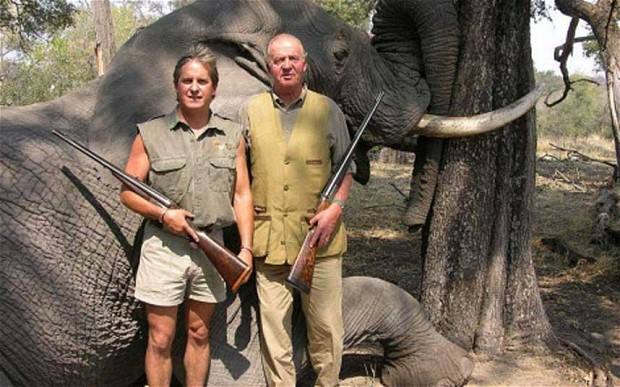
The “Retiring” King Of Spain With His Kill

SHAME - KINGH OF SPAIN

I would like to know why I should continue to support your organisation in light of what I have just learnt. Please don’t give me the usual tired justification of how hunters “protect” wildlife against poachers or that hunting brings in “foreign revenue” and “creates sustainable jobs”.

In the first place, in the scores of barbaric video material I have viewed of international “professional sport hunters”, I have yet to observe one hunter that shows any inkling of bravery. They are always surrounded by other “professional sport hunters” who are also armed with heavy calibre, high powered rifles ‘just in case’ things don’t quite go according to plan.

A hunter who hunts with a spear or a knife could be called brave but can we really call the (generally) overweight, privileged business people who feature in these hunting videos (and have to be driven to within striking distance of their prey because they are so unfit) courageous? Please explain how hunters are contributing to the preservation of wildlife and biodiversity or helping to reduce the poaching in this country.

Then there is the argument of job creation and foreign revenue. The usual neo-liberal economic model that involves the enrichment of an elite few, coupled to minimum wages for everyone else. The amount of foreign revenue that flows into South Africa is vague and unsubstantiated and I would really like to hear a factual explanation (rather than the speculative/aspirational version provided by the Department of Environmental Affairs) as to how this income really contributes to building an equitable, humane and sustainable economy.

Most of the wealth in this country is in the hands of a minority and continues to be so as the wealth inequality gap grows ever wider. If WWF is really impartial about this they should do a proper, holistic investigation which examines all the complex factors involved. The hunting industry is merely perpetuating the same business model that many other industries practice in this country which are neither interested in human or animal rights nor the preservation of the environment.

Please don’t respond to this with a whole bunch of academic mumbo-jumbo. I am myself busy with a Master’s in Sustainable Development and am experiencing, first-hand, the enormous limitations of academic study in solving complex problems. I would like to incorporate some of this in my thesis next year but I doubt I will get very far because the little contact I have had with the hunting industry always seems to illicit the same response that resonates with gun ownership lobbyists in the USA – “if you want me to give up my firearm, you will need to pry it from my dead fingers”! I am pretty sure many at WWF know what I am talking about as I have seen how some of the hunting industry players speak and behave.

Perhaps WWF is trying to “constructively engage” with the hunting industry but I do not believe “asking them nicely” is going to change the way they operate. The industry is also inadequately policed as illustrated by the widespread use of canned hunting that is currently taking place in this country. No one really knows what happens out there on those hunts unless the hunter decides to post his video on the internet to brag about it.

Bow hunting is banned in South Africa but look at all the examples of bow kills below. I have the same argument of the SASSI grading system of sustainable fish – the fishing methods may be a bit more “sustainable” but unless the person responsible for the grading is on those boats they have no idea how those fish are really caught and how many other sea animals are killed with clubs and shotguns by fisherman “protecting” their catches. Getting all the role players in the industry to “fill in forms” is no guarantee whatsoever that this is how they operate.

I’m unable to see how we can call ourselves a civilized nation while we continue to condone this. This is not the way advanced societies behave. On the one hand we rant and rave about the number of Rhinos poached each year and on the other hand we allow sport hunters to kill them for pleasure.

The only difference I can see between the two is where the money flows to. I understand WWF has large corporate sponsors and your organisation has to be careful not to offend them but we have to find a way to break the stranglehold corporations have on this country and the world. The first step is to break the financial ties that lead to a conflict of interests.

I have seen how badly many of the animals are killed. The entire system is so complex I am not convinced any study can ascertain the full impact of allowing this to carry on. We continue to allow certain industries to operate in this country (no matter how environmentally destructive those operations may be) because we want to preserve the jobs. What use will jobs be to us once our ecosystem is irreversibly degraded?

I don’t believe anyone working in your organisation truly agrees with sport hunting. In your hearts you know killing for pleasure is barbaric and cannot be justified either economically, morally or for conservation. I cannot help wondering if you have taken this position to keep a large corporate donor happy and I sympathise with your predicament if that is the case.

It takes courage to stand up for what you truly believe in. This is not a choice that involves a colour or taste preference which are merely matters of opinion. An evolved society simply doesn’t allow its members to choose whether or not they can exploit other living creatures for pleasure or entertainment.

WWF should not make it easy for hunters to indulge their addiction to the adrenalin rush of killing! If we want to create just, equitable and humane societies it has to start with the way we treat animals. If we don’t, I cannot see how we can ever expect to achieve it among ourselves.

Just because something is “legal” doesn’t make it ethical. There are more examples of this than I care to mention – including here in South Africa.

Yours faithfully,

Bradley Bergh

A concerned citizen and former WWF donor!

Bradley is meeting with the SA CEO of WWF in June.

PS: “We hunt because we love these animals” – says one hunter. Please explain this to me!

Why Would Anyone Hunt Elephants? GQ Tries To Defend Those That Do

By Jenny Kutner

In a recent piece for GQ, writer Wells Tower attempts to answer10304338_10204008161985492_2584105410340479966_n a simple question with a story that’s as long as it is powerful: “Who wants to shoot an elephant?” As it were, that’s not actually the question Tower ends up asking; it’s pretty easy to find the people who want to shoot elephants, as the journalist did in order to write his story. What Tower really gets at is why anyone would want to shoot an elephant, or how people think they can justify it. Try as they might, they can’t.

And oh, do they try. Robyn Waldrip and her husband, Will, allowed Tower to accompany them on an eight-day safari last summer, during which time they explained to the writer why they feel that hunts like theirs can be justified. Waldrip’s trip was arranged solely so she could kill an elephant and bring parts of its broken-down body back to her home in Texas, where she’ll keep them as a trophy. But that’s okay, she and her husband explained, because it actually does good for the environment, and even for the elephants themselves:

Perhaps out of a kind of kindred impulse, Will and Robyn Waldrip are quick to point out the violences elephants have inflicted on the local landscape. … While he has no reservations about Robyn shooting the elephant, [Will] is doing, I think, some version of the hunt-justifying psych-up going on in my own head. He wants to feel like it’s a good deed his wife is doing out here, a Lorax-ly hit in the name of the trees. …

[And] counterintuitively, even in the presence of an active bullet-tourism industry, Botswana’s elephant population has multiplied twentyfold, from a low point of 8,000 in 1960 to more than 154,000 today. These healthy numbers … mirror elephant populations in other African countries where hunting is allowed. … Kenya, on the other hand, banned elephant hunting in 1973 and has seen its elephant population decimated, from 167,000 to 27,000 or so in 2013. Some experts predict that elephants will be extinct in Kenya within a decade.

There is a confused correlation going on here, which Tower himself points out: legalized hunting incentivizes tourism, and that tourism brings money and jobs into the communities near elephant habitats. “When locals’ livelihoods are bound to the survival of the elephants,” Tower writes, “they’re less likely to tolerate poachers, or to summarily shoot animals that wander into their crop fields.” But it doesn’t have to be hunting that monetizes the elephants for local residents: other, non-lethal forms of ecotourism could bring in solid cash-flow as well.

Those with vested interests in legalized hunting — like the Waldrips’ guide, Jeff Rann — would argue that poachers can and will circumvent photo-safaris and other ecotourism concessions, as they have in Kenya. But poaching is not an inevitability; all it takes is “some combination of public policy, private money, and anti-ivory market pressures” to “render hunting obsolete as a conservation instrument,” Tower points out.

It’s easier said than done, certainly — but if we know that making elephants valuable to communities is necessary, and we know how to monetize them in a non-lethal way, then there is no excuse for trophy hunting. Alternative tourism ventures, such as Thailand’s Elephant Nature Park, have proven hugely successful at protecting elephant populations without killing relying on blood money. It’s not a form of conservation. It’s a cop-out that allows those wealthy and willing enough to participate to pay for the right to poach.

Trophy hunting advocates tout the activity as a key form of conservation — but in reality, it merely contributes to the gradual decimation of endangered species around the world. Join us in pledging never to support big game hunting of any form, and to stand with governments that ban the sale of imported animal “trophies.”

supporters have signed this petition. Let’s get to 1,000

Poachers and Pedophiles are Like Apples and Oranges

Comparing poachers to pedophiles may seem like comparing apples and oranges; but like the two fruits, there are more similarities than differences. Both apples and oranges are round, grow on trees, have a skin, contain seeds, are about the same size, etc. By the same token, the poacher and the pedophile both engage in socially unacceptable or illegal behavior for self-serving purposes, without regard for their victims. 

Likewise, the catch and release fisherman can be compared to the serial rapist: both put their pleasures over the suffering of their targets. The more their prey struggles, the more exciting the event for the perpetrator. Only when the victim has been completely conquered and has lost all will to fight are they set free, the vanquisher having no more use for them. 

And the analogy between a trophy hunter and a serial killer has been well established: both are single-minded in their quest for the kill, placing their own perverse desires above the self-interests—indeed, the very lives—of their victims. Both perpetrators like to take souvenirs from their kills, and neither one cares what the rest of the world thinks of their actions.

Text and Wildlife Photography ©Jim Robertson

Text and Wildlife Photography ©Jim Robertson

Metallica Might Be Booted From Festival For Bear Hunting

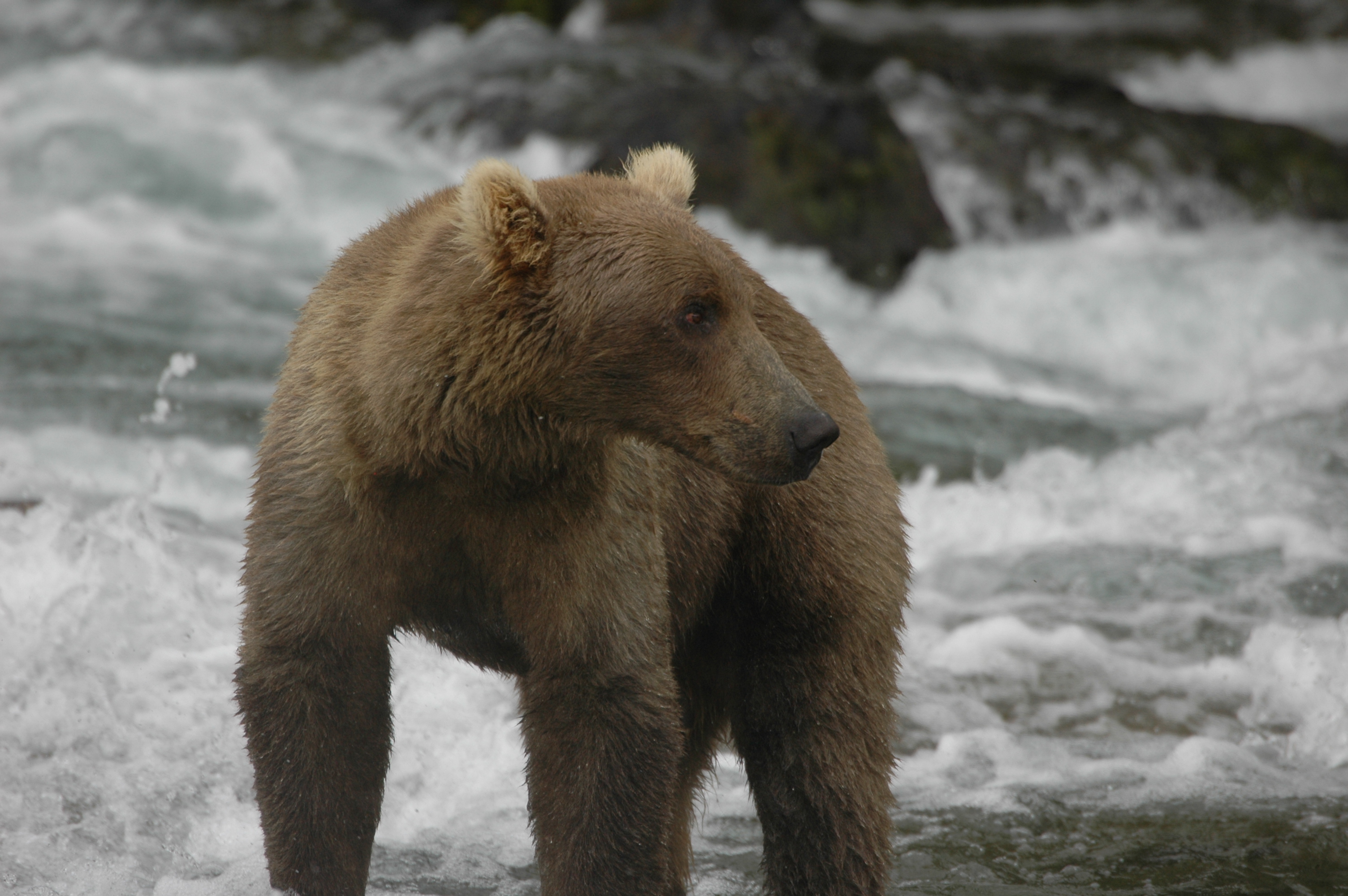
Grizzly photo Copyright Jim Robertson

Grizzly photo Copyright Jim Robertson

Animal rights activists want Metallica booted from the Glastonbury music festival because frontman James Hetfield is an enthusiastic hunter, the Telegraph reports.

A Facebook page calling for their removal, launched shortly after the History Channel announced that Hetfield will narrate its new series about bear hunting, already has over 27 thousand likes.

The page says that Hetfield’s “support of big game hunting…is incompatible with the spirit of Glastonbury and brings its good name into disrepute.”

Hetfield, who once admitted that he missed his son’s birthday while hunting bears in Russia,  is a member of the NRA and has described himself as “pretty conservative on a lot of things.”

Read more: http://dailycaller.com/2014/06/07/metallica-might-be-booted-from-festival-for-bear-hunting/#ixzz344VHOQ00

Petition: Stop any kind of Safari hunting in Africa

Sign the Petition: https://www.causes.com/actions/1742571-stop-any-kind-of-safari-hunting-in-south-africa

President of South Africa Mr. Jacob Zuma – President of Uganda Mr. Yoweri Museveni – President of Kenia Mr. Uhuru Kenyatta – President of Tanzania Mr. Jakaya Kikwete – President of Namibia Mr. Hifikepunye Pohamba – President of Botswana Mr. Ian Khama

All wild animals in Africa, elephants, giraffes, lions, rhinos, leopards, cape buffalos, zebras, etc. are a heritage of whole mankind, a heritage for our children and for those who will come after them. With this our public petition we ask strongly to stop all forms of safari in Africa, the only kind of Safari allowed must be photographic safari. We find shameful as may be granted hunting, with precision weapons, to these animals, which are themselves the symbol of whole African continent.

P.S. Please join too to our Facebook group: No Safari Facebook Group and to our FB official page giving us a like AnimalsTrust Facebook page to give us more strength and a greater International weight.

Please follow us on Twitter too: https://twitter.com/animalstrust

1979559_639720376107870_1515330944290250336_n