There’s no rest for game processors during hunting season

There’s no rest for game processors during hunting season By CHRIS CIOFFI ccioffi@billingsgazette.com The Billings Gazette
11 hours ago  •  By Chris Cioffi

The large walk-in coolers at Project Meats have been crowded the last few weeks with harvested elk and deer on their way to the dinner table.

Even more elk and deer are piled on the loading dock, waiting their turn on the butcher block….

Read more: http://billingsgazette.com/business/features/there-s-no-rest-for-game-processors-during-hunting-season/article_c4a9d25b-7ed9-522b-98f2-8753020da2a2.html#ixzz2mFa3vzvq

Utah hunting group reports death threats after supporting hunter who posed with lion

http://www.foxnews.com/us/2013/11/27/utah-hunting-group-claims-death-threats-after-supporting-hunter-who-posed-with/

Published November 27, 2013/
FoxNews.com

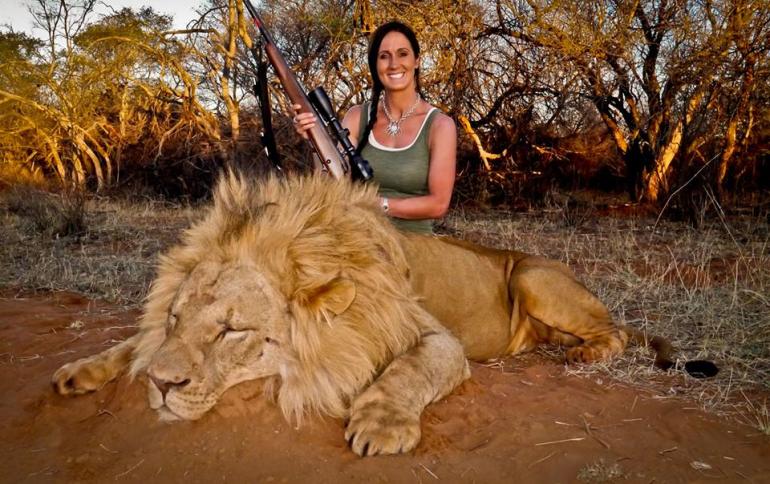
The leader of a pro-hunting group in Utah said he has received death threats from animal rights advocates after voicing support for a hunter who posted a picture of herself earlier this month smiling next to the carcass of a male lion during a hunting trip to South Africa.

Jason Fackrell, the founder of Hunters Against PETA, told KSL.com that one comment said, “I wish to have some money to kill you myself.” Another comment, the station reported, talked about killing Melissa Bachman, the hunter who posted the picture.

Fackrell described the torment he faced. He said he had to move, had his contact information posted online by hackers and has seen family members threatened in the past.

He expressed his dismay that about “90 percent of the population eats meat, but it’s OK to threaten the life of a human being that kills an animal.”

He has not reported the recent threat to the FBI, the report said. But highlighted what he sees as a double standard.

“I’ve never seen hunters threaten the lives of animal rights activists because they don’t like hunting, so there definitely is a double standard.”

PETA responded to KSL.com’s report and said it opposes violence. The report noted that PETA is not connected to the alleged threats on Fackrell.

Meanwhile, more than 375,000 people signed a petition to ban Bachman, the host of “Winchester Deadly Passion,” from gaining entry again into South Africa.

trophy

Some Thoughts on Melissa Bachman and the Lion

http://www.abolitionistapproach.com/thoughts-melissa-bachman/#.Uo–277Tly0

by Gary  Francione

Melissa Bachman, who is the host of a hunting show called Deadly Passion, announced on her Facebook page on November 1 that she had killed a lion in South Africa and she posted this picture:

melissalion

The response was remarkable. According to one story, “Bachman found herself the target of vicious death wishes and obscenity-laced insults on Monday as critics on Twitter, YouTube and other social networks blasted the Minnesotan for her boastful hunting escapades.” According to another story, “More than 250,000 people have signed an online petition demanding that South Africa deny future entry to Melissa Bachman, a big game hunter whose smiling photo with a dead lion has sparked considerable outrage.”

And, to no one’s surprise, the large animal welfare charities are rushing to create a fundraising campaign with a petition to have lions listed as endangered under the Endangered Species Act (U.S.)

I posted something about this on my Facebook page, and I had to delete the comments and close the thread because of the horribly misogynist and violent comments that were being made.

People are angry that Bachman killed the lion unnecessarily. There was no need, no compulsion for her to do so. She did not kill the lion in self defense. She killed the lion because she enjoys killing animals.

And most of us think that that’s terrible; we don’t think that we should make animals suffer and die just because we derive some pleasure from it.

Or do we?

We kill and eat about 56 billion land animals not counting fish. There is no necessity; no compulsion. We do not need to eat animals to be optimally healthy and animal agriculture is an ecological disaster.

The best justification we have for imposing suffering and death on those billions of animals, many of whom have had lives far more hideous than the lion Bachman slaughtered, is that they taste good.

So how exactly does this distinguish those of us who consume animals from Bachman?

That’s a rhetorical question: there is no coherent moral distinction between her and most of us. The fact that Bachman kills “charismatic species” and the rest of us just kill chickens, pigs, cows, and fish is completely irrelevant.

The Bachman matter is no different from the moral schizophrenia that we saw in the matters of Michael Vick, Mitt Romney, and Kisha Curtis.

On the positive side, every time one of these cases erupts, we reaffirm our belief in the widely shared moral intuition that it’s morally wrong to impose suffering on or kill animals without a good reason. Ironically, we already believe everything we need to believe to reject animal exploitation altogether. It’s just a matter of coming to see there is no morally relevant difference between shooting a lion for fun or eating a steak because you enjoy it. In both cases, we have taken a life for no good reason.

Let us hope that these episodes of moral schizophrenia cause the light to go on at least for some who make the decision to put their morals where their mouth is and go vegan.

Gary L. Francione Professor, Rutgers University

©2013 Gary L. Francione

Five Year Old Mississippi Girl Among Kids Hooked on Killing

Youth get hooked on hunting

Nov. 16, 2013

1117youth01.jpg

[This is like something out of the movie Exorcist.]
Payton Heidel, 5, of Yazoo City harvested a 9-point deer on the opening weekend of youth deer season.  /  Special to The Clarion-Ledger

Written by
Brian Albert Broom

For many Mississippi hunters, the start of deer season is possibly the most anticipated day of the year. But when youth season opens, it is often an event that produces memories that last a lifetime.

Last weekend’s youth season opener didn’t exactly start as planned for Hays Heidel of Yazoo City. Heidel said he and his daughter, Payton Heidel, 5, had practiced together before the season to get her comfortably shooting reduced recoil ammunition in her 7-08 rifle. But when the big day came, she wasn’t very cooperative.

“She said she didn’t want to get up because she would be grouchy,” Heidel said.

Heidel let her sleep, but as he was having a cup of coffee and looking over a lake on his property, he saw a doe in the distance. Heidel woke his daughter again, but this time, she was ready.

Sneaking within shooting range, Heidel got his daughter set up for a solid shot and with the crosshairs on the doe, Heidel gave her the OK.

“As soon as I clicked off the safety she shot the deer. POW!,” Heidel said. “She about scared me to death.”

The practice paid off and the two were soon following a blood trail. “When she saw the deer she threw her hands up and hugged my leg,” Heidel said. “To see that little girl’s smile — she was tickled to death to see that deer.”

The following afternoon, Payton Heidel made a repeat performance and harvested a 9-point. Heidel thinks he has a hunter for life and added, “I wouldn’t have it any other way.”

Glen Lewis, 6, of Brookhaven, also had success. Lewis had also been practicing shooting with his father, Keith Lewis, and when the time came he knew what to do.

Lewis said his son dropped his first doe with a 115-yard shot and the excitement went into overdrive. “Oh my word,” Lewis said. “I think he called every family member we know.”

Lewis said since then, his son has asked to go hunting every afternoon. “He’s got deer fever now,” Lewis said. “He’s hooked, definitely.”

According to Lann Wilf, Deer Program Leader for the Mississippi Department of Wildlife, Fisheries and Parks, most areas of the state experienced a good level of success.

“Countless does were taken, lots of first deer and several bucks,” Wilf said. “Some places knocked it out of the park.”

As productive as the past week has been, Wilf said the coming gun season could be one of the best in years.

Big Game Hunter Pays $13,500 to Kill Mountain Lion

[He won’t just donate the money without the chance to killsnrsslion something, of course.]

From Mountain Lion Foundation: Big Game Hunter Pays $13,500 to Participate in Nebraska’s First Ever Exclusive Lion Hunt

Spouting the standard propaganda about hunters being the biggest conservationists, Tom Ferry, of Ponca, Nebraska, paid $13,500 to become the winning bidder of one of the first two mountain lion permits issued by the Nebraska Game and Parks Commission.

Mr. Ferry, a Big Game Hunter, has killed animals for sport in Africa, Canada, New Zealand, Russia, and across the United States. He has approximately 150 trophy mounts commemorating his exploits at his home including those of mountain lions killed in Arizona and Utah.

“I just thought it would be nice to hunt mountain lions in Nebraska during the state’s first season,” Ferry said.

Ferry will be one of only two people permitted to hunt cougars during Nebraska’s first lion hunting season (January 1st through February 14th) in the Pine Ridge Hunting Unit. Last week, 15-year-old Holden Bruce of Franklin, Nebraska, was selected in a drawing for the other permit. Both hunters will be allowed to hunt with dogs.

The auction, held Wednesday night at a special Nebraska Big Game Society function, reflected the small participant turnout experienced in last week’s statewide lion hunting lottery with only 70 bidders.

Before the auction, Nebraska Game and Parks Director, Jim Douglas, also presented former State Senator LeRoy Louden, who shepherded Nebraska’s lion hunting bill through the Legislature, with an honorary mountain lion hunting permit so he can accompany the remaining 99 lottery winners when they commence their hunt during Nebraska’s second lion hunting season (February 15th through March 31st).

Game and Parks officials say the objective for allowing mountain lion hunting is to provide hunters opportunities while allowing a slight to moderate reduction in mountain lion population.

Mr. Ferry seemed to sum up the Department’s draconian position towards Nebraska’s wildlife. “They have a saying in Africa,” he said. “And it’s true here, too: If it doesn’t pay, it doesn’t stay.”

“Harvest” is Not a Synonym of “Kill”

Local OKC weekend hunting news:

Oklahoma’s deer muzzleloader season opened Sat. and will run thru Nov. 3rd statewide.
Archery deer season remains open thru Jan. 15th. Up to now, more than 12,000 deer have been harvested by bow hunters and youth gun hunters this season a/w state wildlife officials.
A big game biologist for the Okla. Dept. of Wildlife Conservation states “With the recent onset of cooler weather, deer will be moving longer in the mornings and earlier in the evenings. Hunters need to find natural food sources (for deer) like oak trees that are dropping acorns or persimmon trees.”

The bear muzzleloader season also opened Saturday and runs thru Nov. 3rd in some SE Okla. counties. Bear archery season ended Oct. 20th with a total of 27 bears taken by bow hunters.

Almost all of these bears were killed during the first few days of the three-week season.

[Note that this article, from pro-hunting news source, actually used the word “Killed” for once, instead of the traditional hunter favorite for murdered, “harvested.” Yet the article below, about elk hunting “prospects” uses the word “harvest” 6 times and never mentions even once that successfully hunted animals are “killed.” Of course, “murdered” is right out. Never do they say, “dispatch,” “assassinate,” “slay” or “snuff out.” How about, shoot? That’s a relatively benign-sounding word for what they do. How many times do you suppose they resort to that word? I counted exactly 0. How often did they resort to the word, “bombard”? 0. “Open fire”? 0. “Lay waste to”? 0.  What about something humane, like say, “euthanize” or “finish off”? 0. They speak of hunting “opportunities” 4 times, but they never use the words “liquidate,” “eliminate,” “gun down,” “execute” or “do away with” once. Surprisingly, the even the word “destroy” is never used. But “Harvest” appears six times.  .

I hate to break it to hunters and their apologists, but the word “harvest” is not considered a synonym of “kill” in any English dictionary.]

From the Washington State Department of Wildlife:

Elk hunting prospects good statewide,

2012 harvest best in years 

OLYMPIA – After a strong harvest in 2012, Washington Department of Fish and Wildlife (WDFW) game managers are again forecasting good elk hunting opportunities statewide when the 2013 modern-firearm general season opens Saturday (Oct. 26) in Eastern Washington and next Saturday (Nov. 2) in the western part of the state. 

Dave Ware, game manager for WDFW, said last year’s elk harvest was the best since at least 1997. 

“Our elk harvest has consistently been between roughly 7,000 and 8,800 animals,” said Ware. “But last year, Washington hunters took 9,162 elk, both bulls and cows. It was definitely our best season since at least 1997 when we moved to our current and more reliable method for determining harvest numbers.” 

Ware said the last few years have been good statewide for calf recruitment and adult survival, adding that all of the state’s major herds are at or above population management objectives. As such, he predicts good opportunities throughout Washington’s elk country. 

“News across the state is pretty good, especially for Eastern Washington elk tag holders,” said Ware. “The Yakima Elk Herd’s productivity began declining several years ago, so we backed off our antlerless tags. Productivity has since increased, and, based on last year’s calf survival, I think hunters can expect to see good numbers of spikes in 2013.” 

News is similar in the Blue Mountains, if not better. 

“Our surveys indicate we’re seeing 40 percent survival on spike elk in the Blues, which is excellent,” said Ware. “A more typical number we expect to see is 20 percent post-hunt survival. This means there are plenty of elk escaping hunters, due in part to steep terrain. It looks like we should have very good numbers of spike bulls available in the Blue Mountains again this year.” 

The Colockum Elk Herd is also above WDFW’s management objective and increasing. That should mean increased antlerless tag opportunities in the future, especially with the temporary decline in habitat conditions resulting from this summer’s catastrophic wildfires that swept across the Colockum and L.T. Murray wildlife areas, as well as surrounding lands. 

“The effects of the fire shouldn’t affect the 2013 season much,” said Ware. “The new, green grass growing on burned landscapes is like candy to elk, so hunters might want to look in and around burned areas close to timbered cover. As always, scouting is important, and so is the ability to adapt to different access options and/or elk distribution and behavior caused by fires and post-fire flooding. Hunters should also be mindful of the true-spike regulation in place in these GMUs.” 

Ware also mentioned the Selkirk Elk Herd, which is comprised of many small bands of elk spread out throughout the state’s northeastern corner. Numbers appear to be stable, said Ware, but scouting is especially key to success in this part of the state due to vast habitat and small, roaming bands of elk. 

“Hunter success has held strong over the last several years in Northeast Washington,” Ware said. 

In Western Washington, the St. Helens Elk Herd continues to be the state’s largest, despite hoof disease affecting an undetermined minority of the total population. 

“Hunters should be aware that if they follow basic techniques for caring for game, animals infected with hoof disease appear to pose no threat to human health based on all of those examined so far,” said Ware. 

WDFW is investigating potential causes and solutions to address elk hoof disease in Southwest Washington and is asking hunters to report any hoof deformities they encounter via the department’s website. http://wdfw.wa.gov/conservation/health/hoof_disease/

“Elk numbers remain very high, and we expect good hunter success,” said Ware. “With some private timber lands going into fee access, it will become increasingly important to plan ahead, scout, and develop alternatives going forward. Still, there is plenty of access available.” 

Ware said WDFW is continuing to seek a range of solutions to maintain free or inexpensive access on private timberlands in Western Washington. 

Meanwhile, Southwestern Washington’s Willapa Hills Elk Herd is at objective and should offer good opportunities for three-point or better Roosevelt elk bulls, Ware said. Some hunters may be frustrated by a lack of drive-in access in places, but Ware said those willing to walk behind closed gates – where legal – stand the best chances of encountering and harvesting elk…

Text and Wildlife Photography ©Jim Robertson

Text and Wildlife Photography ©Jim Robertson


Enthusiasts Encourage More Women To Give Hunting A Shot

http://www.npr.org/2013/10/18/236366868/enthusiasts-encourage-more-women-to-give-hunting-a-shot

by   October 18, 2013 fromWPRN                

Tara Heaton (left) and Crystal Mayfield with guide Fred Williams at a women's antelope hunt in Wyoming. Before the event, both women had hunted almost exclusively with male relatives, not other women.

Tara Heaton (left) and Crystal Mayfield with guide Fred Williams at a women’s antelope hunt in Wyoming. Before the event, both women had hunted almost exclusively with male relatives, not other women.         Irina Zhorov/Wyoming Public Media


The departure time for Wyoming’s inaugural Women’s Antelope Hunt was set for 5:30 a.m. — but that was before a snowstorm hit. By 6 a.m., the electricity is still out, wind and snow are howling and antsy women in camouflage are eating eggs by candlelight.

Marilyn Kite, Wyoming’s first female state Supreme Court justice and one of the people who dreamed up the hunt, is among them.

“We’ve found it to be just great recreation, lots of fun, and the camaraderie of it is why you do it, really,” Kite says. “But we also really like the meat.”

Women still make up only a small percentage of all hunters, but that number has increased significantly in recent years. Now, organizations like the Wyoming Women’s Foundation want to encourage more growth through mentorship.

The group says hunting is an important way to teach self-sufficiency and economic independence — and taking meat home is a part of that, Kite says. “There’s a lot of young women who are single mothers, who are trying to provide for their families,” she says. “And [hunting is] certainly one way to do it.”           

 Just to show how outnumbered women currently are in hunting, most of the guides on this women’s hunt are men. One of them, Fred Williams, says women who try hunting usually do really well with the sport.

“I think women tend to be actually better hunters because they tend to be a bit more patient, and oftentimes are a much better shot, because they tend to be a bit more focused,” Williams says.

By 10 a.m., conditions outside have improved and the hunt is on. Williams and his team of two set off for a private ranch to look for antelopes.

Tara Heaton, a Navy veteran, already has some experience hunting, but she says this is different. It gives her an opportunity to meet “different women from around Wyoming, and more hunters, because a lot of my friends growing up weren’t hunters,” she says.

Heaton is partnered with Crystal Mayfield, a single mother. Before today, both women hunted almost exclusively with their fathers and brothers.

As the three drive through the snow, they spot some antelopes in the distance. They park and start stalking them on foot.

Williams has Mayfield load a bullet in the chamber and they proceed quietly through a snow-covered field strewn with cottonwoods and cows. When they reach a rise overlooking the grazing antelopes, Williams preps Mayfield for her shot. She takes aim, shoots — and misses.

In fact, both women miss their shots today. The 35 mph winds don’t help. But on the drive back to the ranch, Mayfield says she’s not upset. Even missing is easier in the company of women, she says.

“When I missed that shot, I didn’t feel like a loser when I went and told [Heaton] that, ‘Oh, I missed it,’ ” she says. “I didn’t feel like she was going to be like, ‘Oh, you’re a huge loser.’ … My brother easily would have been like, ‘Oh, I can’t believe you missed that. You’re stupid.’ “

As is typical in Wyoming, the next day is sunny, wind-free and beautiful. Both Heaton and Mayfield get their antelopes, and all but two of the 34 participating women come away with a kill.

One first-time hunter says she can’t wait to teach her son how to hunt

Girl Kills Two Bucks, Asks “What Now?”

“Some guys think, you know, ‘OK, well, you’re a girl, you can’t kill a deer.’ You know, I can say, ‘Yeah, I’ve killed two of them. What now?'” – Magan Hebert
[An ominous question if there ever was one.]

For Some Girls, The Ultimate Goal Is To Kill A Buck

by Tamara Keith

December 09, 2010
Looking at Magan Hebert in her orange-and-blue cheerleading uniform, you’d never guess that she could shoot a rifle and kill a deer with a single shot.

Her hair is teased up and pinned back into a pouf. Her cheekbones and eyelids are defined with bold, colorful sweeps of makeup.

Magan, 15, of Wayne County, Miss., defies the typical image of a hunter — a man wearing camouflage, holding a gun.

But an increasing number of girls now hunt. According to the latest data from the U.S. Fish and Wildlife Service, there are some 300,000 female hunters under the age of 16. From 1991 to 2006, the number of girls who hunt in this country nearly doubled.

‘I Like To Cheer. I Like To Hunt.’

On a recent Saturday morning, Magan is headed to a cheerleading competition at her high school in Waynesboro. She sings along with the car stereo on the drive over.

Magan Hebert cheerleading

Magan, especially in her cheerleading uniform, defies the typical image  of  a hunter.

Courtesy of Marcy Hebert

“I like to cheer. I like to hunt,” she says. “I get really good grades in school. I keep an A.”

Magan is tiny — one of the girls at the top of the pyramid who flips through the air like a rag doll. And on this day, she lands every stunt. But the team comes in second place out of two. Magan is quiet on the drive home. Maybe she’ll have better luck hunting deer on Sunday.

Magan started hunting when she was in the fourth grade. Her dad hunts every spare minute he can get.

“He would ask, like, every time he went if we wanted to go,” she says, reflecting on how she got into hunting. “One time I was like, ‘Yeah, I want to go.’ I just thought it would be pretty cool, you know, and I just loved it.”

For Magan’s mom, Marcy Hebert, it was a bit of a surprise that her little girl wanted to hunt.

“She wanted to do it, as a matter of fact, before my son did,” Marcy says. “Of course, a lot of the girls up here hunt.”

“I started shaking when I put the gun up, so [Dad] had to hold it steady for me,” Magan says.

But she did it. She hit the doe in the shoulder. Marcy couldn’t believe it. Magan was hooked.

“I just like the peace and quiet,” Magan says, explaining the appeal.

She says she likes it when she sees a mother deer playing with her fawns. “I think it’s cute. ‘Cause, you know, you can’t kill them yet. But when they grow up, it’s really good food. I don’t know. I just like it.”

The family gets almost all the red meat it needs for a whole year during hunting season.

Hunting And Texting

It’s still way before dawn and freezing cold when Magan and Marcy load into the truck and head out to the spot where the family hunts. It’s in a private, wooded area. They have a stand — a small, slightly elevated shack with slits for windows. There’s a feeder off in the distance that occasionally spreads corn and protein pellets on the ground.

Among hunters, baiting is controversial. It’s illegal in some states but standard practice in Mississippi.

Marcy lights a propane camp heater inside the stand, but it’s still cold.

Magan shown with the first deer she killed

Magan killed her first deer when she was 10

Courtesy of Marcy Hebert

“Basically, what you watch for is — at the edge of the tree line, you watch for movement,” Marcy says.

The sun is rising in the sky. The frost is melting off the grass. Magan and Marcy haven’t seen a thing.

Magan flips open her phone and updates her Facebook status: “Sittin’ in the stand, freezin’, waitin’ for the deer to come out,” she taps out on the small keys.

She’s texting, too, and occasionally nodding off. And Marcy says this is how it goes: sitting side by side in the quiet, staring out at trees and grass, hoping to see a deer and breaking the boredom with text messages.

“A lot of times we’d text back and forth, sitting in the stand,” Marcy says. “That’s how I learned how to text, was sitting in a deer stand with her.”

A little before 9 a.m., they give up.

They go back to the house empty-handed, and Magan’s little brother is gloating. He has killed a deer — his second one of the weekend.

“Like, every time he goes hunting — almost every time — he kills something,” Magan says, clearly a little bit jealous.

It’s been five years since the last time she got one. That’s partly because she hasn’t had as much time to hunt now that she’s on the varsity cheerleading squad. But partly, it’s luck: catching the right deer, walking into the right spot at the right time.

“I want to get a buck,” she says. “I don’t care how big. I just want a buck.”

Getting Her Buck

In the afternoon, they go back out, hoping for that buck. They wait and wait. And then, “Shhhh,” Marcy says as she spots a deer. “It’s a spike.”

A spike, a young buck, walks into a clearing near the feeder. He’s about 120 pounds, with just two small antlers. Magan starts texting excitedly.

“You’d better put the phone down and put the gun up,” Marcy whispers firmly.

Magan picks up the gun and releases the safety. She is tense. She takes several deep breaths as she gets the deer in her sight.

There’s a long silence. Then a single gunshot. The sound reverberates around the stand.

Marcy Hebert, with Magan

Magan’s mother, Marcy Hebert, says Magan was interested in hunting before her brother was.

“You got him, you got him,” Marcy says.

The deer runs about 50 feet before collapsing. The shot is clean, and fatal, just behind the front leg. Magan has her buck.

“Some guys think, you know, ‘OK, well, you’re a girl, you can’t kill a deer,’ ” Magan says, reflecting on her triumph. “You know, I can say, ‘Yeah, I’ve killed two of them. What now?’ You know? Not a lot of people can say that.”

Mother and daughter come out of hiding in the deer stand, grab the lifeless spike by the legs and hoist him into the back of the truck. It takes all the strength they have to get it in. They close the truck gate and drive home.

There are bragging rights in the bed of that truck — and there’s venison. Within the hour, Magan’s dad will butcher the deer, filling a cooler with the meat.

NBC Sports Network Cancels NRA-Sponsored Elephant Hunting Show After Host Compares Critics To Hitler

[Interesting that the network cancelled the show because the host dared to mention Hitler, not because he shot an elephant twice in the face and then celebrated its death over champagne… Why he thinks we only care about elephants and not the hunting of ducks, deer, rabbits, etc. is beyond me. Not all anti-hunters are “animal racists,” as he put it, or species favoritists, as I call it. Many of us don’t want to see the hunting of any non-human animals.]

 September 29, 2013  1:41 PM EDT ››› SOPHIA TESFAYE

Photo by Lord Mountbatten

NBC Sports Network has announced that it has canceled the hunting show Under Wild Skies after host Tony Makris compared critics to Hitler.

Controversy began after the show aired an episode in which an elephant was shot in the face twice by host Makris. Makris, who has longstanding ties to the NRA, celebrated the killing of the elephant with a bottle of champagne.

Following days of outrage and a petition calling for NBC to cancel the show, Makris took to NRA News on September 26 to respond to critics by claiming they advocated for a form of “animal racism.” Makris said the following about critics who argued that elephants not be targeted:

MAKRIS: The nice ones will come up and go, you shoot elephant? Why? And I said well, the short answer is because hungry people eat them and because I’m a hunter. You know, I’m not an elephant hunter. I’m a hunter. I hunt all things. And they go, well nobody should shoot an elephant. I said, why? And they go they’re so big and kind and gentle and smart and I said, okay, let me ask you a question. Should I be able to shoot birds? Well, I guess that’s okay. Ducks? Yeah. Pigeons? Oh, they’re flying rats, okay. Rabbits? Well rabbits are cute. But yea. Squirrels? That’s nothing but a rat with a tail — with a fuzzy tail. And I said, well deer eat all my mother’s roses in Long Island and I go– so I can shoot all of those, but not an elephant? No. Do you realize that if you subscribe to that philosophy you are committing a very unique form of animal racism?

CAM EDWARDS, HOST: [laughter]

MAKRIS: And now they’re shocked. And they said but they’re so big and special and they’re smarter. And I went, you know, Hitler would have said the same thing.

On September 28, NBC Sports Network announced in a statement to Deadspin that Under Wild Skies has been canceled due to Makris’ comments:

Under Wild Skies will no longer air on NBC Sports Sports Network due to the program’s close association with its host, whose recent comments comparing his critics to Hitler are outrageous and unacceptable. NBCSN will continue to air all of our other quality outdoor programming.