Fighting to stop trophy hunting of lions in the West

https://blog.humanesociety.org/wayne/2017/11/fighting-stop-trophy-hunting-lions-west.html

by Wayne Pacelle

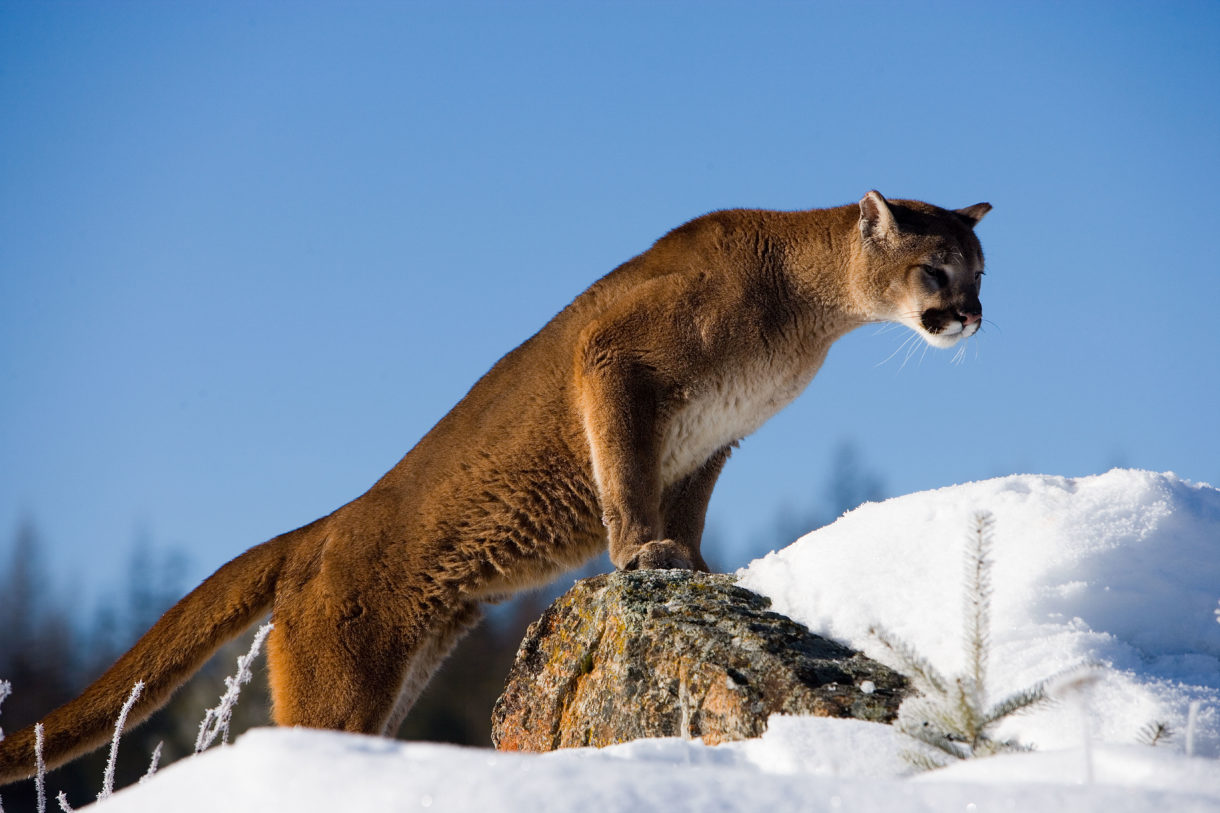
Trophy hunting organizations and state fish and wildlife agencies are in cahoots in the Southwest in executing ruthless mountain lion killing programs, typically involving radio telemetry equipment, packs of hounds, and rifles and bows they use to shoot lions they’ve driven into trees to kill at point-blank range. The trophy hunters are motivated by bragging rights and taxidermy (they are head hunters, and don’t eat the lions). And the states, in addition to catering to that small subset of hunters and enabling their unsporting methods of killing, view the lions as competitors with human hunters for deer and elk. In their economic calculus, every deer or elk lost to a lion is one less hunting license fee paid to the states, to paraphrase an observation from the esteemed outdoor writer Ted Williams.

But The HSUS and other wildlife protection groups are fighting back, and taking a stand for lions—in Arizona, Colorado, and New Mexico. Last week, after legal maneuvers by WildEarth Guardians, the Center for Biological Diversity, and Western Environmental Law Center, state and federal authorities temporarily halted a massive mountain lion “control” program in Colorado ostensibly designed to inflate mule deer populations, pending further environmental review.

Colorado Parks and Wildlife had entered into an agreement with U.S. Department of Agriculture’s Wildlife Services to kill hundreds of mountain lions and dozens of black bears on two study sites to determine if these massive predator-control projects could revive the Centennial State’s flagging mule deer population.

These sorts of programs are a fool’s errand. Across the Western U.S., mule deer struggle because of habitat destruction and corridor loss. In Colorado, this has been exacerbated by rampant oil and gas drilling in western Colorado with its spider web of roads and drill pads that have degraded tremendous amounts of former mule deer habitat and migration routes.

And in New Mexico, a federal judge recently rejected the State’s second attempt to dismiss a lawsuit filed by The HSUS and Animal Protection of New Mexico challenging the state’s Department of Game and Fish’s 2016 decision to open a cougar trapping season on public lands—for the first time in almost 50 years. Even though hounding is bad enough, it’s all the more outrageous to allow trapping and snaring programs for lions, since the lions suffer in the traps and the traps catch whatever creature is unlucky enough to trigger the device.

The Commission’s 2016 Cougar Rule radically expands cougar trapping on more than nine million acres of public trust land, including key Mexican wolf habitat, as well as expanding opportunities for trapping on private land. The risk of a cougar trap injuring or killing a Mexican wolf is high due to the similarity in size and habitat preference between the species.

Meanwhile, in Arizona, we are in full battle mode, as we conduct the signature-gathering campaign to qualify a ballot measure to halt any trophy hunting of lions in the state. The measure would also forbid trophy hunting of bobcats, jaguars, ocelots, and lynx, in a state with the richest diversity of wild cat species in the United States.

Despite Western states’ claim of using science, their arguments amount to no more than fake news and faux science. When trophy hunters kill an adult male lion, his females and kittens are susceptible to mortality from incoming males, as many other studies from Utah, Montana, and Washington have shown. Killing one male lion results in the death of numerous other lions, particularly dependent kittens, who are cannibalized by incoming males. And if a trophy hunter kills an adult female, any kittens under 12 months of age will likely die from starvation, predation, or exposure.

Two summers ago, Americans reacted with outrage in seeing an American trophy hunter grinning over an African lion he killed in Zimbabwe. He conducted that hunt for no other reasons than bragging rights and the trophy. The people who kill mountain lions here in the Southwest are motivated by the same purposes.

Lions strengthen population of deer and elk. They are needed apex predators in intact ecosystems. The states have no idea how many lions they have, and their programs are a relic of antiquated attitudes towards predators.

It’s one thing to kill animals for meat. It’s another to do it just for the heads. To paraphrase Oscar Wilde, it’s the unspeakable in full pursuit of the uneatable.

P.S. Using cutting-edge, remote-camera technologies, Panthera discovered that mountain lions are far more social than biologists ever realized—despite 60 years’ research. Females share their kills with other females and their kittens and even with the adult territorial male. In return, the adult males protect the females and all of his kittens from immigrating males. If left undisturbed, mountain lions have a stable social society where reciprocity between individuals is shared. A revolutionary finding.

Outrage as trophy hunter shoots rare snow leopard and publishes ‘vile’ picture where he’s smiling ear-to-ear

http://www.mirror.co.uk/news/world-news/outrage-trophy-hunter-shoots-rare-11470652
“Hossein ‘Soudy’ Golabchi stands smiling with the dead white and black
animal draped across his shoulders in what protesters have called a
‘disgusting example of outright murder'”

“A US trophy hunter is facing global criticism on social media after
he shot a rare snow leopard and published this grinning picture
online.
“In the image, Hossein Golabchi – also known by the nickname Soudy –
stands smiling from ear-to-ear with the stunning white and black
animal draped across his shoulders.”

Make animal traps illegal in Toronto: Toronto Wildlife Centre
http://torontosun.com/news/local-news/make-animal-traps-illegal-in-toronto-toronto-wildlife-centre
“The head of the Toronto Wildlife Centre is calling for bylaws that
would to make it illegal for people to use animal traps within city
limits.
“The push comes after a skunk and a raccoon — which each suffered
serious injuries when trapped — had to be euthanized after they were
brought into the wildlife centre last week.
“Both badly hurt in leg-hold traps, a distressed skunk transported
from Oakville backyard and a Toronto raccoon were captured in
residential neighbourhoods. And in the raccoon’s case, it was found in
the Pape-Danforth Aves. area.”

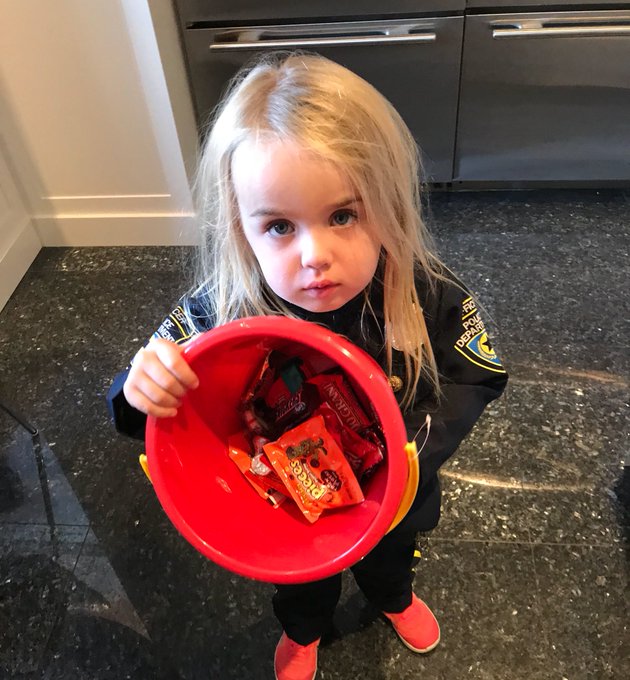
Trump Jr. jokes about taking daughter’s candy to “teach her about socialism”

https://www.cbsnews.com/news/trump-jr-jokes-about-taking-daughters-candy-to-teach-her-about-socialism/

“teach her about socialism”

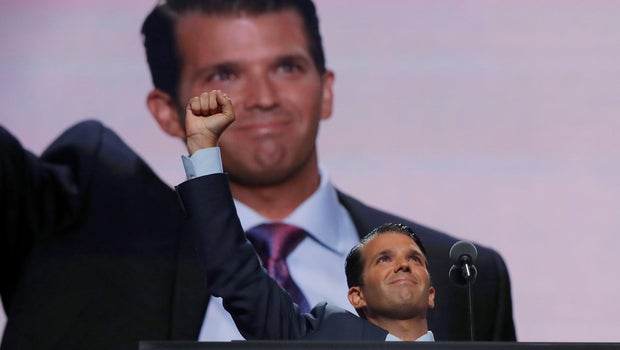
Donald Trump Jr. thrusts his fist after speaking at the 2016 Republican National Convention in Cleveland, Ohio U.S. July 19, 2016.

REUTERS / BRIAN SNYDER

Donald Trump Jr., the president’s older son who is in charge of his father’s business responsibilities, joked on Twitter Tuesday night that he would take half his daughter’s candy from Halloween to “teach her about socialism.”

“I’m going to take half of Chloe’s candy tonight and give it so some kid who sat at home,” he tweeted. “It’s never too early to teach her about socialism.”

I’m going to take half of Chloe’s candy tonight & give it to some kid who sat at home. It’s never to early to teach her about socialism.

She was given candy for free.
You inherited all your money.
You met with Russian spies.
It’s “too”. https://twitter.com/donaldjtrumpjr/status/925495970032443392 

J.K. Rowling, the now-wealthy author of the Harry Potter series who was once so poor she had to write the first novel on napkins in a pub, wrote, “Fill her bucket with old candy left by her great-grandfather, then explain that she has more because she’s smarter than all the other kids.”

Like his father, Trump Jr. — the 39-year-old whom the president defended as a “good boy” in light of the June 2016 meeting he held with a Russia-connected lawyer — has become well-known for his frequent and bombastic use of Twitter. He often uses his account to defend his father and bash liberals.

Trump Jr. and his wife, Vanesa Trump, have five children — Chloe, Kai Madison, Spencer Frederick, Tristan Milos and Donald Trump III. They were married in 2005.


Infamous ‘Lion Killer’ Perishes After Falling 100 Feet During Hunting Trip

https://animalchannel.co/hunter-dies-trip/

written by Britanie Leclair on October 9th, 2017

According to Google Dictionary, karma is a belief based in Hinduism and Buddhism that says a person’s actions dictate their future. It’s also a term that a number of animal lovers have been using to describe the following story.

In November 2015, an Italian hunter named Luciano Ponzetto drew the wrath of the internet after the public got a hold of photos of him smiling next to the body of a hunted lion.

According to Safari Club Italy (of which Ponzetto was a member), the photos were originally posted to the club’s Facebook page to showcase the winners of its annual Chapter Trophy Award competition— a competition in which Ponzetto had won a 3rd place prize.

The photos and subsequent media coverage made Ponzetto infamous. He was criticized and ultimately forced to resign from his role as the medical director of a business kennel.

The Sun also quoted him as saying, “I am being criticized by people who do not know me. I have always loved my work and I have always loved animals… I will carry on hunting until the law changes.”

Source: ATI

But Luciano no longer hunts. It isn’t because the laws have been changed, however— it’s because he died in a manner that many are calling an act of karmic retribution.

One year following the initial controversy, media outlets reported that Ponzetto had died as a result of falling into a 100-foot ravine during one of his regular hunting trips. According to ATI, Ponzetto was hunting wild birds with friends in the Colle delle Oche hills near Turin, Italy, when he slipped on a patch of ice, ultimately falling to his death.

According to sources, prior to the incident, Ponzetto had recently returned from Canada and had bragged about catching a number of kills. An Italian spokesperson (via The Sun) said, “His body was recovered by helicopter and taken to a local hospital… He died instantly and there was nothing that could be done.”

Now, I’m not one to talk ill of the dead, but I can say that the news of Ponzetto’s death received very little sympathy. As mentioned, people considered the circumstances ironic, believing the hunter had finally paid the price for his hunting ways.

ACTION ALERT: GOVERNMENT ACCEPTING COMMENTS ON GRIZZLY HUNT POLICIES

http://thefurbearers.com/blog/action-alert-government-accepting-comments-grizzly-hunt-policies

10/04/2017 – 12:48

ACTION ALERT: Government accepting comments on grizzly hunt policies

The province is changing the way grizzly bears are hunted in British Columbia, and it’s your opportunity to let them know what you think about their policy papers, and what the future of grizzly killing will look like.

In August the government announced that all hunting of grizzlies in the Great Bear Rainforest would end (not including First Nations), as would taking traditional trophies from grizzlies hunted throughout the province (but still allowing a hunt for “meat”). This now means that policies surrounding the hunting of grizzly bears need to change, and the Ministry of Forests, Lands, and Natural Resource Operations is asking for public input.

Specifically, they are seeking feedback on:

  • Changes to manage the ban in hunting areas that overlap the Great Bear Rainforest;
  • Changes that will prohibit the possession of “trophy” grizzly bear parts;
  • Changes that will manage prohibited grizzly bear parts;
  • Changes to prohibit the trafficking of grizzly bear parts; and,
  • New reporting requirements for taxidermists.

We encourage everyone to submit their comments via email to grizzly.bear@gov.bc.ca, and if they’re residents of British Columbia, to copy their MLA. Here are our tips for writing a letter:

  • Keep it short and specific. You want to make sure your points are straight-forward and easy to read so there’s no mistaking your opinions, and that it isn’t confused with other, unrelated comments.
  • Be polite and mindful of language. You may feel a great deal of anger, sadness, or even hate over what you need to write. But when communicating with politicians and government bureaucrats, using hateful language, veiled or indirect threats, or cursing, your points can be more easily ignored, and sometimes even result in resources being redirected as a security measure.
  • Provide citations and links. It’s a lot harder to dismiss an argument if there’s clear evidence through citations to reputable documents or media, and links to existing policy or examples. Providing these makes your letter more impactful.
  • Request follow up. If you want answers, make sure your questions are clear, and that you expect responses within a certain time period. Remember that in the case of policy input there may not be any systems in place for responses, and to follow up with bureaucrats or politicians.

Sample Letter

It is my opinion that managing the hunting of grizzly bears and the harvesting and trafficking of the various trophies, parts, or meat of their carcasses cannot be effectively accomplished within British Columbia at this time. Without significant increases to the resources of the Conservation Officer Service and their counterparts at the Ministry of Forests, Lands, and Natural Resource Operations, there is simply no manner of ensuring any policy allowing for some harvesting of grizzly bear trophies, parts or meat. Additionally, long-standing questions regarding the models and research used to make policy decisions on grizzly bear hunting have not been answered (see recommendations from the Scientific Review of Grizzly Bear Harvest and the yet-to-be delivered report from the Auditor General).

How this will interfere with the thriving grizzly bear viewing industry is also not included in your policy papers – a critical oversight.

In conjunction with these vital issues on the conservation and science side, the lack of resources to properly manage the hunt, and the overwhelming shift in societal views on hunting grizzly bears, all grizzly hunting should cease in the province.

Signed

Your name and address


Join The Fur-Bearers today and help us provide alternatives to fur and non-lethal solutions to wildlife conflict. We receive no government funding and rely entirely on donations from supporters like you. To become a monthly donor (for as little as $10/month – the cost of two lattes) please click here and help us save lives today.

Perry artist focuses exhibit on trophy hunting of endangered animals

http://www.whig.com/20171014/perry-artist-focuses-exhibit-on-trophy-hunting-of-endangered-animals#

By Herald-Whig

Posted: Oct. 14, 2017 8:50 pm

PERRY, Mo. — As professional artist Craig Norton of Perry was doing research for an adult coloring book focusing on endangered animals, something kept gnawing at him.

Norton said he would frequently encounter disturbing photographs of big-game hunters posing with the carcasses of endangered animals they had just killed.

He said he saw one hunter standing victoriously atop a dead elephant while flexing his muscles and giving a thumbs-up sign.

He saw a hunter swaying with a dead cheetah in his arms as if dancing with the animal on prom night.

He saw a couple kissing and holding a “Just Married” sign while standing next to a dead grey zebra one of them had killed.

He saw hunters sitting on a dead giraffe while smoking cigars and toasting each other with champagne glasses.

He saw a photo of a boy — about 10 or 12 years old — relaxing alongside a lion he had shot.

“He was literally cozied up next to the dead lion, and he’s playing on his iPad,” Norton said.

All of these images — and many others — bothered Norton and stayed with him while he was producing the 45 pen-and-ink drawings that were eventually featured in his coloring book, “Endangered: Animals to Color,” which was published in 2016.

Since then, Norton decided to express his feelings about “the negative effects of trophy hunting” by producing a series of paintings that focus on the killing of endangered animals.

The result is “Trophies,” an art exhibit that opens Monday in the Hannibal-LaGrange University’s Arts Department gallery. The exhibit will remain on display through Nov. 10. A reception with the artist — open to the public — is scheduled for 6 p.m. Friday.

Norton, a father of six who makes a living as a professional artist, said he felt compelled to create the series of artworks as a way to make a statement about his concern for the loss of endangered animals.

“These beautiful animals stand no chance when facing a hunter with a gun,” he said.

Norton is quick to point out that he is not opposed to legal hunting in general. He is specifically opposed to killing endangered animals.

“This exhibit has nothing to do with deer, turkey or duck hunters,” he said.

Norton is worried that the continued hunting of endangered animals will lead to the extinction of more species.

“For every species that is wiped out, it affects so much more than people realize because the extinction of one species affects other species,” he said.

Norton likens the extinction possibilities to a jigsaw puzzle.

“When one piece of that puzzle is suddenly missing, it affects the balance of things and is not complete,” he said.

“There’s not enough protection for these animals. Their numbers are dropping considerably. So I’m trying to get the debate going on whether this is the right thing or the wrong thing.”

Norton said all of the paintings he produced for the exhibit were based on real photographs he encountered while doing research over the last couple of years.

“These are not fictional,” he said. “They are based on real photographs, then I make it my own painting by adding things and subtracting things.”

Norton even added editorial text to some of the paintings to help illustrate his points about “the complete and utter disrespect and disregard for the animals’ life.”

Norton, 43, is known for making statements about social issues when producing his work.

Over the years he developed gallery shows in New York, Chicago, St. Louis and Baltimore featuring paintings, drawings and mixed-media work on such diverse subjects as the Holocaust, racial lynchings, gun violence and the travails that have faced Native Americans and the elderly.

He feels endangered animals deserve some attention as well.

“There are thousands of species at risk,” he said.

More information and examples about Norton’s artwork can be found on his website, craignortonart.com, and at craignortonart@facebook.com.

Trophy Hunting

http://www.all-creatures.org/cash/articles-trophy.html

Article posted by C.A.S.H. Committee To Abolish Sport Hunting

CLICK HERE for more from CASH COURIER NEWSLETTER, Fall 2017

By Peter Muller, VP of C.A.S.H.

Trophy hunting is the selective hunting of wild game for human recreation. In “Trophy Hunting” the entire animal or part of the animal is kept as the “trophy.” It is frequently kept as a remembrance of the hunt. The game sought is usually the oldest with the largest body size, largest antlers or other distinguishing attributes.

trophy hunting

Trophy hunting has both supporters as well as opponents – both from within the hunting fraternity and from outside of it. Discussions concerning trophy hunting are not only about the question of the morality of recreational hunting and the supposed conservation efforts of hunting, but also the observed decline in the animal species that are targets for trophy hunting.
Trophy hunting occurs internationally at many levels. We all remember the worldwide press coverage and outcry that Cecil received with many negative comments regarding that taking.

Was it legal?

Was Cecil “set up” for the kill by a wealthy American?

What was the benefit of the money paid by the hunter to the local community?

and so on..

However, let’s restrict this discussion to the US only and look at the arguments in favor and opposed to trophy hunting in the US.
In the US, trophy hunters select their targets according to whether the animal has the largest horns, antlers, or other visible attributes that would be of importance to pass on to future generations – in other words, they are genetically laden with attributes that need to be passed on to future generations for the benefit of the species as a whole.

To selectively kill off these genetically laden members of the species will gradually diminish these positive attributes from appearing in future versions of the species as a whole. In other words, the species, as a whole would slowly but surely decline.

Trophy hunting causes what has been referred to as “unnatural selection.” It has been shown to reduce antler size and body size in roe deer and horn size and body size in mountain sheep.

This unnatural selection which is common to all groups that are trophy hunted likely compromises the long-term viability of all terrestrial and aquatic species.

You can read more here: Fred Allendorf and Jeffery Hard, “Human Induced Evolution Caused by Unnatural Selection through Harvest of Wild Animals,” Proceedings of the National Academy of Science 106 (2009); 9987-94.

To compensate for smaller bucks, game managers now cooperate with the Quality Deer Management Association to build herds with large antlers for sport hunting.

See more Articles

CLICK HERE for more from CASH COURIER NEWSLETTER, Fall 2017

TV hunting shows and trail cameras

http://www.kystandard.com/content/straight-arrow-tv-hunting-shows-and-trail-cameras

Straight Arrow

By Gene Culver

I get a lot of customers in the archery shop who ask about equipment they have seen on some of the bowhunting shows on TV. Some of the stuff they ask about is good; some not so much. But what worries me about the shows is how they lead viewers, especially young bowhunters, to believe that there are tons of trophy bucks running around and they make it seem pretty easy to harvest one of these trophies.

I caught the end of a hunting show Monday morning and the host of the show was saying that the shows make hunting look easy, but that viewers don’t see the times when things don’t go well, and a trophy is not taken on film. He said we don’t see how frustrating, grueling and expensive filming hunts can be, and sometimes without reward, but that he always looked forward to his next hunt, and the experiences and memories that would last a lifetime.

I don’t know how many times I have had a parent tell me that their kid wouldn’t shoot a good 8-point buck because they wanted to wait for a bigger one, and I have had guys tell me they had hunted for up to 20 years and never taken a buck because they had not seen one big enough, with their decision made partly by the deer they had seen on TV hunting shows.

The reality is that most of us don’t get the opportunity to go to a managed ranch or lodge in Texas, Illinois, Iowa, Kansas or some of the other well-known trophy-producing states — Kentucky included, where you can only harvest a 5 ½-year-old or older buck. And most of us won’t spend the $3,000 to $10,000 or more that it costs to hunt some of these places.

In my opinion, hunting locally, the best we can hope for is to hunt and try to harvest the biggest buck on the property you have permission to hunt on, whether that is a 110-inch buck or whatever, most places just never produce the giant bucks we see on TV and dream about.

The other problem I have noticed on some of the shows; if the hunter is using a mechanical broadhead they lead viewers to believe that even when making a bad shot, it will kill the animal. Don’t believe it!

Mechanical broadheads are not a miracle cure-all for a bad shot. Regardless of what type head you choose, it is our responsibility to practice and be as efficient with our equipment as possible. And for anyone shooting less than 60-pound pull, especially kids and women shooting shorter draw length bows, I know that a good fixed blade broadhead is a much better choice and will give better penetration. Shot placement and penetration are what will put venison in your freezer.

Trail cameras have had a major impact on hunting by providing hunters with photos of the deer that walk in front of their cameras, but unless you have a camera that will rotate 360 degrees or have four cameras facing four different directions at each camera station, a lot of deer won’t show up on camera. A couple of years ago, I was hunting near a trail camera and watched eight deer move by me within 30 yards, but none of them walked by the camera to have their photo taken.

Because of cameras, I have had customers tell me if they don’t have a good buck showing up on their camera that they don’t go hunting. Most of the bucks Eric and I have been lucky enough to harvest had never shown up on a camera. We hunt because we love being in the deer woods and the challenges that bowhunting presents.

Ballot measure launched to ban trophy hunting of America’s lions

https://blog.humanesociety.org/wayne/2017/10/ballot-measure-launched-ban-trophy-hunting-americas-lions.html

October 12, 2017

Two summers ago, a color photograph of Minnesota dentist Walter Palmer and his hunting guide kneeling over Cecil, an African lion they’d slain, found its way onto social media platforms and ricocheted across the planet. In response, 45 of the world’s biggest airlines – including all major U.S. carriers – said they’d no longer ship lion trophies in the cargo holds of their planes.

These companies knew that the public found the practice of trophy hunting of African lions and leopards and other rare wildlife repugnant.

With the launch of an Arizona ballot measure yesterday to stop the trophy hunting of mountain lions and bobcats, voters in the Grand Canyon State will have an opportunity to stop the same sort of pointless, cruel killing practices on a big patch of land on this side of the globe.

Specifically, The HSUS and a coalition of about 60 organizations have filed a ballot initiative to stop the trophy hunting of mountain lions and bobcats in Arizona. The measure would also ban trapping of bobcats, currently killed by the thousands every year in this state for their fur. In addition, the ballot measure would codify a no-trophy-hunting policy on jaguars, ocelots, and lynx, in case these rare cats establish healthy populations in Arizona and trophy hunters see them as future targets.

The question that millions of people asked in the wake of the killing of Cecil is the same one that people should ask in Arizona: Why would a person of wealth and privilege shoot a lion he isn’t even going to eat? An animal whose hunting behavior keeps prey populations in check and whose presence is a reminder that there are still wild places in our world where all kinds of beautiful animals, including native carnivores, should be allowed to flourish.

This will be the sixth ballot measure in the west to stop the unsporting trophy hunting of mountain lions, and voters have sided with establishing or maintaining protections for lions in every single one of them. It is also the seventh statewide ballot measure on animal protection issues in Arizona since 1994, and voters have sided with the animal protection position in six of six cases.

There are perhaps few things as senseless as the trophy hunting of mountain lions; no one eats these animals, and that makes killing them easy to classify as trophy hunting in its purest form.

What makes it even worse is that the primary method of hunting the lions is with packs of dogs and radio telemetry equipment, in what amounts to a high-tech search-and-destroy mission. A trophy hunter releases a pack of hounds, fitted with radio transmitters on their collars, and then tracks the chase with a handheld directional antenna. Once the dogs pick up a scent and careen after the lion, the quarry flees, but sometimes turns to fight – resulting in a situation that pits animals in violent combat. If the cat doesn’t kill the dogs, or the dogs don’t overtake and kill the cat (including young kittens), the cat will scamper up a tree.

The hunter will then follow the radio signal to the base of the tree or cliff face, and shoot the lion at close range.

It’s about as sporting as shooting an animal in a cage at the zoo.

Trophy hunting clubs like Arizona-based Safari Club International have, in recent years, promoted the killing of mountain lions by offering awards, certificates, and killing contests to reward and encourage trophy hunters. SCI’s award categories like “North American 29,” “Cats of the World,” and “Trophy Animals of North America” include mountain lions.

Mountain lions pose an immeasurably small risk to humans and do their best to avoid us. Lions have attacked just a handful of people in the United States in the last 30 years, even as we’ve invaded their traditional habitats with developments, agriculture, and recreational activities.

On the other hand, trophy hunters have killed more than 78,000 mountain lions during that same period – an average of 2,500 a year in 10 western states, according to a report we released earlier this year in cooperation with the Summerlee Foundation: State of the Mountain Lion: A Call to End Trophy Hunting of America’s Lion.

These native carnivores provide all sorts of benefits to their ecosystems. Mountain lions keep deer and elk herds healthier, taking weak, sick, and diseased animals. They leave carrion for black bears, grizzly bears, and other scavengers. They are highly sentient and familial. A mother will care for her kittens for up to 24 months, and if she is killed, the kittens could die from starvation, predation, or exposure.

In cases where lions cause an actual problem or pose a perceived or actual threat, the ballot measure allows selective killing of those individuals. The measure, on the other hand, is designed to stop trophy hunters from chasing down and killing unoffending lions – lions who aren’t bothering anyone, and like any creature, are just trying to live and get through another day.

This ballot measure is about our humanity. It’s about ending unsporting methods, killing for no good reason, or killing as a head-hunting exercise. It’s about letting animals have small slices of land where they don’t have to worry about the threat of premeditated human violence.

Join us in this fight to protect America’s own iconic lion and other wild cats of the west. Their future depends on our decision to act on their behalf.

Poll suggests majority of British Columbians support complete ban on grizzly bear hunt

THE CANADIAN PRESS/Jonathan Hayward
– A A +

A new poll suggests three-quarters of British Columbians think grizzly bears should not be hunted in this province at all.

The online survey, conducted by Insights West, found 74 per cent of the over 800 participants said they would support a ban on hunting grizzly bears, while 19 per cent are opposed.

Over 800 people responded to the study across the province, including several self-described hunters, 58 per cent of whom said they would support a ban.

The survey was held for three days at the end of August, two weeks after the B.C. government banned trophy hunting of grizzly bears. A residential hunt is still allowed under the new ruling.

READ MORE: Roughly 75% of rural British Columbian voters oppose grizzly bear trophy hunt: poll

The study found 78 per cent of women across B.C. support a complete ban on the hunting of grizzly bears. The area of the province with the most support for a ban was Vancouver Island, with 81 per cent of residents there voting against the hunt.

Eighty-one per cent of people who voted for both the NDP or the Green Party in the B.C. provincial election in May are in support of the ban, while residents aged 35 to 54 make up the age group that supports a ban the most, with 79 per cent.

READ MORE: B.C. NDP plan to ban grizzly bear trophy hunt

“With so many residents who believe grizzlies should not be hunted at all, there is definitely appetite for more action” beyond the government’s trophy hunting ban, Mario Canseco of Insights West said.

Province to consult on grizzly regulations

The poll comes as the province announces a round of public consultation on its new grizzly hunting regulations, to take effect Nov. 30.

Earlier this summer, the new NDP government announced plans to ban trophy hunting, which would close all grizzly hunting in the Great Bear Rainforest, and would block hunters from possessing the paws, head or hide of a grizzly.

Hunting for meat is still permitted.

In a media release, the Ministry of Forests Lands and Natural Resources said it now wants input on five areas related to the new rules:

  • Changes to manage the ban in hunting areas that overlap the Great Bear Rainforest;
  • Changes that will prohibit the possession of “trophy” grizzly bear parts;
  • Changes that will manage prohibited grizzly bear parts;
  • Changes to prohibit the trafficking of grizzly bear parts, and
  • New reporting requirements for taxidermists.

British Columbians looking to weigh in can find out more here, and make comment until Nov. 2.

© 2017 Global News, a division of Corus Entertainment Inc.