Convicted Scottish gamekeeper Russell Mason – more disturbing details about this case
Reply

Salt Lake City — With warmer weather on the near horizon, rattlesnakes will begin emerging from their winter dens, and you may encounter one while hiking or spending time outdoors. Here are some tips to help you stay safe and aware while recreating outside this spring and summer.
Native snakes are an important part of Utah’s ecosystem. There are five rattlesnake species in Utah, and the most common is the Great Basin rattlesnake, which is a subspecies of the Western rattlesnake. Rattlesnakes help to reduce diseases that are spread by rodents, and their dens may provide shelter for other snake species.
“It is important to become more knowledgeable about the rattlesnakes that you may encounter around your residence or during outdoor recreational activities,” Utah Division of Wildlife Resources Native Herpetology Coordinator Alyssa Hoekstra said. “Being aware of species you may encounter is a great way to be proactive in avoiding any unwanted interactions with rattlesnakes and prepares you to respond in a safe manner.”
Rattlesnakes are most active during the late spring and early summer months. This is when they are on the move, looking for food, water and mates. Although their activity levels peak at dawn and dusk, rattlesnakes can be encountered at all hours, especially in the spring.
Rocky benches, high-elevation slopes and dry canyons are the most common places in Utah to encounter rattlesnakes, often while people are out hiking, rock climbing or biking. However, you may also encounter rattlesnakes at lower elevations and in open areas. Individual rattlesnakes move around a large area (known as their “home range”) and will usually move on from a specific location within a short period of time.
A rattlesnake’s camouflage helps it to blend into its surroundings, so you may pass by a rattlesnake and never know it.
Rattlesnakes are protected under Utah law, making it illegal to harass or kill one. Rattlesnakes use their venom to subdue prey so they can eat it, and a snake will only bite defensively if it feels threatened.
Rattlesnakes do not chase people and will stop aggressive or defensive behavior once you are far enough away. Snake bites are quite rare, and harassing or trying to illegally kill the snake greatly increases the risk of being bitten. Never corner a rattlesnake or get close enough for a bite to occur.
When you are out hiking, make sure to always watch the trail ahead of you and check carefully before stepping over rocks, reaching onto ledges or sitting down on a rock or log. Keep your hands and feet where you can see them and avoid reaching into dense brush or crevices before visually checking to make sure they are clear.
“Like most wild animals, rattlesnakes fear humans and will do anything they can to avoid us,” Hoekstra said. “If a snake is feeling threatened, it may act in defense. The best course of action is to maintain a safe distance from rattlesnakes and other native snake species.”
If you do encounter a rattlesnake, the following tips can help you — and others — stay safe:
There is no need to kill a rattlesnake for fear of its return to an area. If you do repeatedly see a rattlesnake in a problematic area or if you encounter a rattlesnake in a public park, yard or play area, you can contact the nearest DWR office to report it.
To avoid conflicts between dogs and rattlesnakes, keeping your dog on a leash is highly recommended — especially when you hike during the late spring and early summer months. Allowing your dog to roam without a leash increases the likelihood of a rattlesnake encounter. You can also do rattlesnake aversion training for your dog, which can help them learn to avoid rattlesnakes.
Pet owners should also be aware that not all emergency veterinary hospitals keep antivenom at their facilities. Be sure to check with the emergency veterinary hospitals in your area to learn which locations keep antivenom in stock, so you know ahead of time where to take your pet if it’s bitten by a rattlesnake.
Rattlesnake bites are a serious medical emergency and require getting medical attention at a hospital as soon as possible. Rattlesnake bites in the U.S. are seldom deadly, especially when the appropriate medical care is received.
If you are bitten by a rattlesnake:
If you regularly recreate in areas outside of cell phone service, you may want to consider investing in a satellite phone for emergencies.
Depending on where you live, you may occasionally find a snake in your yard. Here are some useful tips to help keep rattlesnakes out of your yard:
Gopher snakes (also referred to as bull snakes and blow snakes) are very abundant in Utah. They are often mistaken for rattlesnakes due to similarities in their appearance and behavior. When alarmed, gopher snakes hiss loudly, flatten their heads into a triangular shape, curl their bodies into an S-like shape and vibrate their tails.
A rattlesnake’s tail is wide and blunt — and tipped with a rattle, hence the name. A gopher snake’s tail is slender, pointed and lacks a rattle. However, rattlesnakes may lose their rattles or sometimes may not rattle when they are disturbed. Do not count on a rattlesnake to reveal its presence by rattling.
Rattlesnakes also have broad, triangular-shaped heads and vertical eye pupils, while non-venomous snakes in Utah tend to have longer snouts and round pupils. If you cannot identify a snake you encounter, the best course of action is to move away and treat the snake as if it were venomous.
You can get additional rattlesnake safety tips on the Wild Aware Utah website. You can also listen to the DWR Wild podcast to learn more information about rattlesnakes in Utah.
How to avoid conflicts with rattlesnakes in Utah this spring and summer
 Staci-lee Sherwood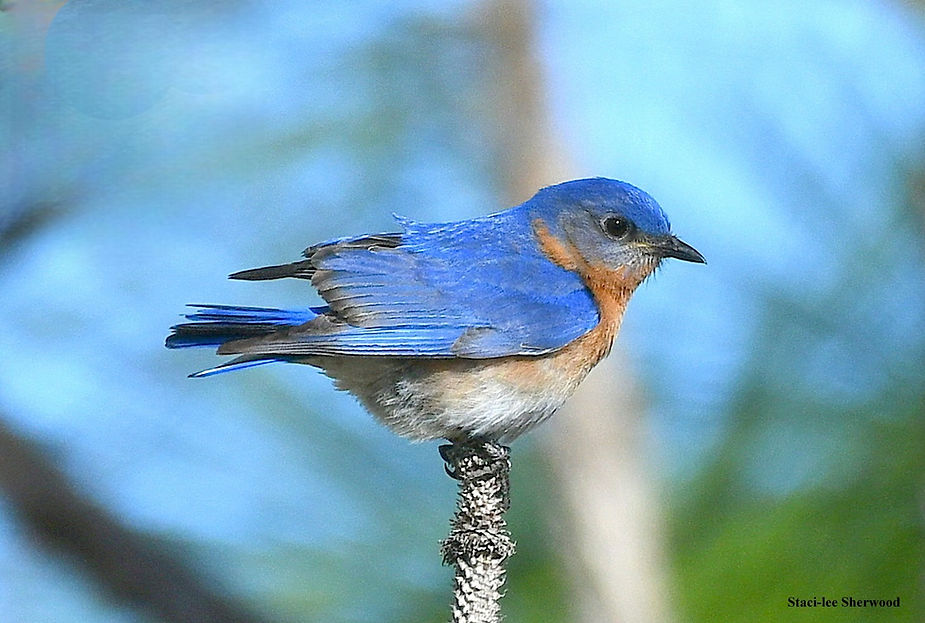
By Staci-lee Sherwood
Every year billions of birds migrate from their winter home to their nesting grounds, and back again. For anyone who’s traveled long distances you know how exhausting and sometimes tedious the journey can be. When we travel to the same place we often use markers so we know we’re on the correct path. Birds do the same thing using a variety of navigational tools. Their flight paths might have been formed thousands, sometimes millions, of years ago by their ancestors using their own internal clock and cues. Sea turtles have a similar ability, being born with their own unique honing system. Modern life with tall buildings and reflecting glass windows have altered what used to be a long but relatively safe journey to one that is extremely dangerous.
The mystery of migration
Why do some birds migrate while others don’t? Some species travel just a few hundred miles while others travel several thousand miles over mountains and oceans. These are amazing feats of nature no human would want to do twice a year. It’s exhausting and dangerous with no guarantee a bird arrives alive. For mated pairs, it’s even more uncertain that both will arrive safely and able to breed and raise young. After breeding season the newly hatched chicks, just learning to fly, have the task of following in their parents footsteps. Unlike humans, birds don’t have a choice they have to follow flock.
Migration through New York City is called the ‘Atlantic Flyway’ from wintering areas in the southern U.S. to as far as South America. These species can travel to the northern U.S. or even the Arctic to breed. Then back down after breeding season. The ‘Mississippi Flyway’ connects birds traveling between South America to Canada through the Midwest of the U.S. Tens of millions of birds travel these two routes so it’s easy to see how many die hitting windows and buildings that didn’t exists a century ago.
Migratory birds have an internal clock that signals when and where to travel. While they inherit from their parents which routes to take they use several natural cues to guide them. At the start of their journey birds use the sun, the stars and the Earth’s magnetic field to steer them in the right direction. When they encounter storms they can be blown off course. Some will eventually get back on track when the storm passes, others seem to choose to stay where they landed (in south Florida we have a yellow-headed caracara living here for three years) and others die from exhaustion from an extended trip or landing where there is no food for them. Scientists still don’t really know how birds learn to migrate or how the ever changing climate and landscape will impact them.
Click here to read more about it
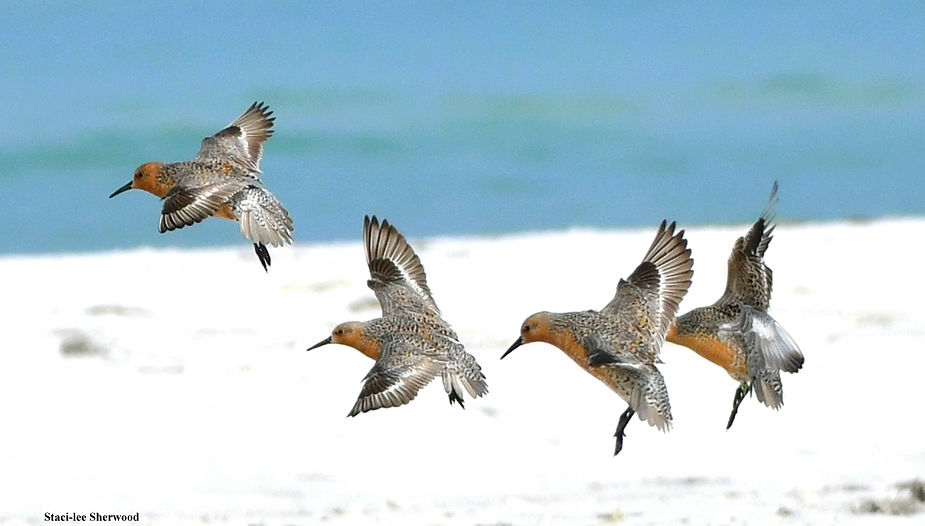
Red Knots have the longest migration well over 9000 miles each trip. They can travel from as far south as southern Argentina to breeding ground in the Arctic tundra
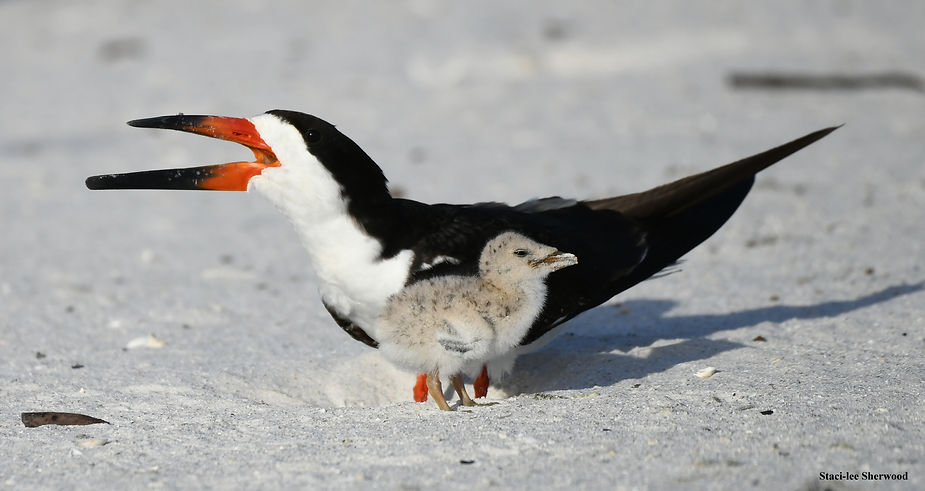
Black Skimmers mostly live year round in South America but some populations travel north to breed, from coastal Florida up to coastal Massachusetts
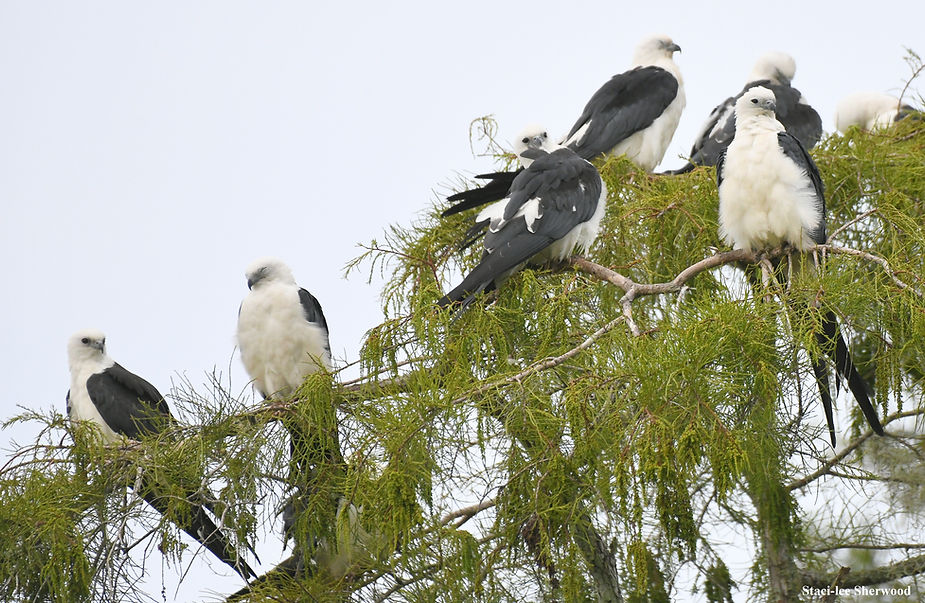
Swallow-tailed Kites can travel over 5000 miles from northern Florida to southern Alabama and Louisiana down to northern half of South America, mostly Brazil
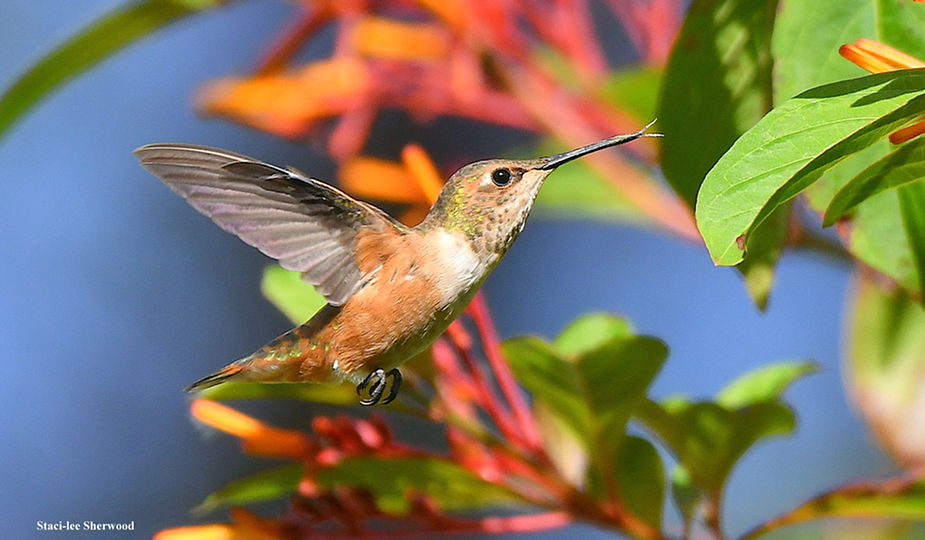
Rufous Hummingbirds can travel 4000 miles to get to their breeding grounds. A miracle since they only weigh about .02 ounces. Their migration is from western Mexico up to their Alaska breeding ground. A few have made it to Florida to winter. Their lifespan is only 3-5 years so this is an extraordinary migration
What causes window strikes?
Birds have been around, what scientists refer to as the ancestor of modern birds, about 85+ million years since the Cretaceous period. Human made obstacles like buildings and artificial light are a very new but deadly obstacle birds have had to learn to adapt to. Artificial light comes in two forms, direct and indirect (skyglow). Direct light can be lights inside or outside a building that draws a bird to it. Skyglow is the cumulative effect of all light; from street lights and car lights to cell phones, store signs and building lights. This type light brightens the entire horizon. Nocturnal birds and owls end of disorientated by this because it interferes with their night vision making it harder to navigate and see prey. When your eyes are designed to see in darkness a bright sky is deadly.
New York City skyline in 2010, with more skyscrapers now. Just a couple of hundred years ago this landscape was open and filled with trees, flowers and ponds. A feeding ground and rest stop for weary migrating birds

Chicago skyline in 2006. For a bird this is a wall of glass and reflections

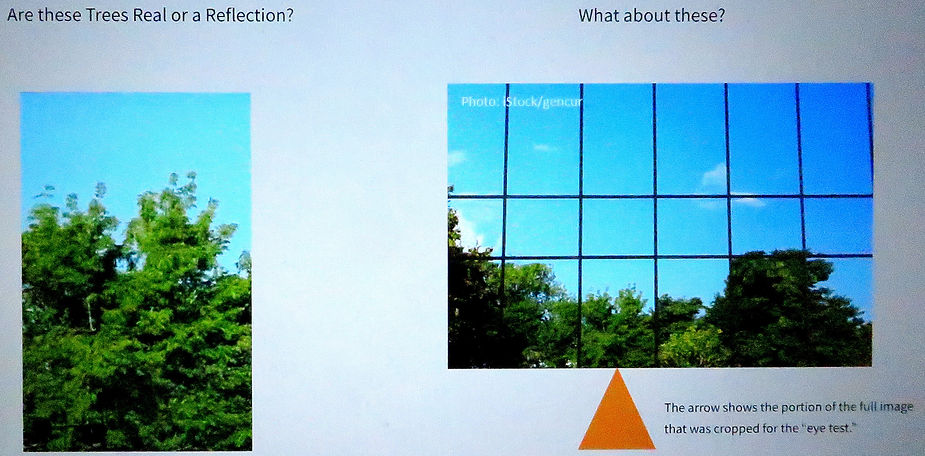
Many modern buildings in cities look like this, a giant wall of super shiny glass. At night the buildings are light up inside so nighttime navigation can be just as dangerous. Imagine being a bird flying into this and thinking you’re flying into the sky. Buildings like these cast a reflection that can be blinding. Unlike skyscrapers, lower buildings can reflect trees and vegetation making it seem as though they are flying toward a safe landing. Many buildings have parking lots from above look like ponds often causing birds, even huge flocks, to crash or strand once they realize they’ve landed on concrete not water. This building reflects another building but also the sky making it seem as if the bird need only to fly over the reflected image, not the actual building.

This is an excellent example of what birds see when the reflection is vegetation. It’s easy but deadly mistake. Photo credit: Minnesota Bird Coalition
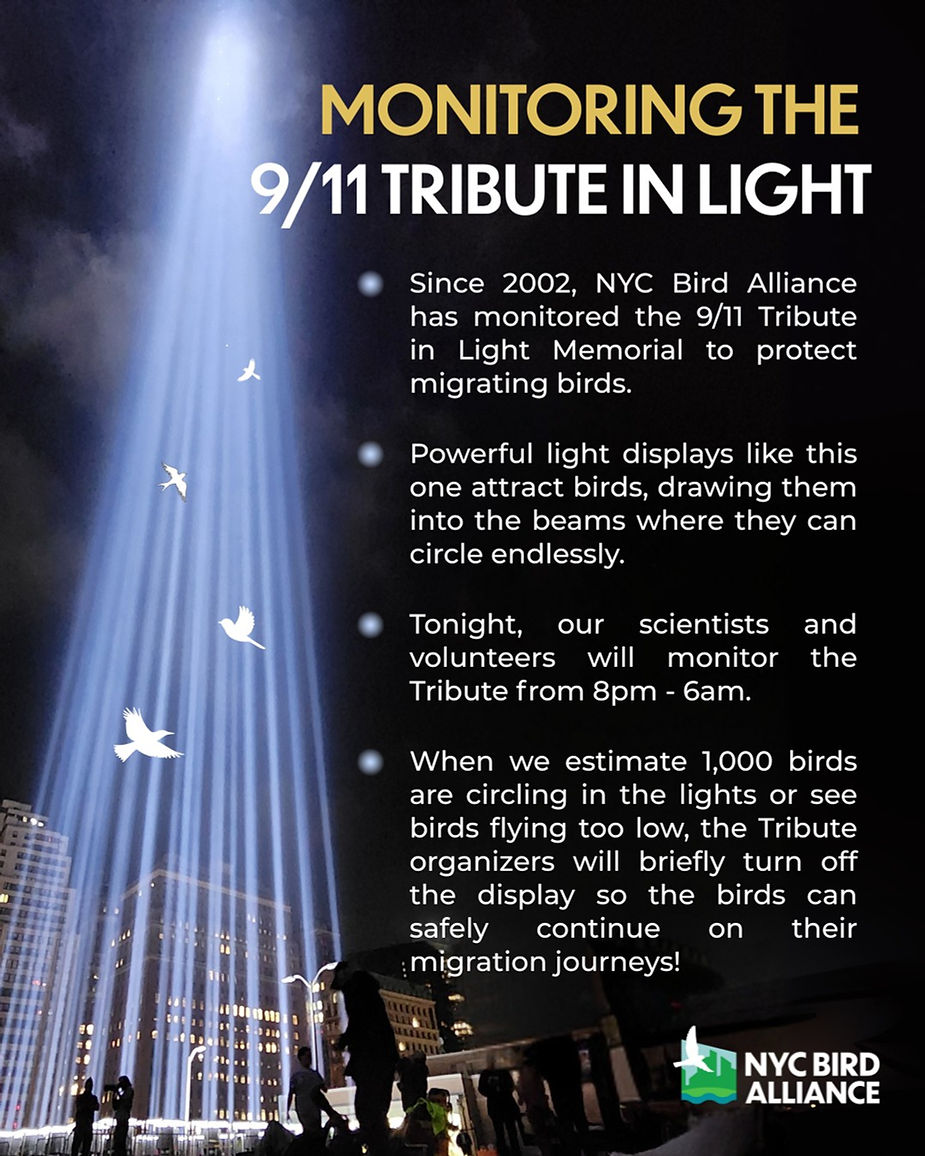
Artificial lights confuses and disorientates birds (and sea turtles) often until they run out of energy and die
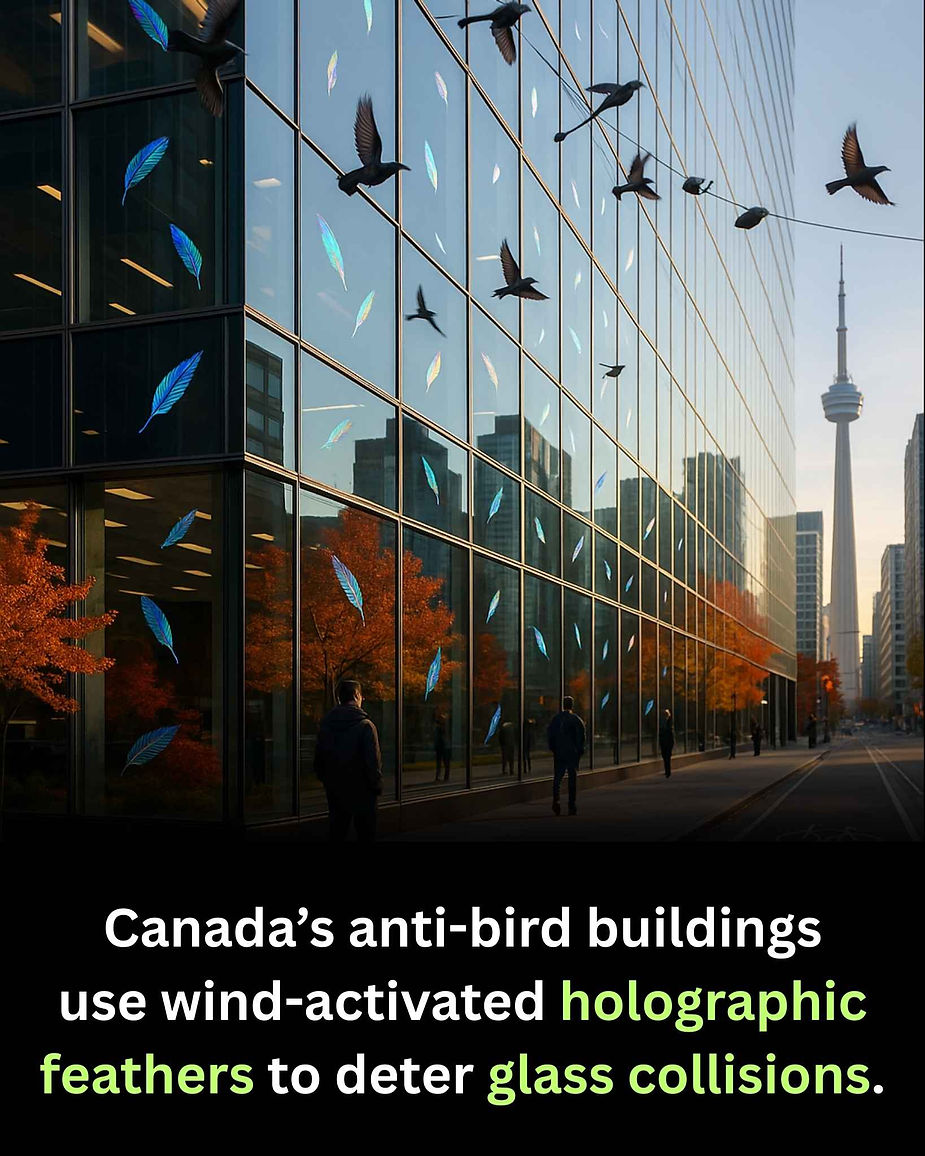
Death or injury from window strikes and light pollution IS something we can prevent. If we can send a man to the moon, we can and should figure this out.
By the numbers
It’s estimated over a billion birds die from window strikes, the second most deadly cause of death after outdoor cats. The NYC Bird Alliance research shows between 90,000 and 230,000 birds are killed in the city each year in these tragic often preventable collisions. Mortality rates are high and the types of injuries show varying release rates. A bird with head trauma is the least likely to survive while stunned birds have a release back into the wild rate between 40 – 60%. These are poor odds especially for something modern life has caused and has the power to rectify. As if that wasn’t bad enough, millions more die from the use of pesticides which kill them directly via aerial spraying and indirectly by killing or poisoning their food sources. It’s little wonder birds in general are in serious decline.
Click here to read the NYC Bird Alliance study from 2025 https://journals.plos.org/plosone/article?id=10.1371/journal.pone.0306362
How you can help save birds
In 2020 a landmark piece of legislation was passed by the NYC Council called the ‘bird safe bill’ and in 2021 became NYC Local Law 15. This requires all new construction to be bird friendly to reduce death by collision. However it left a loop hole of the millions of windows already in place. New York City became the largest city so enact such a law. With millions of birds still dying from exempt windows there is a lot of work still to be done. If you wish to help birds in other areas contact your local Audubon group or bird rescue and get a bill like this started.
Click here to read more about the bill https://www.nyc.gov/assets/buildings/pdf/ll15of20_sn.pdf
Some companies have gotten on the bandwagon to help our feathered friends, even if the law was their true inspiration. Tri State Sun Control uses 3m Bird Strike Window Film ‘Our bird safety film has proved to be 100% successful. It is installed at the Philadelphia Zoo and Bronx Zoo and they have reported no fatalities since the bird safety film installation. The lines are specially designed to break reflections on the glass allowing the birds to see that there is an obstruction.’ If you are looking to make your windows safer for birds this could be an option.
Another solution
Project Safe Flight began in 1997 by founder Rebekah Creshkoff who noticed a huge crisis of birds dying from building collisions. This program is all volunteer and run by the NYC Bird Alliance. There is also a project safe flight/bird strike rescue groups run in Atlanta, Georgia by Birds Georgia and in Minnesota by the Minnesota Bird Coalition and in Chicago run by Chicago Bird Collision Monitors. These three states have millions of birds migrating every year and always need help.
If you find a stunned bird time is everything. Be very gentle but swift. It’s best to take any stunned or injured bird immediately to a rehab. If you are not near one this is the next best thing to do.
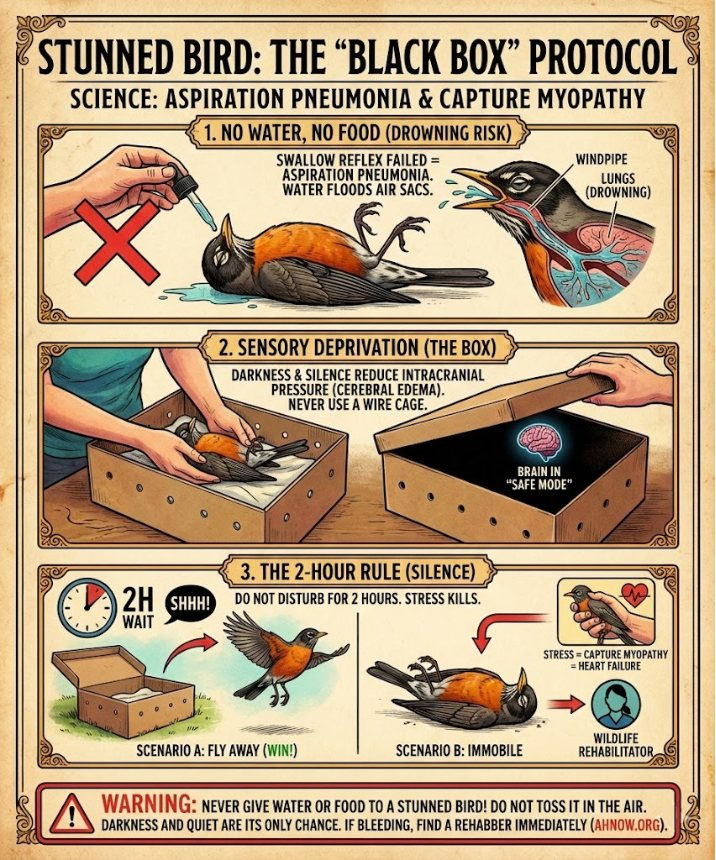
There are many other ways to help migrating birds, or any bird, stay safe while in flight. The following are things for both residential and commercial buildings. Some are very easy and inexpensive but the lives saved are priceless.
Chicago Bird Collision Monitors
NYC Bird Alliance
Minnesota Bird Coalition
Birds Georgia
Dear Friend, The U.S. House of Representatives is expected to vote early this week on a reckless, dangerous bill — H.R. 556. The measure would bar the U.S. Fish and Wildlife Service, the U.S. Forest Service, and other federal land management agencies from taking action to limit lead poisoning of wildlife caused by hunters dispersing lead ammunition on hundreds of millions of acres of our public lands. We urgently need your help to defeat H.R. 556 on the House floor. This is a priority bill for the NRA and other extreme hunting groups that disregard overwhelming evidence that spent lead ammunition is poisoning and killing 20 million wild animals a year across American lands and putting 60 million people who consume wild game meat at risk of cognitive impairment. Just two weeks ago, newspapers across Virginia reported alarming news from the Wildlife Center of Virginia in Waynesboro: bald eagles are being admitted in record numbers for lead poisoning. In 2025 alone, 76 bald eagles were admitted to the center — and 53 of them (70%) tested positive for lead poisoning. Eagles deaths are happening like this all over the country — from Alaska to Florida. Wildlife experts say the primary source is lead ammunition. Lead’s Uniquely Dangerous Properties as Hunting Ammo When a hunter shoots a deer or other game animal with a lead bullet, the projectile fragments into dozens of tiny pieces, spreading through the meat as far as 18 inches from the wound. Those fragments are then eaten by scavenging wildlife like eagles feeding on gut piles or carcasses — and sometimes by hunting families eating the harvested meat. The science on this issue is overwhelming. More than 500 scientific studies have documented the risk from lead ammunition to over 130 species of wildlife — and to people. Lead is a potent neurotoxin, and there is no safe level of exposure for humans. Yet H.R. 556 would tie the hands of federal wildlife managers, preventing them from taking reasonable steps to reduce this avoidable source of poisoning on public lands. This is especially troubling because we already know that transitioning away from lead ammunition works. In 1991, the U.S. Fish and Wildlife Service banned lead ammunition for waterfowl hunting nationwide. That policy has become one of the great conservation success stories, sparing 1.4 to 3.9 million ducks and geese from poisoning every year, while waterfowl hunting continues to thrive. More recently, the state of California successfully transitioned to non-lead ammunition for all hunting, with no negative effect on participation. Today, affordable non-lead ammunition made from copper, bismuth, tungsten, and other materials is widely available in stores and online. Despite the known risks, lead ammunition remains the largest source of unregulated lead intentionally released into the environment in the United States, with tens of thousands of tons dispersed across public lands each year. Congress should not categorically impede commonsense efforts to reduce documented and irrefutable poisoning of wildlife and people.Please take action today! Send a message to your U.S. Representative through our Action Alert urging them to vote NO on H.R. 556. Then call the U.S. Capitol switchboard at 202-225-3121. Ask to be connected to your U.S. Representative’s office and leave this message: “I am a constituent and I urge you to vote NO on H.R. 556. Lead ammunition is toxic and deadly for wildlife and people.” This bill could move quickly, so your voice right now can make the difference. America’s wildlife — from bald eagles to countless other species — should not suffer from a preventable toxic threat when non-toxic alternatives already exist. Sincerely, President Animal Wellness Action |
 Exposing the Big Game