The cost of hunting — still worth it
Reply

4 Sep 2025South Africa
Animal welfare groups in South Africa are pushing back against a local government plan to allow culling and trophy hunting to reduce elephant numbers in Madikwe Game Reserve.
According to the North West Parks and Tourism Board, which oversees the 75,000-hectare (185,000-acre) wildlife conservation area in the country’s north, the elephant herd has grown too large. More than 1,600 elephants now live in Madikwe, more than triple the planned capacity of 500.
“Population reduction strategies will include both culling applied together with contraception at least,” board CEO Jonathan Denga told Mongabay by text message.
Animal welfare NGO Humane World for Animals told Mongabay its offer to introduce contraception at Madikwe has been repeatedly postponed since 2020, and still hasn’t been implemented.
Denga also suggested the board is open to relocating elephants to other conservation areas. “We will not preclude any requests for live elephants should anyone come to the fore and they have adequately suited habitats,” he said.
In 2024, 75 elephants died from starvation amid the region’s worst drought in a century, sparking concerns over the park’s management. But the proposed solution to kill more elephants, which Denga called a “realistic” option, has intensified criticisms.
In a July statement, the board said it wouldn’t “be driven by emotions or agendas that seek to keep South Africa and our province in the economic doldrums.” Revenue from hunting and culling would be reverted back into the reserve, it added.
South Africa’s largest animal welfare organization, NSPCA, condemned the plan, saying culling and hunting should never be routine solutions for controlling wildlife populations.
“We are alarmed by the framing and normalisation of lethal reduction as both viable strategy and economic opportunity,” it wrote in an Aug. 13 statement. “Elephants are sentient, intelligent beings with intricate social structures and emotional lives.
“Economic hardship, inequality, and community upliftment are real and pressing challenges,” NSPCA added. “But these cannot be solved by reducing living beings to financial levers.”
The average price to hunt an African elephant in 2023 was $26,500. For comparison, hunting a critically endangered black rhinoceros costs $300,000, while lions and buffalos are priced at about $13,000 a head. That’s according to data by the Professional Hunters Association, obtained by an access-to-information request by the Daily Maverick and reviewed by Mongabay.
A tender published in May 2025 by the North West Parks and Tourism Board, which has since been recalled and deleted, reportedly advertised 25 elephants, two black rhinos and 10 buffalos for trophy hunting at Madikwe.
Andrew de Blocq, environment spokesperson for the Democratic Alliance, a ruling coalition party, said the current situation could have been avoided. “Elephants don’t grow from a population of 250 to 1,500 overnight. They’ve known for a long time this was coming, and they’ve done very little to nothing about it,” he told Mongabay in an audio message.
Banner image: Elephant in Madikwe, South Africa. Image by Debbi via Flickr (CC BY-NC-ND 2.0).

Help End Bear Baiting on Our Federal Lands
Trophy hunters shoot more than 10,000 bears every year by targeting the unsuspecting animals as they gorge on bait piles left out to lure them within range. It happens in national forests and on national wildlife refuges, and it even occurs on national preserves managed by the National Park Service. This is outrageous.
The animals, lured with heaps of rotting food, don’t have a chance. They are ambushed while their heads are buried in human-scented garbage.
This isn’t hunting. It’s awful for the bears, and it’s also a threat to hikers and others who use our public lands.
The Don’t Feed the Bears Act of 2025 (H.R. 4422), introduced by Rep. Shri Thanedar, would end this shameful practice on federal lands. It’s backed by more than 75 organizations, including hunters, conservationists, and animal welfare advocates.
➤ Send a message today to your federal lawmakers urging them to support this bipartisan effort to end bear baiting on public lands.
Together, we can stop this reckless practice and restore ethics and safety to wildlife management on our most cherished landscapes.
?Take future action with a single click.
Log in or Sign up for FastAction
Prefix (Optional)First NameLast NameStreet AddressPostal CodeCityState/Province- State -AKALARAZCACOCTDCDEFLGAHIIAIDILINKSKYLAMAMDMEMIMNMOMSMTNCNDNENHNJNMNVNYOHOKORPARISCSDTNTXUTVAVTWAWIWVWYASFMGUMHMPPRPWVIAAAEAPEmailMobile Phone (Optional)
By submitting your cell phone number you are agreeing to receive periodic text messages from Animal Wellness Action. Message and data rates may apply. Text HELP for more information. Text STOP to stop receiving messages.
CPW is doing a statewide survey to gather your ideas and concerns about how rangers can best manage the mule deer herds in our state.
By: Ryan Mutch
Posted 4:24 PM, Sep 03, 2025
and last updated 10:05 AM, Sep 04, 2025
COLORADO (KOAA) — Colorado Parks and Wildlife (CPW) is looking for your input on how to manage the mule deer population.
CPW is doing a statewide survey to gather your ideas and concerns about how Wildlife Managers can best manage the mule deer herds in our state. Survey results support plans that are in place for 10 years.
Scientists look at the following when making a plan for managing the deer population:
“Some of the things that we’re interested in hearing about are how people interface with deer, if they view them as wildlife viewers or landowners, and then what kind of concerns they see moving forward, and that really depends on people’s perspectives, and that’s what we’re trying to gain right now,” said Julie Stiver, a Senior Biologist for CPW.
CPW’s South East Region, which includes Colorado Springs, currently manages five mule deer herds.
If you are looking to weigh in, you can fill out the survey on CPW’s website. The deadline is September 19.
ON 09-04-2025
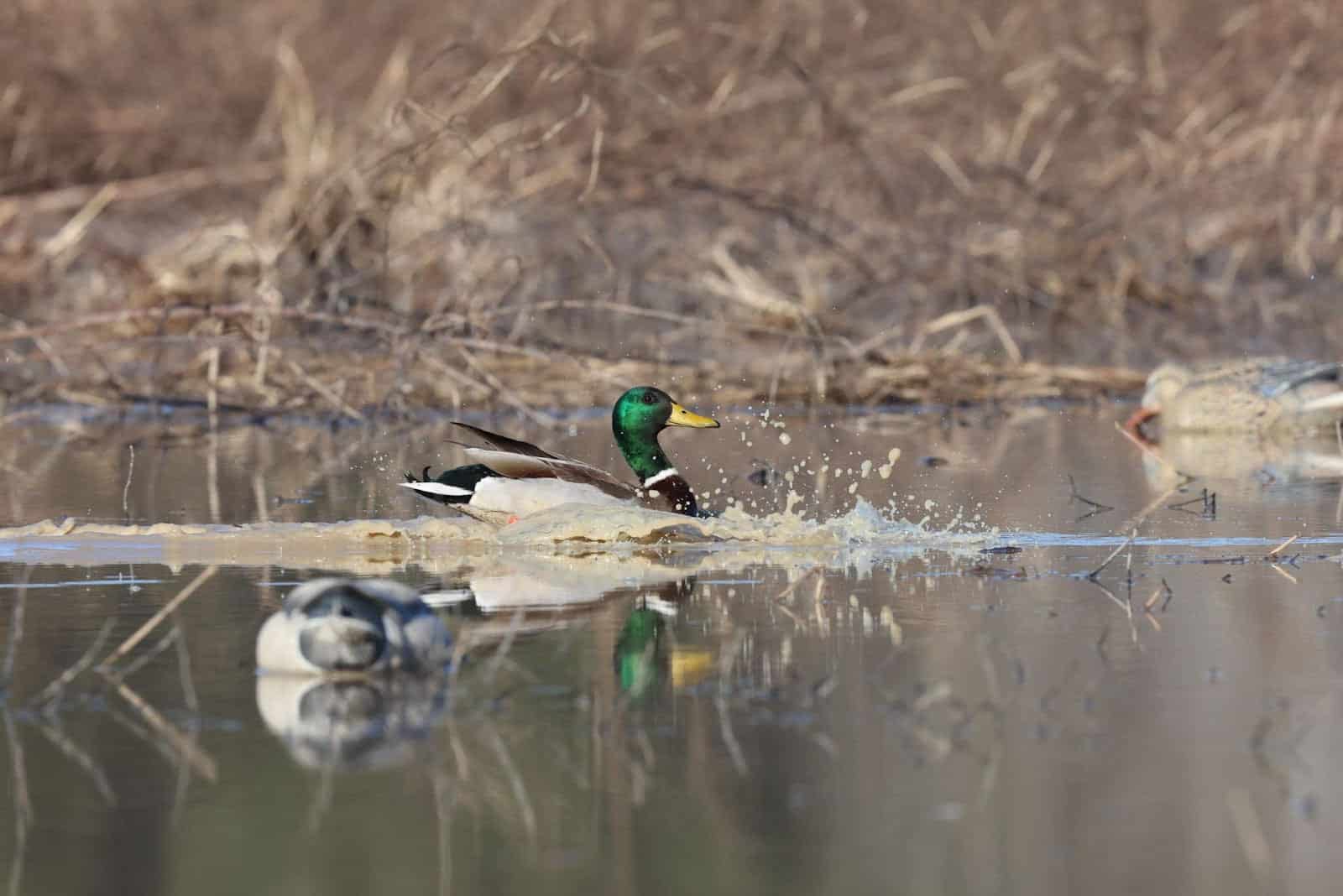
LITTLE ROCK — The U.S. Fish and Wildlife Service formally released its annual Waterfowl Population Status report for the 2025 survey year on Tuesday, and hunters may see a familiar tone to last year’s report. According to the report, an estimated 34 million ducks were present in the traditional survey area across Canada and the northern U.S. earlier this summer. This is virtually identical to population estimates from 2024 (4 percent below the long-term average), which dictated the 2025-26 waterfowl hunting season frameworks.
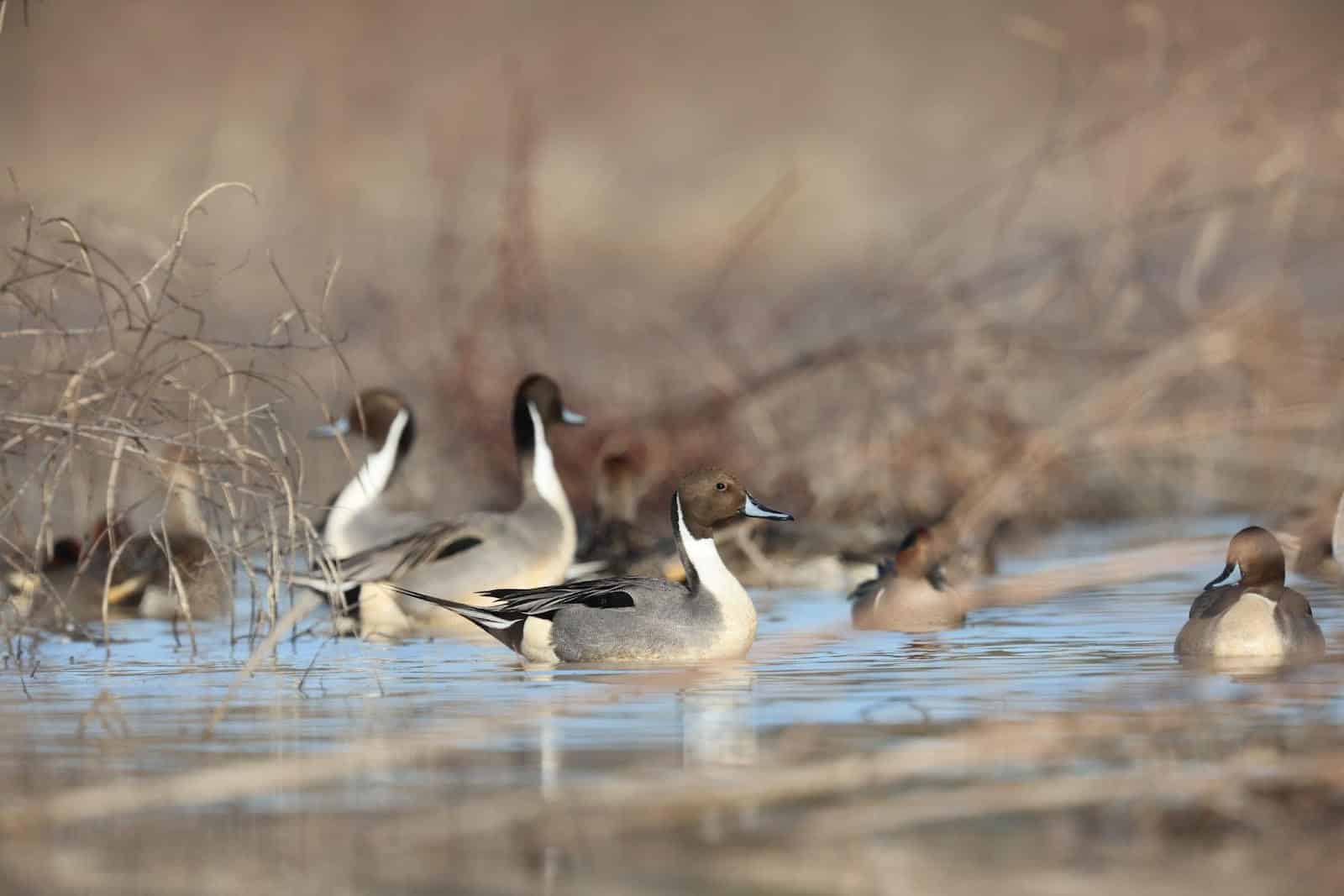
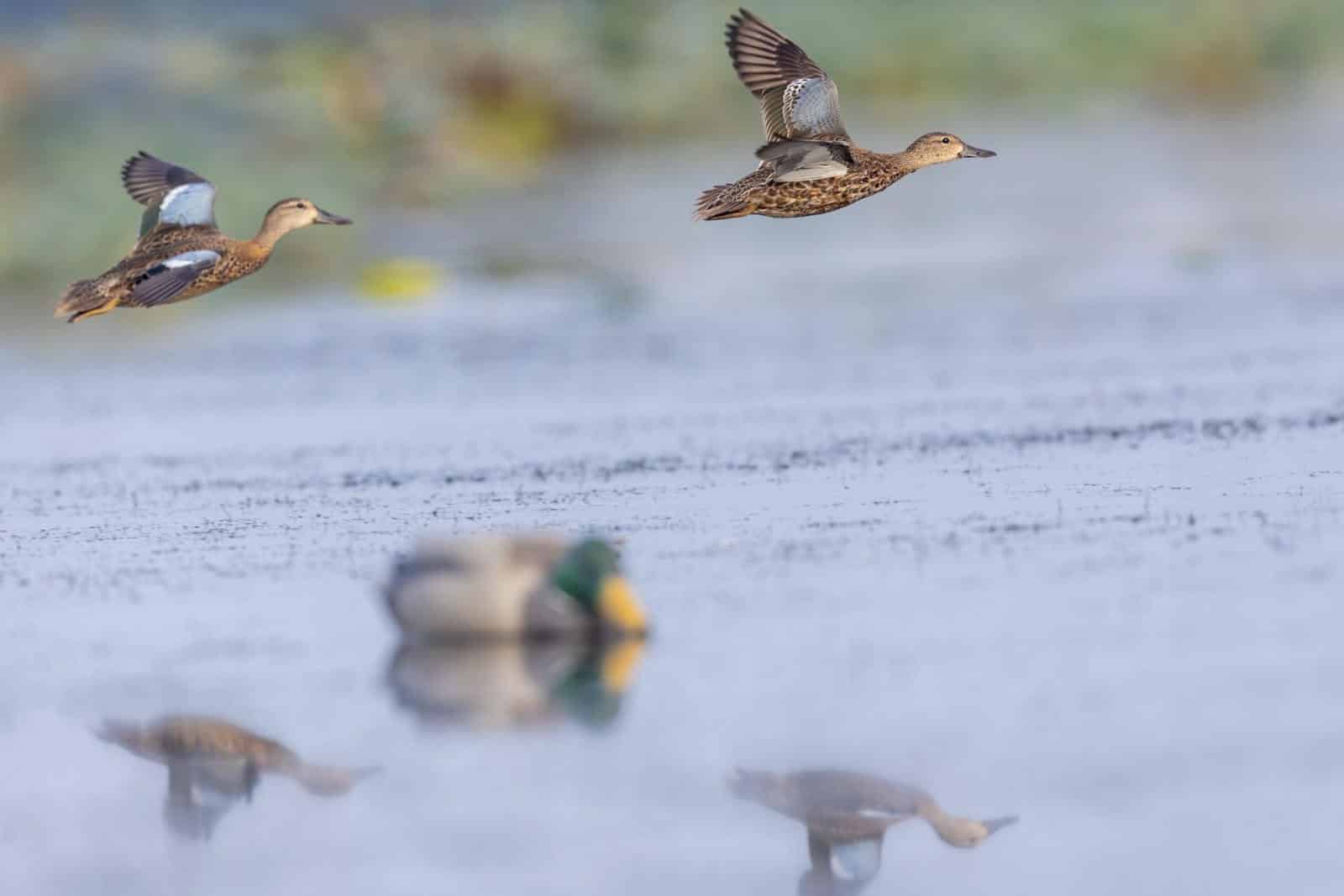
The mallard population, which is of particular interest to Arkansas duck hunters, followed the trend of total duck numbers, remaining unchanged from last year’s count of 6.6 million. Northern pintails saw a 13 percent increase from last year with 2.2 million birds estimated across the survey area. The blue-winged teal population also remained unchanged from last year, still below the threshold for a 16-day teal season, so hunters should expect another nine-day season in next year’s framework.
Early reports of extremely dry conditions throughout the breeding grounds were confirmed in the report, which indicated a 19 percent decrease of ponds throughout the survey area. The hardest hit area of the traditional survey area was in the north-central U.S., which saw ponds decrease by as much as 34 percent from last year’s survey. Estimates of ponds in prairie Canada remained similar to last year’s counts, which were 27 percent below the long-term average.
The numbers from this year’s surveys will be used to set the 2026-27 season frameworks, and the adaptive harvest matrix for next year offers a liberal hunting season framework at the federal level for the 2026-27 season.
“Long-term data collected since 1995 has shown both higher and lower pond counts and population estimates and the liberal framework of 60-day seasons have been in place throughout that time,” Arkansas Game and Fish Commission Waterfowl Program Coordinator Brett Leach said.
According to USFWS reports, this year’s mallard estimate is very similar to the 6.75 million-bird estimate in 2005. That year still saw liberal frameworks, and the population still increased dramatically in the next few years, following favorable conditions on the breeding grounds.
“Hunter harvest can play a role in overall populations, but it’s not as large of a factor as habitat on the breeding grounds during nesting season,” Leach said. “Shorter seasons and smaller bag limits in modern hunting frameworks can help when populations are at critical levels, but supporting wetland habitat where it counts far outweighs any small reductions in hunting mortality modified seasons may offer.”
“It’s also important to keep in mind that many other factors come into play throughout Arkansas’s duck season, and these numbers do not necessarily indicate a ‘good’ or ‘bad’ hunting season,” Luke Naylor, Arkansas Game and Fish Commission Chief of Wildlife Management, said. “The driving factors for duck abundance in Arkansas are the timing and amount of flooded habitat on the state’s landscape and the timing of freezing temperatures and weather events in states north of us in the Mississippi Flyway.”
Naylor also warns hunters to enter into the 2025-26 hunting seasons with a bit of perspective on the total population. Mallards are still 17 percent below their long-term average population, and nearly half of the population counted during 2015, when observers estimated a record 11.6 million mallards.
“This shouldn’t be taken as gloom and doom, but some hunters have memories of the early 2000s and again in the 2010s, when those record-high duck populations were nearly twice what they are today,” Naylor said. “We’ve seen higher duck population and pond counts than this year’s reports, but we’ve also seen worse, and the ducks rebounded when habitat conditions were favorable.
“Given the best science available, duck populations are still sufficient to support continued liberal seasons,” Naylor added. “But the fact remains that mallard population estimates are half what they were only a decade ago. No doubt hunters will feel those impacts and likely see fewer ducks.”
AGFC Director Doug Schoenrock doubled down on the importance of habitat, both in Arkansas and in the breeding grounds, to the state’s waterfowl-centered culture.
“We’re fortunate that the duck population is similar to last year, but wetland habitat remains a major concern, both in Arkansas and on the breeding grounds,” Schoenrock said. “We can’t control the weather, but we can control having the right habitat in place when conditions are favorable. There’s no magic bullet or easy fix; it takes dedication, hard work and many partnerships in both the private and public sector to keep habitat on the ground. We’re dedicated to continuing those partnerships and continuing Arkansas’s duck hunting heritage.”
Visit www.fws.gov/library/collections/waterfowl-population-status-reports for the complete report from the USFWS, as well as a collection of previous waterfowl population status reports.
Sep 04, 2025 | 9:31 pm ET
By Joshua HaiarShare https://www.newsfromthestates.com/article/commission-expands-black-hills-area-where-hunters-can-use-dogs-chase-mountain-lions
Description
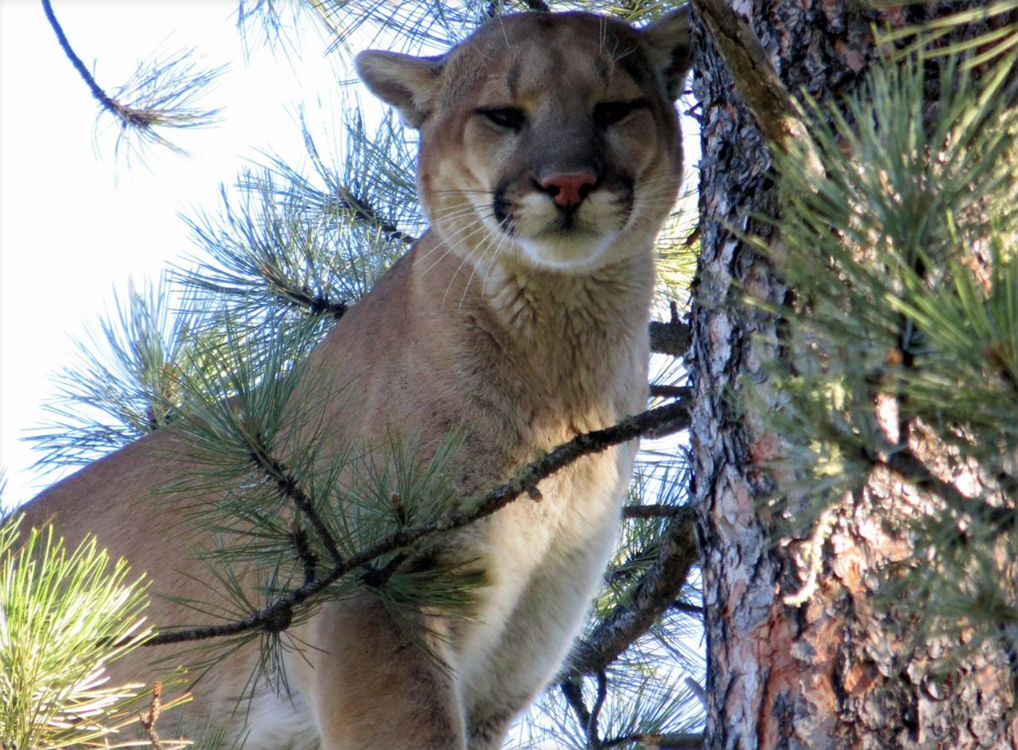
A mountain lion in South Dakota’s Black Hills. (Courtesy of SD Game, Fish and Parks)
The commission overseeing wildlife management in South Dakota approved a proposal Thursday in Rapid City to expand the area where dogs can be used for hunting mountain lions.
The decision by the Game, Fish and Parks Commission increases the area within the Black Hills where hunters can use scent-tracking hounds to chase mountain lions up trees. The expansion includes areas in the eastern and southern Hills.
The rule change also removes the requirement for hunters without dogs to obtain an access permit in addition to a hunter’s license to hunt mountain lions in Custer State Park.
The annual harvest limit remains capped at 60 mountain lions or 40 females, whichever is reached first.
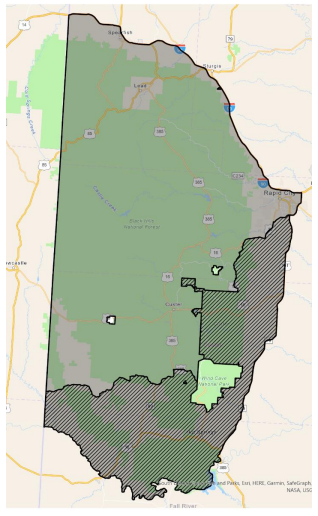
The decision to expand the area for dog-assisted hunting follows months of debate and hundreds of submitted comments over the role of dogs in lion management. Another roughly 30 people spoke during Thursday’s hearing.
Supporters of the new rule said that expanding dog hunting opportunities will improve mountain lion management. Hunters with dogs have an approximately 50% success rate, while hunters without dogs have less than 4%. They said the move will help the state meet its population objectives and ensure that problem lions attacking livestock are killed.
A report issued this year by the Department of Game, Fish and Parks says the latest mountain lion population estimate for the Black Hills is 393, but also says mountain lion population estimates “often have low precision.” Averaged over multiple years, the department said, the population generally stays within the management objective of 200 to 300.
Supporters also said hunting with dogs and chasing lions up trees allows hunters to get close and better identify the sex and age of lions before deciding to shoot them. They said fewer lions would also increase the mule deer population in the southern Hills, where hunters complain of low numbers.
“Mountain lion numbers are too high in the Black Hills. So are coyote numbers. The deer population is trending down,” wrote Jordan Schneider of Rapid City.
Opponents said hunting with dogs undermines the principle of fair chase — giving the animal an opportunity to escape — and reduces opportunities for hunters without dogs. Others called the practice inhumane and said the proposal was not based on science.
“This is not a real ‘hunting sport,’ but a cruel and unethical event,” wrote Leisa Bailey of Vermillion.
Commission Chair Stephanie Rissler, who spoke in favor of the proposal, said the move will help manage problem lions without increasing permit numbers or the harvest limit.
The final vote was 7-0, with one commissioner, Travis Theel, recusing himself. During the public comment period, state Rep. Tim Goodwin, R-Rapid City, alleged that Theel, who runs a guided hunting service in the Black Hills, and Commissioner Travis Bies, who owns land near the Black Hills, had conflicts of interest. Bies did not recuse himself, saying his land is not in the affected area.
Mountain lions were nearly eradicated from South Dakota by the early 20th century due to bounties and unregulated hunting. After lions recolonized the Black Hills in the 1980s, the state established a hunting season in 2005.
 Exposing the Big Game

