The International Union for Conservation of Nature has officially verified that the Chinese paddlefish and wild Yangtze sturgeon are extinct on their list of threatened species.
The Chinese paddlefish, or Psephurus gladius, was one of the largest freshwater fish in the world, weighing up to 660 pounds and measuring up to 10 feet in length. They were gray, had a white underbelly and small, round eyes. These fish were endemic to the freshwater wetlands in the Yangtze and Yellow River basins. They migrated upstream to their estuary in the East China Sea to spawn during mid-March to early April.
The Chinese paddlefish had been protected since 1989. Because the iconic fish species was economically valued for their rarity, they were fished for human consumption and often as bycatch.
In 1996, the International Union for Conservation of Nature declared…
It’s not too late to avert the climate crisis from becoming even more deadly – but the window is closing
‘High temperature records are being obliterated across western Europe. Raging wildfires are displacing thousands of people.’Photograph: Delcia Lopez/AP
High temperature records are being obliterated across western Europe, some of which had been previously set during the heatwave in 2003 that is estimated tohave left tens of thousands dead. Raging wildfires aredisplacing thousands of people, one of the many compounding impacts of the climate crisis. This heatwave is another reminder that we have already breached unsafe levels of global heating.
As our planet warms, these lethal heatwaves will becomemore frequent and more intense. In fact, we may look back on these years as some of the coolest, compared with what will come if we do not…
FILE – Cattle feed at a feed lot near Dodge City, Kan., March 9, 2007. Thousands of cattle in feedlots in southwestern Kansas have died of heat stress amid soaring temperatures coupled with high humidity and little wind in recent days, industry officials said Thursday, June, 16, 2022. (AP Photo/Orlin Wagner, File)
Dangerous heat and crushing drought conditions in southern U.S. states are unlikely to subside anytime soon, federal experts say, with many currently blighted regions expected to face a “whiplash” in extreme weather over the coming months.
That means period of rain may bring little relief, as summer heat squashes crop yields and forces farmers to sell off cattle, while also boosting wildfires and creating life-threatening conditions for outdoor work.
The heat wave across the middle of the country “will split next week and then gradually fade,” Greg Carbin, head of Forecast Operations at the National Weather Service told The Hill.
But don’t expect that to last. Within a couple of weeks, conditions will return to what they are now, “and you bring the heat back in with a vengeance to parts of the central U.S.,” Carbin said.
That tendency of summer heat waves and droughts to return — rather than breaking apart in a new wave of good weather — is “one of the big challenges facing all of us in the weather and climate community,” Victor Murphy, who runs the Climate Services program at the National Weather Service told reporters on Thursday.
“You can see an amazing amount of weather whiplash — from one extreme to the other, then right back to the first extreme again,” Murphy said.
He was pointing at a drought map of Oklahoma, where a nearly two-month spell of no rain had appeared to break in a rainy May and June.
The persistent high-summer heat waves is the result of the “layering” of unusual climate conditions atop normal summer heat waves, Carbin said.
Those abnormal conditions — which helped drive the unseasonable spring heat waves across the country — included the persistent drought, which cause land and air to heat up more quickly.
It also included the atmospheric phenomena known as heat domes, in which a dense mass of warm air becomes trapped over a broad area — creating in effect an enormous greenhouse.
Both of these phenomena create feedback loops that make heat waves and droughts more likely to return, as dry soil, warm air and summer temperatures bid each other up like contenders at an auction.
It is difficult to link any particular phenomenon to climate change. Summer heat waves are, in themselves, hardly unusual.
But fossil fuel emissions are helping “load the dice,” Carbin said.
Continuing combustion of coal, oil and gas is creating a world in which the current spate of anomalous, record-breaking temperatures are ever more likely, he said.
These conditions are already taking a toll across the Southern Plains.
In Texas, which is experiencing its hottest July on record, electricity demand has broken records 11 times since June as residents and businesses try to stay cool, Houston Public Media reported.
Ninety-four percent of the state is in drought, forcing some ranchers to rapidly sell off their herds. Cattle sales are at their highest level since the drought of 2008, agricultural economist Walter Kunisch of Hilltop Securities told The Hill.
In one troubling statistic, the number of breeding female cattle is at its lowest level since 2006 — a sign that operations across the South and West are “selling more animals than they’re breeding,” Kunsich added.
One slight regional bright spot is New Mexico, where the summer monsoon season “came not a day too soon,” Murphy said.
The summer rains offered some relief to the state, which stands at the extreme eastern edge of the Western zone gripped by a 20-year mega drought.
But the broader situation there remains grim. Destructive fires have already burned almost four times more land this year than the state average.
And the crucial Elephant Butte reservoir — a water supply it shares with Texas — was at just 5.2 percent capacity as of Thursday.
With heat and lack of water have come a heightened risk of fire, Nick Nosler of the Interagency Fire Center at the Department of Interior told reporters.
BEND, OR — Oregon’s ninth case of bird flu was found this week in Deschutes County. The flock of 40 ducks and chickens is north of the previous incidents, pushing the Dept. of Agriculture’s quarantine area to include southern Redmond and the fairgrounds. “The Deschutes County Fair will not have poultry at the fair this year,” State Veterinarian Dr. Ryan Scholz tells KBND News. The fair begins August third, which is within the two-week qurantine surveillance window.
He says the risk is not from the domestic birds, but from attendees who might expose prized poultry and then infect their entire flock, “The risk of a fair goer having just been out at the county park, wandering the pathway, walking through some goose poop that happens to be infected with influenza, not washing their hands or doing something like that, and coming to the fair and wandering down the chicken aisle and potentially exposing those birds to virus is going to be a risk.”
Deschutes County isn’t the only one dealing with Highly Pathogenic Avian Influenza (HPAI), “There are other fairs that are kind of modifying what they’re doing with poultry based on the risk. There’s still a risk of this disease anywhere,” says Dr. Scholz, “Lane County [fair], which is going on right now, they opted to do just a one-day come in, show the birds, go home. Rather than have the birds there for the whole fair.” He says ODA is working with Deschutes County’s 4-H to allow a similar market bird sale, “So, the birds that kids have been raising that were planned to be sold at the fair in the auction – so that those kids can still do that – Because those birds are processed immediately after sale. They’re going to do just a really short one-day, bring them in, show them, sell them and then process them right away. But otherwise, the rest of the birds will not be at fair this year.”
Central Oregon seems particularly susceptible to the spread of bird flu. Dr. Scholz believes it might be because of the number of private ponds, “It’s primarily people who have domestic waterfowl and other poultry species and have a pond where wild ducks and geese are coming to that pond, co-mingling with their domestic ducks and then, that’s how these infections are starting.” He says the virus will continue to spread as long as wild and domestic birds are allowed to co-mingle.
This latest case impacts the quarantine area because, like the other local cases, eggs from this flock were sold to the public. But, because the property is north of the previous locations, the quarantine radius expands north. In this latest case, all 40 chickens and ducks were euthanized.
ODA provides an online map of the quarantined sites in Oregon. People may also enter their address using the online tool to determine whether their property is included in the quarantine area. The purpose of the quarantine is to prevent the movement of poultry and poultry products from within the affected area giving state and federal officials time to conduct surveillance to ensure no additional cases of HPAI exist. The quarantine also applies to importing all birds from states where a state or federal quarantine is in place.
For more tips on protecting your backyard flock, please visit the ODA online at Avian Influenza.
This story was originally published by theGuardianandis reproduced here as part of theClimate Deskcollaboration.
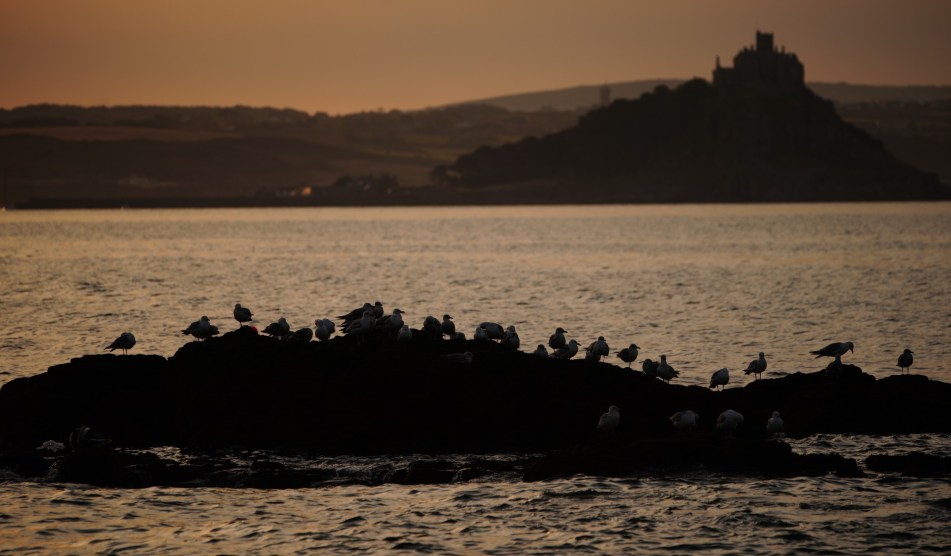
A quarter of Europe’sbreeding seabirds spend spring in the UK, turning our coastline into a giant maternity unit. These noisy outcrops usually stink of bird poo. However, this year has been different. “Instead of the smell of guano, it’s the smell of death,” says Gwen Potter, a National Trust countryside manager working on the Farne Islands, off the coast ofNorthumberland. “It’s completely horrendous.”
This annual congregation of life has turned into a super-spreader event, as a highly pathogenic avian influenza, H5N1—also known as bird flu—sweeps through populations of breeding birds, causing devastating…
‘Nature’s engineers’ who create wetlands with their dams are recognised as native wildlife
Legislation will make it an offence to capture, kill, disturb, or injure beavers, or damage their breeding sites or resting places. Photograph: Jeppe Gustafsson/REX/Shutterstock
Helena Horton Environment reporterThu 21 Jul 2022 09.03 EDT
Beavers are to be given legal protection in England, meaning it will be illegal to kill or harm them as they are formally recognised as native wildlife.
This is a step forward for the charismatic rodents, which were hunted to extinction in the country 400 years ago but have reappeared owing to illegal releases around the country.
The government has also been licensing beaver releases inside enclosures, and some environmentalists hope that later this year in the upcoming beaver strategy there will be permissions for the rodents to be released to roam wild.
It is thought there are hundreds of beavers already living wild along England’s waterways, with some experts believing there could be as many as 800.
New legislation, due to come into force on 1 October, will make it an offence to deliberately capture, kill, disturb, or injure beavers, or damage their breeding sites or resting places – without holding the appropriate licence.
The animals are known as “nature’s engineers” as they create wetlands – an important habitat for many plants and animals – when they build dams. In doing so, they also prevent flooding and drought-related problems such as wildfires by keeping water in the land.
Derek Gow, a farmer turned rewilder who is known as one of the country’s leading beaver experts, said: “The news today that beavers will be afforded legal protection in England is both appropriate and welcome.
“We have been very slow to recognise the critical role that this species delivers in the creation of complex wetland landscapes, which can afford resilience against the twin extremes of flood and drought. All they need from us to guarantee this goal is understanding, tolerance and space.”
There was confusion this week as the plans were due to be announced earlier, but appeared to have been pulled at the last minute.
Craig Bennett, chief executive of the Wildlife Trusts, said at the time: “Clarity around legal protections for beavers are crucial if populations are to recover and thrive long term – it is extremely disappointing that this legislation has been brought to a juddering halt, with no explanation why.
Sign up to First Edition, our free daily newsletter – every weekday morning at 7am BST
“We need to see the widespread return of wild beavers to create vital wetland habitats and restore rivers, many of which have been damaged by centuries of dredging and being cut off from floodplains. As England grapples with a nature and climate emergency, we need our beavers back.”
However, sources at Defra blamed the rush to get legislation out before recess for the hold-up, and said they always planned to enshrine these protections in law, as it is a legal requirement under the Berne convention.