Safety tips to keep in mind ahead of hunting season
Reply

Animal Protection Austria has generally welcomed the planned reform of gun laws, but has criticized exceptions for hobby hunters.
September 5, 2025, 4:34 p.m., Editorial staff of IG Wild at Wild

The association positively assesses the proposed stricter measures, such as higher age limits, mandatory psychological assessments, and longer waiting periods for firearm purchases, as an important step towards violence prevention.
However, President Madeleine Petrovic stated that it was incomprehensible that hobby hunters were exempt from regular psychological aptitude tests. Cases such as the triple murder in Annaberg in 2023 demonstrated that there is also a risk of gun violence in the hunting environment.
Tierschutz Austria also points to scientific studies that suggest a connection between animal cruelty and subsequent violence against humans. Criminological and psychological studies show that those who intentionally torture animals hunting , are significantly more likely to engage in violent behavior toward humans – particularly in the areas of domestic violence, child abuse, and grievous bodily harm. The organization therefore calls for convictions for animal cruelty to also result in preventive weapons bans. Furthermore, such offenses should be mandatorily reported to weapons authorities and recorded in a central risk database.
Anyone who mistreats animals poses a risk to society. The protection of humans and animals must be considered together – and consistently protected by law, says Petrovic.
- Are hobby hunters psychopaths?
- Hobby hunters on the psychological swing
- Aggression: Understanding hobby hunters better
- Killing Femininity: Understanding Hobby Hunters Better
- Pride: The mistake lies in the hobby hunter
- Hunting fever
- Sadism: Understanding hobby hunters better
- Trophies: The Pleasure Hunt
- Psychopathy: Better understanding hobby hunters
- Psychopaths, narcissists, sadists and hobby hunters share a “dark core”
- Hunting and Hunters: Psychoanalysis
- Alcohol: Hobby hunters and the drinking problem
- Hobby hunter, what is that?
- Defining hobby hunters
- Hobby hunters and violence in our society

Avian flu has recently been confirmed at commercial turkey farms in North Dakota and South Dakota. (Scott Bauer/Agriculture Research Service, USDA)
Avian flu has hit turkey farms in North Dakota and South Dakota, the first cases in commercial flocks in the United States since early July.
The U.S. Department of Agriculture’s Animal and Plant Health Inspection Service on Aug. 28 confirmed an outbreak of highly pathogenic avian influenza in Faulk County in northeast South Dakota. The outbreak meant 55,400 birds were killed to prevent the spread of the disease.
It is the first case in a U.S. commercial flock since July 2, when the avian flu was confirmed at a game bird facility in Lancaster County, Pennsylvania.
The North Dakota Department of Agriculture said Wednesday that bird flu had been confirmed Saturday at a turkey farm in Dickey County, near the South Dakota state line.
“After a quiet summer, it’s not unexpected that we have another case of HPAI as birds are gathering to begin the fall migration,” North Dakota Agriculture Commissioner Doug Goehring said in a news release.
Dr. Ethan Andress, state veterinarian in North Dakota, said 60,000 birds had to be destroyed in Dickey County.
Andress said that because large flocks of waterfowl, such as snow geese, are not yet migrating south over the Dakotas, it may be an indication that the virus was spread from local waterfowl.
Avian influenza exists in many wild birds and can be transmitted by contact with infected birds or through infected food and water.
The federal Centers for Disease Control and Prevention says the public health risk is low but notes that avian flu also has spread to dairy cattle and humans with one human death.
In August, the avian flu also was confirmed at a live-bird market in Los Angeles County, California, and in backyard birds in St. Lawrence County, New York, according to the USDA.
The poultry industry has been combating different strains of avian influenza since 2020, according to the CDC.

SHARE


Listen to this article
3 min
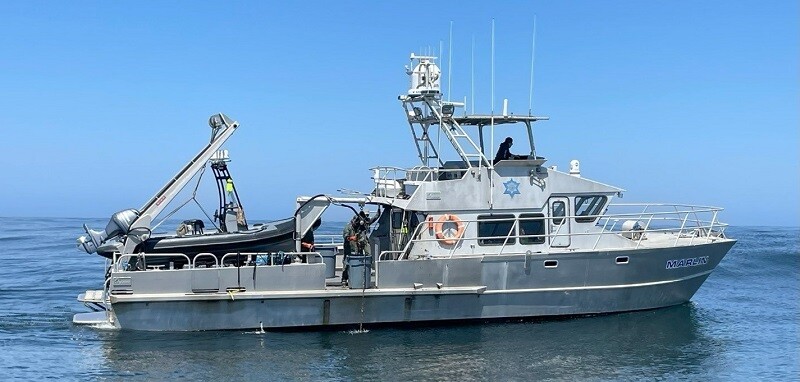
The California Fish and Game Commission has permanently revoked the commercial fishing licenses and permits of two fishermen following extensive and repeated violations in the state’s lobster and Dungeness crab fisheries.
At its meeting in June, the Commission acted on recommendations from the California Department of Fish and Wildlife (CDFW) to revoke the commercial fishing license and lobster operator permit of Christopher James Miller, 68, of Santa Barbara, and the commercial fishing license and Dungeness crab permit of Ronald Ghera, 45, of Fortuna.
According to CDFW, Miller’s violations spanned over a decade and included abandoning 156 lobster traps in waters off Santa Barbara and the Northern Channel Islands. Additional infractions included leaving traps in the water after the season had closed, failing to retrieve baited traps, and submitting inaccurate catch records.
Ghera was cited for abandoning 94 crab traps after the 2023 season and 74 after the 2024 season. He also failed to service traps within the required 96-hour window, did not submit mandatory reports, and used untagged traps and buoys that were improperly marked.
Abandoned traps can pose significant threats to marine mammals and other wildlife, and may also lead to shortened fishing seasons, impacting law-abiding fishers who rely on these fisheries for their livelihoods, CDFW said in press release.
“The majority of people who fish commercially are law-abiding and care about our fisheries,” Nathaniel Arnold, Chief of the CDFW Law Enforcement Division, said in a statement. “There are a few individuals, however, who choose to partake in commercial poaching. These individuals will eventually be caught and will likely lose the privilege to commercially fish in this state through either criminal or administrative actions.”
This isn’t an isolated case. In October 2023, the commission revoked the license of one fisherman and virtually suspended another for repeated violations such as trap abandonment and fishing in protected areas. One received a five-year permit suspension, and another had a lifetime revocation.
Miller has a long string of fishing violations. In 2024, he pled guilty to falsifying commercial fishing records, harvesting lobster out of season, and abandoning at least 156 commercial lobster traps around Santa Cruz Island and the Santa Barbara Harbor — his third commercial lobster poaching conviction since 2014.
 Exposing the Big Game