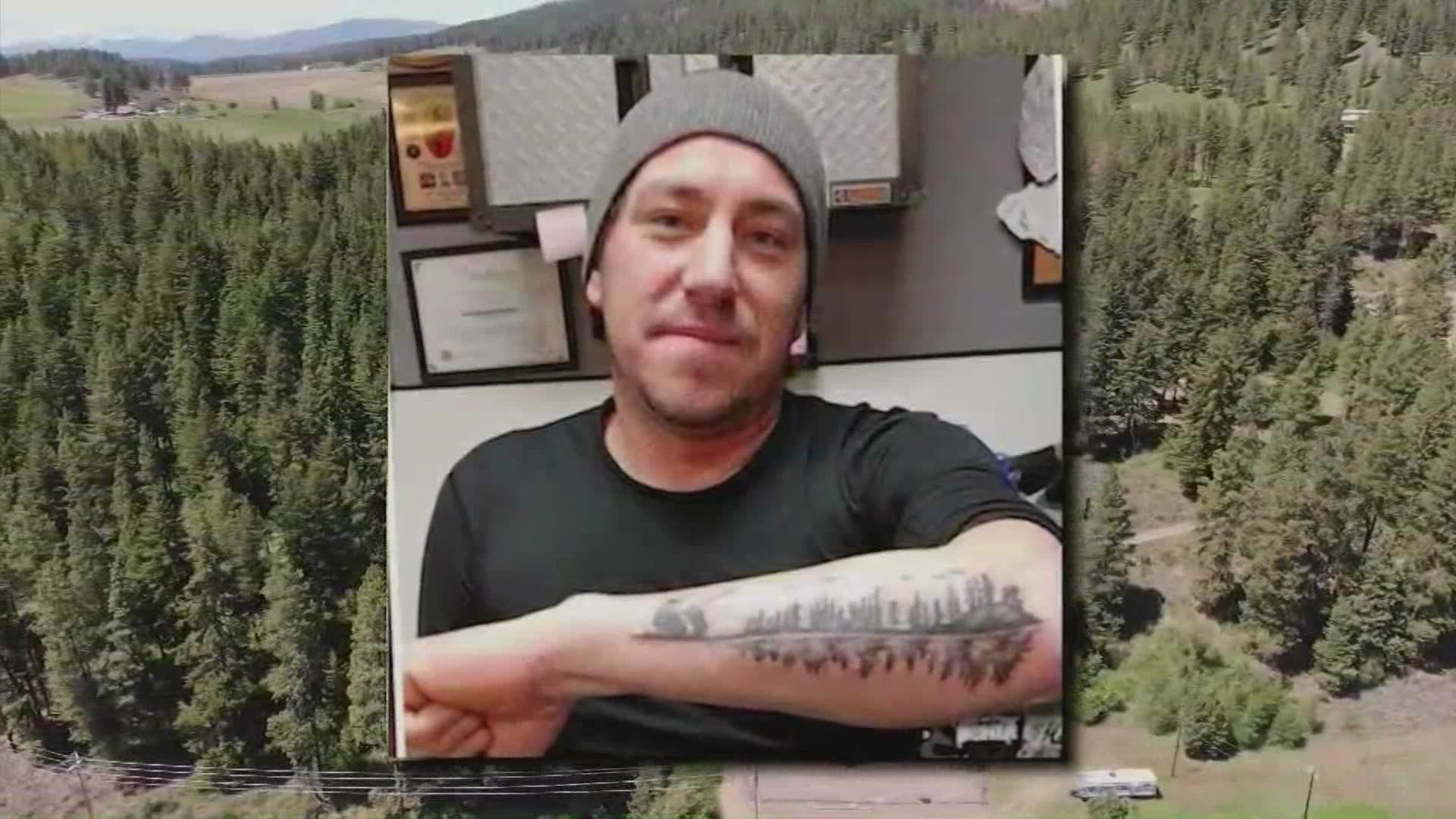
Investigators found evidence indicating Ian Eckles was killed but his body was never found. His family’s top priority is laying him to rest with respect.
SEATTLE — Two years after a Kent mandisappeared near Cle Elum, his family is still looking for answers and hoping for closure.
“Life goes by and you kind of feel stuck in the same moment,” said Nate Eckles, whose younger brother Ian Eckles was reported missing May 18, 2020. “Every day that passes, you just don’t know where he is or if we’ll ever be able to bring him home.”
Brad Moline, a fourth-generation Iowa turkey farmer, saw this happen before. In 2015, a virulent avian flu outbreak nearly wiped out his flock.
Barns once filled with chattering birds were suddenly silent. Employees were anguished by having to kill sickened animals. The family business, started in 1924, was at serious risk.
His business recovered, but now the virus is back, again imperiling the nation’s poultry farms. And this time, there’s another pernicious force at work: a potent wave of misinformation that claims the bird flu isn’t real.
“You just want to beat your head against the wall,” Moline said of the Facebook groups in which people insist the flu is fake or, maybe…
Throughout the COVID-19 pandemic, research has shown that more people sought out nature and animals as means to relieve stress and support mental health. Birdwatching in particular became a popular pastime during periods of pandemic lockdown. Today though, as many regions of the world cope with yet another viral pathogen, H5N1, a.k.a. the latest strain of avian flu, it’s the birds who now need us. As Jody Allair, director of community engagement for Birds Canada stated in a recent newsletter: “Birds and nature have been there for us through these challenging times. Now we need to be there for them.”
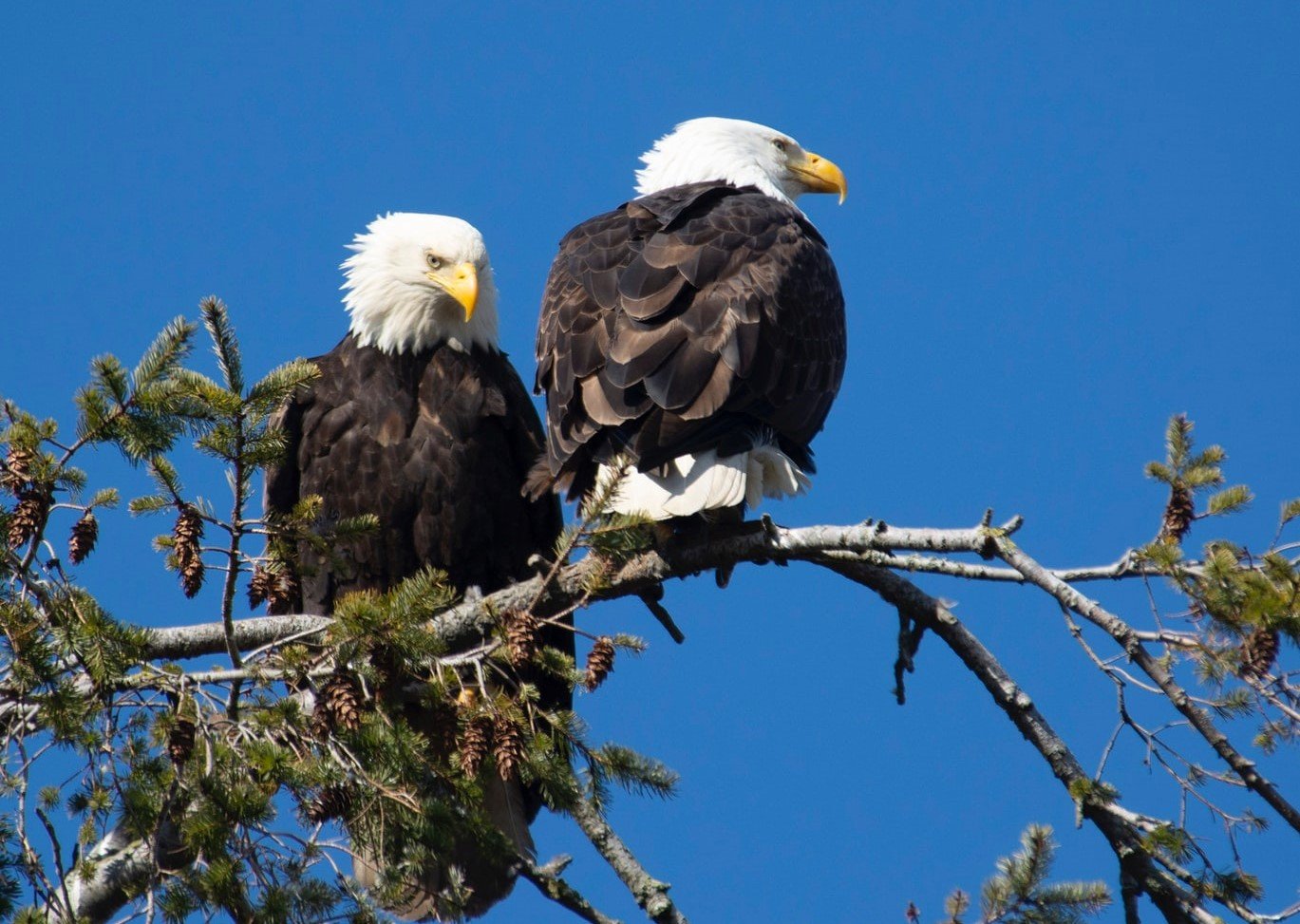
To date, over 1.7 million farmed birds in Canada, and 38 million in the US, have died or been killed due to avian flu and millions more have died in Europe, Asia and Africa. The number of wild birds impacted by the virus is unknown (the virus affects different wild birds in different ways), but at least 51 bird species are documented to have been infected in the US. Bald eagles in particular have reportedly been dying of the virus in both Canada and the US.
Bald Eagles. Photo: Mariko Margetson on Unsplash
So how can we help our feathered friends? According to Birds Canada, there are a few things the average bird lover can do, including not feeding birds by hand, not touching dead birds, and reporting sick or dead birds to local authorities. There has also been some debate over whether or not it is safe to put out birdfeeders, birdbaths and other places where birds could gather. While local authorities in some areas have been advising against it, Environment and Climate Change Canada states bird feeders remain safe to use on properties without domestic “poultry” birds.
“To help keep feeder birds healthy, clean feeders every two weeks,” suggests Birds Canada. “Scrub and soak feeders with 10% chlorine bleach solution (use one part bleach to nine parts water). Rinse feeders thoroughly and allow to completely dry before refilling.”
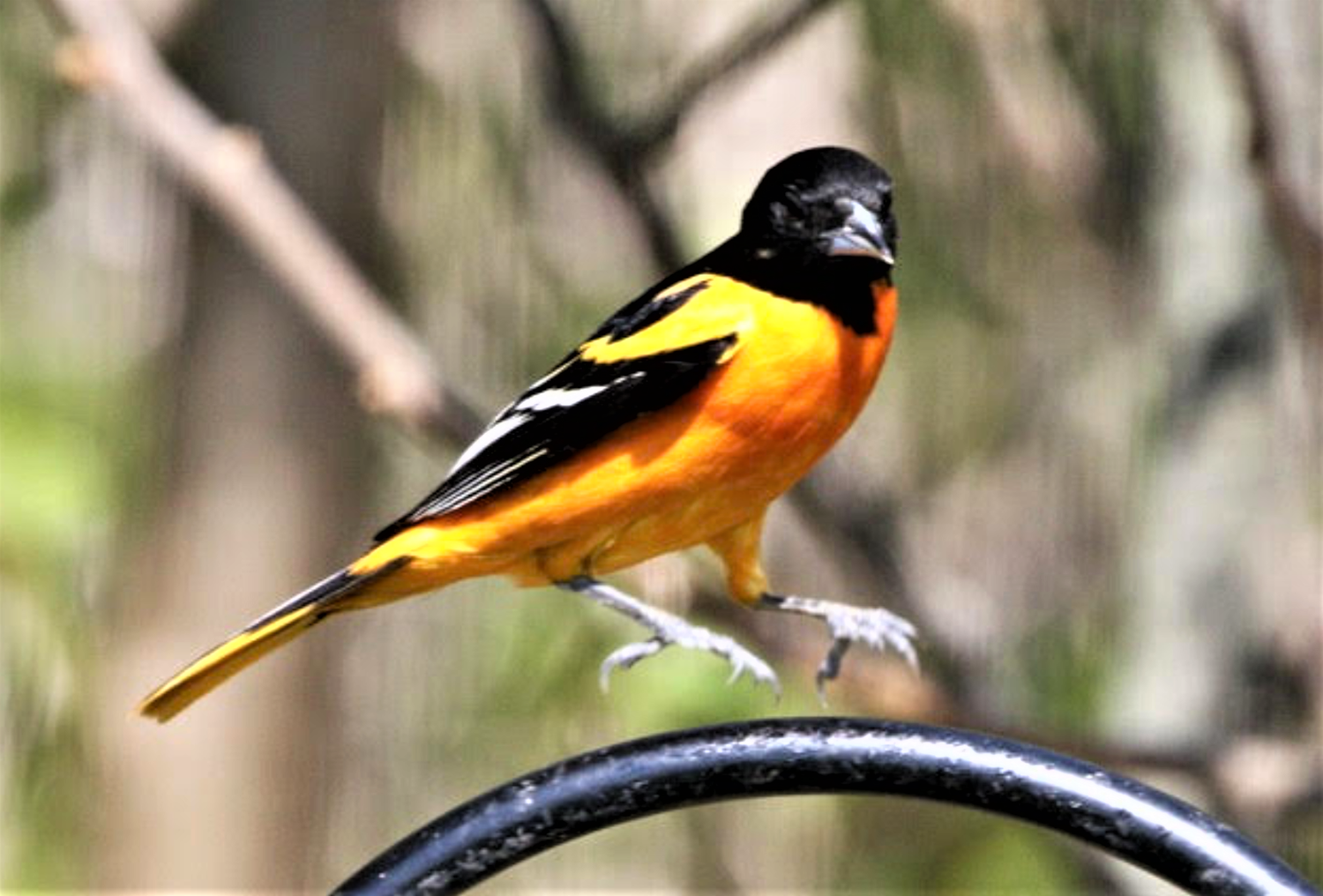
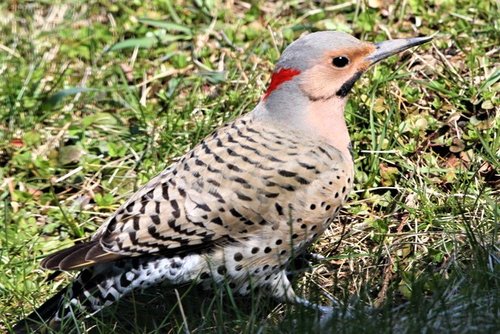
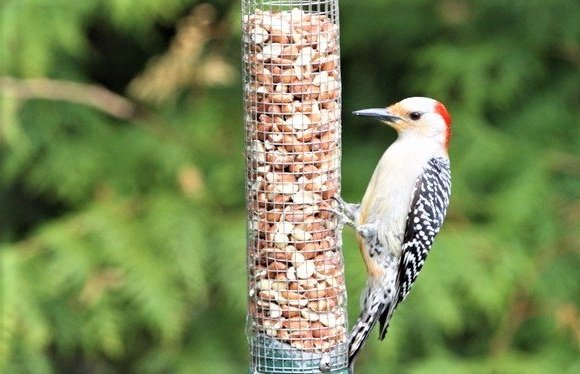
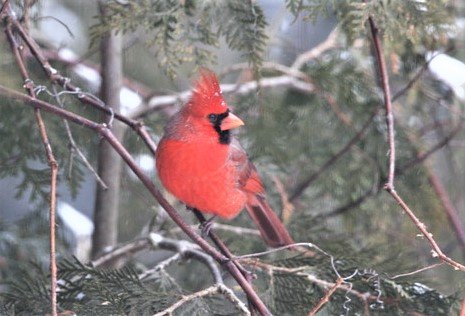
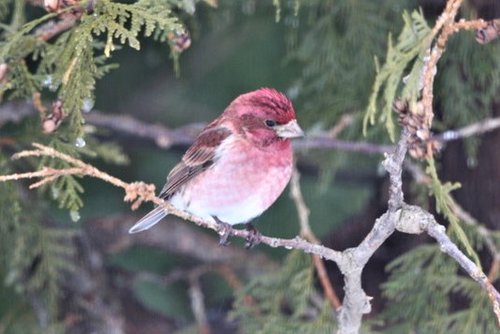
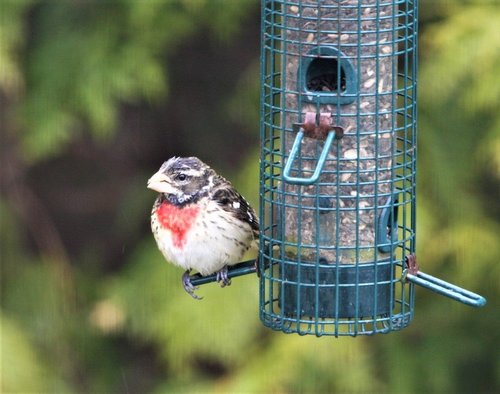
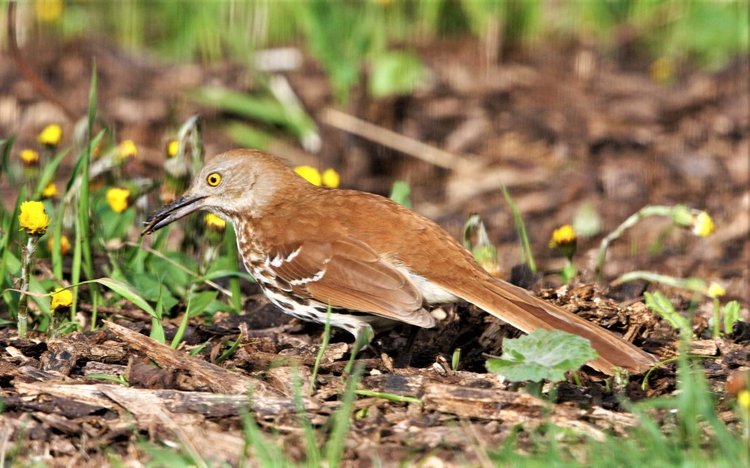
Clockwise from left: Male Northern Flicker, Female Red-Bellied Woodpecker, Male Northern Cardinal, Male Purple Finch, Male Rose-Breasted Grosbeak, Brown Thrasher. Photos: PFN
You can support Birds Canada in its efforts to protect wild bird habitats by becoming a regular donor.
Also being impacted by the current avian flu outbreak are farmed animal sanctuaries and wildlife rehabilitation centres. Many of these important organizations have had to stop allowing public on-site tours in efforts to keep the virus away from resident birds. Most sanctuaries and wildlife facilities have also had to put additional protocols in place for new avian arrivals, including strict or stricter quarantining, in some cases off-site, and costly additional veterinary checks. Some have paused new avian intakes altogether. For non-profits, these changes can add up to be financially challenging, even devastating. So to help those who are helping birds, consider supporting your local sanctuaries and rehabilitation centres with a donation.
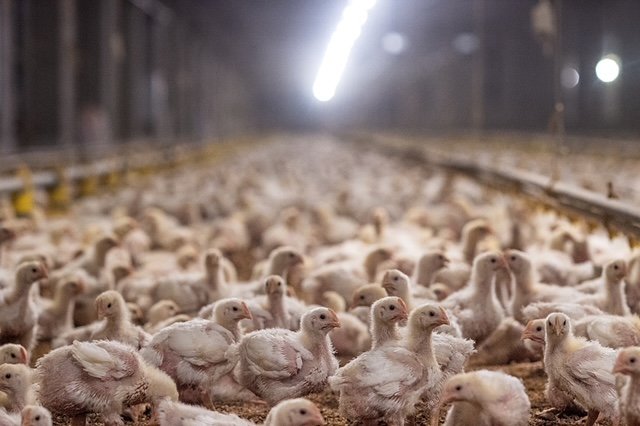
Finally, to support birds more broadly and into the future, consider limiting or ceasing support of factory farming. Avian flu may originate in wild birds, but it spreads rapidly among domesticated birds due to the conditions in which most are confined. Intensive farming of chickens, ducks, etc., for meat and eggs, involves packing large numbers of animals into very small, typically enclosed spaces, creating perfect reservoirs for disease (unfortunately, we’ve all learned about the importance of distance and air circulation in preventing disease spread). Once a case of avian flu is confirmed on a farm, entire flocks are destroyed, and methods of mass on-farm culling — such as suffocation — are far from humane. Thankfully, farming plant-based proteins used to produce meat and egg alternatives, come with little to no risk of avian flu spread.
Factory farmed chickens. Photo: Jo-Anne McArthur, We Animals Media
Birds hold a special place in many animal-lovers’ hearts, whether it be the song birds outside our windows, the rare owl spotted on a hike, or hens at the local sanctuary. But beyond the lovely sights and sounds, birds also provide us with crucial insights into the health of the world around us. As famous American naturalist and ornithologist Roger Tory Peterson once said: “Birds are an ‘ecological litmus paper.’ Because of their rapid metabolism and wide geographic range, they reflect changes in the environment quickly, they warn us of things out of balance, sending out signals whenever there is deterioration in the ecosystem.”
It’s time to stop and listen to the birds, perhaps more intently now than ever.
Recent preliminary research might offer some comfort to the many vaccinated Americans who came across Omicron this past winter. A pair of studies suggest that vaccinated people who caught the variant went on to develop a strong and diverse immune response to the SARS-CoV-2 coronavirus in general—more so than people who were vaccinated and boosted or people who were only infected with Omicron. The findings could also indicate that an updated booster, perhaps specific to Omicron, will be more effective at ensuring longer-term immunity moving forward.
The results come from two preprint papers released on the website bioRxiv in April and May:onefrom University of Washington researchers and theotherfrom researchers at BioNTech, the…
Congress may need to create incentives to get national security officials to talk.
A House Intelligence panel is set to hear Tuesday from officials including Ronald Moultrie, the Pentagon’s top intelligence official. | Jacquelyn Martin/AP Photo
As Congress prepares to hold the first public hearing on UFOs in half a century, the Pentagon and intelligence agencies are feuding internally over how much to cooperate with demands to investigate and share what they know, according to current and former national security officials.
The law also requires regular classified and public reports to oversight committees on new incidents involving “unidentified aerial phenomena,” including previous information or investigations that are uncovered in government…
Congress may need to create incentives to get national security officials to talk.
A House Intelligence panel is set to hear Tuesday from officials including Ronald Moultrie, the Pentagon’s top intelligence official. | Jacquelyn Martin/AP Photo
As Congress prepares to hold the first public hearing on UFOs in half a century, the Pentagon and intelligence agencies are feuding internally over how much to cooperate with demands to investigate and share what they know, according to current and former national security officials.
The law also requires regular classified and public reports to oversight committees on new incidents involving “unidentified aerial phenomena,” including previous information or investigations that are uncovered in government repositories or testimony.
But there is a tug of war among competing factions inside the national security bureaucracy that will make it difficult for Congress to compel military branches, spy agencies, national laboratories and other organizations to come clean given the longstanding secrecy and stigma surrounding the issue.
“Without forcing peoples’ hand, it is going to be very difficult to uncover legacy ventures and programs that we know about based on oral interviews we dug up,” said a Defense Department official who is involved in the new effort but was not authorized to speak publicly. “There has to be a forcing mechanism.”
“There has to be something to hold people accountable but also give them a chance to come out clean for a period of time,” the official added, noting that in his experience the Pentagon oversight group has been “stonewalled.”
The official said there are people with knowledge of the phenomena who have yet to contribute to the oversight effort.
“These people exist and they are protecting very interesting information,” the official said.
“It will give the American people an opportunity to learn what there is to know about these incidents,” the panel’s chair, Rep. André Carson (D-Ind.), said in announcing the hearing last week.
Set to testify are Ronald Moultrie, the Pentagon’s top intelligence official, and Scott Bray, the deputy director of naval intelligence — which has played a prominent role in investigating reports of “drone swarms” dogging Navy pilots flying from aircraft carriers.
It comes five months after the National Defense Authorization Act required the military to establish a permanent UFO research office and take a series of other steps to collect and investigate reports.
But dueling factions in the Pentagon and intelligence agencies are jockeying over how to carry out Congress’ direction and how much to reveal to oversight committees, according to fourcurrent and former officials.
Two current officials said they are concerned that the most unusual incidents now being reported are getting lumped in with drones, space debris and other more common occurrences and therefore aren’t being fully investigated.
“They’re like, you know, five things out of 5,000, we weren’t sure what they were,” said an intelligence official who was not authorized to discuss internal deliberations, adding that his superiors want to treat all UAPs as “all air trash.”
The official feels the department is not addressing “the whole tapestry of the multi-tech problem that we have.”
“They really dragged their feet on this,” said the DoD official. “I don’t think they have taken it very seriously.”
The insider’s guide to the Pentagon UFO reportShare
So far, the official said someone has been identified to lead the new Pentagon oversight group and has established two full-time positions for analysts.
“To meet the will of Congress you are going to need an analysis team,” the DoD official said. “It can’t just be a small operation with a lead and two officials. That is what they were trying to get away with.”
It is also unclear what the budget is for the new Pentagon effort. “How much funding was actually allocated to the 2022 UAP effort?” asked Colm Kelleher, a biochemist who previously worked as a Pentagon contractor on UAP research. “Has anyone ever confirmed that actual appropriation funding ever went along” with the recently passed law?
Christopher Mellon, a former top Pentagon intelligence official who has been pressing Congress to take more aggressive steps, said the Biden administration appears to be treating the new effort “as a small office that compiles reports, conducts briefings, and seemingly little else.”
“There remains a large gap between the intent of Congress and the actions of the Pentagon,” he wrote in a public appeal to the panel on Friday. “Who owns the urgent mission of getting to the bottom of these ‘drone’ swarms plaguing our ships and bases and what are they doing about it?”
The biggest question may be whether the Pentagon is being fully transparent with Congress.
The intelligence official described another faction inside military and intel agencies “that … takes this subject very seriously” and is protective of UAP-related data.
“They fetishize their secret society,” the official said. “It’s kind of a Skull and Bones-type vibe. They take it seriously but they have no accountability. Zero. There is a whole group of us that know in great detail this subject, a lot of which has not been reported to Congress because of security issues.”
The Pentagon, through spokesperson Susan Gough, declined multiple requests to discuss the progress of the new Pentagon-led effort, including how many personnel are assigned, from what agencies, and how it is carrying out the congressional mandate.
The upcoming House hearing, however, is seen as an opportunity to make historic headway.
A coalition of scientists appealed to the panel over the weekend to press Pentagon witnesses to publicly share as much as possible on what government agencies have learned about a number of widely reported cases.
The Scientific Coalition for UAP Studies, whose members work at private corporations, universities and government agencies, singled out reports of intrusions — and even interference — at nuclear weapons facilities.
They also urged more transparency on reported health hazards from encounters with the phenomena as well as whether military and intelligence agencies have tracked unknown craft maneuvering through multiple mediums — including the air, under the sea and in orbit.
“Will the Department of Defense release information on this transmedium behavior to the public?” they wrote in an open letter.
Mellon has also said that Pentagon officials need to be asked publicly if any of the reported aerial intrusions were also detected maneuvering through space.
“If members can confirm UAP in space, they’ll make history and help to eliminate an entire category of potential explanations having to do with atmospheric phenomenon, Chinese lanterns, civilian drones,” he said.
But what may be needed first is finding new ways to compel agencies and government personnel to be more forthcoming to Congress.
For instance, lawmakers and staff have been discussing the possibility of taking new steps to encourage individuals with pertinent information to come forward, according to four current and former officials and a pair of congressional staffers.
The UAP coalition raised the prospect that Congress may need to push legislation to allow personnel who signed nondisclosure agreements or were directed not to discuss their knowledge of incidents to share what they know, as long as they are not publicly revealing classified information.
Only with credible, verified data on UAP reports — then and now — can modern technology be used to fully analyze the phenomena, according to experts.
“Can we get the highest quality UAP data to scientists who will analyze it methodically and quantitatively?” said Avi Loeb, who heads the Galileo Project at Harvard University and has worked with NASA and the Space Force. “‘Future cooperation between government and science will help us understand the unknown.”
He said he is eager “to engage my research team at Harvard in a detailed analysis of such data, should the government be interested in sharing it.”
What’s becoming clear is that the hearing is likely to be a first step.
“I think there are going to be good questions,” said the DoD official, who said he has viewed some videos of UAPs that have not been made public. “But I think they are going to lead to more questions.”
But there are also concerns it will be more theater than anything else.
“Congressional inquiries on this subject have often turned out to have entertainment value and little substance,” said Jacques Vallée, a computer scientist and ufologist who advised the Air Force’s Project Blue Book UFO investigation in the 1960s and has consulted on more recent Pentagon research efforts. “But this case may be an exception. We may be touching a real issue with a serious purpose.”
The mortality rate in highly pathogenic avian influenza is nearly 100% for domestic poultry, but it’s killing wild birds now, too. Idaho recently identified its first such case in agreat-horned owl.
Colorado assistant state veterinarian Morgan McCarty said it’s mainly affecting waterfowl, like ducks and geese.
“But we’re also seeing it in owls and eagles and vultures and hawks and crows across the United States where we have never seen the levels of virus in the wild birds that we’re seeing this year.”
In Colorado alone, the state hasrecordedseveral infected wild birds, including a bald eagle, a few Canada geese, two snow geese, Ross’s geese, two turkey vultures, a few mallard ducks and a green-winged teal duck.
Editor’s Note:John D. Sutteris a CNN contributor, National Geographic Explorer and MIT science journalism fellow. He is director of the forthcomingBASELINEdocumentary series, which is visiting four locations on the front lines of the climate crisis every five years until 2050. Visit theproject’s website. The opinions expressed in this commentary are his own. View moreopinionat CNN.CNN—
The Calf Canyon/Hermits Peak wildfire is now the largest in New Mexico’s history.Sam Wasson/Sipa/APCNN—
The growingCalf Canyon/Hermits Peak Firehas become the largest fire in New Mexico history, burning 298,060 acres, officials said.
The blaze, burning east of Santa Fe, is 27% contained with 2,015 personnel working to contain the fire, officials said Monday on aFacebook pageproviding updates on the effort to quell it.
The Calf Canyon Fire started April 19 and later combined with the Hermits Peak Fire, which has been burning for more than a month, to become the nation’s largest wildfire this year. It has destroyed hundreds of homes.
The wildfire, which has threatened the city of Las Vegas, New Mexico, has prompted President Joe Biden to declare a major disaster. The cause of the fire remains under investigation.