TheNatural Resource Commission voted unanimously to expandbobcat hunting season in Michigan on Thursday, despite animal rights activists voicing strongopposition.
This means there will be a new season in nine counties, Kent, Ionia, Montcalm, Muskegon, Gratiot, Saginaw, Ottawa,Clinton, and Shiawassee.
The limit is one bobcat per person unless otherwise specified.
At the meeting,National Resources Commissioner David Nyberg said that conservation efforts have increased the bobcat population, which will in turn support an expanded hunting season,Bridge Michigan reported.
“We’re also going to be able to further support the actual act of conservation through the funding of licensed dollars that supports that work,” Nyberg said.
There will be an11-day hunting season in the southern counties, and the hunting and trapping season in the Lower Peninsula will now be 20 days with two weekends, Bridge reported.
For the first 2 billion years of Earth’s history, there was barely any oxygen in the air. While some microbes were photosynthesizing by the latter part of this period, oxygen had not yet accumulated at levels that would impact the global biosphere.
But somewhere around 2.3 billion years ago, this stable, low-oxygen equilibrium shifted, and oxygen began building up in the atmosphere, eventually reaching the life-sustaining levels we breathe today. This rapid infusion is known as the Great Oxygenation Event, or GOE. What triggered the event and pulled the planet out of its low-oxygen funk is one of the great mysteries of science.
A new hypothesis, proposed by MIT scientists, suggests that oxygen finally started accumulating in the atmosphere thanks to interactions between certainmarine microbesand minerals in ocean sediments. These interactions helped prevent oxygen from being consumed, setting…
José Escalante looks out over the mile of fine, white sand leading up to the Mayan ruins perched on a bluff over the turquoise Caribbean. A few fishing boats have been pulled up onTulum’s Playa Pescadores, one of the world’s most photogenic beaches. Tourists pose as the sun fades over the Yucatán peninsula behind them. All seems well in paradise.
But Escalante is weary. He is selling the six beachfront hotels he co-owns in this booming Mexican tourist destination and has a long list of reasons why: the increasingly unmanageable quantities of seaweed washing up on the beach, the large chains with few local connections opening restaurants and beach bars, and organised crime, which makes security a worry.
He also has a bigger, existential concern. “Climate change is definitely one of the reasons I am selling,” he says.
Almost all the infrastructure in Quintana Roo state is concentrated in a coastal ribbon of beach resorts and timeshare properties, especially from Tulum to Cancún, about 80 miles (130km) to the north. Air-conditioned white minivans filled with tourists buzz over hot asphalt as palms stand by on parade. But this land is in a perilous position.https://interactive.guim.co.uk/maps/embed/mar/2022-03-11T16:48:15.html
Rises in sea level driven by the climate crisis could reach 40cm (15in) by 2050, says Ruth Cerezo-Mota, an oceanographer at the National Autonomous University of Mexico (UNAM), with four to 20 metres of beach lost. This “would mean chaos”, says Christian Appendini, a coastal engineer at UNAM. “All the beaches in front of urban developments would probably disappear unless drastic nature-based beach restoration measures are taken.”
The 700-mile coast of Quintana Roo has been eroded at a rate of 1.2 metres a year, with some parts losing up to 4.9 metres a year, according to Mexico’s tourism ministry.
A new tourist development that is already under threat from coastal erosion in Cancún. Photograph: Feike de Jong
Beaches are disappearing, and some are only maintained artificially with sand dredged from the seabed. Often they are little more than strips of sand, no wider than a dirt road. Sometimes the strand has completely vanished, leaving waves breaking against the walls of swimming pools, restaurants and houses.
Hurricanes are expected to increase in intensity due to higher ocean temperatures, leading to storm surges and exacerbating beach erosion. In 2005, Cancún lost large swaths of an eight-mile beach after Hurricane Wilma, which were later artificially restored, and then hit again by Hurricane Dean two years later. In 2020, the Riviera Maya region experienced 17 tropical storms and 13 hurricanes in one of the most active hurricane seasons on record.
Algal blooms have also plagued the coast of the Riviera Maya, a phenomenon scientists have linked to warming sea temperatures. The beachfront along the coast is frequentlylined with mounds of rotting black seaweed. In Tulum, the seaweed is often stacked high in piles with workers shovelling it on to wheelbarrows on the shore and hotel owners despairing over where to put it all.
Yet as the region starts to rebound from the pandemic – about 12.5 million tourists visited Quintana Roo last year – experts say few are thinking about the climate crisis.
A worker empties another barrow-load of seaweed cleared from the beach at Tulum. Photograph: Feike de Jong
Last year, the Mexican president, Andrés Manuel López Obrador, announced the construction of a new international airport in Tulum and the huge Tren Maya rail project will further accelerate development. At least 91 big tourist projects are under construction in the state, according to the Mexican environmental watchdog Bios Política.
The way hotels are built probably contributed more to the loss of the beaches than sea level rise
José Escalante
Quintana Roo’s second largest city, Playa del Carmen, grew from a population of 63,000 in 2000 to 333,000 in 2020, the Mexican census found. It is the fastest growth rate of any municipality in Latin America, according to the city government.
The pace of tourism development around Cancún is exacerbating the erosion of beaches along the coast. Photograph: Feike de Jong
This development is worsening the region’s problems, Escalante says: “I think the way hotels are built has probably contributed more to the loss of the beaches than sea level rise.” Resorts have been built on the dunes, cutting the process of beach formation in a phenomenon known as coastal squeeze.
Gene Towle, of the Mexican property consultancy Softec, says: “The real-estate market in the Cancún-Riviera Maya region is not very sophisticated – nobody is thinking long term or about climate change.
Some of the beaches in the coastal resorts around Cancún are only maintained with sand dredged up from the seabed. Photograph: Feike de Jong
“I think there is a window of about three years before developers start feeling the economic effects of environmental degradation,” says Jennifer Ruiz-Ramírez, an oceanographer at the University of Quintana Roo. “That is how long it will take for tourists to figure out that the reality no longer corresponds to the image they are being sold.”
There are some signs that the reality of the climate crisis may be slowly dawning on parts of the Riviera Maya tourism industry. In 2019, the Quintana Roo government entered into the world’s first coral reef insurance policy with premiums paid by hotel owners as well as the local government. The first payout of $800,000 (£590,000) came in 2020 after Hurricane Delta damaged reefs and beaches.
International action could also affect the industry. In June 2021, the G7 group of rich democracies backed the mandatory reporting of climate-related financial risks by publicly traded companies. This would make beachfront investments a potential liability. In Cancún, 22 resorts are projected to experience partial flooding every year by 2050, says Daniel Scott, a geographer at Canada’s University of Waterloo.
“It could take about three years before the decision by the G7 is implemented,” says Scott. “But when that happens institutional investors will start selling high-risk properties on the coast.”
Escalante could be the first of many seeking to sell their investments while the market still has its dazzle. He does not expect to have much trouble selling his hotels during the present boom – he has never had less than full occupancy in Tulum’s tourist season.
“It was a truly great business,” says Escalante. But the writing is on the wall, he feels: “I was in Cancún recently and the beaches were just like they were after Hurricane Wilma 15 years ago.”
Michael Bigelow was arranged in Yellowstone County Friday morning and is pleading not guilty to all charges.
His bond has been set at $125,000 and will be required to be monitored via GPS.
Bigelow has been ordered to have no contact with his mother or any animals.
MONTANA – After more than a dozen dogs were found dead at one property in Yellowstone County, a man is facing four felonies and multiple misdemeanors related to animal cruelty.
Court documents say an Animal Control Officer responded to the 700 block of Bender road on Thursday, March 3rd, for a report of a loose dog in the area. When the officers arrived, the complainant told the officer that three large Great Pyrenees dogs were harassing her horses and it was not the first time this had happened. She told the officer she believed the dogs belonged to the property across the street.
Documents says the officer was familiar with the property after responding to an animal welfare call at the residence earlier this year.
The officer entered the property and looked for someone to talk to about the loose dogs. As she looked, documents say the officer saw a number of dead dogs, a dead horse, litters of puppies, and adult dogs chained up in poor condition.
The officer met the defendant, Michael Bigelow, on the property and said she was there to discuss the dogs. After observing the man’s condition, the ACO reported her observations to a detective who had her remove the suspect from the property while a search warrant was drafted.
Once the warrant was acquired, several members of the Yellowstone County Sheriff’s Office, along with a consulting veterinarian, entered the property and began to execute the search warrant.
At least 16 dogs were found dead, most by gunshot wounds. Several dogs were found to be in poor physical condition, with little to no access to food or fresh water. Yellowstone Valley Animal Shelter says they received 19 dogs from the one property.
The four felony charges Bigelow is facing are due to the location where the dogs were shot, which caused injury, suffering, and eventual death.
Charging documents say other animals were found on the property that were also in poor condition on the property, with one horse carcass on the property which the consulting vet said was likely a source of food for the loose dogs as it had been partially consumed.
Since his arrest, charging documents say the suspect has made several threats to law enforcement during calls to his mother, and has not expressed any concern for the animals.
When tapirs first came on the scene during the Paleocene epoch, 66 million years ago, the world looked very different than it does today—and not only because it had recently been hit by a 7-mile wide asteroid traveling at 27,000 miles per hour. After the impact, earth descended into a dark, smoldering mess of debris; within a short time, dinosaurs died out, along with all the large marine and flying reptiles. Birds, small mammals, and a few remaining flora and fauna were left to start life anew. The mega-beasts of yesteryear were gone and it was finally the mammals’ chance to thrive, especially the tapir.
A member of the Perissodactyl group that includes horses, zebras and rhinoceros, tapirs quickly diversified and spread across North America. Curious creatures that resemble an oversized hog with an anteater snout, they lived alongside miniature horses and phenacodontids, a now extinct herbivore about the size of a fox. But while horses evolved from forest dwellers to grazers as grasslands spread across the West, tapirs have changed little over tens of millions of years: Their teeth, jaw, and body structure remain largely unchanged. As a result, says Larisa DeSantis, an associate professor of biological sciences at Vanderbilt University, tapirs can provide a window into our prehistoric past. For example, their fossils tell us where ancient forests once stood. “Tapirs are living fossils that we know have never resided outside of forests,” says DeSantis.
Shy and unassuming, tapirs have an ability to disappear in plain sight. That’s part of the reason they have lived this long. Even those trained to track tapirs, says DeSantis, often have a hard time finding them. But in recent years, Brazilian highways surrounding their habitat make it difficult to safety navigate between forests. The heavy traffic on the highway that cuts between the northern and southern Atlantic Forest is a death trap for wildlife. “Tapirs often die when attempting to cross it,” according to Patrícia Medici, coordinator of the Lowland Tapir Conservation Initiative.
Monthly giving provides the resources to sustain long-term campaigns that permanently protect our most precious resources.DONATE
Ways to Give
Be a champion for the environment and fight for everything we hold dear. Join today.DONATE
As a result, says researcher Kevin Flesher, a scientist at the Michelin Ecological Reserve in Bahia, the tapir’s range is now less than 2 percent of what it once was in the Atlantic Forest, which covers Brazil, Argentina and Paraguay. Medici and Flesher’s research, detailed in a recent study in Neotropical and Biological Conservation, found that of the 48 populations of tapirs documented in the study, between 31 and 69 percent were “demographically unviable.” The tapir populations are becoming too isolated from one another to reach different groups.
Like many large mammals, tapirs only have one calf at a time and tend to wait a few years between births. With such low populations, says Flesher, every animal lost to a traffic accident or a hunter can have dire implications for the species. He says that now is the time to act as new highway construction already underway could further threaten tapir habitat.
“We need a combination of strategies including signs and speed traps to avoid speeders on the highways,” says Flesher. “On the larger super highways we need [wildlife] underpasses and overpasses especially as two-lane highways are being expanded.” Use of such tools in other parts of the world, Flesher says, has made a big difference in protecting these animals from becoming roadkill.
The picture isn’t all bleak, however. Hunting tapirs, which used to be a problem in the Atlantic Forest, is now illegal in Brazil’s reserves. The hunting ban has led to increased populations in some areas. “Today people are generally afraid to kill tapirs because they’re big enough to draw attention in these small villages and they don’t want the authorities finding out,” says Flesher. “These are resilient creatures and if humans get out of the way, they’ll be just fine. They can eat just about anything in the forest and have for millions of years.”
Even if humans seldom see them, tapirs are hard at work. They have a surprisingly critical role to the forest by virtue of being one of few remaining South American mammals large enough to ingest and expel large seeds and scatter them across the woods. “Tapirs are among the principal dispersers of large seeded fruits,” says Flesher. “These are some of the most endangered forests in the world and they depend on tapirs for their very survival.” When you go into forests where the tapirs and monkeys have been wiped out, he says, the forests can quickly die out. Research conducted in Brazil found that tapirs disperse three times more seeds in degraded forests than in primary forests, which means that when forests are destroyed by wildfire, for example, tapirs can help resuscitate them.
So while tapirs really don’t need us, we need them. Not only are these animals the key to unlocking the world’s ancient forests, they’re also important for preserving them in the future.
Penis bones are found in certain species of mammal, but not all.
Fiona Rogers/Stone/Getty Images
MATILDA BRINDLE
3.12.2022 6:00 PM
ONE OF THE WEIRDEST and most wonderful products of evolution is the penis bone or baculum. The baculum is an extra-skeletal bone, which means it is not attached to the rest of the skeleton but instead floats daintily at the end of the penis. Depending on the animal, bacula range in size from under a millimeter to nearly a meter long, and in shape, varying from needle-like spines to fork-like prongs.
The walrus baculum, which could easily be mistaken for a 2ft-long club, is around 1/6th of its body length, whereas the diminutive centimeter-long baculum of the ring-tailed lemur is only around 1/40th of its body length.
Bacula is found in certain species of mammal, but not all. Most primate males have a baculum, so humans are rather an oddity in that they don’t have one. In a handful of extraordinary circumstances human males have formed bones in the soft tissue at the end of their penises, but this is a rare abnormality, rather than a baculum.
In a study published in 2016 in Proceedings of the Royal Society B, my colleague Kit Opie and I examined how the baculum developed in mammals by studying how it is distributed across different species in light of their pattern of descent (known as phylogenetics).
We showed that the baculum first evolved after placental and non-placental mammals split, around 145 million years ago, but before the most recent common ancestor of primates and carnivores evolved, around 95 million years ago. Our research also shows that the common ancestor of primates and carnivores had a baculum. This means that any species in these groups without a baculum, such as humans, must have lost it over the course of evolution.
So, why on Earth would an animal need a bone in its penis in the first place? Scientists have come up with a few theories as to why a baculum might be handy. In certain species, such as cats, a female’s body doesn’t release its eggs until she mates, and some argue that the baculum may help to stimulate females and trigger ovulation. Another, somewhat colorfully named, theory is the vaginal friction hypothesis. This essentially argues that the baculum acts as a shoehorn, enabling a male to overcome any friction and squeeze himself into a female.
Is that it?Shutterstock
Finally, it has been proposed that the baculum helps prolong intromission, otherwise known as vaginal penetration. Far from simply being a nice way to spend an afternoon, prolonging intromission like this is a way for a male to prevent a female from sneaking off and mating with anyone else before his sperm have had a chance to work their magic. This theory brings a whole new meaning to the term “cock-blocking”.
We found that, over the entire course of primate evolution, having a baculum was linked to longer intromission durations (anything over three minutes). On top of this, males of primate species with longer intromission durations tend to have far longer bacula than males of species where intromission is short.
Another interesting discovery was that males of species facing high levels of sexual competition for females have longer bacula than those facing lower levels of sexual competition.
But what about humans? If the penis bone is so important in competing for a mate and prolonging copulation, then why don’t we have one? Well, the short answer to that is that humans don’t quite make it into the “prolonged intromission” category. The average duration from penetration to ejaculation for human males is less than two minutes.
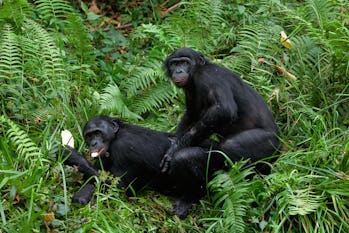
But bonobos only copulate for about 15 seconds at a time and they still have a baculum, even if it is very small (about 8mm). So what makes us different? It’s possible that this comes down to our mating strategies. Human males (generally) have minimal sexual competition as females typically only mate with one male at a time. Perhaps the adoption of this mating pattern, in addition to our short intromission duration, was the last straw for the baculum.
Scientists are only just beginning to piece together the function of this most unusual bone. What seems to be clear is that changes in the primate baculum are driven, at least partly, by a species’ mating strategy.
In this photo taken Wednesday, Oct. 14, 2015, an inspector reaches for a packaged animal part during an inspection of the shipment of hunting trophies from South Africa, in SeaTac, Wash.(Associated Press photo/Elaine Thompson)
Story at a glance
The Center for Biological Diversity obtained data from the U.S. Fish and Wildlife Service on trophy hunting imports from 2016 through 2020.
U.S. hunters imported more than 700,000 hunting trophies — including skulls, mounts and teeth, among others — during this timeframe.
According to the Humane Society International, the U.S. is the largest importer of hunting trophies.
U.S. hunters imported more than 700,000 hunting trophies — including skulls, mounts, and teeth, among others — over the course of 5 years.
The meat industry largely defines what’s animal cruelty and what isn’t; a recent court ruling in Pennsylvania could offer a new legal route for activists.
In 2018, Erin Wing worked for two months at a 1,000-cow dairy farm in Chambersburg, a small Pennsylvania town about three hours west of Philadelphia, where she was one of 10 employees who milked and fed the cows. But something set her apart from the other workers: Wing wore a hidden camera, living a double life as an undercover investigator for Animal Outlook, an animal advocacy nonprofit.
During her stint, Wing captured a variety of horrors on film. Some were inhumane but legal and not uncommon in the dairy industry, like removing calves’ horns —which is done to prevent the horns from injuring workers — without pain mitigation like anesthesia or anti-inflammatory drugs.
But she also documented acts of cruelty that seemed wholly gratuitous, like employees beating, stomping on, and kicking cows, and many others I’ll omit for the sake of readers’ peace of mind.
Want to eat less meat but don’t know where to start? Sign up for Vox’s five-day newsletter full of practical tips — and food for thought — to incorporate more plant-based food into your diet.
“All told, we documented over 300 incidents that we believed violated Pennsylvania’s laws,” Will Lowrey, an attorney with Animal Outlook, told me.
The Pennsylvania State Police opened an investigation, and over a year later it announced that the district attorney of Franklin County in Pennsylvania, where Chambersburg is located, would not press charges against the farm as a corporation, the owner, and 14 current and former employees. The police also assured the public that the farm had taken steps to improve training and animal handling procedures. (The Pennsylvania State Police declined an interview, Martin Farms could not be reached for comment, and the Franklin County district attorney did not respond to requests for comment.)Top ArticlesREAD MOREIs booking Airbnbs really the best way tohelp Ukrainians?
The DA’s decision wasn’t surprising. Many undercover investigations that document cruelty to farmed animals don’t result in prosecution, and when they do, it’s usually over the more egregious, often one-off acts of cruelty conducted by stressed-out, low-paid workers. The routine yet inhumane practices instituted by the owner — and often pervasive throughout the industry — go unexamined, even though they account for much more animal suffering.
And with 9 billion animals churning through the meat, dairy, and egg industries each year and just a handful of undercover investigators documenting how they’re treated, consumers and policymakers are left in the dark. This system persists because farmed animals are largely invisible in the law.
But due to a quirk in Pennsylvania’s legal code — the ability of private citizens to challenge government officials’ decision not to prosecute — Animal Outlook was able to circumvent that invisibility and set a new precedent for animal law. But before I get to that, it helps to understand the legal system under which animals are farmed.
How the animal agriculture lobby erased farmed animals from the law
At the federal level, there are no laws that protect animals while they’re on the farm.
The Animal Welfare Act, which sets minimum standards for animals used in zoos or research or sold as pets, specifically exempts animals raised for food. The Humane Methods of Slaughter Act and the 28-Hour Law (the latter which covers farmed animals in transport) are weakly enforced, and both exempt poultry, which make up 98 percent of US land animals raised for food.
Every state has an anti-cruelty statute on the books, and a few exempt farmed animals altogether, while most exempt what are considered “customary farming practices” — or as Pennsylvania law puts it, “normal farming operations.” It doesn’t matter how inhumane those practices may appear as long as they are commonly used, year after year.
“In most of the United States, prosecutors, judges, and juries no longer have the power to determine whether or not farmed animals are treated in an acceptable manner,” wrote animal law professors Mariann Sullivan and David Wolfson in their seminal text on state and federal anti-cruelty exemptions. “The industry alone defines the criminality of its own conduct.”
As a result, only more extreme acts of cruelty — like some of the acts documented at Martin Farms — are potentially prosecutable under the law. But they’re typically only uncovered if a group like Animal Outlook sends an investigator onto one of America’s tens of thousands of factory farms, which leaves most abuse undocumented and unaddressed.
And even if an investigator can gain employment on a farm, political and cultural factors pose major barriers to seeking justice for the abuse they document. Factory farms tend to be located in rural areas, where they are woven deeply into the fabric of the region’s politics, economy, and culture, so sheriffs and district attorneys are often reluctant to take action. When they do, it’s usually against low-level employees who are disproportionately immigrants and are labeled as “bad apple” workers while (typically white) owners and management often get off scot-free.
“You see this syndrome where the owner says, ‘Oh, my god, I’m so shocked — this is terrible. We’re firing them right away and they should be prosecuted’,” Sullivan, who teaches animal law at Cornell Law School and hosts the Animal Law podcast, told me. “So the very low-level people get prosecuted for this gratuitous cruelty. … And they’re eligible for being thrown under the bus by the owners.”
This kind of outcome for undercover investigations happens frequently enough that it’s causing some in the animal protection movement to critically examine the carceral approach to investigative work.
By getting laws passed, animal advocates have been able to ban or restrict the use of some customary farming practices, mostly cages and crates for hens and pigs, in 14 states. But the legislative route is slow and difficult; to even get to a full vote, farmed animal welfare bills first have to make it through the statehouse’s agriculture committee, where they usually go to die, as they’re often chaired by industry-friendly lawmakers.
Advocates have found some success through putting the vote directly to the people via ballot measures, but those are costly, and fewer than half of US states allow such direct measures.
This challenging legal landscape, and the political and cultural factors that block the gaps that could overcome it, have long stymied animal lawyers and advocates who’ve amassed thousands of hours of footage of animal abuse through their undercover investigations. But due to the above-mentioned quirk in Pennsylvania law — the ability to petition a court to overturn the district attorney’s denial of prosecution — Animal Outlook shifted what practices can be deemed “normal” in the first place.
The organization’s initial petition was denied, so it appealed to Pennsylvania’s Superior Court. Last month, in a precedent-setting decision, the court’s three-judge panel ruled that the lower court was required to order the Franklin County district attorney to prosecute Martin Farms for animal cruelty, including over common practices like dehorning without pain mitigation.
“The most obvious evidence overlooked by the trial court was that concerning the dehorning of calves…” the decision reads. Citing Dr. Holly Cheever, a veterinarian who reviewed the investigative footage, the decision went on to state that “the technique used by Martin Farms as shown in the video caused the calves to be ‘in agonizing pain, shown by their violent thrashing and bellowing.’”
The judge characterized the district attorney’s position on exempting dehorning without pain mitigation as “absurd,” creating a crack in the meat industry’s ironclad legal armor.
Animal Outlook’s investigation could influence the future of animal law
“I can’t even describe the feeling I had,” Wing, the investigator, said about hearing of the ruling for the first time. “I have thought of Martin Farms and that investigation for years. … I definitely have had nightmares about what I witnessed there.”
Erin Wing, an investigator with the animal advocacy group Animal Outlook, shares fruit with a cow at Wildwood Farm Sanctuary & Preserve in Newberg, Oregon. In 2018, Wing spent two months undercover at a dairy farm in Pennsylvania.
“I do think it’s an amazing and important case,” Sullivan told me. “Obviously it’s limited to Pennsylvania, but the fact that an appellate court looked at this situation and was clearly horrified … feels like a very big deal.”
The case would still be influential if it had merely centered on the more malicious acts of animal cruelty, but what makes it more important is that the court also questioned whether dehorning calves without pain mitigation should be considered “normal” in the first place (and if not, it could then be prosecutable). The court also deemed Martin Farms’ dehorning not normal because employees roughly handled the calves and performed dehorning at an age when the practice is more painful.
Since Pennsylvania’s anti-cruelty statute exempts “normal agricultural operations,” this decision could lead to advocates challenging other common farming practices in the courts.
Dehorning without pain mitigation exists in a “normality gray zone” because while some dairy industry organizations don’t like it, a lot of farmers still do it because they don’t think pain mitigation is necessary, they’re unfamiliar with the available drugs, or the drugs take too much time to administer. A 2021 survey of 217 dairy farmers in Wisconsin, which ranks second in dairy production, found that only half used pain relief for the procedure.
Does that make it a normal agricultural practice? When does a practice go from normal to abnormal, from legal to illegal? As battery cages for egg-laying hens get replaced by cage-free systems, what will the threshold be that tilts cages from normality to cruelty in the eyes of the law? Someday, a Pennsylvania judge may decide.
“How could this be a standard practice — to take a hot iron and press it into the skull of a young calf and burn their skin away, burn their horn tissue away, and especially to do that without some form of anesthetic?” Wing says. “To have that be recognized [by the court] is really incredible.”
The decision “sends a clear message that animals used in agriculture are protected by the law,” Lowrey said.
And even though the precedent is limited to Pennsylvania, it’s important in two other ways. First, Pennsylvania is a major agricultural state, ranking fourth in egg production, seventh in dairy, 10th in turkey, and 14th in chicken. All told, over 235 million animals are raised for food in the state each year. Those who advocate for them now have another tool in their legal toolbox.
Sullivan says it also sets a cultural precedent, which can’t be discounted — and it gives animal lawyers across the country a decision to reference when challenging other states’ exemptions.
It could be months or even years until the case is resolved, and anything could happen. The Franklin County district attorney could appeal and the case could be dismissed, washing away this new precedent in animal law. The case could move forward and the district attorney could fail in their case, or it could successfully prosecute Martin Farms, emphasizing that the practice of dehorning without pain mitigation was no longer “normal” in Pennsylvania farming, setting a cultural precedent in a major agricultural state.
But whatever the outcome, the Pennsylvania Superior Court decision illustrates what can happen when standard yet horrific farming practices are put under a microscope: The institutions that govern how America farms and eats might be forced to evolve.
An octopus sheltering in a broken glass bottle. John Paul Meillon
Whether it’s mimicking venomous creatures, or shooting jets of water at aquarium light switches to turn them off, octopuses are nothing if not resourceful. Now, an analysis of underwater images suggests octopuses are increasingly using discarded bottles, cans, and other human rubbish as shelter or as a sanctuary for their eggs.
The study — the first to systematically evaluate and characterize litter use by octopuses using crowdsourced images — analyzed hundreds of underwater photos posted on social media platforms and image databases or collected by marine biologists and diving interest groups.
The research, published in Marine Pollution Bulletin, documented 24 species of octopus sheltering inside glass bottles, cans, and even an old battery; burying themselves under a mixture of bottle tops and seashells; even carrying plastic items around while “stilt-walking” on two tentacles to conceal themselves from predators.
“The deep-sea records were extremely interesting, because even at great depths these animals are interacting with the litter,” said Maira Proietti of the Federal University of Rio Grande in Brazil, who supervised the research. “They clearly see that there’s a lot of litter around, and it can therefore act as a kind of artificial camouflage.
“It shows their extreme ability to adapt. They are very intelligent animals, and they will use what they have at their disposal to continue sheltering or walking around with protection.”
The octopuses seemed to show a preference for unbroken items, as well as darker or opaque containers, and the most common interaction recorded was using rubbish as shelter.
Proietti said, “While these interactions could seem positive for the animals because they are lacking natural shelters such as seashells, it is not a good thing to think that the animals may be using litter as shelter because the seashells are gone.”
Sheltering or laying eggs inside discarded tires, batteries, or plastic objects could also expose octopuses to heavy metals and other harmful chemicals, she said.





 Support the Sierra Club
 Become a Wilderness Guardian
 Ways to Give




 Top Articles


