


Russian armored vehicles on the move not far from the border with Ukraine on Tuesday.YURI KOCHETKOV/SHUTTERSTOCK
Updated Feb. 23, 2022 11:19 pm ET
SHARE
TEXT
Listen to article
Length11 minutes
Russia’s audaciousmilitary assault on Ukraineis the first major clash marking a new order in international politics, with three major powers jostling for position in ways that threaten America’s primacy.
The challenges are different than those the U.S. and its network of alliances faced in the Cold War. Russia and China have built a thriving partnership based in part on a shared interest in diminishing U.S. power. Unlike the Sino-Soviet bloc of the 1950s, Russia is a critical gas supplier to Europe, while China isn’t an impoverished, war-ravaged partner but the world’s manufacturing powerhouse with an expanding…
View original post 1,886 more words
Erin B. Logan
Sat, February 26, 2022, 12:23 PM·5 min read
In this article:

Former President Trump bashed President Biden for the nation’s high inflation rates and gas prices and blamed him for Russia’s unprovoked invasion of Ukraine, which he called “an outrage and an atrocity.”
Echoing much-criticized comments from earlier in the week when he praised Russian President Vladimir Putin’s intelligence, Trump reiterated that he thought the autocrat “smart.”
“The real problem is that our leaders are dumb,” Trump said, adding that the Russian leader “is playing Biden like a drum, and it’s…
View original post 912 more words
By YURAS KARMANAU, JIM HEINTZ, VLADIMIR ISACHENKOV and DASHA LITVINOVA15 minutes ago

1 of 21
A woman reacts as paramedics perform CPR on a girl who was injured during shelling, at city hospital of Mariupol, eastern Ukraine, Sunday, Feb. 27, 2022. The girl did not survive. (AP Photo/Evgeniy Maloletka)
KYIV, Ukraine (AP) — President Vladimir Putin dramatically escalated East-West tensions by ordering Russian nuclear forces put on high alert Sunday, while Ukraine’s embattled leader agreed to talks with Moscow as Putin’s forces drove deeper into the country.
Putin cited “aggressive statements” by NATO in issuing a directive to increase the readiness of his country’s nuclear weapons — a step that raised fears that the invasion of Ukraine could boil over into nuclear war, whether by design or mistake.
The Russian leader is “potentially putting in play forces that, if there’s a miscalculation, could make things much, much more dangerous,” said…
View original post 1,238 more words
If confirmed, Jackson likely will have at least one high-profile environmental case waiting to welcome her to the high court this fall.

Judge Ketanji Brown Jackson poses for a portrait. | Jacquelyn Martin/AP Photo
By ALEX GUILLÉN
02/25/2022 10:49 AM EST
Ketanji Brown Jackson, President Joe Biden’s expected nominee to the Supreme Court, had an early encounter with federal environmental policy.
As a Miami high school student in 1987, she “grilled” then-Interior Secretary Donald Hodel about the risk posed by offshore oil drilling to Florida’s reefs, the Miami Herald reported at the time. “Oil and water don’t mix,” she said.
Thirty years later, however, as a judge in a D.C. court, Jackson threw out environmentalists’ lawsuit over the risks of offshore drilling.
Ketanji Brown Jackson introduced as first Black woman selected for SCOTUS, in 180 secondsShare
https://imasdk.googleapis.com/js/core/bridge3.502.0_en.html#goog_358058177Play Video
Green groups had sought to force the Interior Department to finish a post-Deepwater Horizon review of its practice of issuing offshore oil and gas drilling permits without first carrying out a site-specific environmental review. In her 2017 ruling, Jackson agreed Interior had an “ongoing obligation” to review its procedures, but ruled that department policy “does not mandate that an agency complete its ongoing review… much less demand that an agency publicly announce its decision to decline to revise its existing rules.”
Jackson’s ruling illustrates that she “comes to cases with an open mind and will rule based on the record and the law,” said Kristen Monsell, the Center for Biological Diversity attorney who argued the case.
“I obviously did disagree with the analysis and conclusion, but she did give us a fair hearing,” Monsell added.
Environmentalists are expected to coalesce behind Jackson as a replacement for Justice Stephen Breyer, as protecting his seat on the Supreme Court has become critical for liberal activists across the board.
If confirmed, Jackson would join a court that tilts decidedly to the right. Absent the departure of a conservative member, that could mean Jackson should expect to spend much of her time penning dissents, including for environmental cases.
Jackson clerked for Breyer — who will retire at the end of the court’s current term this summer and was known for seeking compromise solutions that could win votes from the court’s conservative wing — in the 1999-2000 term.
“If someone were to fill in exactly where Breyer is, she would be right there,” said Steph Tai, a law professor at the University of Wisconsin-Madison.
Jackson’s ruling against the environmentalists in the offshore drilling case “illustrated her ability to set aside her personal preferences to actually stick by the requirements of the Administrative Procedure Act, which, honestly, allows a lot of deference to agencies,” Tai added.

Jackson, 51, is best known for her experience in criminal law. She worked as a federal public defender in Washington, D.C., from 2005 to 2007, and from 2010 through 2014 she served as vice chair of the U.S. Sentencing Commission, a judicial agency that creates sentencing policies.
Jackson was confirmed as a district judge in 2013 by a voice vote. But her 2021 confirmation to the D.C. Circuit — widely seen as positioning her for the Supreme Court — was far more contentious. She ultimately garnered support from just three Republicans: Lisa Murkowski of Alaska, Susan Collins of Maine and Lindsey Graham of South Carolina. (She also enjoyed public backing from former Speaker Paul Ryan, to whom she is related by marriage.)
Jackson likely will have at least one high-profile environmental case waiting to welcome her to the high court this fall, should she be confirmed.
The Supreme Court in January agreed to take up an appeal questioning whether lower courts have applied the proper test for determining which wetlands are federally protected waters. That case appears to be headed for argument near the beginning of the court’s term in October.
However, Jackson’s replacement of Breyer probably wouldn’t shift the dynamics of that case. The six conservative justices likely have enough votes to rule without needing the support of the court’s diminished liberal wing.
In many of her environmental rulings during her eight years in district court, Jackson relied on facts unique to the case or statutory limitations.
“She’s very fact-based, she’s very multiple-factor-based,” said Tai. “And to the extent that the multiple factors come out against the environmentalists, she’s fine with ruling that way.”
One of her highest profile rulings involved environmentalists’ challenge to the Trump administration’s waiver of key environmental laws in constructing the Mexican border wall. In 2019, Jackson ruled that a 1996 law blocked judicial review of the groups’ challenge, and thus prevented her from weighing in on their claims that the administration had overstepped its authority.
Early in her time as a judge, Jackson ruled against environmentalists challenging the Enbridge-owned Flanagan South Pipeline, which carries oil sands crude oil from Illinois to Oklahoma mostly across privately-owned land. The green groups argued the federal government should have conducted an environmental review of the entire pipeline, but Jackson ruled they were wrong.
“The Federal Defendants have permitting authority over only small segments of this private pipeline project and none of the defendant agencies, alone or in combination, have authority to oversee or control the vast portions of the FS Pipeline that traverse private land,” she wrote in 2014. The D.C. Circuit later affirmed her ruling.
In 2018, Jackson tossed out an Obama-era designation that established critical habitat for the Riverside fairy shrimp, an endangered species found only in a small part of California’s San Diego County. The Fish and Wildlife Service had named 56 acres of a developer’s property as critical habitat because it was adjacent to the small pools the shrimp occupy. “There is nothing about the [Endangered Species Act’s] use of ‘occupied,’ or the plain meaning of that term, or, quite frankly, common sense, that permits this result,” Jackson ruled.
And in 2015, Jackson rejected a lawsuit over a planning rule that industry challengers argued placed environmental interests over competing logging and grazing interests, concluding they lacked standing.
Jackson has sometimes ruled in favor of environmental interests.
In 2018, after environmental groups sued EPA over long-overdue updates to nine air pollution standards, Jackson rejected the Trump administration’s request for seven years to finish the rulemakings. Environmentalists asked for a two-year deadline, but Jackson called that timeline “impossibly compressed” and instead imposed a three-and-a-half year deadline. (Several of those deadlines have since been pushed back into 2022.)
Also that year, Jackson green-lighted a $160 million lawsuit brought by Guam against the Navy over Superfund clean-up costs of an old dump. She was reversed by the D.C. Circuit — but the Supreme Court reversed again on appeal in 2021, allowing Guam’s lawsuit to proceed to trial, as Jackson had initially ruled.
Jackson also briefly oversaw challenges to the Trump Transportation Department’s rule that prohibited California and other states from setting more stringent greenhouse gas standards for vehicles. That case never advanced very far, and the Biden administration has since repealed that regulation.
Since joining the D.C. Circuit last year, Jackson’s participation in energy and environmental cases has skyrocketed — but her short time on the appellate bench means she’s signed her name to few rulings.
In January, Jackson heard environmentalists’ challenge to the Trump administration’s environmental review that underpinned two lease sales in the Gulf of Mexico in 2018. Jackson and Judge Robert Wilkins expressed concerns about the environmental impact statement. She specifically went after the Bureau of Ocean Energy Management for not addressing the Bureau of Safety and Environmental Enforcement’s planned changes to the well control rule, which tightened standards for the equipment used to drill and produce oil and gas from underwater wells.
“I’m concerned about the suggestion that the agency doesn’t have to take that into account, if it relies on those rules, when it’s putting together an EIS,” Jackson said during oral arguments. The court has not yet ruled in that case, but Wilkins indicated he was inclined to vacate the leases.
Also in January, Jackson joined a ruling that found the Trump administration had not provided “clear and convincing evidence” to justify the increased stringency of an energy efficiency rule for boilers used in commercial or multifamily buildings. DOE has until April to provide a fuller explanation for the standard; if it does not, the regulation will be vacated.
Jackson sat on a panel in November that heard a tribal challenge to the Nuclear Regulatory Commission’s licensing of a South Dakota uranium mine. That panel has not yet ruled, but during arguments, Jackson seemed disinclined to second guess the licensing board. “Ordinarily, we give deference to an agency in its determination of fact, particularly after a lengthy evidentiary hearing,” she said.
In her short time on the D.C. Circuit, Jackson has heard seven different FERC lawsuits. Only two have led to rulings so far — including one issued on Thursday, unusual timing for an opinion release that stirred speculation that Jackson was trying to clear her docket before a nomination announcement.

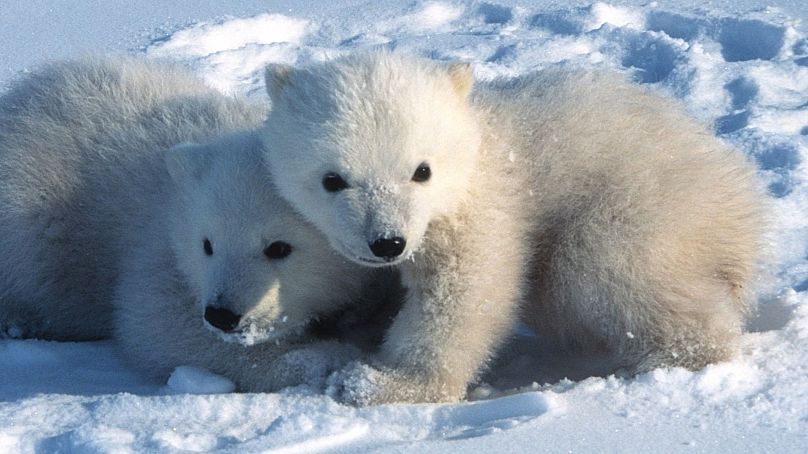
Polar bear family – Copyright © Dmytro Cherkasov/polarbearsinternational.org
By Doloresz Katanich • Updated: 27/02/2022 – 08:12
27 February is International Polar Bear Day, created to draw attention to the many threats the iconic species is facing.
The event was created by NGO Polar Bears International in 2011, to raise awareness of female polar bears and their cubs, which are currently denning across the Arctic.
The polar bear is labelled vulnerable by the International Union for Conservation of Nature (IUCN)’s red list, which estimated that there are 20-25,000 bears in 5 countries. It is very hard to get exact data about the population because of the severity of the circumstances.
Protecting the most vulnerable of them is crucial in order to secure the future of the species, which is already threatened by global warming and habitat loss. The disappearing sea ice means that the bears’ hunting and denning territory is rapidly disappearing.
The latest study published in Nature Climate Change in 2020 projects that if there is no change in greenhouse gas emission levels, all but a few populations will be wiped out by the year 2100.
about:blank
Keeping mother and cubs safe, while also addressing a warming climate, is a critical part of polar bear conservation. A stable, uninterrupted denning process is essential to the survival of polar bears.
Right now, scientists from Polar Bears International and partner organisations are in Svalbard, Norway, conducting research and working on locating and monitoring dens in order to protect them from human activities.
“It can really disturb the mothers and if they are disturbed too much, or at the wrong period of time the mum may actually leave the den and leave the small cubs behind,” says scientist at Polar Bears International, Dr. Thea Bechshoft.
“Studies have shown that polar bear cub mortality can be incredibly high, upwards of 50 to 75 per cent.”
The ongoing war in Ukraine could have a huge impact on worldwide efforts to mitigate climate change and global warming, warns the scientist.
“This war may create a shift in energy use that could either go towards more fossil fuels or it could go towards a quicker, greener transition. Time will tell, ” says Bechshoft.
Watch the video to learn more about saving polar bears.

ByGina AgapiouFebruary 24, 20222 Comments399SHARE
Two men, aged 34 and 49, were fined a total of €1,000 in separate cases of possession and use of an illegal device which mimics bird sounds to attract prey, police said on Thursday.
The older man was booked €500, after he was found by a patrolling game service officer using of the specific device while hunting in Kamenes area at Neo Chorio in Paphos around 8.40am on Wednesday.
Authorities confiscated six killed wild birds, his hunting shotgun and 20 full cartridges.
Later that day, a 34-year-old man was also booked the same amount as he was found hunting in the ‘Mahouzis’ in Lemonas area with a device mimicking various bird sounds in his possession.
View original post 1 more word

HELENA DORE Chronicle Staff Writer
Yellowstone National Park announced Tuesday that bison trapping has begun near the park’s northern border, meaning efforts to cull the population through shipment to slaughter are underway.
Trapping at the Stephens Creek administrative area began late last week, according to the park. Bison are captured at the corrals near Gardiner as they migrate beyond the park’s boundaries in search of food.
Park officials did not confirm how many bison have been trapped at Stephens Creek so far this year. After bison are trapped, those animals that aren’t enrolled in a quarantine program are slaughtered. Meat and hides are distributed to tribes.
Buffalo Field Campaign, a group that advocates for free-roaming wild bison on the landscape, wrote last Friday that their patrol witnessed the capturing of 23 adult bison at the Stephens Creek facility last Wednesday.
Another 11 adult bison were seen captured there on Thursday, according to the group.
During an interagency meeting in Missoula last December, park biologists estimated that the Yellowstone bison population numbered at around 5,400 animals.
Officials who manage Yellowstone bison under the Interagency Bison Management Plan agreed to reduce the population by between 600 and 900 animals last year.
Up Next – Trotter tells story of Gayle Benson responding to young girl who applied to be Saints’ head coach
Up Next – Trotter tells story of Gayle Benson responding to young girl who applied to be Saints’ head coachclose
https://imasdk.googleapis.com/js/core/bridge3.502.0_en.html#goog_1652862875
Ad 1 of 1 (0:15)volume_off volume_up


volume_off
-0:15
fullscreen
Auto (225p)
225p
360p
Subtitles Off
English

Up Next – Trotter tells story of Gayle Benson responding to young girl who applied to be Saints’ head coach
NFL Network’s Jim Trotter tells story of Gayle Benson responding to young girl who applied to be New Orleans Saints’ head coach.

Cynthia Frelund reveals who NFL’s highest-paid player of 2022 is (as of now)
NFL
|
0:25
Trotter tells story of Gayle Benson responding to young girl who applied to be Saints’ head coach
NFL
|
0:39

Wolfe reveals why Tagovailoa is wearing a Georgia Bulldogs shirt on 2-2-22
NFL
|
0:32

Doug Pederson: ‘You see flashes’ of talent on this Jaguars roster
NFL
|
0:51

Stafford celebrates Super Bowl LVI win with daughters on field
NFL
|
0:09

Van Jefferson finds out wife is in labor after Rams’ Super Bowl win
NFL
|
0:17

Cooper Kupp waves to fans at Rams parade wearing Kobe Bryant jersey
NFL
|
0:07

Matthew Stafford throws passes to fans from Rams parade bus
NFL
|
0:13

Aaron Donald goes shirtless at Rams parade
NFL
|
0:17

Is Russell Wilson a good fit for the Washington Commanders?
Football
|
3:00
Bison aren’t tolerated much in Montana due to the risks that brucellosis pose to the livestock industry, so the population must be culled annually to keep numbers steady in the park.
Shipment to slaughter is one of three methods that bison managers use to cull Yellowstone’s population. Animals are also removed through tribal and state hunting and the Bison Conservation Transfer Program — a brucellosis quarantine program meant to produce disease-free animals that can be released elsewhere.
Last winter, there was no trapping of bison at Stephens Creek because the animals’ annual migration did not occur ahead of calving season. Migrations are influenced by multiple factors, but cycling between low and high temperatures likely delayed the one last year.
1of 2

Carteret County Sheriff Asa Buck speaks with reporters in Carteret County, N.C., on Monday, Feb. 14, 2022. Authorities say four teenagers and four adults returning from a hunting trip were on board a small plane that crashed off the coast of North Carolina over the weekend.

Law enforcement get ready for a search after a small plane crash in Carteret County, N.C., on Monday, Feb. 14, 2022. Authorities say four teenagers and four adults returning from a hunting trip were on board a small plane that crashed off the coast of North Carolina over the weekend.
A plane carrying eight people — including four teenagers — had issued no distress calls and made no declarations of an emergency before it crashed off the North Carolina coast, the National Transportation…
View original post 571 more words
SHARE THIS

HELENA, Montana (AP) — Despite a recent interpretation of Montana state law that aerial hunting of wolves is not prohibited, doing so runs afoul of federal law.
Montana Fish, Wildlife & Parks argued in the state District Court recently that state law does not prohibit aerial hunting of wolves. FWP’s arguments came as legal justification for the agency removing language from the state’s wolf regulations that had stated hunting wolves from aircraft was barred. The agency says that inclusion of that language in the regulations for a decade was an error.
In response to media reporting on the case, a number of readers pointed to federal law addressing aerial…
View original post 773 more words

