Many parts of eastern Chinaexperienced severe flooding in June and Julyin 2020. The researchers say the reductions in emissions contributed about one third of the extreme summer rain.
The Yangtze river saw the heaviest rainfall since 1961, with a 79% increase in June and July compared to the…
Register now for FREE unlimited access to Reuters.com
Register
Summary
Companies
Russian forces near Ukraine starting to ‘uncoil’ – U.S.
Separatists in east Ukraine call for military mobilisation
Kremlin says Putin starts nuclear drills, no invasion plan
DONETSK, Ukraine/MOSCOW, Feb 19 (Reuters) – Russia’s strategic nuclear forces held exercises overseen by President Vladimir Putin on Saturday, and Washington accused Russian troops massed near Ukraine’s border of moving forward and being “poised to strike”.
With Western fears of war rising, foreign ministers from the G7 group of rich nations said they had seen no evidence that Russia is reducing military activity near Ukraine’s borders and remained “gravely concerned” about the situation.Report ad
After Kyiv and Moscow traded accusations over new shelling incidents near the border, France and Germany urged all or some…
Protesters kneel in front of Surete du Quebec officers forming an enclosure around blockaded vehicles on Rideau Street, as police aim to end an ongoing protest against COVID-19 measures that has grown into a broader anti-government protest, in Ottawa, Ontario, Friday, Feb. 18, 2022. (Justin Tang/The Canadian Press via AP)
OTTAWA, Ontario (AP) — Police arrested scores of demonstrators and towed away vehicles Friday in Canada’s besieged capital, and a stream of trucks started leaving under the pressure, raising authorities’ hopes for an end to the three-week protest against the country’s COVID-19 restrictions.
By midafternoon, at least 70 people had been arrested, mostly on mischief charges, and nearly two dozen vehicles had been towed, including all of those blocking one of the city’s major streets, authorities said. One officer had a minor injury, but no protesters…
BILLINGS, Mont. (AP) — The Department of Fish, Wildlife and Parks says wolf hunting and trapping season has ended in southwestern Montana. A recently-set quota of 82 wolves have been killed in that region of the state. Yellowstone National Park officials asked the state to suspend wolf hunting and trapping in some areas bordering Yellowstone after some wolves were killed after leaving the park.
One pack was effectively wiped out. Montana’s wildlife commission rejected the request. But it set an 82-wolf quota for southwestern Montana and that quota was reached on Wednesday. Park officials say two dozen wolves known to Yellowstone park managers were killed this winter, mostly in Montana.
Louisiana Department of Wildlife and Fisheries enforcement agents citied two men for alleged hunting violations in Rapides Parish on Feb. 12.
Gavin H. Crooks, 20, and Jacob R. Tyler, 22, both from Alexandria, were cited for hunting from a moving vehicle, hunting from a public roadway, and hunting deer during illegal hours. Crooks was also cited for hunting deer with illegal electronic sights.
In the early morning hours of Feb. 12, agents received information about possible night hunting that was occurring near the Latanier community. Upon arrival, agents made contact with both Crooks and Tyler.
During questioning, agents learned the subjects were hunting from there vehicle when they shot an antlerless deer that was found in a field nearby. Agents returned during daylight hours and located a second antlerless adeer that was determined to be harvested by the subjects.
Posted at 2:24 PM, Feb 15, 2022https://www.ktvh.com/news/helena-man-receives-lifetime-hunting-ban-for-2019-moose-poaching?fbclid=IwAR1atlruKUNF8dMjcmVc-waa_DwArezRmqYJpzN97BNeh6C2VlYhLHkP8ps
and last updated1:59 PM, Feb 15, 2022
HELENA — A Helena man received a lifetime ban from hunting and trapping in Montana as part of his sentence for illegally killing a trophy moose east of Townsend in 2019.
Montana Fish, Wildlife and Parks (FWP) say Shiloh Berry, 41, was sentenced Friday in Broadwater County District Court. He pleaded guilty last fall to unlawful possession of a game animal, hunting without a valid license and waste of a game animal.
In addition to the lifetime ban, Berry has also been sentenced to a three-year suspension of fishing privileges, $12,100 in fines and restitution and a suspended five-year imprisonment term.
FWP game wardens received a tip in 2019 via the department’s 1-800-TIP-MONT hotline about a dead moose with its head…
U.S. poultry producers are on high alert after cases of highly pathogenic avian influenza (HPAI) have cropped up in multiple states, sparking fears that further outbreaks could cause significant losses.
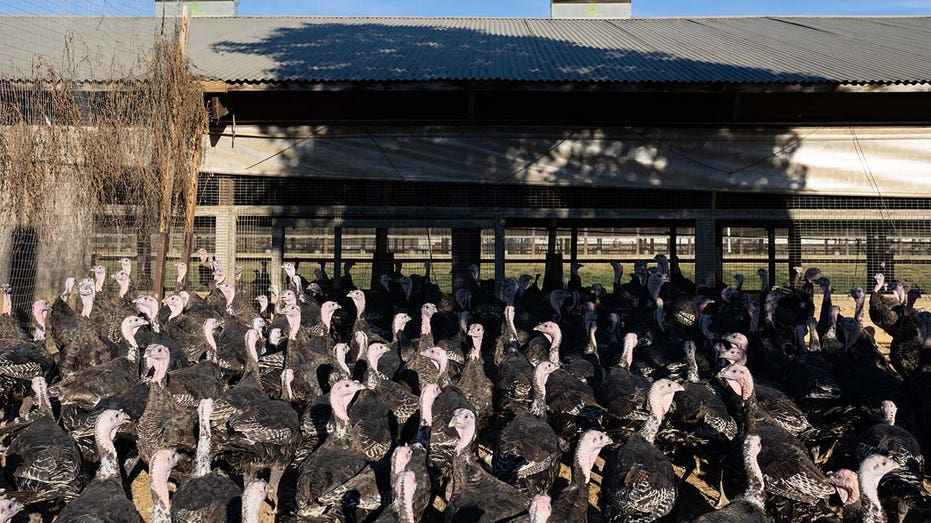
Turkeys on a farm in Orefield, Pennsylvania, U.S., on Wednesday, Nov. 10, 2021. ( Photographer: Hannah Beier/Bloomberg via Getty Images / Getty Images)
The United States Department of Agriculture confirmed Feb. 9 that a commercial turkey flock in Indiana was hit with avian flu, the first case in the U.S. since 2020. The entire flock of nearly 30,000 birds was euthanized in an effort to stop the spread.
Then on Feb. 14, the agency confirmed that a commercial flock of broiler chickens was hit with bird flu in Kentucky, and a backyard flock of mixed species fowl also tested positive in Virginia. Both flocks were culled.
Tom Super, senior vice president of the National Chicken Council, told FOX Business that while any detection of bird flu “in poultry is a concern and the industry remains on high alert,” the U.S. “has the most robust monitoring and surveillance program in the world – and detailed plans are in place to control spreading among flocks and eliminate the virus completely.”
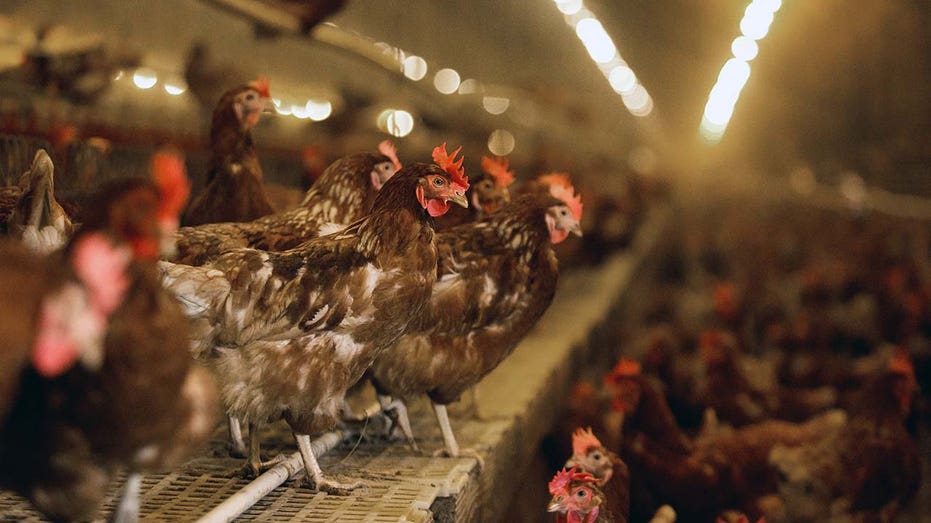
Chickens at a farm in Gonzales, Texas, U.S., on Wednesday, May 5, 2021. (Photographer: Mary Kang/Bloomberg via Getty Images / Getty Images)
National Turkey Federation Vice President of Communications Beth Breeding told FOX Business that producers “are focused on farm security every day” and that “members remain vigilant and practice all biosecurity protocols.”
She said that “for farms within a 10km control zone of confirmed [bird flu] cases, regular testing is taking place to monitor the health of flocks.”
A spokesperson from the USDA told FOX Business that the agency recently expanded its wild bird surveillance after the first detection of HPAI in a wild bird in the U.S., and that the surveillance of wild birds ensures that both the agency and the poultry industry “are able to enhance biosecurity measures and rapidly respond to reduce the risk of disease spread.”
The spokesperson said that “bird owners (whether it’s commercial or backyard poultry, or pet or hobby birds), should take some simple steps to protect their birds from the virus: In addition to practicing good biosecurity, all bird owners should prevent contact between their birds and wild birds and report sick birds or unusual bird deaths to state or federal officials.”
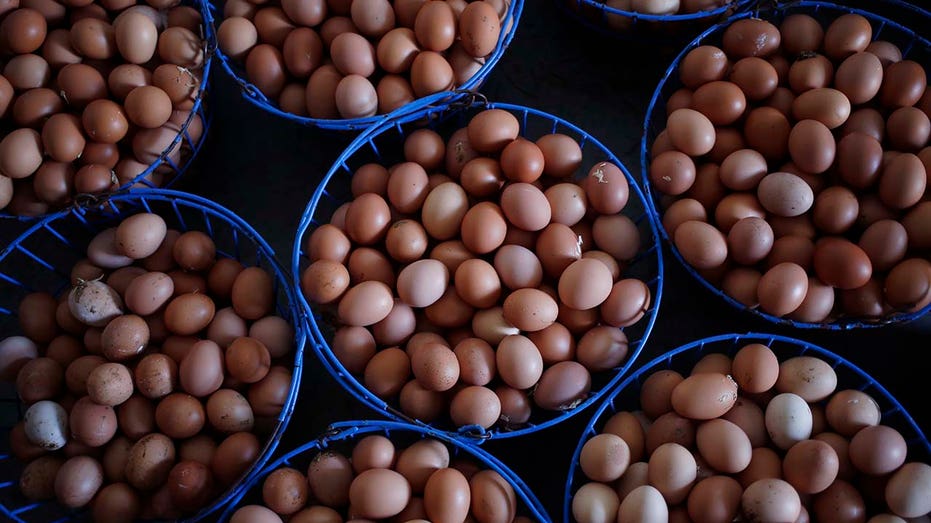
Freshly-laid chicken eggs in baskets before being washed and packaged for sale at a farm in Pleasureville, Kentucky, U.S., on Wednesday, Jan. 8, 2020. (Photographer: Luke Sharrett/Bloomberg via Getty Images / Getty Images)
The risk of humans contracting bird flu is very low, and any flock found to have an infected bird does not enter the food chain. The virus also does not present a food safety risk as long as food is properly cooked, but it has the potential of being deadly to domestic fowl and threatens to spark shortages of chicken, turkey and eggs – along with a further increase in prices for such items amid soaring inflation.
According to the Associated Press, the bird flu strain currently circulating in the U.S. is H5N1, and is related to the 2015 avian virus that killed 50 million birds across 15 states and cost the federal government nearly $1 billion.
America faces themomentous choicebetween engagement and retreat for the third time in 100 years.
The first time, America chose wrong. We retreated to the international sidelines following World War I, and the League of Nations couldn’t prevent a second world war without American leadership.
JOHN BISSET/STUFFTricia Phillips was part of a group protesting against live cattle exports in Timaru at the weekend.
Virginia Fallon is a Stuff senior writer and columnist based in Wellington.
OPINION: A distinct smell of manure is emanating from one of New Zealand’s ports right now.
There, at some point in the next few days the country’s backward welfare laws will be on full display when thousands of animals embark on their big OE, otherwise known as overseas exploitation.
The animals are due to depart from Timaru in a practice of government-approved cruelty we’ve been promised would be wound down, but that is actually ramping up. Because while the nation’s been focusing on who can’t get into the country, we’re continuing to turn a collective blind eye to just what’s leaving it.
JOHN BISSET/STUFFThe Al Kuwait livestock ship berthed in Timaru.
Last week the livestock ship Al Kuwait returned to New Zealand, where it is allowed to fill up yet another cargo of horror: 6748 cattle bound for China. It was last here about five weeks ago to load more than 10,000 cows from the South Canterbury port.
Like those before them, these most recent animals will spend weeks at sea, crammed into pens and destined for a country that lacks minimum welfare standards. Once they arrive, they’ll apparently be used for “breeding purposes”, not slaughter. Definitely not slaughter.
Of course, that’s if they get there at all. The practice of shipping animals overseas isn’t just inhumane, it’s extremely risky. The 2020 sinking of livestock export ship Gulf Livestock 1 saw 41 people and 6000 cows die in the waters off Japan, the latest in a line of needless tragedies.
In 2003 the government banned the live export of sheep for slaughter after 57,000 of the animals on board the Cormo Express were turned away from Saudi Arabia. After two months at sea, 6000 of them died.
The ban was eventually extended to include cattle, but all it did was create a loophole that’s been well-used ever since: the animals can still be transported for breeding. See what it did there?
JOHN BISSET/STUFFLyn Mansel demonstrates what she believes is all the room cattle have on live export ships, at a protest against the practice in Timaru last year. (File photo)
But back to shipping these definitely not-for-slaughter animals around the world.
Last year the Government announced the practice would be wound down over the next few years and come to an end by 2023. Agriculture Minister Damien O’Connor acknowledged the benefit some farmers get from the trade, but also noted “support of it is not universal within the sector”.
Needing to “stay ahead of the curve in a world where animal welfare is under increasing scrutiny” played a key part in the decision, he said.
The announcement was, of course, met with fury by those who profit from suffering – in 2019, the trade was worth $77 million – and also criticised by welfare groups who said the ban should be brought forward. Two years left a lot more time for a lot more agony, after all.
Still, it’s that promise of winding down that’s left an odour at the port of Timaru, where those opposed to the practice say it’s cranking through the exports like never before.
Animal welfare group SAFE says figures obtained under the Official Information Act show approximately 124,000 cows were exported in 2021, compared with 109,921 in 2020 and 39,269 in 2019.
Regardless of whether this business of suffering is ramping up or winding down, it should have been stopped years ago because it’s cruel, dangerous and outdated. And as for animal welfare being “under increasing scrutiny?”