Meeting the goals of the Paris Agreement will require completely eliminating carbon dioxide emissions from coal-burning power plants like this one in Adamsville, AlabamaANDREW CABALLERO-REYNOLDS/AFP via Getty Images
The United Nations is warning that most countries have failed to uphold promises to make deep cuts to greenhouse gas pollution, in order to avoid the most catastrophic effects of climate change.
Under the 2015 Paris Agreement on climate, countries are required to submit details oftheir plansto cut greenhouse emissions, called “Nationally Determined Contributions,” or NDCs, to the UN, which then calculates their total impact. The goal is to keep average global temperatures from rising beyond 3.8 degrees Fahrenheit (2 degrees Celsius), and ideally, no more than 2.7 degrees, compared to pre-industrial levels.
“We need about a 45 to 50 percent decrease by 2030 to stay…
Crews continue to battleCaliforniawildfires that have burned into some groves of ancient giant sequoias, the world’s largest tree.
The National Weather Service (NWS) issued a weather watch for critical fire conditions in the Sequoia national park in the Sierra Nevada, where the Colony fire was burning about a mile from Giant Forest, a grove of 2,000 sequoias.
Firefighterswrapped the base of the General Sherman Treein fire-resistant aluminum of the type used in wildland firefighter emergency shelters and to protect historic wooden buildings, fire spokeswoman Rebecca Paterson said.
Firefighters pose next to the General Sherman Tree after wrapping it in fire-resistant blanket on 17 September.Photograph: National Park Service/EPA
The General Sherman Tree is the largest in the world…
Court papers have revealed that Talley’s deepwater fishing division, Amaltal, has shifted the blame for illegally bottom trawling in the Hikurangi Marine Reserve off Kaikōura, a year after the company was found guilty of the breach.
But despite both the skipper and Talley’s subsidiary being initially found guilty of the illegal trawls, the conviction of the fishing company was set aside by the High Court.
Greenpeace says this ruling shows loopholes that must be closed, to ensure commercial fishing companies don’t get away with trashing protected areas of the ocean.
“What we have seen with Talley’s historically is a pattern of bad behaviour: repeated charges of their vessels illegally trawling in protected areas, followed by attempts to evade responsibility by blaming the skippers or observers,” says Greenpeace’s Ellie Hooper.
“Talley’s has washed their hands of it and taken no responsibiltiy.”
In January 2021, a further illegal trawl incident by a New Zealand vessel was highlighted at the meeting of the South Pacific Regional Fisheries Management Organisation (SPRFMO), but officials have not released further details.
What information has been shared, suggests a vessel trawling on a seamount likely destroyed a vulnerable marine ecosystem, which may have been the only one of its kind in the area.
Greenpeace says there is a clear pattern of illegality in the bottom trawling industry, with every company given high seas permits this year having been recently convicted of offences.
“The softly-softly approach from the government obviously hasn’t worked,” says Hooper.
“Talley’s and other commercial fishing companies are doing damage to vulnerable parts of the ocean, but are still being issued permits to continue trawling.
“Marine Reserves should protect the most precious and biologically diverse parts of the ocean – like Hikurangi – but this case shows that companies can too easily dodge their responsibilities.”
Greenpeace and the Deep Sea Conservation Coalition (DSCC) are calling for better protection of seamounts from bottom trawl fishing. They demand that:
– Bottom trawling is banned on seamounts and similar features to protect these hotspots for vulnerable marine life.
– The Marine Reserves Act is strengthened to ensure that commercial fishing companies are held accountable for illegal fishing.
– The current Parliamentary inquiry into illegal, unreported and unregulated (IUU) fishing brings our laws up to standard to tackle this threat to the ocean.
– Fisheries New Zealand stops issuing high seas permits to companies that have recently been convicted of illegal fishing.
The animal rights group Sea Shepherd says it hopes that pressure will build from within the Faeroe Islands to end its traditional drive of sea mammals into shallow water where they are killed for their meat and blubberBy APWednesday, Sep 15, 2021 10:10
COPENHAGEN, Denmark (AP) – The international animal rights group Sea Shepherd said Wednesday it hopes that pressure will build from within the Faeroe Islands to end its traditional drive of sea mammals into shallow water, where they are slaughtered for their meat and blubber.
A local activist published gruesome video footage of Sunday’s slaughter of 1,428 white-sided dolphins on the central Faeroese island of Eysturoy in the North Atlantic archipelago. The number of dolphins was so large – much higher than in previous years – that it appears participants may not have been able to follow regulations to minimize the suffering of the mammals.
“It was a complete disaster, completely unprecedented in fact, it could even be the largest single hunt of cetaceans in documented history anywhere in the world,” said Robert Read, campaign director for the Sea Shepherd Conservation Society.
Environmental activists have long claimed the practice is cruel. But this year even people on the Faeroes who defend the four-century-old practice have spoken out amid fears that this year’s slaughter will draw unwanted attention.
“We must admit that things did not go as we would like to,” said Hans Jacob Hermansen, the former chairman of the Faeroese association behind the drives. “We are going to evaluate if anything went wrong, what went wrong and why, and what can we do to avoid that in the future.”
Sea Shepherd says it is hoping for “much tighter restrictions” around such hunts and, if not, “at least a ban on the killing of the Atlantic white-sided dolphins.”
Faeroese hunters are used to criticism from animal rights groups and push back at what they see as an interference in a cultural practice.
Each year, islanders drive herds of the mammals – chiefly pilot whales – into shallow waters, where they are stabbed to death. A blow-hole hook is used to secure the beached whales and their spine and main artery leading to the brain are severed with knives, turning water in the bay red with blood. The drives are regulated by law and the meat and blubber are shared on a community basis.
“The killing of pilot whales is not very much different from killing cattle or anything else. It’s just that we have an open abattoir,” Hermansen told The Associated Press. “Everyone can see it but if a cow also doesn’t die immediately, you don’t stop killing cattle.”
The white-side dolphins and pilot whales are not endangered species.
But Read said Sunday’s slaughter was “completely indiscriminate. The entire pod is killed and pregnant mothers, calves, everything.” He added that residents used “power boats and jet skis to chase dolphins and pilot whales for hours on end, they really have no chance of escape.”
Fisheries Minister Jacob Vestergaard said everything this year was done by the book in the dolphin hunt. The Faeroes – 18 rocky islands located halfway between Scotland and Iceland – are semi-independent and part of the Danish realm.
—
David Keyton in Stockholm contributed to this report.
In this image released by Sea Shepherd Conservation Society the carcasses of dead white-sided dolphins lay on a beach after being pulled from the blood-stained water on the island of Eysturoy which is part of the Faeroe Islands Sunday Sept. 12, 2021. The dolphins were part of a slaughter of 1,428 white-sided dolphins that is part of a four-century-old traditional drive of sea mammals into shallow water where they are killed for their meat and blubber. The hunt in the North Atlantic islands is not commercial and is authorized, but environmental activists claim it is cruel. (Sea Shepherd via AP)
In this image released by Sea Shepherd Conservation Society the carcasses of dead white-sided dolphins lay on a beach after being pulled from the blood-stained water on the island of Eysturoy which is part of the Faeroe Islands Sunday Sept. 12, 2021. The dolphins were part of a slaughter of 1,428 white-sided dolphins that is part of a four-century-old traditional drive of sea mammals into shallow water where they are killed for their meat and blubber. The hunt in the North Atlantic islands is not commercial and is authorized, but environmental activists claim it is cruel. (Sea Shepherd via AP)
In this image released by Sea Shepherd Conservation Society the carcasses of dead white-sided dolphins lay on a beach after being pulled from the blood-stained water on the island of Eysturoy which is part of the Faeroe Islands Sunday Sept. 12, 2021. The dolphins were part of a slaughter of 1,428 white-sided dolphins that is part of a four-century-old traditional drive of sea mammals into shallow water where they are killed for their meat and blubber. (Sea Shepherd via AP)
In this image released by Sea Shepherd Conservation Society the carcasses of dead white-sided dolphins lay on a beach after being pulled from the blood-stained water on the island of Eysturoy which is part of the Faeroe Islands Sunday Sept. 12, 2021. The dolphins were part of a slaughter of 1,428 white-sided dolphins that is part of a four-century-old traditional drive of sea mammals into shallow water where they are killed for their meat and blubber. The hunt in the North Atlantic islands is not commercial and is authorized, but environmental activists claim it is cruel. (Sea Shepherd via AP)
In this image released by Sea Shepherd Conservation Society the carcasses of dead white-sided dolphins lay on a beach after being pulled from the blood-stained water on the island of Eysturoy which is part of the Faeroe Islands Sunday Sept. 12, 2021. The dolphins were part of a slaughter of 1,428 white-sided dolphins that is part of a four-century-old traditional drive of sea mammals into shallow water where they are killed for their meat and blubber. The hunt in the North Atlantic islands is not commercial and is authorized, but environmental activists claim it is cruel. (Sea Shepherd via AP)
In this image released by Sea Shepherd Conservation Society the carcasses of dead white-sided dolphins lay on a beach after being pulled from the blood-stained water on the island of Eysturoy which is part of the Faeroe Islands Sunday Sept. 12, 2021. The dolphins were part of a slaughter of 1,428 white-sided dolphins that is part of a four-century-old traditional drive of sea mammals into shallow water where they are killed for their meat and blubber. The hunt in the North Atlantic islands is not commercial and is authorized, but environmental activists claim it is cruel. (Sea Shepherd via AP)
In this image released by Sea Shepherd Conservation Society the carcasses of dead white-sided dolphins lay on a beach after being pulled from the blood-stained water on the island of Eysturoy which is part of the Faeroe Islands Sunday Sept. 12, 2021. The dolphins were part of a slaughter of 1,428 white-sided dolphins that is part of a four-century-old traditional drive of sea mammals into shallow water where they are killed for their meat and blubber. The hunt in the North Atlantic islands is not commercial and is authorized, but environmental activists claim it is cruel. (Sea Shepherd via AP)
FROM THE WISCONSIN DEPARTMENT OF NATURAL RESOURCES
The Wisconsin Department of Natural Resources (DNR) is reminding waterfowl hunters to follow best safety practices as they hit the water this upcoming season.
It’s important for hunters to follow these safety tips to prevent boating accidents and deaths:
Be aware that water temperatures are rapidly cooling at this time of year. A fall overboard can turn dangerous quickly as hypothermia sets in. Wearing a life jacket can keep individuals on the surface and allow energy to be used to keep warm rather than to stay above the water.
Remember to protect canine companions on the water – they need life jackets, too.
Never overload the boat. If hunting on a large river or lake, use a boat that is big enough to handle rough water.
Balance the boat evenly and keep weight low for stability.
Be on the lookout for elements outside of your control, such as changing weather, or a slightly submerged stump, rock, sandbar or floating debris.
If in a boat or canoe with a hunting partner, establish and communicate a safe fire zone; do not stand to shoot if a partner is shooting from a seated position.
Always carry a cellphone so communication can happen in case of an emergency.
“Waterfowl hunters should keep in mind that hunting dogs can get excited and start jumping all over the boat, increasing the risk for capsizing. Hunting boats also tend to be smaller and less stable than average boats,” said Lt. Darren Kuhn, DNR Boating Safety Administrator. “This can be a recipe for trouble, so waterfowl hunters should always wear their life jackets.”
Hunters should also be aware of the danger of waders on the water. If a boat capsizes and the hunter is ejected, the waders would fill with water, creating suction around the hunter’s legs and feet making it difficult to remove the waders. This added water weight greatly increases the risk of drowning and wearing a life jacket can help keep hunters afloat.
One wearable life jacket is required for each person on board a boat and must fit properly. In addition to the wearable life jackets, a throwable personal flotation device, such as a ring buoy or standard seat cushion, is required for every boat longer than 16 feet.
A bow hunter was fatally wounded in the area of the Kilpacker Trail of Dolores County, according to the Sheriff’s Office. (Courtesy Scott Simmons)Courtesy Scott Simmons
An archery hunter was fatally shot Friday morning in the San Juan National Forest near the Kilpacker trailhead north of Rico, according to the Dolores County Sheriff’s Office.
A news release from Sheriff Don Wilson on theSheriff’s Office Facebook page, said the office received a call of a hunting accident about 10:48 a.m. Friday.
Two black powder rifle hunters wearing reflective clothing were hunting in the area, and an archery hunter was fatally wounded, according to the news release, time-stamped at 2:19 p.m.
“The incident is currently under investigation with our partners at Colorado Bureau of Investigations, Montezuma County Sheriff’s…
LAFAYETTE, La. (AP) — A Louisiana hunter must pay a $5,000 fine, serve two years of probation and complete 100 hours of community service for violating the Migratory Bird Treaty Act, federal prosecutors said.
Kevin Berken, 60, of Lake Arthur, was charged in a bill of information with one count of violating the law by taking more than the daily bag limit of six ducks in any one calendar day, the U.S. Attorney’s Office for the Western District of Louisiana said in a news release Thursday.
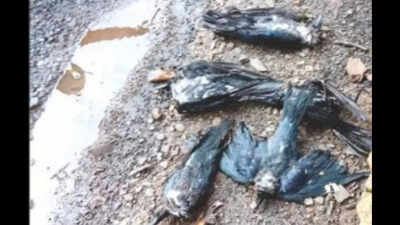
The incident occurred on Sunday and Monday, too, was a holiday.NAGPUR: At a time when the population of crows is declining, over 100 crows were found dead under the jurisdiction of the Chikhaldara Municipal Council (CMC) on Sunday. However, animal husbandry department officials claimed only six crows died. Vice-president of CMC Abdul Sheikh, who first raised the issue, slammed the animal husbandry doctors for not staying at the headquarters to ensure the number of birds’ deaths and solutions thereon. “This is for the first time that such large-scale deaths of crows was reported and people, who came complaining to me, are themselves witnesses,” Sheikh said.
“We collected only six crows for sampling while the remaining birds were disposed of in a tractor, a fact not known to the foresters and veterinary staff. The crows were lying dead at various spots near pipal trees where vendors sold mutton and chicken in the open on Sunday,” Sheikh told TOI. “The incident occurred on Sunday and Monday, too, was a holiday. There were no livestock development officers at the veterinary hospital (LDOs). Hence, we handed over the case to the Chikhaldara range forest officer (RFO). I don’t know what happened later,” Sheikh said. Crows are listed under Schedule V of the Wildlife (Protection) Act, 1972, but have been legally declared as vermin. After vultures vanished, crows have been playing the role of predators and scavengers. They eat practically anything. Melghat Tiger Reserve (MTR) CCF & field director Jayoti Banerjee said, “I’ve been told by my RFO at Chikhaldara that pesticide is suspected to be the reason for the death of the birds. It’s not bird flu. After the municipal staff handed over the six dead crows to the staff, veterinary doctors collected the samples to know the cause of death. The birds were later buried.”
Talking to TOI, Amravati district animal husbandry officer Dr Vijay Rahate denied death of 100 crows. “There were six crows. There is no major reason to worry. I suspect the birds died of food poisoning may be after scavenging on flesh thrown as waste in the area.” “Samples are being sent to the Regional Disease Investigation Laboratory, Pune, for toxicological and bacterial tests. Had it been some epidemic, more crows would have been found dead in the last two days but we have not found a single dead bird. We are keeping a close watch and our staff is alert. Bird flu is also ruled out as the reason for death,” said Dr Rahate. Dr Ajay Poharkar, president, Maharashtra State Veterinary Council (MSVC), said it could also be the West Nile Virus (WNV), which has been detected in several birds, mostly crows and jays. “But unless it’s proved scientifically it would not be right to comment. Similar deaths of crows had occurred near Mouda in the summer of 2005,” the raptor scientist said. “I believe the population of crows is declining fast. In Melghat, there are huge trees and hence, the crow population there is in sizeable numbers. The loss of birds is an eye-opener for the forest department which should come with research on the subject,” said Dr Poharkar. Bird expert Nitin Marathe says, “Rapid disappearance of crows is a cause for concern. One of the major reasons for the decline is habitat destruction. Generally, crows prefer strong trees like pipal and banyan for nesting. These trees are being destroyed for road expansion and urbanization. Hence, they are left in very few pockets in the city.”
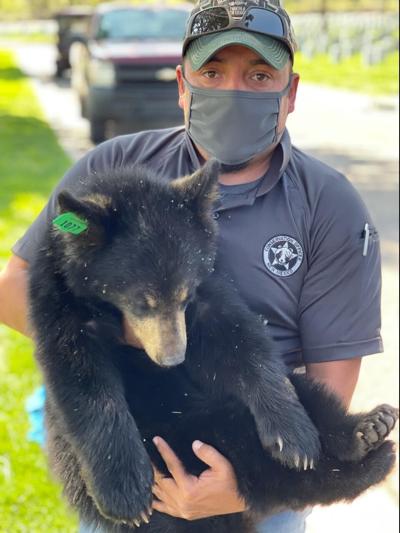
An orphaned bear cub was captured at the Santa Fe National Cemetery and taken to a wildlife shelter last week, the day after its mother was fatally struck by an unidentified driver on Rosario Boulevard.
State game officials believe a second stray cub is still roaming the area.
The captured female cub was spotted Sept. 9 in a tree at the national cemetery.
State Game and Fish Department officers used a dart gun to tranquilize the bear and then climbed up a ladder to carry it down.
They took the cub to the Cottonwood Veterinary Clinic in Española, where it will be prepared for release into the wild.
It’s good the cub was caught quickly, said Kathleen Ramsay, a veterinarian who oversees the clinic’s wildlife rehabilitation center, because cubs that wander through neighborhoods raiding bird feeders often don’t learn to eat the foods necessary to survive in the wild.
“What she has to learn to eat is important,” Ramsay said.
At the center, all but the most essential human contact with bears is avoided, she said, explaining if bears become comfortable with people, they are more likely to approach them in outdoor settings, which is dangerous.
The cub has been named Bonita and is paired with one named Pooh Bear, recently picked up in Jemez Springs, Ramsay said. The two will be trained together to live in the wild, and then they’ll be released in tandem, she added.
Typically, two cubs that have bonded like this will stick together for about a year, alerting one another to any approaching threat — the biggest one being adult bears — before parting ways, Ramsay said.
“If we can release them in pairs for their first year of life, they do so much better,” Ramsay said.
Like hibernation, bears’ mating and birthing run like clockwork in New Mexico, she said. Cubs are born between late November and early December, which makes it easy to pin down their ages.
Ramsay said she takes the place of a cubs’ mother in teaching them what to eat.
She prunes acorn and chokecherry branches and hangs them in the cubs’ cages to mimic trees they’ll encounter.
She also put plants with rose hips in their pens and leaves rotting logs in a field so the cubs can tear them apart to find bugs, a prime food source for bears.
“We work very hard to make sure these bears get training on what they need to do to stay alive,” Ramsay said. “And our success has been quite good.”
One year, radio tracking was done on 56 yearlings that were released, and all but two made it to at least 2 years of age, she said.
She generally releases cubs in early January, after hunting season has ended and the yearly hibernation has begun. That way, the bears will crawl into a den until May.
The Santa Fe cub might be turned loose in January if it reaches at least 110 pounds, giving it enough girth to get through June, when bear food is more scarce, Ramsay said.
As for the mother bear that was killed, the carcass was sold to a local buyer to use for the fur and meat, said Tristanna Bickford, a spokeswoman for the state Game and Fish Department. Some of the fur was placed in live-capture traps in an attempt to lure the cubs, Bickford added.
The agency is still searching for the second orphaned cub but hasn’t heard of any sightings, she said. A cub isn’t likely to roam as far as an adult bear, increasing the chance it’s still in the Santa Fe area.
“But you can never quite guess with wild animals where they’re going to go and why they go there,” Bickford said.