Modern snakes evolved from a few survivors of dino-killing asteroid

by University of Bath

https://phys.org/news/2021-09-modern-snakes-evolved-survivors-dino-killing.html

Modern snakes evolved from a few survivors of dino-killing asteroid
All living snakes evolved from a handful of species that survived the giant asteroid impact that wiped out the dinosaurs and most other living things at the end of the Cretaceous. Credit: Joschua Knüppe

A new study suggests that all living snakes evolved from a handful of species that survived the giant asteroid impact that wiped out the dinosaurs and most other living things at the end of the Cretaceous. The authors say that this devastating extinction event was a form of ‘creative destruction’ that allowed snakes to diversify into new niches, previously filled by their competitors.

The research, published in Nature Communications, shows that snakes, today including almost 4000 living species, started to diversify around the time that an extra-terrestrial impact wiped out the dinosaurs and most other species on the planet.

The study, led by scientists at the University of Bath and including collaborators from Bristol, Cambridge and Germany, used fossils and analyzed genetic differences between modern snakes to reconstruct snake evolution. The analyses helped to pinpoint the time that modern snakes evolved.

Their results show that all living snakes trace back to just a handful of species that survived the asteroid impact 66 million years ago, the same extinction that wiped out the dinosaurs.

The authors argue that the ability of snakes to shelter underground and go for long periods without food helped them survive the destructive effects of the impact. In the aftermath, the extinction of their competitors—including Cretaceous snakes and the dinosaurs themselves—allowed snakes to move into new niches, new habitats and new continents.

Snakes then began to diversify, producing lineages like vipers, cobras, garter snakes, pythons, and boas, exploiting new habitats, and new prey. Modern snake diversity—including tree snakes, sea snakes, venomous vipers and cobras, and huge constrictors like boas and pythons—emerged only after the dinosaur extinction.

Fossils also show a change in the shape of snake vertebrae in the aftermath, resulting from the extinction of Cretaceous lineages and the appearance of new groups, including giant sea snakes up to 10 meters long.

“It’s remarkable, because not only are they surviving an extinction that wipes out so many other animals, but within a few million years they are innovating, using their habitats in new ways,” said lead author and recent Bath graduate Dr. Catherine Klein, who now works at Friedrich-Alexander-Universität Erlangen-Nürnberg (FAU) in Germany.

The study also suggests that snakes began to spread across the globe around this time. Although the ancestor of living snakes probably lived somewhere in the Southern Hemisphere, snakes first appear to have spread to Asia after the extinction.

Dr. Nick Longrich, from the Milner Centre for Evolution at the University of Bath and the corresponding author, said: “Our research suggests that extinction acted as a form of ‘creative destruction’- by wiping out old species, it allowed survivors to exploit the gaps in the ecosystem, experimenting with new lifestyles and habitats.

“This seems to be a general feature of evolution—it’s the periods immediately after major extinctions where we see evolution at its most wildly experimental and innovative.

“The destruction of biodiversity makes room for new things to emerge and colonize new landmasses. Ultimately life becomes even more diverse than before.”

The study also found evidence for a second major diversification event around the time that the world shifted from a warm ‘Greenhouse Earth’ into a cold ‘Icehouse’ climate, which saw the formation of polar icecaps and the start of the Ice Ages.

The patterns seen in snakes hint at a key role for catastrophes—severe, rapid, and global environmental disruptions—in driving evolutionary change.

The new study is published in Nature Communications.


Explore furtherHow snakes got their fangs

High Meat Prices Are Helping Fuel Inflation, And A Few Big Companies Are Being Blamed

Updated September 14, 20218:48 AM ET 

SCOTT HORSLEYTwitterLISTEN· 4:344-Minute ListenAdd toPLAYLIST

Packages of beef cuts are displayed at a Costco store on May 24 in Novato, Calif. The prices of meats have surged, and the White House is partly blaming the handful of meatpackers that control the industry.Justin Sullivan/Getty Images

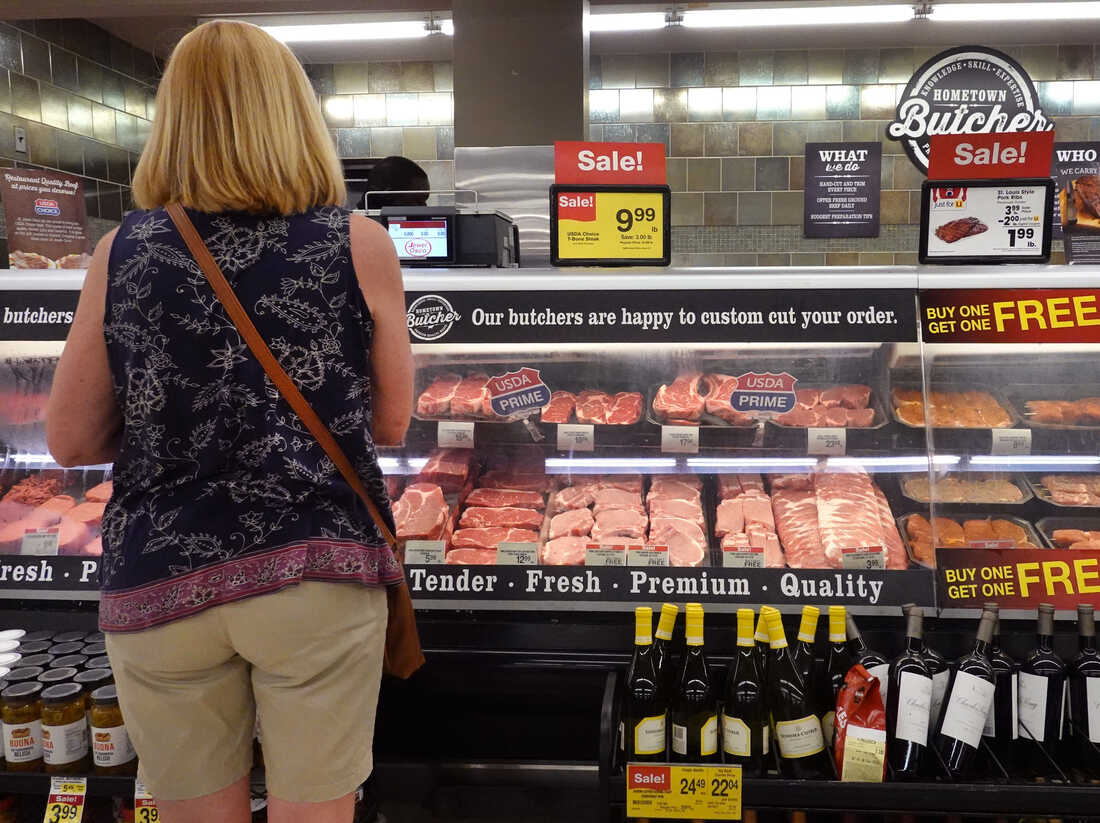
Prices for beef, pork and chicken have surged during the pandemic, and the Biden administration believes it knows who’s partly behind it: a handful of big meatpacking companies that control most of the country’s supply.

Beef prices alone jumped 12.2% over the last year, according to new consumer inflation data on Tuesday, making it one of the costliest items in the surging bills that consumers face today at the grocery store.

“It’s just outrageous. I can’t even understand how people are supposed to be able to pay that kind of money for basic stuff like ground beef,” says Adam Jones, who raises Angus cattle in northwest Kansas. “We’re not talking about filet mignon. We’re just talking about being able to make spaghetti or being able to make tacos.”

The surge in meat prices is contributing to high inflation. The Labor Department reported Tuesday that consumer price index rose 5.3% in the 12 months ending in August. That’s down slightly from June and July when inflation was running at 5.4% — but it’s still near the highest level in nearly 13 years. Pork prices jumped 9.8% in the last year while chicken prices jumped 7.2%.Article continues after sponsor messagehttps://8365fe610adbc4295ba88093fca9a092.safeframe.googlesyndication.com/safeframe/1-0-38/html/container.html

https://apps.npr.org/dailygraphics/graphics/inflation-20210914/?initialWidth=613&childId=responsive-embed-inflation-20210914&parentTitle=The%20White%20House%20Wants%20To%20Bust%20The%20Big%20Meat%20Industry%20Open%20%3A%20NPR&parentUrl=https%3A%2F%2Fwww.npr.org%2F2021%2F09%2F14%2F1036678722%2Fchicken-beef-pork-meat-prices-inflation-biden

The White House is responding by shining a spotlight on “Big Meat,” as part of a larger campaign against what the Biden administration calls “anti-competitive” behavior by big business — even as meatpackers insist they are not to blame.

More than 80% of the beef in the U.S. is slaughtered and processed by just four big companies, including Tyson Foods and JBS USA. A similar handful of companies also controls processing of more than half the chicken in the country and two-thirds of the pork.

That means farmers and ranchers have few choices of where to sell their livestock.

Jones calls himself a conservative Republican. But he welcomes the administration’s push to bring more competition to the highly consolidated meatpacking industry.

“There has been merger after merger,” Jones said. “It’s really gotten to the point where there’s no competition in our industry at all.”

The administration says industry giants like Tyson and Smithfield have such a stranglehold on processing operations that they can command higher prices at the supermarket, while also putting the squeeze on farmers, who in some cases can’t even cover their costs.

“Farmers are losing money on cattle, hogs and poultry that they’re selling at a time when consumers are seeing higher prices at the grocery store,” Agriculture Secretary Tom Vilsack said last week. “And there are now record profits or near-record profits for those in the middle.

“I remember talking to a producer the other day in Council Bluffs [Iowa], and he said, ‘I don’t get this. I just sold my cattle and lost $150 a head. But the processor made $1,800 a head. How can that be?’ ” Vilsack said.

Agriculture Secretary Tom Vilsack speaks on rising food prices at a press briefing at the White House on Sept. 8. The Biden administration is taking steps to try to bring more suppliers to the meatpacking industry.Kevin Dietsch/Getty Images

The White House wants to open up the Big Meat industry

The administration is setting aside $500 million to help bankroll new meat processors to compete with the big four.

The Justice Department is also investigating alleged price-fixing in the chicken market. The No. 2 chicken processor, Pilgrim’s Pride, pleaded guilty this year to conspiring with others to limit production and keep chicken prices artificially high.

But meatpackers reject the idea that industry consolidation is hurting ranchers or consumers.

“The present spread between live cattle and beef prices has everything to do with the law of supply and demand,” says Shane Miller, group president for fresh meats at Tyson, the nation’s largest beef and chicken processor.

Miller told a Senate committee this summer that the pandemic and other shocks have forced processors to slow down their slaughtering operations, so there are fewer cattle coming in and fewer steaks going out.

“This led to an oversupply of live cattle and an undersupply of beef, all while demand for beef products is at an all-time high,” Miller said. “So it should not surprise any of us that as a result, the price for cattle fell while the price for beef rose.”

A customer shops for meat at a supermarket in Chicago on June 10. A surge in meat prices is contributing to higher inflation, raising the Biden administration’s concern.Scott Olson/Getty Images

Ending sticker shock at the butcher counter

The meatpacking companies argue that in normal times, their giant size makes them more efficient and helps keep prices for consumers low.

In recent decades, that “consumer welfare” argument carried a lot of weight. Government regulators were willing to go along with one merger after another, so long as hamburger was cheap.

But a new generation of antitrust scholars — and the Biden administration — are more skeptical of supersized corporate power.

“Between these recent price shocks in the pandemic and ongoing allegations of price-fixing, that [consumer welfare] argument for consolidation is falling apart,” said Claire Kelloway, a researcher at the Open Markets Institute, an anti-monopoly think tank. “There’s increasing evidence and suspicions that this market power has gone too far and is beginning to hurt consumers.”

A ransomware attack on JBS in June that temporarily idled nearly a quarter of the company’s beef-processing capacity also highlighted the risk of having so much of the nation’s food supply in the hands of a few big companies.

Almost exactly a century ago, the federal government passed the Packers and Stockyards Act to crack down on excesses of what was then known as the “Meat Trust.”

The Biden administration is promising beefed-up enforcement of that 1921 law. And it may find fresh support from shoppers facing sticker shock at the butcher counter.

Hunting license revocations can be harsh

Exposing the Big Game's avatarCommittee to Abolish Sport Hunting Blog

V. Paul Reynolds

Contributed•September 14, 2021

In Michigan last fall, a guided elk hunter holding a cow tag accidentally shot a bull elk. Upon discovering the mistake, the hunter and his guide immediately notified a state conservation officer. After a thorough investigation, it was concluded that, indeed, it was an “honest mistake.” The hunter did not have his rifle confiscated or go to jail, but he ultimately paid a $1,000 fine and had his hunting license revoked.

The bull elk was confiscated by the state and the meat was donated to a worthy charity.

This incident begs the question: Did the punishment fit the crime?

In Maine, as in other states, not a hunting season goes by without incidents like the Michigan one, where hunters misjudge the sex of an animal in the heat of the hunt, or, worse, kill two animals by mistake…

View original post 335 more words

Bear hunting, ATV violations keep Minnesota DNR officers busy

Exposing the Big Game's avatarCommittee to Abolish Sport Hunting Blog

Department of Natural Resources report for the week of Sept. 13, 2021.Written By:Minnesota Department of Natural Resources|4:07 pm, Sep. 13, 2021

    https://www.pinejournal.com/northland-outdoors/7193366-Bear-hunting-ATV-violations-keep-Minnesota-DNR-officers-busy

    District 5—Eveleth area

    Conservation Officer Darrin Kittelson (International Falls 1)reports fall recreational activities are increasing with bear hunting and ATV riding being the main focuses. Instructing emergency vehicle operations to fellow conservation officers was conducted at Camp Ripley. More than 50 local youth received their firearms safety certificate over the weekend.

    CO Curtis Simonson (International Falls 2)reports checking anglers on Rainy Lake as well as checking bear baits in the area. Unregistered bear baits and bear baits without the required signage were located. Enforcement action was taken for these issues. Simonson also assisted with a youth firearms safety class in the International Falls area.

    CO Troy Fondie (Orr)reports monitoring angling and boating activities. ATV-riding and goose-hunting activities were checked. Forest roads were monitored…

    View original post 1,080 more words

    Wisconsin lawmakers propose legislation to make annual mandatory wolf hunt optional

    Exposing the Big Game's avatarCommittee to Abolish Sport Hunting Blog

    A one-word change in current statute would allow Department of Natural Resources total discretion over annual wolf hunt

    byABIGAIL LEAVINS·Sep 13, 2021ShareTweetCapitol, Madison, State Capitol, Carroll St,

    AHMAD HAMID/The Badger Herald

    Wisconsin lawmakers drafted a bill Wednesday to overturn the law requiring an annual wolf hunting season.

    Themandatorywolf hunts began under former Wisconsin Governor Scott Walker in 2012. Democrats are now pushing to pass a bill changing the statute to make wolf huntsoptional and give the Department of Natural Resources discretion over whether the hunt should take place or not,according to the Wisconsin State Journal.The new bill would change one word of the original statute. Instead of stating “the department shall allow the hunting and trapping of wolves,” it would state “the department may allow the hunting and trapping ofwolves,”according to WSJ.

    The Wisconsin…

    View original post 286 more words

    Zoonotics of agricultural production: Shift to plant-based diet

    https://www.graphic.com.gh/features/opinion/zoonotics-of-agricultural-production-shift-to-plant-based-diet.html

    Date: Sep – 14 – 2021 , 11:19BY: Obed Amoakoh BoatengCategory: Opinion

    facebook sharing button Sharetwitter sharing button Tweet

    whatsapp sharing button
    email sharing button
    sharethis sharing button
    messenger sharing button
    linkedin sharing button

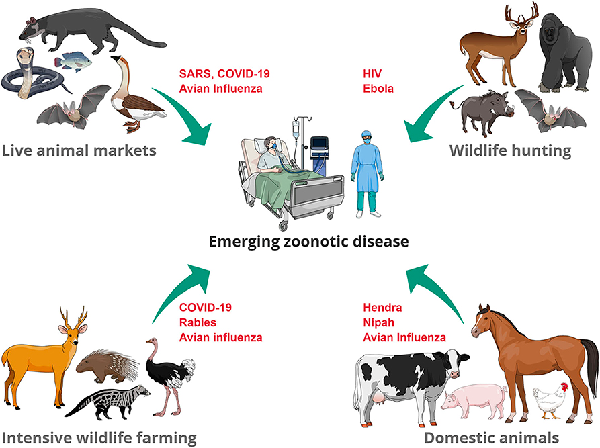
    COVID-19, SARS, bovine spongiform, swine flu and avian influenza all have one thing in common: they are all zoonotic diseases, suggesting they originated from animals.

    These diseases, however, do not literally “come from animals.” After all, animals aren’t scheming against people by tossing COVID-19 over the back fence.https://googleads.g.doubleclick.net/pagead/ads?gdpr=0&client=ca-pub-1220784161199635&output=html&h=280&slotname=4025056134&adk=4201343349&adf=1531280845&pi=t.ma~as.4025056134&w=920&fwrn=4&fwrnh=100&lmt=1631653867&rafmt=1&psa=0&format=920×280&url=https%3A%2F%2Fwww.graphic.com.gh%2Ffeatures%2Fopinion%2Fzoonotics-of-agricultural-production-shift-to-plant-based-diet.html&flash=0&fwr=0&fwrattr=true&rpe=1&resp_fmts=3&wgl=1&uach=WyJXaW5kb3dzIiwiMTAuMC4wIiwieDg2IiwiIiwiOTMuMC40NTc3LjYzIixbXSxudWxsLG51bGwsIjY0Il0.&dt=1631653864625&bpp=9&bdt=2160&idt=1414&shv=r20210909&mjsv=m202109130101&ptt=9&saldr=aa&abxe=1&prev_fmts=0x0%2C160x600&nras=1&correlator=3812534212057&frm=20&pv=1&ga_vid=902961464.1631653867&ga_sid=1631653868&ga_hid=172721370&ga_fc=0&u_tz=-420&u_his=1&u_java=0&u_h=640&u_w=1139&u_ah=607&u_aw=1139&u_cd=24&u_nplug=3&u_nmime=4&adx=101&ady=1058&biw=1123&bih=537&scr_x=0&scr_y=0&eid=44747621%2C31062297&oid=3&pvsid=230992473889810&pem=749&ref=https%3A%2F%2Fwww.google.com%2F&eae=0&fc=1920&brdim=0%2C0%2C0%2C0%2C1139%2C0%2C1139%2C607%2C1139%2C537&vis=1&rsz=%7C%7CpoeEbr%7C&abl=CS&pfx=0&fu=128&bc=31&ifi=3&uci=a!3&btvi=1&fsb=1&xpc=VwJYzrYRHy&p=https%3A//www.graphic.com.gh&dtd=3157

    When we state that this epidemic is “animal-related,” we mean that the diseases are caused by the way society produces, harvests and consumes animals.

    Reduced demand for animal products should be part of a comprehensive policy approach for averting the next pandemic.

    Fortunately, a successful strategy does not necessitate the government telling individuals what they should and should not consume.https://googleads.g.doubleclick.net/pagead/ads?gdpr=0&client=ca-pub-1220784161199635&output=html&h=280&slotname=4025056134&adk=4201343349&adf=70639872&pi=t.ma~as.4025056134&w=920&fwrn=4&fwrnh=100&lmt=1631653867&rafmt=1&psa=0&format=920×280&url=https%3A%2F%2Fwww.graphic.com.gh%2Ffeatures%2Fopinion%2Fzoonotics-of-agricultural-production-shift-to-plant-based-diet.html&flash=0&fwr=0&fwrattr=true&rpe=1&resp_fmts=3&wgl=1&uach=WyJXaW5kb3dzIiwiMTAuMC4wIiwieDg2IiwiIiwiOTMuMC40NTc3LjYzIixbXSxudWxsLG51bGwsIjY0Il0.&dt=1631653864625&bpp=12&bdt=2159&idt=1419&shv=r20210909&mjsv=m202109130101&ptt=9&saldr=aa&abxe=1&prev_fmts=0x0%2C160x600%2C920x280&nras=1&correlator=3812534212057&frm=20&pv=1&ga_vid=902961464.1631653867&ga_sid=1631653868&ga_hid=172721370&ga_fc=0&u_tz=-420&u_his=1&u_java=0&u_h=640&u_w=1139&u_ah=607&u_aw=1139&u_cd=24&u_nplug=3&u_nmime=4&adx=101&ady=1570&biw=1123&bih=537&scr_x=0&scr_y=0&eid=44747621%2C31062297&oid=3&pvsid=230992473889810&pem=749&ref=https%3A%2F%2Fwww.google.com%2F&eae=0&fc=1920&brdim=0%2C0%2C0%2C0%2C1139%2C0%2C1139%2C607%2C1139%2C537&vis=1&rsz=%7C%7CpoeEbr%7C&abl=CS&pfx=0&fu=128&bc=31&ifi=4&uci=a!4&btvi=2&fsb=1&xpc=ywJPfQblCI&p=https%3A//www.graphic.com.gh&dtd=3214

    Many Ghanaians, like the rest of the world, are well aware of the advantages of a plant-based diet.

    Government policy could be more effective if it did a better job of helping those who are already striving to make dietary changes.

    Policies that improve animal health and increase food production monitoring and regulation may help to lower the danger of zoonotic infections.

    Policy possibilitieshttps://googleads.g.doubleclick.net/pagead/ads?gdpr=0&client=ca-pub-5510276167635361&output=html&h=280&slotname=5081102193&adk=3227442708&adf=993977256&pi=t.ma~as.5081102193&w=940&fwrn=4&fwrnh=100&lmt=1631653867&rafmt=1&psa=0&format=940×280&url=https%3A%2F%2Fwww.graphic.com.gh%2Ffeatures%2Fopinion%2Fzoonotics-of-agricultural-production-shift-to-plant-based-diet.html&flash=0&fwr=0&fwrattr=true&rpe=1&resp_fmts=3&wgl=1&uach=WyJXaW5kb3dzIiwiMTAuMC4wIiwieDg2IiwiIiwiOTMuMC40NTc3LjYzIixbXSxudWxsLG51bGwsIjY0Il0.&dt=1631653864625&bpp=22&bdt=2160&idt=1422&shv=r20210909&mjsv=m202109130101&ptt=9&saldr=aa&abxe=1&prev_fmts=0x0%2C160x600%2C920x280%2C920x280&nras=1&correlator=3812534212057&frm=20&pv=2&ga_vid=902961464.1631653867&ga_sid=1631653868&ga_hid=172721370&ga_fc=0&u_tz=-420&u_his=1&u_java=0&u_h=640&u_w=1139&u_ah=607&u_aw=1139&u_cd=24&u_nplug=3&u_nmime=4&adx=91&ady=2120&biw=1123&bih=537&scr_x=0&scr_y=0&eid=44747621%2C31062297&oid=3&pvsid=230992473889810&pem=749&ref=https%3A%2F%2Fwww.google.com%2F&eae=0&fc=1920&brdim=0%2C0%2C0%2C0%2C1139%2C0%2C1139%2C607%2C1139%2C537&vis=1&rsz=%7C%7CpoeEbr%7C&abl=CS&pfx=0&fu=128&bc=31&ifi=5&uci=a!5&btvi=3&fsb=1&xpc=JFqYsNiBMr&p=https%3A//www.graphic.com.gh&dtd=3251

    Expanding scientific study into the environmental components of zoonotic diseases, as well as creating and implementing stronger biosecurity measures are some of the policy possibilities.

    It advocates for legislation that improve animal health (including wildlife health services), as well as greater monitoring and regulatory capability in the food industry.

    Government should also find measures to lessen their demand for animal protein, according to the paper.

    Reducing meat demand isn’t increasingly recognised as essential as a policy solution, partially because many people don’t associate our present pandemic with the dietary pattern or agricultural sector.

    Throughout time’s vicissitudes, the incidents of pandemics have been known to have originated from animal husbandry and industrial production chain.

    Reference can be made to the mad cow disease (Bovine spongiform encephalopathy) outbreak in the United kingdom in the 1980s, the H5N1 (bird flu) outbreak traced to Chinese chicken factories in 1997, swine flu (H1N1) outbreak in 2009, which is known to have originated from farms in North Carolina in the United States and Mexico, the west African Ebola outbreak in 2013, though it is believed to have its earlier traces identified 1976 in parts of Central Africa, followed by the SARS-COVID 19 (corona virus), whose early cases were associated to the animal market in Wuhan, China.

    Clearly, the origins of these pandemics aren’t limited to some countries or some practices.

    It is imperative to note that pandemic viruses have all been realised in situations where humans and animals meet, thus rearing animals on a larger scale as food will have significant effects on our lives.

    Plants

    One fundamental idea that emanates from these assertions is that fact that since the dawn of time, no single recorded pandemic is known to have originated with plants or has a history that can be traced to plants.

    Taking into consideration the unpredictability of the influx of pandemics, and our position to mitigate against its consequences, effectives strategies that will arouse public interest in substituting increasing need for animal food with plant food, will place us in a much advantageous position against future pandemics.

    It is incumbent of policy makers to implement policies appropriate for more consumption of plant-based diet than animal-based diet, however, this may not be heralded by policy leaders as it involves changing some behavioural, patterns of people, which may in most cases be considered as not the business of policy makers or government.

    However, there is a sense in which taking this into consideration of more imperative. An attention shift towards plant-based diet means cultivating more plants, which not only serves as healthy food, but also a supportive climate change agent.

    In order to successfully realise that, measures can be initiated by incentivising and making plant-based farming more attractive which is evaluating food procurement and nutrition guidelines to ensure that public facilities such as schools, hospitals, jails, and industries serve a plant-based meal as a daily requirement on menus.

    Dietry guide

    The government should also work to implement its own dietary guide and increase access to plant-based foods, particularly for low-income, rural and northern citizens. Foods that are good for humans and the environment must be subsidised.

    It is clearly without a doubt that our dietary habits influence our environments as well as having health impacts on us.

    It is thus inevitably relevant for the Ghanaian populace and policy makers to support an agenda to shift to plant-based diet, taking into consideration, the interrelationship between zoonosis and animal production.

    Because if not us who and if not now, when? It is Kairos time.

    The writer is a Teaching/Research Assistant,
    University of Energy and Natural Resources.
    P.O. Box 214, Sunyani-Ghana

    UT: Hunter Found Dead In North Slope Area

    Exposing the Big Game's avatarCommittee to Abolish Sport Hunting Blog

    https://www.kpcw.org/post/hunter-found-dead-north-slope-area#stream/0

    ByRICK BROUGH•13 HOURS AGOShareTweetEmailListenListening…0:51

    Summit County deputies responded last weekend to the report of a hunter found dead, apparently of natural causes, in the North Slope area of the High Uintas.

    Sheriff’s Lt. Andrew Wright said that on Saturday morning, at about 7:45, his office heard from two hunters, traveling through an area east of the Mirror Lake Highway, who discovered a red ATV. About 20 feet away, they found a man who, the Lieutenant said, had been dead for some time.

    The fatality, later identified as a 67-year-old Syracuse resident, showed no signs of obvious wounds or indications of a suspicious death.

    According to Lt. Wright, the man’s family said he usually hunted alone and would send out his GPS location to keep in touch. His daughter said he didn’t appear, as scheduled, for his granddaughter’s softball game on Friday…

    View original post 22 more words

    DON’T BE FOOLED BY GREEN AND HUMANE WASHING

    thomas-iversen-4W8FgDVyUME-unsplash2.jpg
    Screenshot (696).png

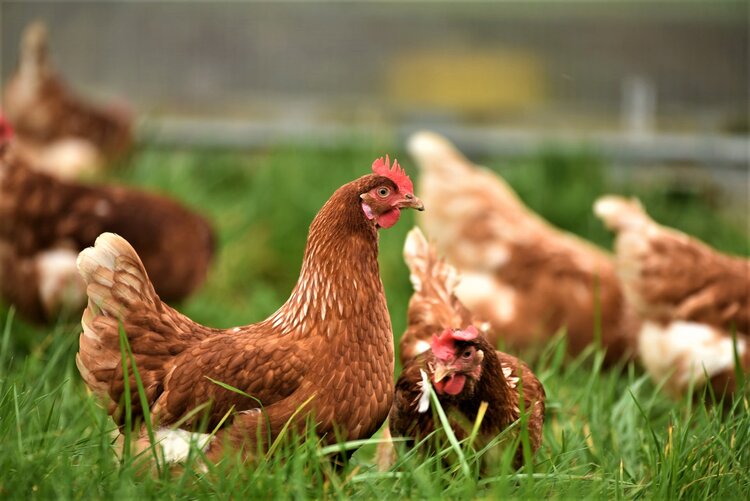
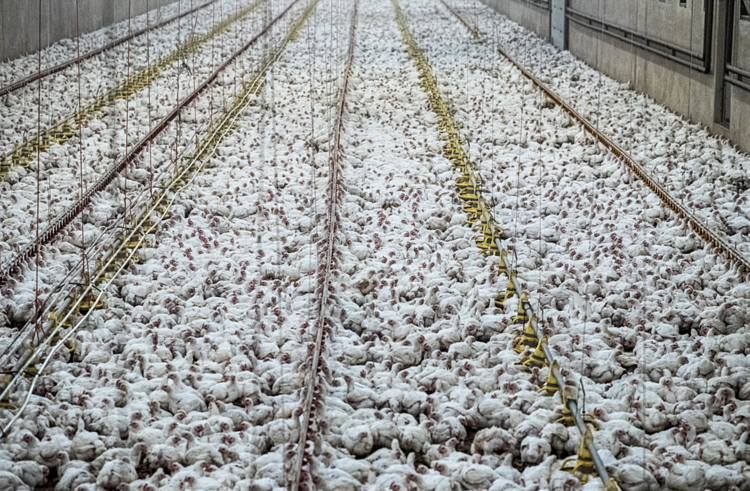
    Which photo do you think shows organic/free range chicken farming? The answer is: Both!

    Photos: Thomas Iversen on Unsplash (l); Juho Kerala/Hidden/We Animals Media (r)

    https://www.planetfriendlynews.com/blog/dont-be-fooled-by-green-and-humane-washing

    By Jessica Scott-Reid

    Jessica is a Canadian writer, animal advocate and plant-based food expert. Her work appears regularly in media across Canada and the US.

    In recent years, demand for meat, dairy and egg products that come from animals who consumers believe are treated more humanely than animals raised on factory farms, has increased. Similarly, demand for animal products farmed in ways that appear more environmentally friendly and sustainable, has also grown. It is no longer one of the world’s best kept secrets that industrialized animal farming comes with major animal welfare and climate change concerns. Thus, many consumers are now looking to certain food labels to assure them that what they are buying – and often spending more money on — offers more ethical and environmental value.

    But, with marketing and labelling terms such as “humanely raised” and “sustainably farmed” often unregulated, and in some cases used deceptively by industrial producers, consumers can be left confused or, worse, duped. Thankfully, a number of animal and environmental advocacy organizations, academic institutions and publications have come to the rescue with food labelling guides to help decipher which marketing terms mean what they imply, and which are conning caring consumers.  

    US 

    In the US, consumers are overwhelmed with choices when it comes to seemingly humane or sustainable animal products. The barrage of labels claiming items are “free range,” “organic,” “CARE certified” or “grass-fed” can make it nearly impossible to figure out which terms, if any, mean anything meaningful for animals or the planet.

    The Animal Welfare Institute has taken up this tricky task for consumers, creating a quick-check guide to weed through what many labels, certification programs and terms mean (or don’t mean), with added colour coding to identify the best and worst choices. FoodPrint has created a similar guide regarding common environmental labels. And for an even more in-depth look at terms used specifically to humane-wash meat, dairy and egg products, advocacy group Farm Forward created a report entitled The Dirt on Humanewashing.

    Staff and students at Vermont Law School have also made an online tool called Labels Unwrapped, which provides broader education on food labels and the laws behind them, including information on animal product labels, produce labels, supplements and more. Finally, for an easy breakdown and great read, writer Rachel Krantz for VOX authored: “Wild-caught,” “organic,” “grass-fed”: what do all these animal welfare labels actually mean?  which also discusses fish labeling.   

    Planet Friendly News/Food labelling/Green washing

    Canada  

    Though Canada has fewer labels and certification programs pertaining to animal products than the US, buzzwords known to evoke unwarranted compassion, such as “cage free” and “natural,” are still found in most meat, dairy and egg aisles. To assist the consumer in casting a critical eye over these claims, Canadian animal law organization Animal Justice, provides on its site a list of common meat, dairy and egg labelling terms, and what they mean.

    And for discussion on Canada’s Roundtable on Sustainable Beef, a label now gracing beef products sold at Canadian Walmarts, Corporate Knights Magazine offers a well-balanced take in Is ‘sustainable beef’ a load of bull?  

    UK/ EU  

    In the UK, animal welfare organization Compassion in World Farming discusses some of those common meat, dairy and egg label claims, along with certification programs unique to the region, such as Soil Association Standard, RSPCA Assured, and Red Tractor. The BBC also has a helpful list of pros and cons regarding certain food labels, which also includes Rainforest Alliance and Marine Stewardship Council.   

    In the EU, Eurogroup For Animals published a report last year on the various meat, dairy and egg labelling schemes across EU countries. The report also discusses growing demand for label transparency, and makes a case for the mandatory implementation of what it calls Method of Production + labelling, “that would combine method-of-production marking with simple information on animal welfare, based on a core set of animal welfare indicators.”   

    Marketing and labelling of meat, dairy and egg products has become a complex and somewhat volatile endeavour across the Western world. A growing number of consumers are eager to spend a little more money to feel a little less guilty about the impact of their purchases, and the meat, egg and dairy industries are ready to make claims that will ease consumers’ consciences.

    Decoding which animal welfare and environmental claims are truthful, audited, and genuinely beneficial is a difficult task. And even those deemed best can only ever tell a story of products that may be a little less harmful than the standard. Animal farming is inherently cruel and always ecologically damaging, albeit to varying degrees. To truly reduce harm upon animals and the planet, opting for plant-based alternatives and proteins will always be a better bet.   

    Sign up below for our newsletter — delivered to your inbox every month — to share insightful stories on how to have a positive impact on life on our planet.

     SEPTEMBER 13, 2021NEXTOTHER VICTIMS OF CLIMATE CHAOS

    Huge reduction in meat-eating ‘essential’ to avoid climate breakdown

    This article is more than 2 years old

    Major study also finds huge changes to farming are needed to avoid destroying Earth’s ability to feed its population

    https://www.theguardian.com/environment/2018/oct/10/huge-reduction-in-meat-eating-essential-to-avoid-climate-breakdown

    Steak and a healthy vegetarian meal with pulses.
    Steak and a healthy vegetarian meal with pulses. Composite: Getty Images

    Damian Carrington Environment editor@dpcarringtonWed 10 Oct 2018 13.00 EDT

    2,246

    Huge reductions in meat-eating are essential to avoid dangerous climate change, according to the most comprehensive analysis yet of the food system’s impact on the environment. In western countries, beef consumption needs to fall by 90% and be replaced by five times more beans and pulses.

    The research also finds that enormous changes to farming are needed to avoid destroying the planet’s ability to feed the 10 billion people expected to be on the planet in a few decades.

    Food production already causes great damage to the environment, via greenhouse gases from livestock, deforestation and water shortages from farming, and vast ocean dead zones from agricultural pollution. But without action, its impact will get far worse as the world population rises by 2.3 billion people by 2050 and global income triples, enabling more people to eat meat-rich western diets.

    Cattle at an illegal settlement in the Jamanxim National Forest, northern Brazil.

    This trajectory would smash critical environmental limits beyond which humanity will struggle to live, the new research indicates. “It is pretty shocking,” said Marco Springmann at the University of Oxford, who led the research team. “We are really risking the sustainability of the whole system. If we are interested in people being able to farm and eat, then we better not do that.”

    “Feeding a world population of 10 billion is possible, but only if we change the way we eat and the way we produce food,” said Prof Johan Rockström at the Potsdam Institute for Climate Impact Research in Germany, who was part of the research team. “Greening the food sector or eating up our planet: this is what is on the menu today.”https://interactive.guim.co.uk/uploader/embed/2018/10/archive-zip/giv-3902g0So34D17lH0

    The new study follows the publication of a landmark UN report on Monday in which the world’s leading scientists warned there are just a dozen years in which to keep global warming under 1.5C, beyond which even half a degree will significantly worsen the risks of drought, floods and extreme heat. The report said eating less meat and dairy was important but said current trends were in the opposite direction.Advertisementhttps://711edaa8d79bfe2f073f96ff59f44717.safeframe.googlesyndication.com/safeframe/1-0-38/html/container.html

    The new research, published in the journal Nature, is the most thorough to date and combined data from every country to assess the impact of food production on the global environment. It then looked at what could be done to stop the looming food crisis.

    “There is no magic bullet,” said Springmann. “But dietary and technological change [on farms] are the two essential things, and hopefully they can be complemented by reduction in food loss and waste.” About a third of food produced today never reaches the table.

    The researchers found a global shift to a “flexitarian” diet was needed to keep climate change even under 2C, let alone 1.5C. This flexitarian diet means the average world citizen needs to eat 75% less beef, 90% less pork and half the number of eggs, while tripling consumption of beans and pulses and quadrupling nuts and seeds. This would halve emissions from livestock and better management of manure would enable further cuts.

    In rich nations, the dietary changes required are ever more stark. UK and US citizens need to cut beef by 90% and milk by 60% while increasing beans and pulses between four and six times. However, the millions of people in poor nations who are undernourished need to eat a little more meat and dairy.

    Reducing meat consumption might be achieved by a mix of education, taxes, subsidies for plant-based foods and changes to school and workplace menus, the scientists said.

    To halt deforestation, water shortages and pollution from overuse of fertiliser, profound changes in farming practices are needed. These include increasing crop yields in poorer nations, more universal water storage and far more careful use of fertilisers.

    “I was surprised by the fact we need a combination of very ambitious options,” Springmann said. “We really need to push it to the edge of what is possible.”

    All the diet and farming options are already being implemented in somewhere in the world, said Springmann. In the Netherlands and Israel, fertilisers and water are being better used, while big cuts in meat consumption are being seen among young people in some cities.

    Synthetic burger restaurant

    But a global change is needed, he said: “I think we can do it, but we really need much more proactive governments to provide the right framework. People can make a personal difference by changing their diet, but also by knocking on the doors of their politicians and saying we need better environmental regulations – that is also very important. Do not let politicians off the hook.”

    Prof Tim Benton at the University of Leeds, who was not part of the research team, said: “Ultimately, we live on a finite planet, with finite resources. It is a fiction to imagine there is a technological solution allowing us to produce as much food as we might ever want, allowing us to overeat and throw food away.” He said the environmental burden of the current food system “undermines the ability of future generations to live on a stable and ecologically rich planet”.

    Prof Peter Smith at the University of Aberdeen, who was also not part of the research team, said: “We know food choices are very personal, and that behaviour change can be difficult to encourage, but the evidence is now unequivocal – we need to change our diets if we are to have a sustainable future. The fact that it will also make us healthier makes it a no-brainer.”

    Meat accounts for nearly 60% of all greenhouse gases from food production, study finds

    Production of meat worldwide emits 28 times as much as growing plants, and most crops are raised to feed animals bound for slaughter

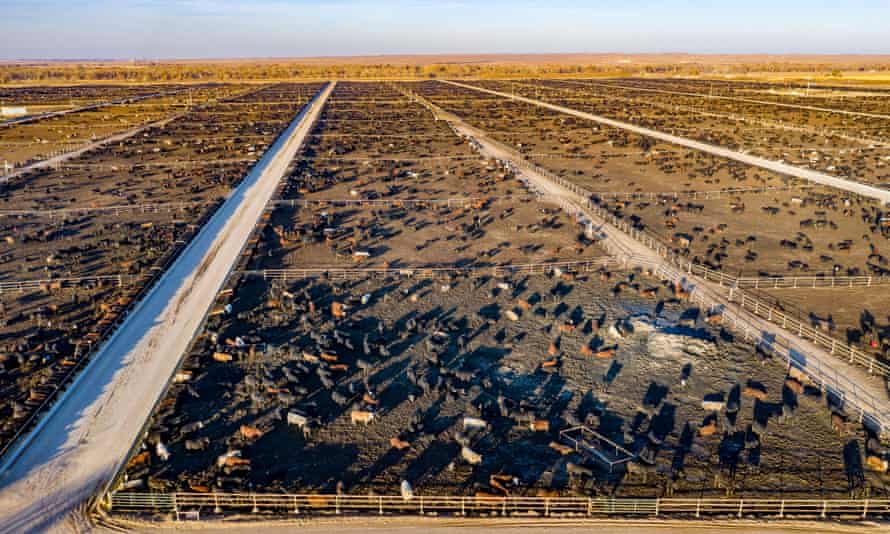
    A single kilo of beef creates 70kg of emissions. This feedlot in Colorado can hold 98,000 cattle.
    A single kilo of beef creates 70kg of emissions. This feedlot in Colorado can hold 98,000 cattle. Photograph: Jim West/Alamy Stock Photo

    Oliver Milman@olliemilmanMon 13 Sep 2021 11.00 EDT

    https://www.theguardian.com/environment/2021/sep/13/meat-greenhouses-gases-food-production-study?fbclid=IwAR10tnfrj1DGM5v5u5Dz00P1bVnCKF1ZYF3AX07DGP7dohtQGaA-zWPbkz

    The global production of food is responsible for a third of all planet-heating gases emitted by human activity, with the use of animals for meat causing twice the pollution of producing plant-based foods, a major new study has found.

    The entire system of food production, such as the use of farming machinery, spraying of fertilizer and transportation of products, causes 17.3bn metric tonnes of greenhouse gases a year, according to the research. This enormous release of gases that fuel the climate crisis is more than double the entire emissions of the US and represents 35% of all global emissions, researchers said.

    “The emissions are at the higher end of what we expected, it was a little bit of a surprise,” said Atul Jain, a climate scientist at the University of Illinois and co-author of the paper, published in Nature Food. “This study shows the entire cycle of the food production system, and policymakers may want to use the results to think about how to control greenhouse gas emissions.”

    The raising and culling of animals for food is far worse for the climate than growing and processing fruits and vegetables for people to eat, the research found, confirming previous findings on the outsized impact that meat production, particularly beef, has on the environment.

    The use of cows, pigs and other animals for food, as well as livestock feed, is responsible for 57% of all food production emissions, the research found, with 29% coming from the cultivation of plant-based foods. The rest comes from other uses of land, such as for cotton or rubber. Beef alone accounts for a quarter of emissions produced by raising and growing food.https://interactive.guim.co.uk/uploader/embed/2021/09/archive-zip/giv-825aLgf1Cna7ZLS/

    Grazing animals require a lot of land, which is often cleared through the felling of forests, as well as vast tracts of additional land to grow their feed. The paper calculates that the majority of all the world’s cropland is used to feed livestock, rather than people. Livestock also produce large quantities of methane, a powerful greenhouse gas.

    “All of these things combined means that the emissions are very high,” said Xiaoming Xu, another University of Illinois researcher and the lead author of the paper. “To produce more meat you need to feed the animals more, which then generates more emissions. You need more biomass to feed animals in order to get the same amount of calories. It isn’t very efficient.”

    The difference in emissions between meat and plant production is stark – to produce 1kg of wheat, 2.5kg of greenhouse gases are emitted. A single kilo of beef, meanwhile, creates 70kg of emissions. The researchers said that societies should be aware of this significant discrepancy when addressing the climate crisis.Advertisementhttps://f5082b5b82680f355b9138534e6bb88b.safeframe.googlesyndication.com/safeframe/1-0-38/html/container.html

    “I’m a strict vegetarian and part of the motivation for this study was to find out my own carbon footprint, but it’s not our intention to force people to change their diets,” said Jain. “A lot of this comes down to personal choice. You can’t just impose your views on others. But if people are concerned about climate change, they should seriously consider changing their dietary habits.”

    The researchers built a database that provided a consistent emissions profile of 171 crops and 16 animal products, drawing data from more than 200 countries. They found that South America is the region with the largest share of animal-based food emissions, followed by south and south-east Asia and then China. Food-related emissions have grown rapidly in China and India as increasing wealth and cultural changes have led more younger people in these countries to adopt meat-based diets.

    The paper’s calculations of the climate impact of meat is higher than previous estimates – the UN’s Food and Agricultural Organization has said about 14% of all emissions come from meat and diary production. The climate crisis is also itself a cause of hunger, with a recent study finding that a third of global food production will be at risk by the end of the century if greenhouse gas emissions continue to rise at their current rate.

    Scientists have consistently stressed that if dangerous global heating is to be avoided, a major rethink of eating habits and farming practices is required. Meat production has now expanded to the point that there are now approximately three chickens for every human on the planet.

    Lewis Ziska, a plant physiologist at Columbia University who was not involved in the research said the paper is a “damn good study” that should be given “due attention” at the upcoming UN climate talks in Scotland.

    “A fundamental unknown in global agriculture is its impact on greenhouse gas emissions,” Ziska said. “While previous estimates have been made, this effort represents a gold standard that will serve as an essential reference in the years to come.”