Man-animal conflicts have left 74 people dead and 134 injured each year on an average with over 90 per cent of such incidents involving elephants in Jharkhand. Between 2016 to 2020, 301 people and 80 elephants have died. Picture used for illustrative purposes only.Image Credit: Razeq Mohammad
Patna: A young elephant that killed 16 people in the past two months has been reunited with the herd in Jharkhand.
“We were constantly on the move, keeping track of the tusker and alerting the villagers about its unruly behaviour. We have information the separated elephant has got united with the herd,” local divisional forest officer Satish Chandra Rai said over the phone from Dhanbad town on Thursday.
“Yet, we are keeping a close watch on his behaviour to see how the herd reacts,” he added. Currently, the herd has been spotted in Giridih forests, he informed.
Forest department officials said the mature male, around 16 years old, had been on the rampage ever since it got separated from the herd of 22 elephants in the forests of Dhanabad district in May this year. Subsequently, it went from one district to another, and trampled to death as many as 16 villagers in six districts after covering a distance of 500km.
Several teams of forest staff were tracking the elephant and alerted the villagers not to come in its path . The villagers didn’t take heed and tried to capture the animal which led to its violent behaviour , In villages close to forest, people chase away elephants with the help of traditional weapons, like spears and bamboo sticks.
Another forest official told local media the elephant might have been expelled from the herd for its “bad behaviour”. “So we are studying his behaviour and monitoring his activities closely. We want to see if he is accepted back into the herd,” he added.
The elephant had demonstrated his extreme behaviour in Jamtara district when he lifted an elderly couple with his trunk and killed them while they ventured out before dawn. The incident took place in the last week of June.
A similar story was reported from Jharkhand two years back when a young elephant killed 20 villagers after getting separated from the herd. The forest department team tried hard to tranquillise the elephant but did not succeed. Eventually, the elephant had to be put down.
Man-animal conflicts have left 74 people dead and 134 injured each year on an average with over 90 per cent of such incidents involving elephants in Jharkhand. Between 2016 to 2020, 301 people and 80 elephants have died.
First global assessment of the extent of snow and ice cover on Earth’s surface—a critical factor cooling the planet through reflected sunlight—and its response to warming temperatures.
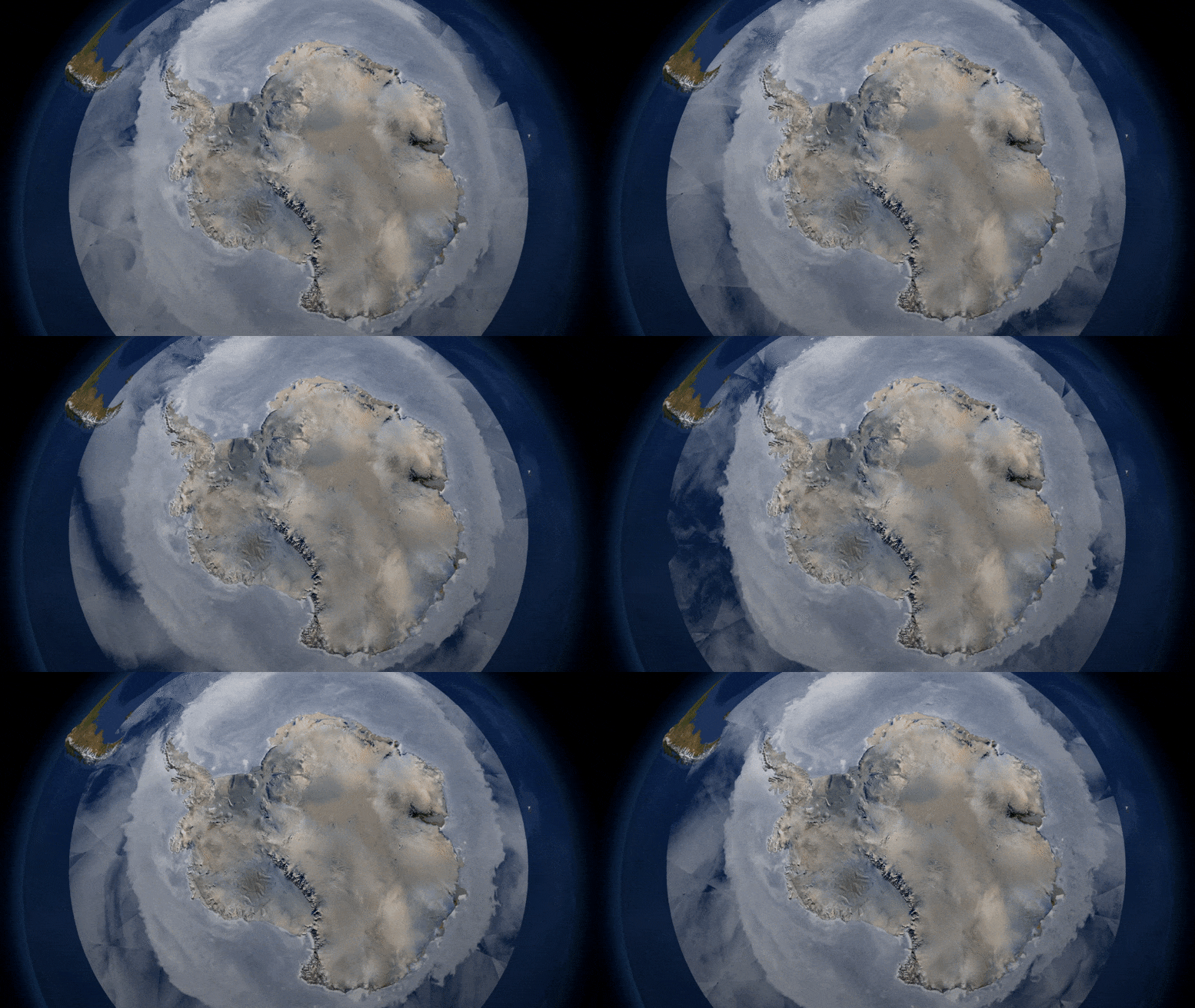
The global cryosphere—all of the areas with frozen water on Earth—shrank by about 87,000 square kilometers (about 33,000 square miles), a area about the size of Lake Superior, per year on average, between 1979 and 2016 as a result of climate change, according to a new study. This research is the first to make a global estimate of the surface area of the Earth covered by sea ice, snow cover, and frozen ground.
The extent of land covered by frozen water is just as important as its mass because the bright white surface reflects sunlight…
Updated 7:08 AM ET, Thu July 1, 2021Proposed legislation would phase out cages for farm animals, including rabbits, young hens, quails, ducks and geese.
(CNN)The European Union will work to phase out caged animal farming across the bloc, after a petition calling for an end to the practice gathered more than a million signatures.The European Commission has outlined plans to propose legislation which would phase out — and ultimately ban — cages for farm animals, including rabbits, young hens, quails, ducks and geese.The changes would be suggested by 2023 and introduced by 2027, the Commission said in a statement Wednesday.
Currently, only laying hens, broiler chickens, sows and calves are covered by the EU rules on caging.
“Animals are sentient beings and we have a moral, societal responsibility to ensure that on-farm conditions for animals reflect this,” Stella Kyriakides, commissioner for health and food safety, said in a statement.
“Citizens demanded change and the Commission received the message loud and clear, making an unequivocal and visionary commitment to phase out cages. The tide is finally turning. We will stay focused on the European institutions until they deliver on this ambition and will be vigilant in preventing vested interests from watering it down.”Factory farming is the biggest cause of cruelty to sentient creatures on the planet. Ending the use of cages is a massive step towards ending factory farming,” she added.
Eurogroup for Animals, a lobby group based in Brussels, Belgium, said the changes would affect more than 300 million farmed animals on the continent.Reineke Hameleers, Eurogroup for Animals CEO, said the commitment to end caged animal farming would have a “huge impact for millions of animals.”
Old Faithful erupts in Yellowstone. Photograph: Susanne Pommer/Alamy
If temperatures rise 10F by the century’s end as projected,Old Faithful could stop erupting, and the snowpack that feeds rivers throughout the west may disappearAdam Popescu@adampopescuFri 2 Jul 2021 01.00 EDT
When a band of geological surveyors and US army scouts mapped out what would become Yellowstone in 1870, the geysers and springs seemed endless – a land so unbound that Congress moved to name it the world’s first national park.
Nearly 150 years later, about 4 million people visit the park annually to see its most famous geyser: Old Faithful.It is a sight to behold, shooting tens of thousands of litres of boiling water hundreds of feet into the air about 17 times a day.
While the geyser is highly predictable – it eruptsevery 44 to 125 minutes since 2000 – a new climate assessment and a recent study has revealed that rising temperatures, reduced snowfall and increased rain threaten to shut Old Faithful off completely by the end of the century.
While that could threaten the natural beauty of the park, it also means an ecosystem three times the size of Rhode Island, stretching 22m acres across Montana, Wyoming and Idaho, faces a threat that no national park can protect against: temperature.
The Greater Yellowstone ecosystem’s size, boundaries and characteristics can vary greatly. Photograph: Yellowstone Resources and Issues Handbook
If temperatures at Yellowstone rise10F (5.6C) by the end of the century, as they are projected to, this vast ecosystem will be disrupted. Old Faithful will almost surely shut off completely, and the snowpack that feeds rivers throughout the west may disappear.
While the story of climate change is well-known, what’s new is the startling connection between temperature and water, a shift which threatens an extensive geyser system that makes this place so iconic.
But it is not the first time this has happened. About 800 years ago, extreme heat and drought made Old Faithful come to a complete standstill for decades, a shift which changed everything from what plant species grew in the area to what the land looked like.
Looking at what happened then could be a mirror to the present – a way of looking back to look forward.
Academics are trying to use the park’s recent past as a sort of climate roadmap, helping us to predict what might happen next. But reading that map isn’t easy – or clean. The geological samples studied to help predict what happens next are full of mud, pollen and sludge – heavy, hard to reach and buried deep under lakes.
In 2018, Chris Schiller, a post-doctoral research associate at Montana State University, set out to find out what made one lake in the geyser basin go from thermal to freshwater centuries ago, and whether that stark change may have been caused by a period of staggering heat and drought that looks very much like the temperature shifts we are experiencing today.
In the lab, Schiller’s team discovered evidence of fire, drought and temperature shifts in the sediment. The research fills in gaps to prehistoric climate and vegetation, all indicators of how this land has changed. The why remains more opaque, but we do know that the conditions that led to this change occurred in a period of extreme dryness, like today.
But what can this study tell us about the future?
Yellowstone is home to 10,000 hydrothermal features which could be affected, including the Grand Prismatic Spring, pictured. Photograph: Peter Adams Photography/Alamy
“The best part of science is you find something no one else has ever seen, something new, and that’s what happened at Goose Lake. We’re still trying to figure out what it means,” saysCathy Whitlock, a paleo-climatologist at Montana State University, and Schiller’s research partner and co-author.
What we do know, she says, is that the period of mega droughts that caused Old Faithful to dry up was potentially less extreme than now. “We are now moving into a climate that seems even warmer and drier than those periods. That’s crazy,” she says, adding: “It’s possible that this whole geyser basin and the plumbing is going to change.”
Whitlock specializes in long-term environmental and climate change, and has spent four decades sifting through these sediment-rich lakes, publishing more than 200 scientific papers on the topic, including co-writing Yellowstone’s first ever climate assessment which showed that since 1950, the area’s average temperature has increased by 2.3F (1.3C).Advertisementhttps://b0790319982ed80465a1327f6c3ee9a9.safeframe.googlesyndication.com/safeframe/1-0-38/html/container.html
Such a small shift may seem benign – until you realize that the last Ice Age was only around 5-7F (2.8-3.9C) colder than the pre-industrial period.
In recent decades, the average temperature in the park has been as high or higher than in any period in the last 20,000 years, and could be the warmest of the last 800,000 years, according to the recent Yellowstone climate assessment.
One clue as to what will happen next can be found by looking at plant fossils.
A portion of a White Bark Pine forest. The different colors show various levels of damage done to the trees by a combination of Mountain Pine beetles and climate change. Photograph: Gado Images/Alamy
Schiller and Whitlock’s work showed that about 4,000 years ago, a cool, wet period abruptly ended, and the temperatures looked a lot like today. Modern Yellowstone is known for thick pine forests, expansive geyser basins with grassy vistas that break the tree cover. When the team analyzed the pollen buried in Goose Lake, they found that once the temperature heated up, the pine stopped growing and there was a sudden explosion of sagebrush and other grasses that do well in hotter climates. This points to drought at the time, Whitlock says.
So far, no one is 100% sure whether or not the changes were caused by climate alone. But with trees dying off due to the hotter climate, this could mean less forest in the coming decades here, which has a cascading effect: less forest and tree roots mean more grass and more erosion. Drier grass means less nutrients for major mammals. Less water also hurts everything from migratory and aquatic species to grazers like bison who face decreased nutrients from dry plants.Advertisement
Big flora like white bark pine, a key species already vulnerable from years of destructive beetle outbreaks associated with rising temperatures, now face a 79% mortality rate, further increasing soil erosion and disappearing habitat. Each dry domino is an accelerant which further reduces snow and waterflow and turns already dry vegetation into spark-hungry tinder.
Extreme weather is now the norm and blazes like Yellowstone’s huge 1988 fires – which burned 800,000 acres – are a seasonal worry.
“We’re facing a critical moment,” Schiller says, referencing the current situation at Yellowstone.But the new climate report could jumpstart locals to begin discussing the changes around them. Whitlock points out that ranchers, miners and tourism are all set to be affected should the pristine settings and the water these mountains produce dry up – which could ultimately mean financial losses.
The Grand Canyon Lower Falls could dry up. Photograph: Alamy
The Yellowstone, Snake and Green Rivers feed major tributaries for the Missouri, Columbia and Colorado Rivers – vital for agriculture, recreation, energy production, even the water we receive inour kitchen sinks. Regional farming – potatoes, hay, alfalfa – and cattle ranching depend on late season irrigation, threatened by reduced snowfall. And abig question mark hangs over the rapidly growing tourism and hospitality industries that rely on Yellowstone’s world-class rivers and ski areas for angling and black diamond runs.Advertisementhttps://b0790319982ed80465a1327f6c3ee9a9.safeframe.googlesyndication.com/safeframe/1-0-38/html/container.html
Whitlock says the most important part of her career is giving people on the ground evidence of the changes she sees happening – even if they aren’t always keen to hear it. And while her work helps to reconstruct the past, she hopes it can also help to change the current trajectory we are on, before projections become reality.
As Whitlock reflects on her own legacy and the world she leaves her grandchildren, it can be scary. Referencing how steep temperatures have risen over the last few years, she says: “The trajectory we take depends on what we do about greenhouse gas now. By 2040, 2050, we can flatten the curve.” Her voice lowers and she collects herself. “What we do in the next decade is critical. We have new technologies, we can solve this. We just need the will to do it.”
Commercial salmon fishing — once the cultural and economic backbone of coastal B.C. — will be significantly diminished to protect the salmon, the federal government announced Tuesday. Photo by Marc Fawcett-AtkinsonListen to article
Commercial salmon fishing will be closed in most of coastal B.C. this year and into the foreseeable future to save the West Coast’s critically low fish stocks, the federal government announced Tuesday.
Nearly 60 per cent of the province’s commercial salmon fisheries, once the economic and cultural backbone of the B.C. coast, will be forced to shutter in 2021, Fisheries and Oceans Canada (DFO) said. Yukon salmon rivers will also be closed to all commercial fishing in 2021, while recreational fisheries in both Yukon and B.C. will be restricted. Many of B.C.’s coastal fisheries will likely not reopen to commercial harvesting for years in an attempt to revive the province’s dwindling salmon populations.
“No fisheries minister wants to make these kinds of decisions, because they’re very difficult and impact people’s livelihoods,” said federal Fisheries Minister Bernadette Jordan. “(But) no fisheries minister wants to be the minister when the stock collapses, and that’s where we are right now with Pacific salmon — it’s a stock on the verge of collapse. If we don’t do everything we can, we won’t have salmon.”
GET TOP STORIES IN YOUR INBOX.
Email *
Pacific salmon are in a long-term decline, with many runs verging on collapse as they struggle to survive climate change, habitat destruction and overfishing. Last year saw the lowest global salmon catch since 1982, according to the North Pacific Anadromous Fish Commission, an international organization protecting wild salmon and other fish.
The province’s salmon harvesters — many of them independent and nearing retirement — are also struggling after years of dangerously low catches, according to a report published by the United Fish and Allied Workers Union this spring.
To compensate harvesters for the loss, DFO is creating a program to buy back commercial fishing licences from fish harvesters in an effort to permanently decrease the size of the West Coast salmon fleet. In 2019, DFO issued 1,582 commercial fishing licences for West Coast salmon, according to Statistics Canada.
Under the program, fish harvesters will be able to sell their licences back to the government at market value. Financially depleted after years of bad harvests, these licence buybacks will be many harvesters’ main retirement income, noted Tasha Sutcliffe, senior adviser for community fisheries at Ecotrust Canada.
First Nations communities that hold one of 127 communal commercial licences will be able to shift to fishing techniques less-damaging to salmon or use the licences to catch other healthy commercial species, like halibut.
“Some First Nations do harvest commercially, but they’re coming to the realization that something needs to be done to preserve our stocks,” said Chief Dalton Silver, fisheries representative for the Union of B.C. Indian Chiefs. Salmon are key to food security and cultural well-being for many Indigenous people in the province. Preserving them is essential, even if it impacts First Nations’ commercial fisheries, he said.
“I think a lot of our people would feel better if there was a complete halt to the commercial aspect of the fishery (to) allow the stocks to rebuild,” he said, noting that while not all Indigenous people agree entirely with that position, it is becoming more commonplace.
“It’s incredibly sad,” said Aaron Hill, executive director of Watershed Watch, an organization working to bring back B.C.’s salmon. “When we see a fishery closure, it’s a collective failure of all of us to manage our salmon and fisheries better over the last decades (to) avoid such drastic measures and their social and economic consequences.”
Commercial salmon fishing will be closed in most of coastal B.C., the federal government announced Tuesday. #Salmon #BC
It is essential the licence buyback program adequately supports fish harvesters who have seen their livelihoods disappear, said Hill. Overfishing is only one of the factors driving the species’ decline, with climate change, open-pen fish farms and habitat destruction also to blame.
“The salmon crisis is not the fault of working fishermen,” he explained.
Looking ahead, he hopes this decision will make a profound shift in how salmon is managed and harvested in B.C. That means moving to fishing techniques that increase the market value of each fish while reducing the overall environmental impact of commercial fishing.
For example, fishing by troll — a technique that relies on hooks and line — or harvesting fish once they reach their spawning river can send higher-quality fish to market with less ecological impact. Techniques that help harvesters only retain fish from the healthiest runs, like genetic testing, could also help make any future fisheries more sustainable, he said.
Silver added that fisheries management also needs to be overhauled to better integrate Indigenous knowledge.
“I’ve always said that if (Indigenous people) were involved from the very beginning, upon contact, with the management of our resources, we’d all be in a lot better place today,” he said. It’s an approach that has gained significant attention recently thanks to several researchers and its adoption by global seafood ranking organization Ocean Wise this spring.
DFO has committed to working with First Nations to revive the salmon, said Jordan, Canada’s fisheries minister. The ministry will also work with fish harvesters, environmental groups and other organizations to bring the fish back.
“There’s no one thing that’s going to solve the problem, but if we don’t start taking these measures now, there’s going to be no salmon to protect,” she said. “I think we have a moment in time, and that window is closing. I think if we don’t do this now, it will be too late — but I still think we have the ability to make a difference.”
With temperatures set to soar to 47 C in B.C., forests provide a cool, wet place for animals and people alike to seek shelter
By Emma GilchristJune 28, 2021 4 min. readPhotographer TJ Watt stands beside the stump of a giant old-growth cedar recently felled in the Caycuse watershed. Old-growth forests provide a refuge from extreme heat. Photo: TJ Watt / Ancient Forest Alliance
In a moment of weakness a couple of weeks ago, I agreed to run a 20-kilometre stretch of the Juan de Fuca trail on the southwest of Vancouver Island with a group from my gym.
“It’ll be fine,” I thought, comforting myself with the thought (a.k.a. delusion) that it would be a fun, elongated walk in the woods.
But as the date rapidly approached, there was just one problem: our “fun walk in the woods” turned out to be smack dab in the middle of British Columbia’s worst heat wave on record.
Yet the show went on. I left the parking lot at Sombrio Beach carrying nothing but three litres of water, four protein bars, a clean pair of socks and a moderately positive attitude.
Within 30 minutes, I was coated with mud and drenched with sweat. The temperature in Victoria was on its way to hitting 35.6-degrees that afternoon, making it the third hottest day on record for the city (until the all-time record was smashed the next day). But on the trail, mostly under the shade of the forest, I quickly discovered the temperature was surprisingly manageable.
I had a solid five hours to ponder the relationship between the forest and the heat as I traversed suspension bridges, fell in mud bogs and sweatily scampered along boardwalks.
Our end point was Botanical Beach, just outside of the town of Port Renfrew in Pacheedaht First Nation territory, less than a 15-minute drive from the Fairy Creek logging blockades. Every time I emerged into a clearing and felt the sun glaring down, I found myself wondering how much hotter it would be in the middle of a clearcut — and what that would mean for all of the surrounding forests, animals and people.
Get The Narwhal in your inbox!
People always tell us they love our newsletter. Find out yourself with a weekly dose of our ad‑free, independent journalismYour emailYour emailSUBSCRIBE
When I returned to internet service (and a normal body temperature), I started digging for research on this topic and came across a report written earlier this year by Peter Wood for Sierra Club BC on the connection between intact forests and climate risks.
“Just as climate change is expected to generate more extreme weather, intensive forest management, namely clearcutting, creates extreme conditions locally and at the landscape level,” Wood, who has a PhD in forestry from the University of Toronto, wrote.
“Old intact forests act as a moderating influence on the landscape, creating their own microclimate that is cooler and wetter year-round. The shade they provide allows for the development of a rich understory and soil development, which acts as a sponge, absorbing and releasing water slowly throughout the year, mitigating against both drought and flood conditions.”
Thanks to the cooling effect provided by intact forest, these ecosystems also provide a refuge during forest fires.
“Old growth provides almost like a Noah’s ark, where species will flee to more dense, cooler, wetter, old-growth forest,” Wood told me in an interview. “After a fire, what’s available there to regrow the forest comes from these species that were able to take shelter in these refuges.”
On the flipside, landscapes degraded by industrial logging increase local temperatures and make woody debris more flammable, according to the report.
In other words: not only do clearcuts result in increased temperatures, but they also provide the perfect fuel for forest fires. “Approximately 50 per cent of the entire biomass that’s in a forest is left behind after a clearcut and that starts to dry out and becomes this readily available fuel,” Wood said.
B.C.’s 429-page Strategic Climate Risk Assessment identifies 15 climate risks, the majority of which are influenced by logging, according to Wood. The assessment flagged the greatest climate-related risks as severe wildfire, seasonal water shortage and — you got it — heat waves.
But here’s the catch: nowhere in the assessment does the government examine how industrial logging contributes to those climate risks. “They actually did look at how climate change would impact the profitability of the logging sector and they have quite detailed consideration of how that might prevent harvesting operations and how flooding might hurt their mills,” Wood noted.
So here we are, on what is shaping up to be the hottest day ever recorded in Canada (the day after Lytton, B.C., smashed the Canadian heat record with a temperature of 46.6 Celsius), in a heat wave indicative of the patterns predicted by climate scientists for decades, and the B.C. government is still viewing forests primarily as a source for timber — not as stores of carbon, refuges for wildlife, flood prevention infrastructure or natural air conditioners.
Calls for the B.C. government to undergo a paradigm shift in terms of how it views its forests are growing.
“We’ve got to think about changing our priorities,” Wood said. “What kind of forest do we want that is best able to withstand the pressures of climate change and is going to keep our communities safe from fire, from flooding?”
“There’s no way we can be simultaneously logging our old-growth forests and talking about the best possible options in terms of management. If we wait too long, we’re just not going to have the options left to us.”
The current heat wave makes it viscerally clear that climate change is not a distant future problem.
Wood says he hopes the heat wave helps people realize that climate change and forest protection are not solely the concern of environmentalists.
“You don’t have to be an environmentalist to not want to burn in a climate-fuelled fire,” he said. “It strikes to the core of our very existence.”
The prosecution and defense presented opposing views in the first day of a jury trial for a man charged with his killing his 11-year-old stepson during a hunting incident in Clay Township.
St. Clair County Assistant Prosecuting Attorney JoshuaSparling said John Varndell Jr. was with his stepson, Zachary Rock, on Sept. 13 in Clay Townshipfor a youth hunt organized by the Department of Natural Resources.
Safety precautions weren’t taken for the hunt, including the wearing of hunter’s orange. Varndell decided to go off on his own, not knowing where the rest of the group was.
In the dark, where the group could only see using flashlights and cell phones, Varndell fired eight shots, Sparling said.
“You’re going to hear about eight shots that went ringing out through those woods,” Sparling said. “How one of those shots went right…
At the start of 2021, the Trump Administration removed the gray wolf from the federal endangered species list, ending longstanding federal safeguards for wolves across the lower 48 states, save for a small Mexican gray wolf population in Arizona and New Mexico.
Just weeks after the federal rule took effect, several states began enacting new policies to encourage the mass slaughter of their wolf population to bring numbers down to the bare minimum.
Killing wolves is unnecessary.
The concept that state-sanctioned killing of wolves is necessary to control wolf populations is one of the most widespread assumptions in large carnivore management. However, research demonstrates that wolves limit their own numbers.
As apex predators, wolves keep their own numbers in check.
Self-regulation in large carnivores like wolves ensures that the largest and the fiercest do not overexploit their resources.
According to a recent work published in OIKOS, population control is what distinguishes wolves and other “apex predators” from the rest. Wolves are highly social animals that live in well-organized family units called packs. Cooperative living gives wolf families a number of benefits. In addition to facilitating successful hunting, pup-rearing, and defending pack territory, cooperative living allows wolves to limit their own population – for example, they control the numbers within their group by only letting certain members breed. By self-regulating— they also help to keep their ecosystems in balance.
Wolf populations stabilize when carrying capacity is reached.
Since wolf reintroduction in Yellowstone over 20 years ago, the 2+ million-acre park has acted as a laboratory, offering scientists a deeper understanding of the complexity of that ecosystem, including the diverse pressures (beyond lethal control by humans) that manage wolf populations.
Because hunting wolves is not permitted within the Park boundaries, Yellowstone offers us a chance to see what happens to wolf populations when left undisturbed by humans.
National Park Service
In Yellowstone, wolf numbers have grown and generally stabilized. For the last decade, the wolf population has hovered around 100, which experts consider Yellowstone’s carrying capacity. Carrying capacity describes the maximum number of individuals or species that a specific environment’s resources can sustain for an indefinite period without degrading it. Once a species reaches its carrying capacity, population numbers stabilize.
Factors that affect the carrying capacity include:
Food Availability
Disease (canine distemper virus, mange, etc…)
Intra- pack strife
Competition with other predators (bears, mountain lions, coyotes)
Video screen grabs from an undercover investigation at Safari Club International’s annual hunter’s convention in Las Vegas-CopyrightHSIByTim Gallagher•Updated:01/07/2021 -17:10
A shocking new report reveals that the EU imported an average of eight hunting trophies of internationally protected species between 2014 and 2018.
Over the five-year period nearly 15,000 so-called trophies were imported to the bloc, making it the world’s second largest importer.
The items come from species including African lions, African elephants, critically endangered black rhinos and even polar bears who are vulnerable to extinction.
The research, conducted byHumane Society International (HSI), found an average of 2,982 imports of protected species a year – with Spain, Germany and Denmark making up 52 per cent of imports.
During the period examined the rate of imports increased by almost half. Protected species imported also included African leopards, Hartmann’s mountain zebras and cheetahs, with the EU being…


 Proposed legislation would phase out cages for farm animals, including rabbits, young hens, quails, ducks and geese.