![May be an image of deer and text that says 'How to hunt humanely 1] Retrieve rifle and ammunition. 2]Place rifle and ammunition in cabinet. 3]Lock cabinet and destroy key. 4) Stop killing animals, stupid stupid fuck @VEGANISMUS.TMEANSWER'](https://scontent.fhio3-1.fna.fbcdn.net/v/t1.6435-9/183092676_5535591473181386_807871670050562694_n.jpg?_nc_cat=105&ccb=1-3&_nc_sid=8bfeb9&_nc_ohc=75pZZlZguPcAX8buUfM&_nc_ht=scontent.fhio3-1.fna&oh=d82cbaf000d49c9dbcb092daf3d4b91b&oe=60C11363)


May 10, 2021Laura Oleniacz

Victoria Vayervrvayer@ncsu.eduLincoln Larsonlrlarson@ncsu.eduRichard von Furstenbergrjvonfur@ncsu.eduLaura Oleniacz, NCState News Servicesljolenia@ncsu.edu
A new survey led by researchers from North Carolina State University found that the future of hunting in the United States might look different than it has in the past.
InThe Journal of Wildlife Management,researchersreportedfindings from a nationwide survey of college students’ interest and participation in hunting. They found current, active hunters were more likely to be white, male and from rural areas, and to have family members who hunted. But they also found a group of potential hunters – with no hunting experience but an interest…
View original post 647 more words
https://www.eurekalert.org/pub_releases/2021-05/pp-cca051021.php
PENSOFT PUBLISHERS

Porcupines are frequently traded across Asia, and Indonesia, home to five species, is no exception. They are targeted for a number of reasons: their meat as an alternative source of protein, their bezoars consumed as traditional medicine, and their quills used as talismans and for decorative purposes.
A new study examining seizure data of porcupines, their parts and derivatives in Indonesia found a total of 39 incidents from January 2013 to June 2020 involving an estimated 452 porcupines. The research waspublishedin the open-access, peer-reviewed journalNature Conservation.
There are no harvest quotas for any porcupine species in Indonesia, which makes all hunting and trade…
View original post 341 more words

Romania has banned all trophy hunting of brown bears, wolves, lynx and wild cats in a surprise decision that gives Europe’s largest population of large carnivores a reprieve from its most severe and immediate threat.

“Hunting for money was already illegal, but it was given a green light anyway,” environment minster,
Cristiana Pasca-Palmer, told the Guardian. ‘The damages [clause in the habitats directive] acted as a cover for trophy hunting.”

Gabriel Paun, an activist and conservationist behind a petition that collected 11,000 signatures in the weeks before the hunting ban, sees the government’s decision as a step towards a safer future
for Europe’s wild spaces: “The Carpathian mountains are home to more biodiversity than anywhere else in Europe,
but for too long they have been ruthlessly exploited…
View original post 16 more words
https://www.sacbee.com/news/california/water-and-drought/article251298968.html
BY DALE KASLERMAY 10, 2021 01:46 PM, UPDATED MAY 10, 2021 06:35 PM
Play VideoDuration 5:13Gov. Gavin Newsom announces proposal of $5.1 billion drought planCalifornia Gov. Gavin Newsom announces a proposal of a $5.1 billion investment for drought preparedness, infrastructure and response to ensure a more climate resilient system, in Merced County, Calif, on Monday, May 10, 2021. BY ANDREW KUHN
Gov. Gavin Newsom expanded his drought emergency declaration to 39 more counties Monday, underscoring the rapid deterioration of California’s water supply in recent weeks.
The governor broadened his earlier drought order, which was limited to two counties on the Russian River, to cover most of parched California, which is plunging into its second major drought in less than a decade.
The new order covers the Sacramento and San Joaquin river watersheds, the Tulare Lake basin region and the Klamath region in far Northern California. About 30% of the state’s population is now covered by the declarations, including the greater Sacramento area and Fresno, Merced and Stanislaus counties in the San Joaquin Valley.TOP ARTICLEShttps://imasdk.googleapis.com/js/core/bridge3.457.0_en.html#goog_297238308https://imasdk.googleapis.com/js/core/bridge3.457.0_en.html#goog_1646510280https://imasdk.googleapis.com/js/core/bridge3.457.0_en.html#goog_1021849365javascript:falseSKIP ADSacramento police officer accused of filing false report appears in court via Zoom
Newsom didn’t issue any mandatory drought conservation measures, as his predecessor Jerry Brown did during the last drought.
But such mandatory orders, which could force urban Californians to cut back on outdoor usage, “are on the table” if the state has another dry winter, said Natural Resources Secretary Wade Crowfoot.
Subscribe now for only $1CLAIM OFFERhttps://31a7dc8a3438f8d42d9f3d2765763198.safeframe.googlesyndication.com/safeframe/1-0-38/html/container.html
Newsom issued the declaration shortly before arriving at San Luis Reservoir on the west side of Merced County, where he announced a proposal for a plethora of short- and long-term drought-assistance measures totaling $5.1 billion.
If approved by the Legislature, his “drought and water resilience package” would be part of a $100 billion economic stimulus plan he announced earlier in the day in Oakland.
Some Newsom critics say he has been reluctant to declare a statewide drought for fear of angering voters with a recall election coming this fall. But hydrology is forcing the issue.
Since he issued a regional drought emergency last month for Sonoma and Mendocino counties, warm spring temperatures have melted and evaporated most of the Sierra Nevada snowpack, which was well below average to begin with. Relatively little snowmelt — normally a big piece of the state’s summer and fall supply — reached California’s reservoirs.
The Sierra is producing “far less inflow into the reservoirs than any modeling would have predicted,” Crowfoot told The Sacramento Bee. “Much of the snowpack has melted into the ground.” Many of the major reservoirs, such as Folsom Lake and Lake Oroville, are just half as full as they normally are this time of year.
Sign up for the Daily Afternoon Bulletin and get a quick summary of the day’s news.SIGN UP
This site is protected by reCAPTCHA and the Google Privacy Policy and Terms of Service apply.https://31a7dc8a3438f8d42d9f3d2765763198.safeframe.googlesyndication.com/safeframe/1-0-38/html/container.html
Crowfoot said the state has lost 500,000 acre-feet of water in the past few weeks, enough to supply as many as 1 million homes for a year.https://datawrapper.dwcdn.net/9rGYt/3/
While Newsom stopped short of declaring a statewide emergency, he acknowledged that the pain from the drought is spreading throughout much of the state at a rapid clip.
“We looked at the issue of hydrology, we looked at the issue of snowmelt,” Newsom said as he stood in front of San Luis Reservoir, where much of the shoreline was exposed because of low water levels. He bemoaned “this climate-induced drought, which obviously is extreme and self evident.”
Newsom said he doesn’t think California needs orders requiring mandatory cutbacks in water consumption, saying Californians have already reduced their usage by 16% since the last drought. “We have changed our habits,” Newsom said.https://31a7dc8a3438f8d42d9f3d2765763198.safeframe.googlesyndication.com/safeframe/1-0-38/html/container.html
Still, he urged Californians to take voluntary steps, like keeping showers to five minutes, fixing leaks and switching to drought-tolerant landscaping.
Crowfoot said the emergency declaration could lead to orders from the state water board that would curtail farmers and others from pulling water from rivers that feed into the Sacramento-San Joaquin Delta, the hub of the California water delivery network. That will leave more water flowing through the system, which is necessary to flush salinity out of the Delta and into the ocean.
The emergency order could also speed up the installation of temporary rock barriers in the Delta, like the state used in the last drought, to prevent salt from getting into the estuary.
The order in the the Tulare basin would enhance the state’s ability to truck emergency supplies to communities that ran out of drinking water in the last drought and could become vulnerable again, he said.
Newsom’s $5.1 billion water resiliency proposal represents a huge increase on the $745 million he proposed spending in January. Crowfoot said Newsom is now proposing spending hundreds of millions of dollars to help at-risk rural communities improve the reliability of their water supplies, and funding to enhance environmental monitoring on California’s rivers to safeguard endangered steelhead and salmon during the drought.https://31a7dc8a3438f8d42d9f3d2765763198.safeframe.googlesyndication.com/safeframe/1-0-38/html/container.html
In addition, Newsom is proposing spending for long-term projects, including $500 million to help communities that will have to permanently retire farmland because of the state’s groundwater-management law; and $200 million to help repair major San Joaquin Valley canals that have buckled because of subsidence — the phenomenon that occurs when so much groundwater is pumped that the valley floor sinks. That includes the California Aqueduct, the Delta-Mendota Canal and the Friant-Kern Canal.
Elected officials who accompanied Newsom to the reservoir applauded his plans for improving the state’s water infrastructure. “We can stop the boom-and-bust cycle of drought and no water, and a wet year,” said state Sen. Anna Caballero, D-Salinas, whose district includes parts of Merced County.
| Tuesday, May 11, 2021 |
| PHOTOGRAPH BY JUSTIN SULLIVAN, GETTY IMAGES |
| ByRobert Kunzig, ENVIRONMENT Executive Editor
Nearly a century ago, the people who built Hoover Dam on the Colorado River were “inspired by a vision of lonely lands made fruitful,” as the inscription at the base of the flagpole on the Nevada side puts it. They could not know they were living in what would prove to be the wettest century of the past millennium in the American West. We sure know that now. The “megadrought” that began right at the turn of the 21st century is still going on, and this year is shaping up to be a bad one, in part due to climate change,Alejandra Borundawrites for Nat Geo. Most of Californiawas declared under drought emergency Monday, mainly because the snowpack that Californians depend on to help tide them through summer is… |
View original post 379 more words
https://interestingengineering.com/no-humans-didnt-evolve-from-the-ancestors-of-living-apes
The last ancestor that we shared with apes had its own set of traits, and was different from both us and modern apes.By Marcia WendorfMay 10, 2021 Man-Half-tube/iStockPhoto
The truth is that we don’t know where we, homo sapiens, came from. In his 1871 work, In The Descent of Man, Charles Darwin speculated that humans originated in Africa, and that we evolved from an ancestor who was different from any currently living species.
Now, a new study by an international group of paleoanthropologists, with a wide range of specialties, have backed up Darwin by concluding that it is likely that the last ancestor that we shared with apes had its own distinct set of traits that are different from those of both modern humans and modern apes.
Chimpanzees, with whom we share 98 percent of our DNA, are in genus Pan, while humans are in genus Homo. Humans diverged from chimpanzees between 9.3 and 6.5 million years ago. Top Articles
 READ MORE


 Engineering Failure: Man Trapped on300ft‑High Bridge After Glass Shattershttps://imasdk.googleapis.com/js/core/bridge3.457.0_en.html#goog_1640365065https://imasdk.googleapis.com/js/core/bridge3.457.0_en.html#goog_2056904514https://imasdk.googleapis.com/js/core/bridge3.457.0_en.html#goog_562727021javascript:falseSKIP AD

Historically, two major approaches have been used in analyzing human ancestry:
In reviewing the studies surrounding these diverging approaches, the authors of the paper argue that there are limitations to relying on just one or the other of these opposing approaches. This is because the top-down studies often assume that modern ape species share habitat and features of earlier groups, while bottom-up studies tend to give individual fossil apes a more important evolutionary role than may be warranted.
In an attempt to reconcile these approaches to identifying our ancient ancestor, the scientists looked at what the environment must have been like for the Pan-Homo last common ancestor, or LCA.
The Miocene epoch existed from around 23 to 5.3 million years ago, and a number of fossil ape genera from that era have been found. However, they show a combination of features common to both “orthograde” (upright) and “pronograde” (walking on all fours) body plan, which has led some scientists to exclude the Miocene apes from the human lineage, and there is no scientific consensus on the evolutionary role played by these fossil apes.

Some scientists espouse the theory that some Miocene apes dispersed out of Africa and into Eurasia, approximately 16 to 14 million years ago, before the hominins diverged from apes. Some of these apes gave rise to the line that produced orangutans, and the European “Dryopith” apes, while others returned to Africa where they evolved into modern African apes and hominins. Others interpret dryopiths as broadly ancestral to hominids or as an evolutionary dead end.
During the late Miocene period in Africa, increased habitat fragmentation may have led to the evolution of African ape knuckle-walking, and hominin bipedalism, or walking on two feet, from a common orthograde ancestor who lived in the trees. Walking on two feet might have allowed our human ancestors to adapt their diets and locomotion, and escape the “specialization trap” that kept other apes in an arboreal environment.
The study concluded that future research efforts should focus on looking for Miocene ape fossils in areas where they have yet to be found. The scientists also concluded that data-driven modeling should take precedence over trying to fit evolutionary scenarios to every fossil find.
Hominin fossils have been found in eastern and central Africa, and possibly also in Europe. Fossils of over 50 genera of ancient apes have been found in Africa and Eurasia, however, as Dr. Sergio Almécija, a researcher in the Division of Anthropology at the American Museum of Natural History told Sci-News “… there is no scientific consensus on the evolutionary role played by these fossil apes.”
Kelsey Pugh, one of the study co-authors, added that, “The unique and sometimes unexpected features and combinations of features observed among fossil apes, which often differ from those of living apes, are necessary to untangle which features hominins inherited from our ape ancestors and which are unique to our lineage.”

The new study seems to put us back to square one as to where we came from. Every ancient religion has its own theory of how we came to be. Giorgio A. Tsoukalos, better known as “the hair guy,” who is a producer of the show “Ancient Aliens” on which he often appears, theorizes that humans arose due to visits made to Earth made by ancient aliens. Tsoukalos shares those opinions with others including Erich von Däniken, Zecharia Sitchin, and Robert K. G. Temple.


By R. O. PARKE LOYD, ARIZONA STATE UNIVERSITY MAY 9, 2021
Proxima Centauri is the closest star to the solar system and is home to a potentially habitable planet. Credit: Hubble, European Space Agency
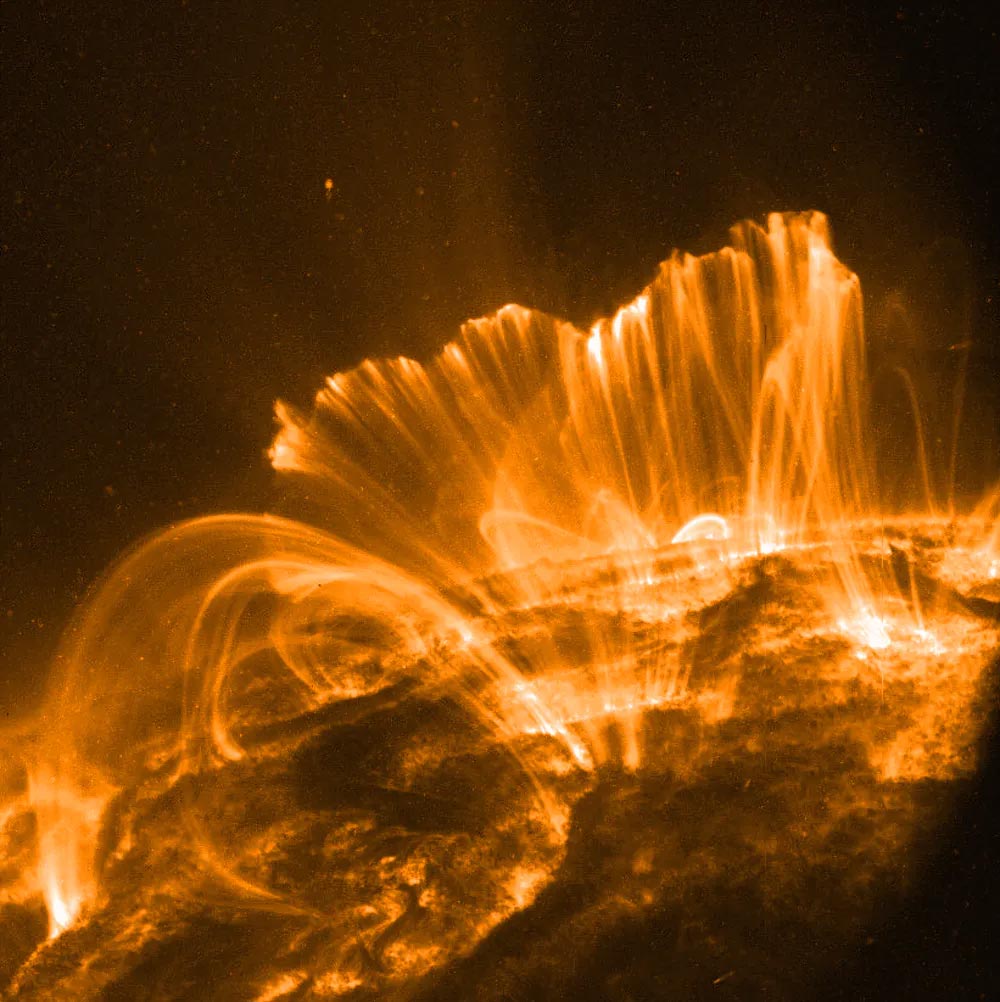
The Sun isn’t the only star to produce stellar flares. On April 21, 2021, a team of astronomers published new research describing the brightest flare ever measured from Proxima Centauri in ultraviolet light. To learn about this extraordinary event – and what it might mean for any life on the planets orbiting Earth’s closest neighboring star – The Conversation spoke with Parke Loyd, an astrophysicist at Arizona State University and co-author of the paper. Excerpts from our conversation are below and have been edited for length and clarity.
Why were you looking at Proxima Centauri?
Proxima Centauri is the closest star to this solar system. A couple of years ago, a team discovered that there is a planet – called Proxima b – orbiting the star. It’s just a little bit bigger than Earth, it’s probably rocky and it is in what is called the habitable zone, or the Goldilocks zone. This means that Proxima b is about the right distance from the star so that it could have liquid water on its surface.
But this star system differs from the Sun in a pretty key way. Proxima Centauri is a small star called a red dwarf – it’s around 15% of the radius of our Sun, and it’s substantially cooler. So Proxima b, in order for it to be in that Goldilocks zone, actually is a lot closer to Proxima Centauri than Earth is to the Sun.
You might think that a smaller star would be a tamer star, but that’s actually not the case at all – red dwarfs produce stellar flares a lot more frequently than the Sun does. So Proxima b, the closest planet in another solar system with a chance for having life, is subject to space weather that is a lot more violent than the space weather in Earth’s solar system.
Solar flares – like this one captured by a NASA satellite orbiting the Sun – eject huge amounts of radiation. Credit: NASA
What did you find?
In 2018, my colleague Meredith MacGregor discovered flashes of light coming from Proxima Centauri that looked very different from solar flares. She was using a telescope that detects light at millimeter wavelengths to monitor Proxima Centauri and saw a big of flash of light in this wavelength. Astronomers had never seen a stellar flare in millimeter wavelengths of light.
My colleagues and I wanted to learn more about these unusual brightenings in the millimeter light coming from the star and see whether they were actually flares or some other phenomenon. We used nine telescopes on Earth, as well as a satellite observatory, to get the longest set of observations – about two days’ worth – of Proxima Centauri with the most wavelength coverage that had ever been obtained.
Immediately we discovered a really strong flare. The ultraviolet light of the star increased by over 10,000 times in just a fraction of a second. If humans could see ultraviolet light, it would be like being blinded by the flash of a camera. Proxima Centauri got bright really fast. This increase lasted for only a couple of seconds, and then there was a gradual decline.
This discovery confirmed that indeed, these weird millimeter emissions are flares.
Proxima b – shown here in an artist’s rendering – is rocky and might support water or even life if the atmosphere is still intact. Credit: European Southern Observatory, M. Kornmesser
What does that mean for chances of life on the planet?
Astronomers are actively exploring this question at the moment because it can kind of go in either direction. When you hear ultraviolet radiation, you’re probably thinking about the fact that people wear sunscreen to try to protect ourselves from ultraviolet radiation here on Earth. Ultraviolet radiation can damage proteins and DNA in human cells, and this results in sunburns and can cause cancer. That would potentially be true for life on another planet as well.
On the flip side, messing with the chemistry of biological molecules can have its advantages – it could help spark life on another planet. Even though it might be a more challenging environment for life to sustain itself, it might be a better environment for life to be generated to begin with.
But the thing that astronomers and astrobiologists are most concerned about is that every time one of these huge flares occurs, it basically erodes away a bit of the atmosphere of any planets orbiting that star – including this potentially Earth-like planet. And if you don’t have an atmosphere left on your planet, then you definitely have a pretty hostile environment to life – there would be huge amounts of radiation, massive temperature fluctuations and little or no air to breathe. It’s not that life would be impossible, but having the surface of a planet basically directly exposed to space would be an environment totally different than anything on Earth.
Is there any atmosphere left on Proxima b?
That’s anybody’s guess at the moment. The fact that these flares are happening doesn’t bode well for that atmosphere being intact – especially if they’re associated with explosions of plasma like what happens on the Sun. But that’s why we’re doing this work. We hope the folks who build models of planetary atmospheres can take what our team has learned about these flares and try to figure out the odds for an atmosphere being sustained on this planet.
Written by R. O. Parke Loyd, Post-Doctoral Researcher in Astrophysics, Arizona State University.
Originally published on The Conversation.
TOPICS:AstrobiologyAstronomyAstrophysicsThe Conversation
ByR. O. PARKE LOYD, ARIZONA STATE UNIVERSITYMAY 9, 2021
Proxima Centauri is the closest star to the solar system and is home to a potentially habitable planet. Credit: Hubble, European Space Agency
The Sun isn’t the only star to produce stellar flares. On April 21, 2021, a team of astronomers published new research describing thebrightest flare ever measured from Proxima Centauri in ultraviolet light. To learn about this extraordinary event – and what it might mean for any life on the planets orbiting Earth’s closest neighboring star – The Conversation spoke withParke Loyd, an astrophysicist at Arizona State Universityand co-author of the paper. Excerpts from our conversation are below and have been edited for length and clarity.
View original post 831 more words