New Mexico to Ban Trapping on Public Land

Exposing the Big Game's avatarCommittee to Abolish Sport Hunting Blog

https://www.outdoorlife.com/conservation/new-mexico-public-land-trapping-ban-imminent/

This law would go into effect in 2022

BYALAN CLEMONSMARCH 29, 2021

New Mexico coyoteLARRY LAMSASHARE

Trapping on public land is a signature away from being banned in New Mexico after hours of contentious debate and a narrow vote in the legislature.

Named “The Wildlife Conservation and Safety Act,” the bill was passed by one vote, 35-34, in the House when Rep. Susan Herrera finally gave in. It had been debated for more than three hours before the final vote,according to theAlbuquerque Journal. The bill passed the Senate, 23-16. It now awaits the approval or veto of Gov. Michelle Lujan Grisham (D).

If signed into law, it will go into effect April 2022 and prevent leghold, body-gripping and cage traps on public land. It also will ban snares and poison, other than for a few exceptions for pest control or research. It was…

View original post 347 more words

World’s rarest great ape is on the brink of extinction

Exposing the Big Game's avatarThe Extinction Chronicles

The Tapanuli orangutan, the most endangered great ape species, is at a greater risk of extinction than previously thought because of rapid habitat loss and unsustainable hunting, according to a new scientific report published at the beginning of January.ByTrang Chu Minh | March 30, 2021

https://thehill.com/changing-america/sustainability/environment/545427-worlds-rarest-great-ape-is-on-the-brink-of

Less than 800 Tapanuli orangutans remain confined to the small mountainous region of Batang Toru in North Sumatra, Indonesia.


Source:https://www.batangtoru.org/

Recognized as a separate species only in 2017, the Tapanuli orangutans suffered a staggering 83 percent decline in just three generations, and retain a mere 2.7 percent of their original habitat occupied 130 years ago.

According to Erik Meijaard, lead author of therecent studyand founder of conservation groupBorneo Futures, if more than 1 percent of the adult population is extracted — that is killed, translocated or captured — from the wild every year, the species’s extinction is…

View original post 1,657 more words

A remnant of a protoplanet may be hiding inside Earth

https://www.livescience.com/theia-may-be-in-mysterious-mantle-blobs.html

By Nicoletta Lanese – Staff Writer a day ago

Illustration of protoplanet crashing into Earth

(Image credit: Getty/Stocktrek Images)

A protoplanet slammed into the Earth about 4.5 billion years ago, knocking loose a chunk of rock that would later become the moon. Now, scientists say that remnants of that protoplanet can still be found, lodged deep inside Earth, Science Magazine reported.

If remains of the protoplanet, known as Theia, did stick around after the impact, that may explain why two continent-size blobs of hot rock now lie in the Earth‘s mantle, one beneath Africa and the other under the Pacific Ocean. These massive blobs would stand about 100 times taller than Mount Everest, were they ever hauled up to Earth’s surface, Live Science previously reported. 

Theia’s impact both formed the moon and transformed Earth’s surface into a roiling magma ocean, and some scientists theorize that the blobs formed as that ocean cooled and crystalized, Science reported. Others think the blobs contain Earth rocks that somehow escaped the effects of the collision and nestled, undisturbed for millions of years, near the planet’s center. 

But last week, at the Lunar and Planetary Science Conference, Qian Yuan, a doctoral student in geodynamics at Arizona State University (ASU) Tempe, presented an alternate hypothesis.

Related: Earth has a hidden layer, and no one knows exactly what it is The Moon Has A TailThe tail is invisible to the naked eye but appears on all-sky cameras during every new moon, which Earth wears like a scarf once a month.https://imasdk.googleapis.com/js/core/bridge3.448.3_en.html#goog_1829485567Volume 0% PLAY SOUND

He proposed that, after the moon-forming impact, dense material from Theia’s mantle descended deep beneath the Earth’s surface, accumulating into what we now know as “the blobs.” According to Yuan’s models, rocks 1.5% to 3.5% denser than Earth’s mantle would not mix into the surrounding rock. Rather, they would sink to the bottom of the mantle, near the inner core. 

“This crazy idea is at least possible,” Yuan told Science.

A 2019 study, published in the journal Geochemistry, supports the idea that Theia’s mantle was denser than Earth’s — about 2% to 3.5% denser, Science reported. The study authors drew conclusions about Theia’s size and chemical composition based on an analysis of Apollo moon rocks, which contained a far higher ratio of light hydrogen to heavy hydrogen than Earth rocks, they found. (Light and heavy hydrogen differ by the number of neutrons in each atom’s nucleus.) 

To supply the moon with so much light hydrogen, Theia must have been very large, nearly the size of Earth at the time of impact, and very dry, since water formed in interstellar space would contain a heavy form of hydrogen called deuterium, which Theia lacked, the authors concluded. Meanwhile, the interior of the hulking protoplanet would have held a dense, iron-rich mantle, Science reported.RELATED CONTENT

—15 incredible places on Earth that are frozen in time

—Photos: Artistic views of Earth from above

—Too hot to handle: 7 sizzling places on Planet Earth 

Per Yuan’s theory, while the lighter rocks hurtled into space to form the moon, chunks of the iron-rich mantle would have barreled down toward the Earth’s core in the wake of Theia’s impact, where they settled and formed the enigmatic blobs. “I think [the idea is] completely viable until someone tells me it’s not,” Edward Garnero, a seismologist at ASU Tempe who was not involved in the work, told Science.

However, not everyone’s convinced. You can read more about  competing theories of how the blobs formed at Science Magazine. 

Originally published on Live Science. 

Real-world evidence shows that the COVID-19 vaccines work

Exposing the Big Game's avatarThe Extinction Chronicles

https://www.theverge.com/2021/3/30/22358085/covid-vaccines-effective-real-world-infection-protection-cdc

They protect against infections, not just symptomsByNicole WetsmanMar 30, 2021, 12:29pm EDT

Share this story

New York Opens 14 Pop-Up Vaccination Sites Throughout State

Three months after the United States’ COVID-19 vaccination campaign began, researchers are starting to collect data showing that the vaccines are just as good in the real world as they were in the clinical trials testing them. Recent studies have consistently shown that the vaccines don’t just protect against symptoms — they reduce the risk that someone will get infected with the coronavirus, a signal that they’ll reduce the spread of the virus, not just prevent sickness.

TheModernaandPfizer / BioNTechvaccines were both around 95 percent effective at protecting people against symptomatic COVID-19 in large trials. It was never guaranteed that they’d perform just as well when they were distributed to the…

View original post 508 more words

Biden Needs to Treat the Climate as an Emergency — Starting Now

Exposing the Big Game's avatarThe Extinction Chronicles

President Biden talks to reporters during a news conference in the East Room of the White House on March 25, 2021, in Washington, D.C.
President Joe Biden talks to reporters during a news conference in the East Room of the White House on March 25, 2021, in Washington, D.C.

BYWilliam Rivers Pitt,TruthoutPUBLISHEDMarch 30, 2021SHAREShare via FacebookShare via TwitterShare via Email

A white lower-case t on a black background

Last week’spress conferenceby President Joe Biden, his first since taking office, was a deliberate exercise in calm. It was not, unfortunately, a similarly deliberate exercise in fact-seeking. This was not entirely the fault of the president; the folks he shared that room with seemed to have lost the tether on their job description after four years of enforced mayhem.

The so-called cream of the Washington, D.C. press corps leaned into garish stories their phone algorithms appeared to tell them were important — the border situation and “Is the president senile?” — while failing…

View original post 1,095 more words

An Entire Group of Whales Has Somehow Escaped Human Attention

Exposing the Big Game's avatarExposing the Big Game

An Entire Group of Whales Has Somehow Escaped Human Attention (msn.com)

J. B. MacKinnon7 hrs ago


California parents of 5 killed by falling redwood treePotent cold front crashes east across U.S., with plunging temperatures…

The marine biologist Jay Barlow likes to say that he went looking for the last of the Ice Age mastodons and instead bumped into a unicorn. It’s a land-based metaphor to help us, a landlubbing species, make sense of what he witnessed late last year, though in fact the mystery unfolded entirely out of sight of land.

In 2014, a team of scientists described acoustic recordings taken far off the coast of California that they suspected were the clicks and buzzes of the Perrin’s beaked whale, the mastodon in Barlow’s metaphor. Though they include 23 known species ranging in size from the pygmy beaked whale, which is about as long as a small hatchback, to…

View original post 2,752 more words

An Entire Group of Whales Has Somehow Escaped Human Attention

An Entire Group of Whales Has Somehow Escaped Human Attention (msn.com)

J. B. MacKinnon  7 hrs ago


California parents of 5 killed by falling redwood treePotent cold front crashes east across U.S., with plunging temperatures…

The marine biologist Jay Barlow likes to say that he went looking for the last of the Ice Age mastodons and instead bumped into a unicorn. It’s a land-based metaphor to help us, a landlubbing species, make sense of what he witnessed late last year, though in fact the mystery unfolded entirely out of sight of land.

In 2014, a team of scientists described acoustic recordings taken far off the coast of California that they suspected were the clicks and buzzes of the Perrin’s beaked whale, the mastodon in Barlow’s metaphor. Though they include 23 known species ranging in size from the pygmy beaked whale, which is about as long as a small hatchback, to the Baird’s beaked whale, which can be nearly the scale of a cargo trailer, beaked whales as a group have remained overlooked cousins of the dolphins and great whales to the present day. Perrin’s beaked whales were among the most obscure of the obscure. Known only from a few carcasses washed ashore in California, they had never been documented alive in the wild.

Four years after those first recordings, acoustic data collected during a National Oceanic and Atmospheric Administration survey captured the same noise pattern. This time it was concentrated around a nameless, undersea ridgetop in the open Pacific Ocean—the middle of nowhere, really—located about 350 kilometers south of the United States–Mexico border. “It was really abundant there,” Barlow, who specializes in marine mammals, told me. “We thought, well, this is good news, maybe we found a spot where the density of the Perrin’s beaked whale is high enough that we might actually have a chance to be the first people to see them.”

It took awhile to put together an expedition during a pandemic year. But on November 15, 2020, a search team co-led by Barlow, the U.S. Navy marine researcher Elizabeth Henderson, and Gustavo Cárdenas Hinojosa, a scientist with the agency responsible for protected areas in Mexico, set sail from a port on the Baja Peninsula. They were aboard a sailboat provided and crewed by the Sea Shepherd Conservation Society as part of a research campaign called Operation Divina Guadalupe—a reference to the image of the Virgin Mary that many Mexicans turn to when they need a miracle.

Active surveying for whales began on the second day at sea; the team saw only a few dolphins. By first light on the third day, the boat was floating nearly a kilometer above the flanks of the unnamed submarine peak where NOAA’s recordings had been made. As a general rule, beaked whales are hard to spot: They slip to the surface rather than surge to it, release no “Thar she blows” puff of exhaled mist, and can easily be hidden by waves kicked up from a gentle breeze. This day, however, the sea was so calm that, looking over the rails of the boat, the crew could see their reflections. “Beaked-whale weather,” Barlow said.

The search started at 6 a.m., with the sun still below the horizon. Eight minutes later, three beaked whales surfaced so close that the scientists didn’t even need to lift their binoculars to see them.

If beaked whales can be hard to see, they are even more difficult to identify. Most look like oversize, thuggish dolphins: They’re often described as cigar shaped, but if so, the cigar is a perfecto, thick through the middle and tapering to the tip and tail. They mainly come in muted tones of gray-brown to blue, often with stripes or polka dots. Neither pattern is as charming as it sounds. The stripes are thought to be scars from underwater battles between males. The polka dots are scars left by the cookiecutter shark, a thalassophobia-inducing creature with jaws designed to remove round plugs of flesh. They sometimes punch permanent holes through beaked whales’ fins.

Telling beaked-whale species apart often comes down to the teeth, a task complicated by the fact that, for the most part, beaked whales are toothless. In nearly all cases, only the males have visible teeth, and usually just one on each side of the lower jaw. The position of these teeth is often distinctive, and their form can be, too: Some resemble ginkgo leaves, others the oblong flensing spades used by 19th-century whalers. The tusks of the strap-toothed whale grow up and across the snout, like a bone ribbon that ties the mouth nearly shut. This apparently causes no problems, because beaked whales—keeping it weird—neither bite nor chew their food. They are suction feeders, drinking in their meals rather than eating them, and they’re also teuthivorous, meaning they primarily eat squid. To do so through a narrower mouth opening only makes the process akin to slurping up noodle soup without cutlery.

When the beaked whales surfaced near the Sea Shepherd boat, the scientists scrambled to make observations, take photographs, and deploy acoustic-recording buoys: Beaked whales are notoriously skittish. Yet these whales lingered for more than an hour, seemingly as curious about their visitors as the visitors were about them. A diver even managed to record some underwater video. Ticking through observations of the whales’ size, coloration, and head shape, the team was soon confident that they weren’t looking at any of the area’s better-known species. “We assumed that these would be Perrin’s beaked whale,” Barlow said. They had found the last mastodons, deep in their hidden valley.

A photograph taken by Henderson seemed to clinch the case. Male Perrin’s beaked whales have their teeth near the tip of the beak, or rostrum, and the image appeared to show just that. On closer inspection, however, the “teeth” turned out to be glints of sunshine. When other photos seemed to show teeth near the midpoint of the jaw, the hope that they had seen Perrin’s beaked whales began to slip away.

“I didn’t want to believe it at the time,” Barlow said. They began to compare their images and audio to descriptions of every other species of beaked whale, trying to make a match. At last, another possibility dawned: that what they had witnessed was not the never-before-seen-alive Perrin’s beaked whale, but a new species entirely. In other words, the metaphorical unicorn: a kind of beaked whale—in this case, an animal twice the size of a bottlenose dolphin and as heavy as a plow-pulling horse—that had somehow gone unnoticed, never known to be seen dead or alive by human eyes. “We were all giddy,” Henderson told me. “There might have been some dancing.”

Back onshore, the news was welcomed as a sign that, just possibly, the human race has not yet left its gaudy thumbprint everywhere. The excitement was heightened by the fact that it was the second year in a row that such a “unicorn” had been reported: In 2019, scientists announced that what had always been considered a smaller, darker variety of the Baird’s beaked whale—one of the best known of the little-known family of beaked whales—was in fact a different species hiding in its cousin’s shadow. That such large animals could remain out of sight on a planet teeming with people and our panopticon technologies into the third decade of the 21st century seemed almost beyond belief.

Whales as a whole are apostates. Life on our planet began in the water and moved onto the land, an evolution that is often represented—in graphics that show fish growing legs and ending up as human beings—as progress. Yet the cetaceans, that grouping of creatures that includes whales, dolphins, and porpoises, reversed the trend. They came ashore, took a look around—and returned to the sea, turning their backs on what would become the human dominion.

Beaked whales were the most emphatic about it. If you have never heard of beaked whales before now, rest assured you are not alone. Other cetaceans appear in the Bible, were carved into rock more than 5,000 years ago in Norway, turn up on fourth-century bas-reliefs. I found a single possible reference to a beaked whale in early art: a playful glass sculpture from Greece that depicts a cetacean with a long, birdlike beak but without the tall fin of a dolphin. Coastal cultures have always known about beaked whales, from animals stranded onshore or glimpsed at sea, but such events were probably as uncommon in antiquity as they are today. The most consistent impression the whales have left on humans is that their flesh and blubber make for dubious eating; a 13th-century Icelandic text gives fair warning that the rendered fat “runs right through” not only humans “or any other animal,” but even vessels made of wood or horn.

In 1823, the French zoologist Georges Cuvier examined the skull of an unknown sea creature and concluded that it was the fossilized remains of an extinct cetacean; the Cuvier’s beaked whale is now believed to be the most widespread of the beaked whales, ranging nearly throughout the world’s oceans. The British scientist William Flower, one of the first people who might fairly be described as anything like a beaked-whale expert, had the following to say in 1872: “Their very presence in the ocean seems to pass unnoticed and unsuspected by voyagers, and even by those whose special occupation is the pursuit and capture of various better known and more abundant cetaceans.” In other words, beaked whales have, with few exceptions, remained at such a remove from human existence that we have never made a habit of hunting and killing them.

Much of our knowledge of beaked whales is still emerging from a vast memento mori of bones and tissues gathered from stranded specimens and housed in the world’s museums. Chris Stinson, a curatorial assistant at the Beaty Biodiversity Museum in Vancouver, is a beaked-whale aficionado (“I just like things that nobody knows anything about,” he told me) and once spent 12 days on a whale survey off Canada’s west coast, during which he logged just about every kind of whale out there—except beaked whales. The closest he has come to an encounter with them is still the museum’s collection of skeletal remains.

He pulled out 10 sets of bones for me. Lifting a Hubbs’ beaked whale skull, it was humbling to think that I could dedicate the rest of my life to seeing the species alive in the wild, and would probably fail. (Humankind’s only truly close encounter with living Hubbs’ whales involved two stranded juveniles who were placed in captivity in a California oceanarium 30 years ago; both died in less than a month.) The skull was an awkward armload. Bizarrely, its size, shape, and long, narrow bill brought to mind the head of Big Bird from Sesame Street, but with none of bird-bone’s lightness: It had heft and density. Without Stinson’s help, I would never have guessed where the eye socket was, and would not have been sure which side was up or down.

“You can’t even tell it’s a skull, really,” Stinson said. “Back in 1997, when I first moved to the West Coast, if I had seen one of these washed up on a beach, I would have thought it was some kind of crazy alien.”

Ironically for animals so little known to us, many beaked whales are named after people—white men, to be exact. (One exception is Deraniyagala’s beaked whale, identified in 1963 from a carcass examined by Paul Deraniyagala, director of the national museums of what is now Sri Lanka.) Most of these men likely never saw a beaked whale alive. The first field studies didn’t begin until the late 1980s, when Hal Whitehead of Dalhousie University in Nova Scotia began to make excursions to the Gully, an underwater canyon 200 kilometers off Canada’s east coast, to research a species of beaked whale called the northern bottlenose whale.

The people who first studied beaked whales in the wild tended to share a similar experience: When they first set out, they were warned that their ambitions were hopeless, because the whales are so rarely seen. Diane Claridge is one such pioneer, having studied beaked whales in the Bahamas since 1991. She told me that even now, having discovered that the Bahamas have long-term, largely site-specific populations of Blainville’s beaked whales, and with three decades of accumulated knowledge about how and where to find them, she still only locates them on about 80 percent of field days—and doesn’t even bother to go looking if the ocean isn’t calm. The sightings often come after hours of searching, and then might involve only brief observations before the animals dive.

“Our notes are like, ‘Up. Down. Up. Down,’” Claridge said.

“Our notes say, ‘Went to this location, searched for an hour. Went to this location, searched for an hour,’” added Charlotte Dunn, her colleague at the Bahamas Marine Mammal Research Organization.

“There’s not many people in the world who would want our job,” Claridge said.

Today, thanks to a handful of dedicated researchers around the globe, four species of beaked whale are relatively well studied: the northern bottlenose whale, Baird’s beaked whale, Cuvier’s beaked whale, and Blainville’s beaked whale. That leaves 19 species of beaked whales—again, creatures of a size that would seem tricky to lose track of—that are somewhere between mysteries and total enigmas. If the species spotted by Operation Divina Guadalupe off Baja last year is confirmed to be a new one, the tally will rise to 20.

When the first handbook dedicated exclusively to beaked whales was finally published in 2017, the authors declared them “the least known of all the large animals in the world.” We know more about certain dinosaurs than some living beaked whales. Yet they are out there right now, perfectly familiar to themselves, perhaps rolling at the surface in a gale, or, in the words of one scientist, “singing their clicks and whistles into the abyss.” They have not needed to come from outer space in order to be otherworldly. They’ve only needed a parallel universe: the life aquatic of the deep sea.

Beaked whales are diving whales, or else, as some now say, they are surfacing whales. It’s a matter of emphasis, of orientation. To call them diving whales is to say that they live at the surface and visit the depths. To call them surfacing whales turns the formula around.

There are few signs that beaked whales take pleasure in time spent at the interface between water and air. When at or even near the surface, they are usually dead silent. They don’t hang around for long, either, often only a minute or two before disappearing. Night and day, probably year-round, they are either making deep dives or preparing to do so, a metronomic pattern that suggests they prefer to spend their time in the lightless waters far below, but regrettably need to breathe air to do so.

“They’re just on this really tight cycle,” Dunn said. “It’s like they don’t have any time to do anything else. Work, sleep; work, sleep.”

Dives of 1,500 meters are ordinary. The deepest on official record is nearly 3,000 meters, but only because a plunge measured at 3,568 meters was discounted due to the fact that the whale’s satellite tag had only been pressure tested to three kilometers of depth. Then there’s the fact that submersibles have photographed large gouges in the seafloor that resemble marks made elsewhere by beaked whales, but they run as deep as 4,258 meters below the surface—two and a half miles down. “I don’t know what to think about this, as it’s super deep and seems insane,” said Nicola Quick, who has studied beaked-whale diving as a research scientist with Duke University’s marine lab.

Yet it is in the deep-water “midnight zone” that beaked whales seem to come to life. There, safe from predators like sharks and killer whales, in cold darkness lit only occasionally by the ghostly glow of luminescent sea creatures, they burst into the sounds they use to echolocate their prey. Somewhere beneath the waves, too, is where the behaviors human eyes have never seen—from males slashing each other with their tusks in battles for dominance to couples mating to the basic act of feeding—presumably take place. The beaked whales might even nap as they tumble into the abyss—scientists have no clear sense, really, of how they otherwise fit enough rest into their 24-hour diving cycle.

“They do things they are not supposed to be able to,” says Andreas Fahlman, a research scientist with the Fundación Oceanogràfic in Valencia, Spain. The essence of how beaked whales have escaped our attention is not how deep they dive, but how long they stay down there. People have forever been fascinated by animals that live in water but, like us, must hold their breath when they’re under it. In an early exploration of such creatures’ limits, the American physiologist Laurence Irving once held a muskrat under water for 12 minutes, only to watch it dive again the moment he let it go. (He gave up on a beaver after just six minutes, when it started thrashing.) At the time, Irving was aware of whalers’ reports that northern bottlenose whales could linger underwater for two hours. Such claims sounded apocryphal.

MORE: An Entire Group of Whales Has Somehow Escaped Human Attention (msn.com)

185 baby tortoises found inside suitcase at Galapagos Islands airport

185 baby tortoises found inside suitcase at Galapagos Islands airport (msn.com)
Cameron Jenkins  5 hrs ago


California parents of 5 killed by falling redwood treePotent cold front crashes east across U.S., with plunging temperatures…

Staff at a Galapagos Islands airport discovered 185 baby tortoises wrapped in plastic in a suitcase Sunday morning.a chair sitting in front of a body of water: 185 baby tortoises found inside suitcase at Galapagos Islands airport© Getty Images 185 baby tortoises found inside suitcase at Galapagos Islands airport

Officials at the Seymour Airport, located on the island of Baltra, just 600 miles off the coast of Ecuador, called the incident an attempt to smuggle the reptiles off the island, according to USA Today.

Airport X-ray machines detected the tortoises when they sensed irregularities in a red suitcase. Staff opened the suitcase to discover 185 of the baby reptiles, including 10 that had died, the news outlet reported.

Ecuador’s environment minister, Marcelo Mata shared a tweet Sunday saying the incident was a crime “against wildlife and the natural heritage of Ecuadorians,” USA Today reported.https://platform.twitter.com/embed/Tweet.html?dnt=false&embedId=twitter-widget-0&frame=false&hideCard=false&hideThread=false&id=1376244971196592128&lang=en&origin=https%3A%2F%2Fthehill.com%2Fhomenews%2Fnews%2F545523-185-baby-tortoises-found-inside-suitcase-at-galapagos-islands-airport&theme=light&widgetsVersion=e1ffbdb%3A1614796141937&width=550px

He said that the surviving tortoises have since been taken for veterinary reviews.

As of Monday, no charges were filed in connection to the incident, though Ecuador’s national police and environmental police are conducting investigations. The owners of the suitcase were also reportedly held for questioning, USA Today reported.

The smuggling of any animal from the islands can result in up to three years in prison, the news outlet noted.

In Alarmist Turn, NATO Is Increasingly Positioning Itself in Opposition to China

Exposing the Big Game's avatarThe Extinction Chronicles

Anthony Blinken
Secretary of State Antony Blinken gives a press briefing at the end of a North Atlantic Treaty Organization Foreign Ministers meeting at NATO headquarters in Brussels, Belgium, on March 24, 2021.

BYAnn Wright,TruthoutPUBLISHEDMarch 29, 2021SHAREShare via FacebookShare via TwitterShare via Email

A white lower-case t on a black background

During the March 23-24 meeting of the North Atlantic Treaty Organization (NATO) council, Anthony Blinken, the U.S. Secretary of State, encouraged NATO members to join the U.S. in viewing China as an economic and security threat to the U.S. as well as to NATO countries, thereby expanding NATO’s areas of focus to include the Pacific. This is a dangerous move that must be challenged.

To gain insight into what transpired at the March NATO meeting, we can look to a roadmap for NATO’s future, which was released last fall. The…

View original post 1,881 more words

Coronavirus pandemic slowdown has made the oceans quieter, which has been good for whales

Not only has pandemic helped accelerate the end of commercial whale hunting, ambient noise in the world’s oceans is also way down.

https://www.nbcnews.com/news/world/coronavirus-pandemic-slowdown-has-made-oceans-quieter-which-has-been-n1262175?fbclid=IwAR3g4XjkrUxDG3LHB14f8U8m_ffssXXzpmaSLnH_iREuXoKgfV0kD8o75vc

March 28, 2021, 5:00 AM PDT / Updated March 28, 2021, 8:05 AM PDTBy Sarah Harman and Carlo Angerer

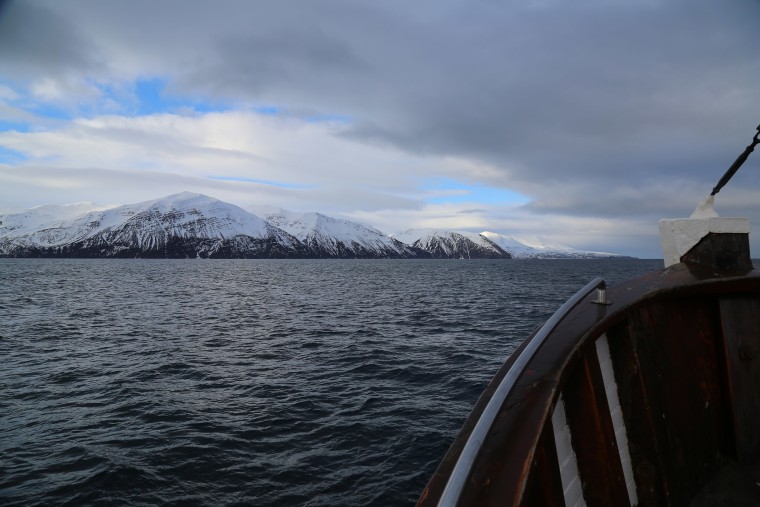
HÚSAVÍK, Iceland — Surrounded by snow-covered mountain ranges, this tiny town on Iceland’s north coast has become the “whale capital” of the country — whale watching is its lifeblood.

“It’s probably the most popular activity for visitors, foreign and domestic,” Heimir Hardarson, captain at North Sailing, said.

As one of the pioneers of whale watching in Iceland, Hardarson has taken people onto ocean waters for nearly 30 years to experience a close encounter with some of the largest animals in the world.

“Very mystical creatures,” he said, “floating around in their weightlessness.”

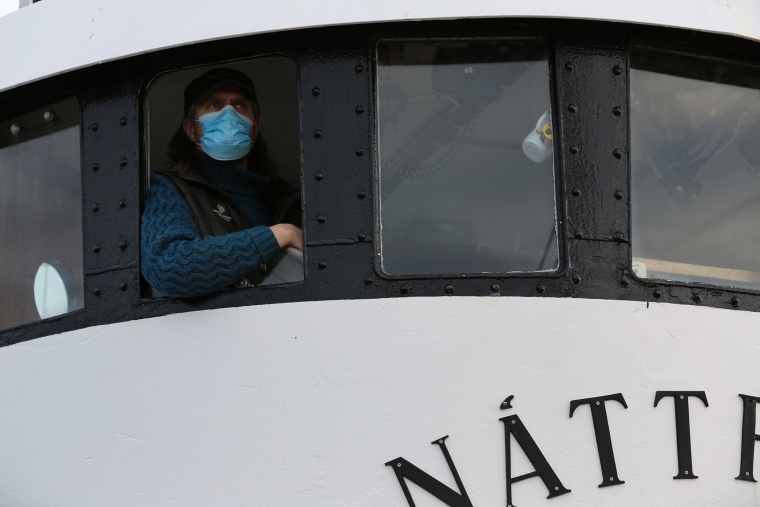
Image:: Captain Heimir Hardarson takes whale watchers out on his boat in Husavik, Iceland.
Captain Heimir Hardarson takes whale watchers out on his boat in Húsavík, Iceland.Carlo Angerer / NBC News

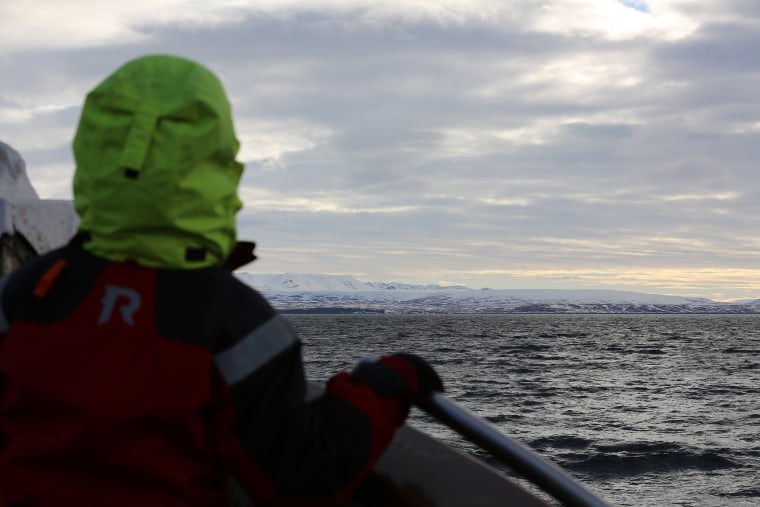
On a recent morning, Hardarson took a handful of visitors on his boat that usually holds 90 passengers to spot humpback and fin whales in Skjalfandi Bay.

Visitor numbers have been hit hard by the coronavirus pandemic. But the global slowdown has actually been good for the whales, as human interference has decreased. Ambient noise in the world’s oceans from cruise ships, sonar and construction is way down.

For more on this story watch TODAY this morning at 8 a.m. ET.

“I think, overall, the pandemic has largely been a positive for whales,” said Ari Friedlaender, a marine ecologist and biologist with the University of California at Santa Cruz.

He is studying how the quieter oceans have affected whales by measuring their stress levels through hormone samples. Friedlaender said animals use acoustics such as whale songs to communicate with one another and locate food. Noise in the environment can interfere with those communications and other critical life functions

“The thought is that as you decrease the amount of human activity and noisy environment, we’re going to see a decrease in the stress hormone levels of these animals,” he said.

Image: Husavik on Iceland's north coast has become the "whale capital" of the country.
Húsavík on Iceland’s north coast has become the “whale capital” of the country.VW Pics / Universal Images Group via Getty file

Friedlaender said stress affects whales similarly to how it has an impact on humans, changing their behavior and ability to perform physically and mentally. Stress can also lead to long-term changes affecting a whale’s overall health and its ability to reproduce.

“The animal may not reproduce as frequently as it would have otherwise,” he said. “If it doesn’t reproduce as frequently, the population doesn’t have the opportunity to grow as quickly, or to maintain its population growth.”

The pandemic has had an even more concrete impact on the whale population off Iceland’s coast: It has helped accelerate the end of commercial whale hunting.

Recommended

WORLDMafia fugitive was living a quiet island life. Then police found his YouTube cooking show.

LATINOIn Mexico, growing outrage over death of Salvadoran woman in police custody

Download the NBC News app for full coverage of the coronavirus outbreak

Iceland is one of only three countries in the world that still allow commercial whaling, the other two being Japan and Norway, and last year two Icelandic whaling companies halted hunting operations due to health restrictions. Operators told local media that social distancing regulations would make the usual processing onboard impossible.

“I’m never going to hunt whales again, I’m stopping for good,” Gunnar Bergmann Jonsson, managing director of the minke whaling company IP-Utgerd, told the news agency Agence France-Presse last year. And demand has continued to fall.

“There’s no need to hunt the whales anymore. There’s no need to eat them,” said Eva Björk Káradóttir, director of the Húsavík Whale Museum. “The young generation born after 2000 don’t really do it.”

Image: Captain Heimir Hardarson takes whale watchers out on his boat in Husavik, Iceland.
Captain Heimir Hardarson has taken people onto ocean waters for nearly 30 years to experience a close encounter with some of the largest animals in the world.Carlo Angerer / NBC News

In fact, much of the demand for whale meat within Iceland had been from tourists who wanted to try it during their visits, she said. Icelanders have re-examined their relationship to whales in recent decades.

“I think tourism started and we started to get just people from all over the world. We got a new perspective, and it’s just in that time that we realized really that our land is beautiful, our water is good and also that people were interested in whales,” she said.

Hardarson, the captain of the whale watching boat, said that people have stopped eating whale meat for several reasons, including realizing the senselessness of killing an animal that can live for almost a century. And he highlighted another simple reason, as well.

“They are worth way more alive than dead,” he said. “I think there’s going to be no commercial whaling, and in the future. I can see no reason why there should be.”

Image: Captain Heimir Hardarson, on his boat in Husavik, Iceland.
Captain Heimir Hardarson said he did not think commercial whaling would take place in the future. Carlo Angerer / NBC News

He acknowledged that animals are also affected by whale watching tours but said the experience helps motivate people to protect them.

“There are threats also connected to whale watching and something you have to keep in mind to try not to overstress or put too much pressure on the resource in this way,” he said. “We are very concerned about this, so we are trying to keep down speed and we are trying to minimize our carbon footprint.”

His hope now is that with tourism growing as Iceland allows vaccinated visitors to enter the country without having to quarantine, whale watching will once again be big business, helping to support the animals and the whole town.