WHY DO WE EAT ANIMALS?

 By: Colin Ruloff   |   Reading time: 15 minutes
I used to eat animals but I no longer do. I gave up the practice about six years ago. When confronted by my meat-eating friends about why I’ve given up eating animals, it’s tacitly assumed that I’m expected to provide an argument or present reasons for why eating animals is wrong. But why, I ask myself, do I have to present reasons for why eating animals is eating wrong? Surely the burden of proof is with my meat-eating friends to show that eating animals is somehow OK. After all, they’re the ones that are choosing to eat a once-sentient being. So, let’s ask: Are there any good reasons for eating animals?
Before we try to answer that question, it’s worth briefly describing where our meat comes from. 

The vast majority of meat, dairy, and eggs produced in the United States and Canada come from animals raised on factory farms. A “factory farm” is a large-scale, high-intensity, industrial complex that breeds and raises large numbers of animals so that we can harvest their meat, milk, and eggs for consumption.
EXPLORING ANIMAL SENTIENCE

Billions of animals are raised and killed for food around the world each year. Although the majority of people consider them food, research shows that farmed animals are intelligent and emotionally complex, like dogs, cats, and other animals that so many of us see as companions.Animals Are More Sentient Than You Think: Ethologist Jordi Casamitjana says we can see animals are sentient because “they can feel, experience, and judge, and once they have judged, they can behave accordingly.” 

Why, then, is it hard for us to see all animals as sentient beings? “In a world where animal exploitation is heavily entrenched in most aspects of all human societies, commercial and cultural forces constantly work to deny the quality of sentience to non-human animals. Even when today’s science clearly shows most animals are sentient, this denial is mainstream,” writes Casamitjana, who is the author of “Ethical Vegan: A Personal and Political Journey to Change the World.”
 Chickens Are Smart (and Yes, They Can Suffer): Chickens are widely considered to be unintelligent, possibly because we view these birds as food animals. In fact, chickens account for 95 percent of the animals farmed for food globally. But research shows these birds are smart, can show empathy, and are capable of feeling pain. 

Jennifer Mishler explores what we know about the minds of chickens, considering information from experts such as Dr. Lori Marino, to answer the questions: “How smart are these birds, and what might they be thinking and feeling?”
 Sentience: What It Means and Why It’s Important: As our name suggests, sentience is at the heart of what we do at Sentient Media. Dr. Jane Kotzmann weighs in on what it means.

“‘Sentient’ is an adjective that describes a capacity for feeling. The word sentient derives from the Latin verb sentire, which means ‘to feel,’” writes Kotzmann. “Sentient beings experience wanted emotions like happiness, joy, and gratitude, and unwanted emotions in the form of pain, suffering, and grief.

Kotzmann believes animal sentience is being increasingly recognized, which makes it a worthy topic of discussion in any circle. If we can simply agree “that sentient beings are capable of experiencing pain and suffering,” she writes, “most humans would further agree that it is morally wrong to inflict unnecessary pain or suffering.”
 Study: Emotional Well-Being of Cows Is Harmed by Denying Outdoor Access: A new study conducted by researchers at Queen’s University Belfast and published in the journal Scientific Reports found that cows are less happy if kept indoors. Furthermore, the researchers found that being outside allowed the cows to engage in behaviors natural to them—concerning, given the confinement they experience on factory farms.

“Pasture access can promote natural behavior [and] improve cows’ health, and cows, given the choice, spend most of their time outside. However, the effects of pasture access on dairy cows’ psychological well-being have been poorly understood—that is what our judgment bias study intended to measure,” said Dr. Gareth Arnott.
 Read more from Sentient Media.We’re reporting the truth about animal agriculture. Your donation fuels our work.
Animals in factory farms are typically packed into confinement facilities. Broiler chickens, for instance, are crammed into massive windowless warehouses, and are denied fresh air, sunshine, and pasture. These sheds contain anywhere from 10,000 to 50,000 birds. Sows are confined to small metal crates on concrete slatted floors with no straw or bedding to lie on and without fresh air or sunlight.

When the animals are ready to be harvested they are then crammed onto eighteen-wheelers and shipped on multiday journeys to the slaughterhouse without food or water. Once they arrive, they are in a weakened physical and psychological state. The animals are hungry and exhausted, confused and frightened. Once inside the slaughterhouse, the animals are jammed into metal shackles, strung upside down (which often causes the breaking of limbs), and brought to the slaughterer.

OK, enough of the gruesome details. Let’s return to the question I posed at the outset: are there any good reasons for eating animals? More exactly, the question I want to ask is this: is it OK to inflict intense suffering on factory-farmed animals so that we might eat them?

I’ve encountered quite a few arguments that try to show that it’s OK to inflict suffering on factory-farmed animals; but instead of examining all of them, I’ll just focus on the four or five arguments that most people find persuasive.

Read the full story here.

Dying Planet or Not, Americans Won’t Stop Eating Beef

Despite the well-documented environmental impacts of the meat industry and the explosion of the market for plant-based alternatives, American meat consumption remains high

Grim new facts about meat’s impact on livestock, workers, and the planet seem to emerge every day, and when it comes to animal agriculture’s impact on the climate, the figures are particularly dour: The international livestock industry is responsible for 14.5 percent of the world’s greenhouse gases, while the cattle industry is the main culprit in the deforestation and destruction of the Amazon, which releases carbon emissions into the atmosphere. Against this apocalyptic backdrop, some of the most sophisticated plant-based proteins ever developed are marketing themselves as no less than potential planet savers. Impossible Foods aims to “save meat, and earth,” while Beyond Meat bills itself as “the future of protein.” Both hawk plant-based meat alternatives, most notably in the form of ground beef-like bricks or patties that “bleed” just like the real thing.

The impulse of these startups to replicate beef rather than back away from burger-like proteins entirely in their quest to save civilization shows how daunting a task it is to get people, especially Americans, to give up meat: In the U.S., eating meat has long been intertwined with grand representational ideals. Beef especially defines classic notions of masculinity, with hamburgers in particular often representing “American” identity, whatever that means. (As a result, beef often becomes an object of political performance.) Despite clear evidence that animal agriculture harms the planet, as of 2018, just 5 percent of Americans identify as vegetarian and only 3 percent as vegan, numbers that have held steady for years. And meat consumption is still growing in proportion to the rest of our diets. Until the 2020 coronavirus pandemic, meat consumption had steadily risen in the U.S. each of the previous five years, with the average American eating 224.3 pounds of beef, pork, and poultry in 2019.https://9dd0c57873b0eaf37e002996292eb1c9.safeframe.googlesyndication.com/safeframe/1-0-38/html/container.html?n=0

It’s true that beef consumption is actually on the decline, with the average American eating less in 2019 (58.1 pounds) than they did during the 1970s, when the average person peaked at around 88.8 pounds a year. But meat consumption overall is on the rise, and during the early days of the pandemic, some were surprised to find that consumers actually turned to beef more than usual: An additional $5.7 billion in beef sales took place last year compared to the previous one, amid coronavirus-related shutdowns. “I’m surprised how strong beef demand was in the face of COVID-19, because we often think of beef consumption happening at the higher-end restaurants around the country, and many of those restaurants have been closed,” says Scott Brown, associate extension professor in the University of Missouri’s College of Agriculture, Food & Natural Resources. “It tells us that that’s probably a shift from restaurant consumption to at-home consumption or takeout consumption.”“It’s really a math problem. We don’t have enough land to keep raising animals in this way.”

If Americans keep eating as much meat as they have been, the outcome will be cataclysmic, argues Leah Garcés, president of Mercy for Animals, an animal protection organization that advocates for a vegan lifestyle. “It’s a catastrophic risk to the future of our planet, food security for future generations, and to our healthcare system to continue to irresponsibly consume animals,” says Garcés, author of Grilled: Turning Adversaries into Allies to Change the Chicken Industry. “It’s really a math problem. We don’t have enough land to keep raising animals in this way, and instead, we should be using the land to raise crops directly to feed ourselves. And we should be thinking very, very clearly about future generations and protecting the environment and the health of ourselves and others as we move forward.”

And the way forward, some argue, is to make giving up meat feel less like a sacrifice — and more like participating in a movement.https://9dd0c57873b0eaf37e002996292eb1c9.safeframe.googlesyndication.com/safeframe/1-0-38/html/container.html?n=0

Why the beef?

Since 1909, the federal government has tracked how much meat — beef, pork, poultry, and otherwise — the public consumes, and not surprisingly, those figures usually parallel economic trends. Beef sales, last year exempted, tend to coincide with periods of economic prosperity: In 1932, while the nation was in the grips of the Great Depression, U.S. beef consumption per capita hit a low of 32 pounds. In contrast, as the nation ushered in a wave of economic stability in 1976, beef consumption hit its high, only for an economic downturn in the early 1980s to dip sales once more.

Something else happened in the ’80s, too: The decade saw the publication of studies that linked red meat — beef and pork — to a risk of developing serious medical problems such as heart disease and cancer. By the time Oprah Winfrey swore off hamburgers over concerns about mad cow disease in 1996, beef sales were plummeting. Chicken became the nation’s top protein, and beef was badly in need of a rebrand.

In recent years, the beef industry has been selling a comeback: Some suggest that technological advances, such as genetically modified beef, can make beef more palatable to the public. “The use of genetic changes produces different beef today than was the case 25 years ago,” Brown says. “Changes in the genetic makeup of the average cattle herd are putting beef products in front of consumers that they like more than they would have in the ’90s.” It’s leaner, tastier, and more tender, he explains. On the other end of the spectrum, as beef-eating increasingly becomes a partisan issue, the masculine sheen around beef could be one of its larger selling points.https://9dd0c57873b0eaf37e002996292eb1c9.safeframe.googlesyndication.com/safeframe/1-0-38/html/container.html?n=0

But a major factor in continued beef consumption is, not surprisingly, money: Garcés points to the power of meat lobbyists to explain why beef consumption is rising. “In other countries, for example, in Europe, there are caps on how much lobbying and how much money and campaign funding can go to a candidate,” she says. “Here, we don’t have real regulations, so money is given and promises are made. This has created a very skewed interest toward increasing meat consumption and doing whatever we can to bend the market toward increasing consumption, like making the product unnaturally cheap. … It’s very challenging to fight those powers.”

From 2010 to 2020, the meat industry more than doubled its contributions to political candidates and parties, according to data from the Center for Responsive Politics. But even as these contributions have grown, so has consumer consciousness about meat’s impact on the environment. This increasing awareness has inspired some meat-eaters to actively incorporate more plant-based meals into their diets, a growing trend known as flexitarianism.

A flexitarian future

One of the biggest misconceptions people have about Kimberlie Le, co-founder of the plant-based meal startup Prime Roots, is that she’s vegan, she says. While the direct-to-consumer meals her company sells are all meatless — made with protein-rich koji fungi grown in the San Francisco Bay Area — Le is a meat-eater.https://9dd0c57873b0eaf37e002996292eb1c9.safeframe.googlesyndication.com/safeframe/1-0-38/html/container.html?n=0

“I consider myself a flexitarian, which is actually the majority of our customers,” says Le, who started her year-old business at the Alt: Meat lab at UC Berkeley’s Sutardja Center for Entrepreneurship and Technology. Flexitarians eat meat but also regularly consume plant-based meals, and the demographic is a sizable one, according to the marketing firm Packaged Facts. A survey it conducted in August found that 36 percent of consumers identify as flexitarian. “A lot of people consider themselves flexitarians once they hear the term and know what it’s all about,” Le says. “We’re not trying to get everyone to turn vegan, because it’s not right for everybody. It is really hard, given that there isn’t a plant-based version of every single thing in the grocery store.”

Le felt inclined to lower her meat consumption and launch a plant-based food company because she was concerned about the meat industry’s environmental impact. When Le was growing up, she never thought much about how a burger was produced or the cow from which the beef came, she says. Food simply brought her family and friends together for joyous occasions. But, today, she says, the public doesn’t have the privilege of ignoring meat production’s impact on the planet.

Although the most obvious answer to mitigating meat’s impact on the environment would be to simply stop eating it, convincing Americans to become flexitarians, like Le, may be a more attainable goal. “The way I look at it, what seems easier?” Garcés asks. “To turn half of America vegetarian or have half of Americans’ meals be vegetarian? Obviously, the latter is more achievable … and that’s the kind of thing we should be aiming for. It would have a huge impact on our environment, our health as a country, and on animals.”https://9dd0c57873b0eaf37e002996292eb1c9.safeframe.googlesyndication.com/safeframe/1-0-38/html/container.html?n=0“The way I look at it, what seems easier? To turn half of America vegetarian or have half of Americans’ meals be vegetarian?”

The fanfare that’s greeted the plant-based proteins of Beyond Meat and Impossible Foods — part of what the New York Times recently called a “meatless gold rush” — could very well inspire more consumers to try mock meats. In recent years, both companies garnered global headlines due to highly promoted collaborations with fast-food chains such as KFC, Burger King, and McDonald’s, which bring their products to the millions of people who consume fast food daily. In 2019, Beyond Meat became a publicly traded company with the best-performing U.S. public offering in recent history, and speculation persists that Impossible will go public as well. (Cattle ranchers and lobbying groups have taken notice, with 30 states announcing legislation that would limit the products’ ability to use the word “meat”; the Washington Post notes the changes come amid the “enormous political power” of cattle associations.)

Despite the considerable buzz surrounding Beyond and Impossible, the retail value of the U.S. plant-based meat industry is about $1 billion, compared to the meat industry’s estimated retail value of $95 billion, meaning the former isn’t likely to overtake the latter as the nation’s dominant protein anytime soon. A wider flexitarian consumer base, along with more awareness about beef’s impact on the environment, could move the needle.

Andrew Gunther, executive director of A Greener World, which promotes sustainable agriculture solutions, understands why many activists want the public to reduce its meat consumption. But he argues effective climate strategies are “not as simple as eating less beef.” Focusing on whether or not to eat meat, Gunther says, is part of a greater need for people to reconsider their lifestyles, which entails looking beyond meat consumption to consumption more broadly. Buying televisions, airplane tickets, iPhones, or new clothes are all consumption habits with an environmental impact.https://9dd0c57873b0eaf37e002996292eb1c9.safeframe.googlesyndication.com/safeframe/1-0-38/html/container.html?n=0

When it comes to meat specifically, “it’s where and how the beef was produced,” he says. “Perhaps we should actually look at the amount of meat we eat, whether that’s fake meat or otherwise. … We may be eating too much. … In the middle somewhere is the solution, where we need to eat what is a nutritionally appropriate amount of proteins from a sustainable source.” Gunther points to research from the University of Oxford and the University of California, Davis indicating that a path exists to make animal agriculture climate neutral. Other researchers have conducted studies that found feeding cows red seaweed dramatically reduces the number of methane emissions they release into the atmosphere through their burps.

And the meat industry itself must be held accountable. Sara Amundson, for one, is encouraged that the U.S. Department of Agriculture appears to be taking the livestock sector’s effect on global warming seriously. Amundson, president of the Humane Society Legislative Fund, notes that the USDA “now has somebody specifically tasked on climate change. So, there’s got to be some acknowledgment that methane, and animal-based agriculture as part of that, are contributing [to global warming].”

Amundson’s group would like the federal government to give farmers incentives to stop the intensive confinement of livestock. It also wants the government to support the development of plant-based and lab-grown meats to combat climate change.https://9dd0c57873b0eaf37e002996292eb1c9.safeframe.googlesyndication.com/safeframe/1-0-38/html/container.html?n=0

Gunther points to a need “to focus on improving the way we farm.” That means getting rid of the herbicide and crop desiccant glyphosate, respecting animals as an integral part of the agricultural system, and creating a sustainable farm of the future, he elaborates. In such a model, farms would share energy, ruminant animals would freely graze the land, and consumers would eat the right amount of food at the right time of year.

“Whatever our solution is, it needs to be capable of feeding the planet,” according to Gunther. Amundson agrees, noting that “there are some emerging countries where we’re seeing growth in animal-based agriculture.” That, she says, is concerning, “because quite honestly if we are going to wrap our heads around how to deal with this crisis from a global perspective, we obviously need to be sensitized, aware, and willing to take on animal-based agriculture.”

As a sustainable-farming advocate, Gunther asserts that revolutionizing the agriculture system is a major way to fight global warming. Consumers can work toward that goal by purchasing pasture-raised beef rather than the industrial variety. This shift can make a dent, if only a small one, in the climate crisis. “We could cut down on the amount of beef we eat because I’m guessing nutritionists would say we eat too much,” Gunther says. “We could demand that [cattle] are outside on pastures that we can’t use as humans. Then, it becomes pretty darn sustainable.”https://9dd0c57873b0eaf37e002996292eb1c9.safeframe.googlesyndication.com/safeframe/1-0-38/html/container.html?n=0

Nadra Nittle is a senior reporter for Civil Eats. She lives in Los Angeles. Yadi Liu is an award-winning visual artist who is passionate about finding the optimum balance between illustration and modern art.
Fact checked by Kelsey Lannin
Copy edited by Rachel P. Kreiter

Sea-level rise is accelerating to its highest levels in at least 2,000 years across the Northeast, including New York City, study says

Exposing the Big Game's avatarThe Extinction Chronicles

https://www.cnn.com/2021/03/26/weather/sea-level-rise-accelerating-east-coast/index.html

By Jackson Dill andBrandon Miller, CNN

Updated 9:41 AM ET, Fri March 26, 2021Rising water caused by Hurricane Sandy rushes into the Carey Tunnel (formerly the Brooklyn-Battery Tunnel), on October 29, 2012 in New York City. Rising water caused by Hurricane Sandy rushes into the Carey Tunnel (formerly the Brooklyn-Battery Tunnel), on October 29, 2012 in New York City.
(CNN)Along a stretch of the East Coast that includes New York City, sea-level rise has increased at its fastest rate in the prior 100 years compared to the past 2,000 years, according to a newstudyled by Rutgers University.”The global rise in sea-level from melting ice and warming oceans from 1900 to 2000 led to a rate that’s more than twice the average for the years 0 to 1800 — the most significant change,” Rutgers said of the study’s findings.The study uses new techniques and focuses on six specific locations in the northeastern US, including three in New Jersey and one each in Connecticut, New York and North Carolina.Human-induced…

View original post 1,049 more words

Update: Sik Gaek Restaurant Removes Live Animals From Menu

ShareTweet

Updated March 26, 2021:
Thank you to everyone who contacted Sik Gaek restaurant in Queens, New York, to ask it to stop serving live octopuses and lobsters. Before disabling its Facebook page, the restaurant posted, “Sikgaek is no longer available for live octopus. We decided not to serve octopus and lobster alive.” We hope this is the truth and that this abject cruelty won’t simply be available “off menu.” Rest assured, we’ll be watching, and we hope you will, too.


Original post:

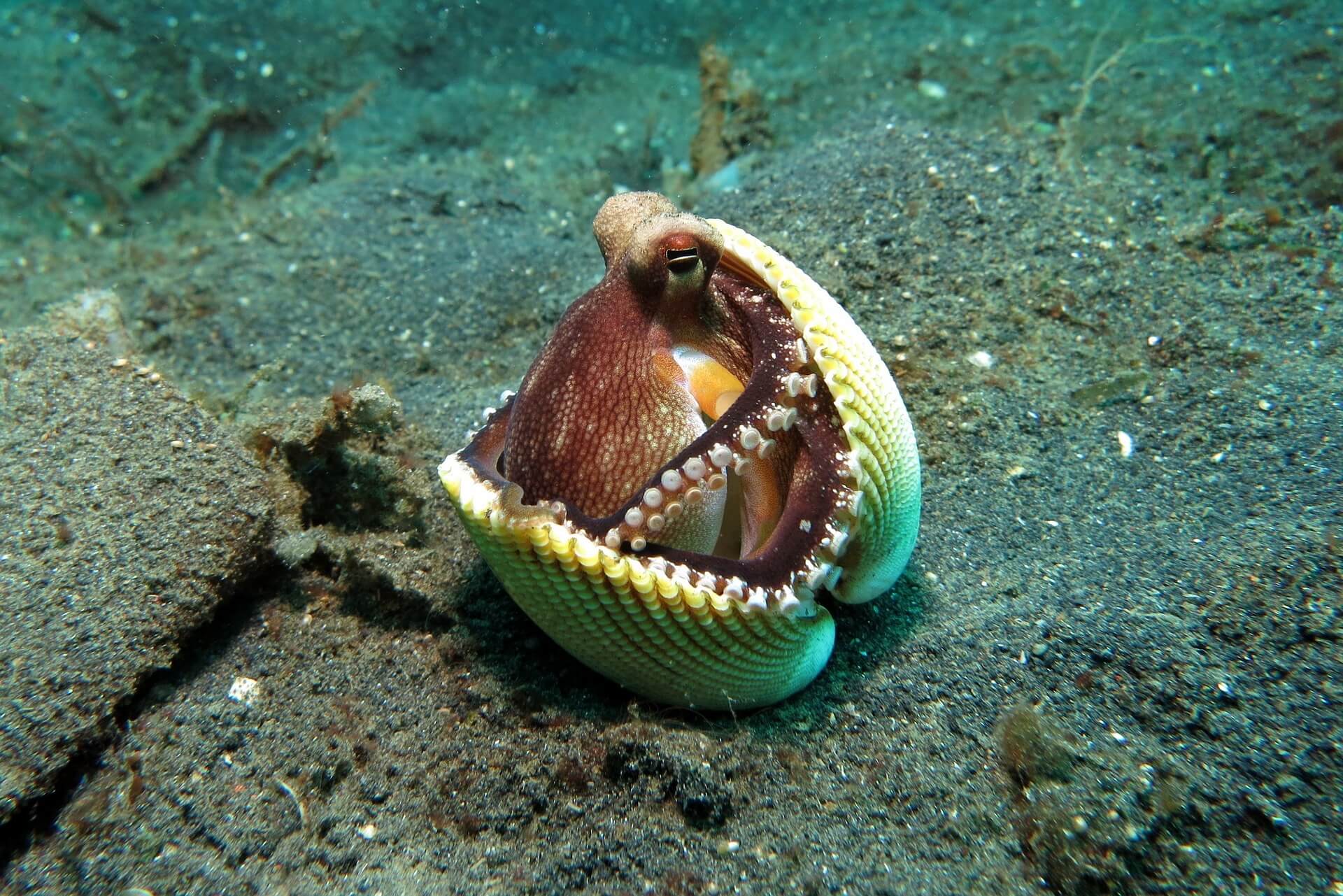
The intelligence of octopuses is well known, but did you know that they have been observed decorating their homes with pretty bits of glass, shells, and bottle tops? They’ve also been seen using tools and playing games! Octopuses have extremely sensitive skin for both touch sensation and chemical recognition. Their suckers are the equivalent of a tongue or fingertip, and the linings are regularly shed to maintain sensitivity to touch and taste. These brilliant beings are like us in so many ways that for most people, the thought of eating one alive is unimaginable.

However, Sik Gaek in Queens, New York, has for years insisted on serving octopuses and lobsters—another complex, misunderstood species also known to have the ability to experience great pain—still squirming on dinner plates, to those customers who find slowly hacking apart living, suffering animals to be appetizing. The restaurant even brags about this horrific practice on its website.

Please feel free to use our sample letter, but remember that using your own words is always more effective.

Cape Girardeau urban deer hunting petition may not receive enough signatures before deadline

Exposing the Big Game's avatarCommittee to Abolish Sport Hunting Blog

https://www.kfvs12.com/2021/03/24/cape-girardeau-urban-deer-hunting-petition-does-not-receive-enough-signatures/

DefaultMono SansMono SerifSansSerifComicFancySmall CapsDefaultX-SmallSmallMediumLargeX-LargeXX-LargeDefaultOutline DarkOutline LightOutline Dark BoldOutline Light BoldShadow DarkShadow LightShadow Dark BoldShadow Light BoldDefaultBlackSilverGrayWhiteMaroonRedPurpleFuchsiaGreenLimeOliveYellowNavyBlueTealAquaOrangeDefault100%75%50%25%0%DefaultBlackSilverGrayWhiteMaroonRedPurpleFuchsiaGreenLimeOliveYellowNavyBlueTealAquaOrangeDefault100%75%50%25%0%Cape Girardeau urban deer hunting petition may not receive enough signatures before deadlineByMike Mohundro|March 24, 2021 at 5:19 PM CDT – Updated March 24 at 10:17 PM

CAPE GIRARDEAU, Mo. (KFVS) -Opponents of an urban deer hunting seasonin Cape Girardeau say they are not going to get enough signatures in time for the petition.

“It’s not going to make it,” Dianne Shepperd said.

They wanted voters in the city to have the final say on the ordinance.

The group was asking for nearly 2,400 signatures by March 29, to repeal the urban deer hunt ordinance.

People we talked with were on both sides of the fence about the petition.

“I believe the people should be able to have a say so in the matter because these are the people…

View original post 51 more words

Letter to the editor: Trapping too brutal for MT Constitution

Exposing the Big Game's avatarCommittee to Abolish Sport Hunting Blog

https://missoulian.com/opinion/letters/letter-to-the-editor-trapping-too-brutal-for-mt-constitution/article_fb0e5ce2-f144-5795-86aa-29c870bc1b9c.html

  • Mar 25, 2021

90% OFF! $3 for 3mos. unlimited digital

House Bill 367would protect trapping under the Montana Constitution.

Hunting and fishing are already included in the Montana Constitution.

Trapping is brutal treatment of Montana’s wildlife.

Over 80 years ago, preservationist Rosalie Edge described steel leg-hold traps as torturing animals before killing them. I have personally come across several wild animals in traps, and these horrific images still haunt me to this day.

This bill is a total power grab by trappers against the citizens of Montana. In 2016, nearly 186,000 Montana voters supported Initiative 177 to rid public lands of traps and snares. I-177 was an effort that involved many volunteers, including many hunters and anglers, and was primarily financed by Montanans.

The Montana Trappers Association, on the other hand, accepted big money from out-of-state organizations and individuals, and thus was able…

View original post 93 more words

Gianforte says he made mistake trapping wolf without certification class

Exposing the Big Game's avatarCommittee to Abolish Sport Hunting Blog

90% OFF! $3 for 3mos. unlimited digital

Montana Gov. Greg Gianforte said he should have known about a state-mandated certification class before trapping a wolf near Gardiner last month, an action for which he received a written warning.

Mountain West News Bureau first reported Monday that Gianforte trapped a wolf on Feb. 15 and received a written warning from game wardens for doing so without first completing a required certification course.Montana Fish, Wildlife & Parks told the bureau that wardens have discretion in issuing citations or warnings, and typically used warnings as a means of education.

The governor was allowed to keep the wolf’s hide and skull and agreed to take the next available certification course.

In an interview Wednesday, Gianforte said he had been trying to successfully hunt, and more recently trap, a Montana wolf for a…

View original post 323 more words

Numerous black bears losing limbs; how groups are working to prevent illegal trappings

Exposing the Big Game's avatarCommittee to Abolish Sport Hunting Blog

https://www.kake.com/story/43555198/numerous-black-bears-losing-limbs-how-groups-are-working-to-prevent-illegal-trappings

Thursday, March 25th 2021, 2:03 PM CDTUpdated:Thursday, March 25th 2021, 2:33 PM CDT

Image

By Ryan Coulter

Click here for updates on this story

BUNCOMBE COUNTY, North Carolina (WLOS) — There is a growing concern in the mountains over the safety of bears as the number of reported 3-legged bears grows. Private groups are now forming to investigate bear poaching and illegal activity to harm bears.

“I enjoy watching them,” said Col. Scotty Morgan talking about bears roaming through his Buncombe County yard.

Morgan says the bears are just a part of living in the mountains. “The bears live a hard life. They’re mischievous, they are really a lot like people,” said Morgan.

When he speaks of a hard life, Colonel Morgan knows what he is talking about. He was a prisoner of war in North Vietnam and knows what it is like to be locked up in…

View original post 698 more words

Carson City Man Dies in Elko Hunting Accident

Exposing the Big Game's avatarCommittee to Abolish Sport Hunting Blog

https://carsonnow.org/story/10/05/2015/carson-city-man-dies-elko-hunting-accident?page=1

Submitted byeditoron Mon, 10/05/2015 – 4:19pmhttps://www.facebook.com/plugins/like.php?action=like&app_id=178159882210918&channel=https%3A%2F%2Fstaticxx.facebook.com%2Fx%2Fconnect%2Fxd_arbiter%2F%3Fversion%3D46%23cb%3Df3dd86e8d8b84fc%26domain%3Dcarsonnow.org%26origin%3Dhttps%253A%252F%252Fcarsonnow.org%252Ff2e00daab61c5d%26relation%3Dparent.parent&color_scheme=light&container_width=0&font=arial&href=https%3A%2F%2Fcarsonnow.org%2Fstory%2F10%2F05%2F2015%2Fcarson-city-man-dies-elko-hunting-accident&layout=button_count&locale=en_US&sdk=joey&send=false&show_faces=false&width=350AP

UPDATE: Carson Tahoe Health has released the following statement regarding Steve Foley, a Registered Nurse, who died from an accidental gunshot during a hunting trip:

“Carson Tahoe Health is devastated by the untimely, accidental death of Steve Foley, RN. Steve was a much loved friend and stellar employee who worked with us for about 15 years, the last five years in the regional medical center Cath Lab. Our hearts are grieving with this tragic loss and he will be sorely missed. Our sympathies and prayers go out to Steve’s family and friends during this time of unimaginable suffering.”
***

ELKO, Nev. (AP) – Elko County sheriff’s officials say a Carson City man is dead after being accidentally shot by his friend on a hunting trip.

View original post

How Covid-19 Jumps From Humans to Animals, Worrying Scientists

Exposing the Big Game's avatarThe Extinction Chronicles

https://finance.yahoo.com/video/covid-19-jumps-humans-animals-092543225.html

Fri, March 26, 2021, 2:25 AM

Covid-19, a virus that many experts believe came to us from bats, has been transmitted on from humans to pets and other animals. Here’s why some scientists are worried that so-called spillbacks could potentially perpetuate a cycle of infection. Photo: Markus Scholz/Zuma Press

Video Transcript

-What’s the common link between a gorilla, a cat, and us? All of these can be infected with the novel coronavirus. And what’s more worrying is that we, humans, can transmit the virus to these species and some others. Scientists around the world are testing all kinds of animals to study the so-called spillbacks of the virus that causes COVID-19 SARS-CoV-2.

The spillback is basically when an animal virus leaps from humans back to animals. Many scientists believe COVID-19 came over to us from wild animals.

-–infected, believed to be by an asymptomatic zookeeper.

-Well, Hong Kong has…

View original post 268 more words