Should Trophy Hunting remain legal?

http://www.dgschapter.com/should-trophy-hunting-remain-legal/?fbclid=IwAR2BT-BaYMh7IkLRa5buUOjFZxQw3_GrqVLUEyyoLss5dgYvS55QE3FC4mU

Omila, Science And Environment WriterOpinion / Science And Environment

Read Time:4 Minutes

“Ever since we arrived on this planet as a species, we’ve cut them down, dug them up, burnt them and poisoned them. Today we are doing so on a greater scale than ever.” – Sir David Attenborough

I start my article with this quote not only out of respect to its author, climate change activist David Attenborough, but due to its succinct message.

This quote is so brilliant because it can be interpreted in so many ways. This quote encapsulates how we, as the human species, have affected every element of the earth’s circle of life through our insensitive desire to be at the top of the food chain.

The “them” can apply to anything: fossil fuels, wildlife, the ocean and, most importantly, the animals that we live side by side with.

In my eyes, I see this quote as a message to the world and its leaders on why trophy hunting (the act of killing a wild animal for sport) should not remain legal any longer.

Most people struggle to understand why hunters want to take life from such beautiful animals.

The statistics from a 2016 report from the International Fund for Animal Welfare found that 1.7 million hunting trophies were traded between nations between 2004 and 2014, of which 200,000 were endangered.”

Even though this data was collected a few years ago, it still highlights the ever increasing number of trophies being exported and traded, meaning more and more animals are being killed. Which I believe needs to stop.

There is an ongoing biodiversity crisis on our planet. Biodiversity refers to the variety of animals and life on earth and sadly this is ever decreasing. A statistic from CareOurEarth says that the current rate of global extinction is 100 times higher than the average over the last million years.

Serious action needs to take place in order to prevent any more of the Earth’s biodiversity from being lost- and this must start with change. Trophy hunting laws might be a good place to start.

File:Cecil the lion at Hwange National Park (4516560206).jpg
Walter Palmer’s killing of Cecil made international news in 2015. It is estimated that hunting has led to the lion species’ gene pool shrinking by 15 percent in the space of 100 years.

This lion, Cecil, lived in Hwange National Park in Matabeleland, Zimbabwe. On the 2nd July 2015, he was killed by American trophy hunter Walter Palmer. Cecil was allegedly lured out of his enclosure then shot with a bow and arrow and left there in extreme pain. Palmer then came back the next day to shoot the lion. On discovery that Palmer had a permit, making the murder legal, controversy arose. A petition was created to change laws on big game hunts in Zimbabwe.

There have been numerous cases where hunters have told journalists and news broadcasters that there is a conservation side to trophy hunting. Some argue that the land allocated for trophy hunting provides protection to species’ habitats and can benefit local communities with both employment and wildlife (when done correctly).  Canned hunting in particular means the animals are bred and the species are saved from otherwise definite extinction in the wild.

And yet the UN Food and Agriculture Organisation found that that only 3% of hunting revenue went to causes such as helping communities. This tells us that there is only a minor contribution to communities and they are able to cope with or without the revenue brought in, even before any ethical considerations.

These so called acts of conservation make the wildlife into an economical asset, which does not solve the problem- rather, it endangers species by giving them an economic value that humans might seek out. The treatment of species which are not yet endangered as assets to be collected or traded will surely lead them to the same fate as those already under threat.

Fortunately, there are wildlife conservation examples to be seen, mainly in Africa, which help preserve suffering species from game hunting. An example is The Makalali Game Reserve ,which is one of South Africa’s private reserves. Their aim is to counteract illegal hunting and wildlife trade by game hunters preying on critically endangered animals. The conservation area gives shelter to the animals known as ‘The Big 5’: lions, elephants, leopards, buffaloes and rhinos.

File:Herd of Elephants.jpg
Elephants are in the top five most sought after animals for trophy hunters.

These animals are the most likely to be hunted due to their distinctive features; whether that is tusks from an elephant or a fur coat from a leopard- these are financial opportunities to hunters, who will either illegally or legally sell these items as commodities, or keep them for their own display.

The ban of trophies being imported to the UK through new laws has seen improvement, and is expected to dis-incentivise hunters who can no longer bring their trophies home. This is a glint of hope but there is a lot that still needs to be done.

I end this article with yet another quote by Sir David for the younger generation to ponder on.

“Cherish the natural world, because you are a part of it and you depend on it.”

Feature lion image © Kevin Pluck via Wikimedia Commons

Cecil the lion picture via Wikimedia Commons © Daughter#3

Antelope in the grass © Stevepb via Wikimedia Commons

Elephants picture © Benh Lieu Song via Wikimedia Commons

Gianforte warned by FWP for violating hunting requirement

Exposing the Big Game's avatarCommittee to Abolish Sport Hunting Blog

https://www.ktvh.com/news/gianforte-warned-by-fwp-for-violating-hunting-requirment

https://assets.scrippsdigital.com/cms/videoIframe.html?&host=www.ktvh.com&title=Gianforte%20warned%20by%20FWP%20for%20violating%20hunting%20requirement&kw=&autoplay=true&m3u8=https://content.uplynk.com/0d77601bc217402683376bd3522b95b3.m3u8&mp4=https://x-default-stgec.uplynk.com/ausw/slices/0d7/b1fb2806e11149eb913b74193acbda23/0d77601bc217402683376bd3522b95b3/0d77601bc217402683376bd3522b95b3_g.mp4&purl=/news/gianforte-warned-by-fwp-for-violating-hunting-requirment&dtrack=1&story=1&contplay=*recent&mute=1&tags=News%2CHelena%20News%2CMontana%20News%2CHome%2CHomepage%20Showcase%2CMontana%20Politics%2CCrime%20and%20Courts&cust_params=temp%3D40-49%26weather%3Dcloudy&s=ktvh

Gianforte warned for violating state hunting law

By:MTN NewsPosted at1:30 PM, Mar 23, 2021and last updated7:25 AM, Mar 24, 2021

HELENA — Gov. Greg Gianforte has been given a warning by Montana Fish, Wildlife and Parks (FWP) afterreportedly trapping and killing a wolf this Februarywhile not having the proper education certification, a violation of state hunting laws.

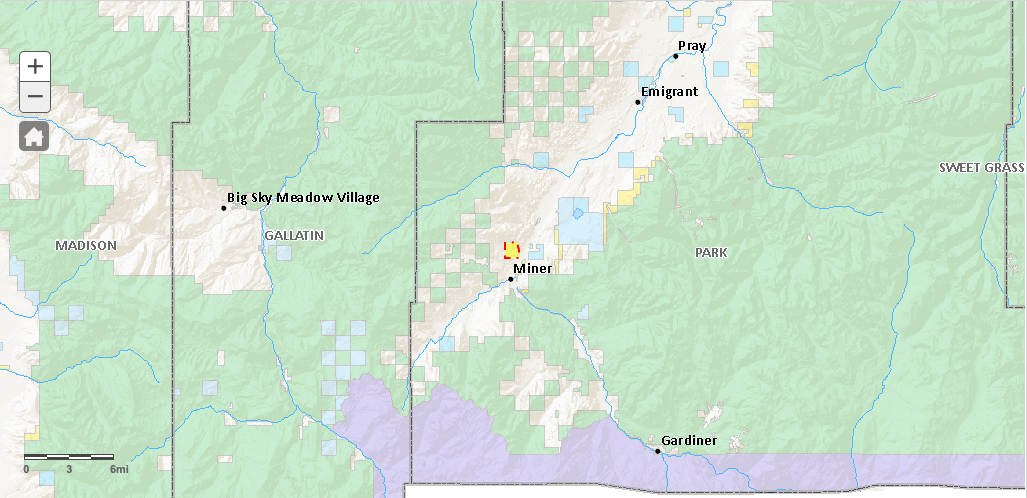
The wolf was trapped and killed on private property near Gardiner north of Yellowstone National Park.

FWP warning for Greg Gianforte

The Governor’s Office issued a statement after reports of the alleged violation surfaced, “After learning that he had not completed the wolf-trapping certification, Governor Gianforte immediately rectified the mistake and enrolled in the wolf-trapping certification course. The governor had all other proper licenses.”

Recent Stories from ktvh.comWe’re OpenCovid and BusinessesRick Novak, owner of the Royal Family Bowling Center and Royal Cinemas in the town of Front Royal, Virginia, says the pandemic has been a frustrating time when it comes to how it has affected his b...WaterTable.JPGREAD MOREGET AMERICA WORKING.pngframe_1500.jpgBARBER WEB.jpgExplorationWorks set to re‑openin Apriljavascript:false00:02/00:06SKIP ADWaterTable.JPG

FWP’s warning was issued on Feb. 16 notifying Gianforte he had violated anFWP commission or department order…

View original post 120 more words

Montana Governor Given Written Warning After Trapping, Killing Of Yellowstone Wolf

https://www.boisestatepublicradio.org/post/montana-governor-given-written-warning-after-trapping-killing-yellowstone-wolf#stream/0

By NATE HEGYI• MAR 23, 2021The Mountain West News BureauShareTweetEmail

  • Montana Gov. Greg Gianforte trapped and killed an adult black wolf, like the one pictured, near Yellowstone National Park on February 15. The wolf, 1155, was born and radio-collared within the park.JIM PEACO / NPS

Montana’s newly elected Republican governor violated state hunting regulations when he trapped and shot a collared wolf near Yellowstone National Park in February, according to documents obtained by the Mountain West News Bureau.ListenListening…4:12

Gov. Greg Gianforte killed the adult black wolf known as “1155” roughly ten miles north of the park’s boundary in Park County. He trapped it on a private ranch owned by Robert E. Smith, director of the conservative Sinclair Broadcasting Group, who contributed thousands of dollars to Gianforte’s 2017 congressional campaign. 

While wolves are protected inside Yellowstone National Park, it’s legal to hunt and trap wolves in Montana – including wolves that wander beyond the park’s boundaries – in accordance with state regulations.

Gianforte violated Montana regulations by harvesting the wolf without first completing a state-mandated wolf trapping certification course. Montana Fish, Wildlife and Parks issued the governor a written warning, and he promised to take the three-hour online course March 24. Montana Gov. Greg Gianforte

According to Montana’s wolf hunting regulations, “A person must attend and complete a wolf-trapping certification class before setting any trap for a wolf,” and the state-issued certificate “must be in possession of any person setting wolf traps and/or harvesting a wolf by trap.”

The course gives would-be wolf trappers “the background and rules to do so ethically, humanely, and lawfully,” the course’s student manual states.

John Sullivan, Montana chapter chair for the sportsmen’s group Backcountry Hunters and Anglers, said the governor should’ve known about the certification requirements. 

“He has been hunting and trapping for a long time and I would be surprised to learn that he didn’t know better than to complete that education,” Sullivan said. “We hope that he apologizes to the citizens of the state for circumventing the process that we all have to go through.”

“It’s difficult to fathom accidentally not taking that class,” he added. “When you go to buy your wolf trapping license online it clearly states that trapper education is required.”

The governor’s spokesperson, Brooke Stroyke, said in an emailed statement that “after learning he had not completed the wolf-trapping certification, Governor Gianforte immediately rectified the mistake and enrolled in the wolf-trapping certification course.”

The governor did have all the necessary hunting licenses to harvest a wolf, according to Montana Fish, Wildlife and Parks spokesperson Greg Lemon. 

“Typically, we approach this sort of incident as an educational opportunity, particularly when the person in question is forthright in what happened and honest about the circumstances,” Lemon said in an email. “That was the case here with Gov. Gianforte.”

Lemon said the warning was a “typical operation procedure” and the governor was allowed to keep the skull and hide. As governor, Gianforte oversees Montana Fish, Wildlife and Parks and appointed its director earlier this year. Gov. Gianforte trapped and killed the wolf on land owned by Robert E. Smith’s Point of Rocks Ranch, LLC, according to location data obtained by the Mountain West News Bureau.

Word of Gianforte’s wolf-kill violation comes as the Republican-controlled Montana Legislature appears poised to send to his desk bills aimed at aggressively reducing the state’s wolf population through hunting and trapping. One would reimburse wolf trappers for the costs they incur, which critics call a “bounty.”

The incident highlights the polarized and overlapping debates in the West over how to manage growing wolf populations and trapping’s role – if it has one at all – in wildlife management. A decade after wolves were stripped of Endangered Species Act protections in the Northern Rockies, Montana, Idaho and Wyoming are asserting aggressive wolf management policies, while Colorado voters recently decided to reintroduce wolves to the Western Slope. 

Meanwhile, the New Mexico Legislature last week approved a bill banning the use of wildlife traps, snares and poison on public lands across the state, likely joining the growing number of Western states that have outlawed the practice increasingly viewed as cruel.

“It’s clearly not an ethical chase,” said Mike Garrity, executive director for the nonprofit environmental group Alliance for the Wild Rockies. “Ethical hunters try to have a clean shot so they kill the animal instantly. Trapping obviously doesn’t do that. They suffer for a long time and who knows how long that wolf was trapped before the governor went out and killed it.” 

Wolf 1155 was born in Yellowstone National Park and was issued a radio collar by wildlife biologists in 2018, according to park spokesperson Morgan Warthin. Collars allow scientists to track the movements – and deaths – of wolves. 1155 was initially a member of the Wapiti Lake pack but is now considered a “dispersed male,” which means it had wandered away from the pack to find a mate elsewhere.

Yellowstone wolves hold a special place in the nation’s heart, according to Jonathan Proctor, director of the Rockies and Plains program for the environmental group Defenders of Wildlife.

“People from all over the world come to Yellowstone specifically to see these wolves,” he said. “The fact that they can be killed so easily, right on the edge of the park in the state of Montana, for only a few dollars for a permit to trap a wolf – it makes no sense, either ecologically or economically.”

There are about 94 wolves living within the park, according to data from last year. Warthin said this was the first Yellowstone-collared wolf to be killed by a hunter or trapper this year. 

Gianforte killed 1155 on Feb. 15. It’s unclear when Gianforte first laid the traps. State regulations require that trappers check their traps every 48 hours and report wolf kills to FWP within 24 hours. Trappers also have the option of releasing a collared wolf. 

This is the second time Gianforte’s personal actions sparked controversy. In 2017, he pleaded guilty to a misdemeanor assault after he body-slammed a reporter from the British newspaper The Guardian. He was sentenced to community service and anger management.

This story was produced by the Mountain West News Bureau, a collaboration between Wyoming Public Media, Boise State Public Radio in Idaho, KUNR in Nevada, the O’Connor Center for the Rocky Mountain West in Montana, KUNC in Colorado, KUNM in New Mexico, with support from affiliate stations across the region. Funding for the Mountain West News Bureau is provided in part by the Corporation for Public Broadcasting.

NM Governor to Decide Fate of “Roxy’s” Trapping Law

Exposing the Big Game's avatarCommittee to Abolish Sport Hunting Blog

https://www.publicnewsservice.org/2021-03-23/public-lands-wilderness/nm-governor-to-decide-fate-of-roxys-trapping-law/a73637-1

share this article

From raccoons to bald eagles to domestic pets, at least four million animals die in traps each year, according to the Humane Society of the United States. (apvnm.org)

From raccoons to bald eagles to domestic pets, at least four million animals die in traps each year, according to the Humane Society of the United States. (apvnm.org)

ByRoz Brown, Public News Service – NM – Producer

March 23, 2021

SANTA FE, N.M. — A dog that died through no fault of its own on a hike with its owner near Santa Cruz Lake in 2019 could leave a lasting legacy if a bill headed to the governor’s desk is signed into law.

“Roxy’s Law,” technically theWildlife Conservation and Public Safety Act, passed the New Mexico House of Representatives last week.

It would prohibit traps, snares and poisons on public lands.

Mary Katherine Ray, wildlife chair for the Rio Grande Sierra Club and a member of the TrapFree New Mexico Coalition, said it’s taken several tries to get “Roxy’s Law” through the Legislature.

“Roxy’s law…

View original post 223 more words

Fears of AI human-to-human transmission in Russia

Exposing the Big Game's avatarThe Extinction Chronicles

https://www.poultryworld.net/Health/Articles/2021/3/Fears-of-AI-human-to-human-transmission-in-Russia-726023E/

Mar 24, 2021

The Russian Union of Poultry Producers (NUPP) has issued a statement ensuring customers that poultry products on the grocery shelves are safe for consumers despite the rising avian influenza (AI) fears.

Continue reading our articles for free!

Our aim is to provide the best in-depth information on the poultry industry. This is why you can read the first 5 articles without being signed in. After 5 articles we would like you to register using an email address so you can get instant unlimited access to all our articles. By providing us information about your areas of interest, we can serve you even better with tailored made content. We welcome you to our community.

GET UNRESTRICTED ACCESS NOW

In late February, Russia reported the first case of bird flu (H5N8) being passed from birds to humans. 7 workers at a poultry farm in Russia’s south were infected…

View original post 359 more words

China reports human death from H5N6 bird flu

Exposing the Big Game's avatarThe Extinction Chronicles

Hong Kong health officials are monitoring a human case of H5N6 bird flu in Guangxi in Southern China.HUMAN HEALTH AND NUTRITIONPOLICY AND REGULATIONAVIAN INFLUENZADISEASESHEALTH & DISEASEby The Poultry Site23 March 2021, at 9:22am

https://www.thepoultrysite.com/news/2021/03/china-reports-human-death-from-h5n6-bird-flu

According to reporting inOutbreak News, the bird flu case involved a 50-year-old man living in Hechi, Guangxi province. He became symptomatic on 16 February and began medical treatment for severe pneumonia on 17 February. He died on 2 March.

Outbreak Newssays that from 2014, 30 human cases of H5N6 bird flu have been reported by Chinese health authorities.

Human infections of avian influenza and instances of human-to-human transmission are rare. People typically become infected through close contact with infected birds and poultry or their droppings. Being in contact with contaminated environments like live poultry markets or wet markets is also a risk factor.

Read more about…

View original post 7 more words

Amid hunting expansion, ban on wolf trapping upheld in Blaine

Exposing the Big Game's avatarCommittee to Abolish Sport Hunting Blog

Wolf Project gears up for 14th season

Wolf
Wolves can now be legally hunted year-round on private land in Blaine County, the Idaho Fish and Game Commission ruled last week. The commission, however, kept the valley’s 11-month public-land wolf hunting season intact and voted to uphold its local ban on wolf trapping.Photo courtesy of Carter Niemeyer

Wolf trapping has long been illegal in the Wood River Valley—and it will stay that way, the Idaho Fish and Game Commission decided in a season-setting meeting last week.

Since Jan. 28, the commission had been weighing a proposal from two sportsmen’s groups seeking to reinstate wolf trapping in Blaine County. The groups—the Idaho Trappers Association and the Foundation for Wildlife Management—also asked to expand private-land wolf hunting in the Wood River Valley from 11 months to year-round, opening up…

View original post 603 more words

New bill looks to lower hunting age in Maine to 14

A new bill in Augusta is looking to lower the hunting age in Maine from 16 to 14 years old.
A new bill in Augusta is looking to lower the hunting age in Maine from 16 to 14 years old.(WABI)

https://www.wabi.tv/2021/03/24/new-bill-looks-to-lower-hunting-age-in-maine-to-14/

By Owen KingsleyPublished: Mar. 24, 2021 at 11:52 AM PDT|Updated: 2 hours ago

Maine (WABI) – A new bill in Augusta is looking to lower the hunting age in Maine from 16 to 14 years old.

State Representative Dustin White says the bill is aimed at allowing parents who think their kids are mature and responsible enough to be able to go hunting at an earlier age.

All the same permit and safety course requirements would still apply.

Colonel Dan Scott of the Maine Warden Service testified neither for nor against the measure but did bring up some concerns to the committee hearing the bill.ADVERTISEMENThttps://af7bd9f93b8ccfcdf7be2cc8cc7850eb.safeframe.googlesyndication.com/safeframe/1-0-38/html/container.html

”I believe in parents knowing their children better than the government. Educate our children at an earlier age to teach them the proper safety protocols, possibly reducing the likelihood of accidents or hunting violations later on in their lives,” said White.

“It’s difficult to predict if there would be an increase in incidents if people 14 to 16 years of age were able to hunt on their own after having completed a safety course. This would also permit two 14-year-olds to climb into a canoe, one behind the other, with shotguns,” said Scott.

Colonel Scott, when asked directly if he would allow his 14 year old to go hunting alone, said no.

Representative White also argues this bill would encourage more family participation on Youth Hunting Day.

F&G approves major expansion to mountain lion hunting

Exposing the Big Game's avatarCommittee to Abolish Sport Hunting Blog

Quotas to be lifted in Wood River Valley; e-calls authorized

Mountain Lion Snow
Photo courtesy of Idaho Fish & Game

The Idaho Fish and Game Commission formally removed statewide mountain lion harvest quotas for the 2021-22 big game season last Thursday during its annual season-setting meeting in Boise, according to a Monday press release.

The new policy lifts all male and female mountain lion harvest quotas—or limits on animals that can be killed, in order to prevent overharvest—in the state’s game units that impose such restrictions. The effect will be significantly expanded mountain lion season lengths starting this summer.

Sex-specific mountain lion quotas will be lifted in August in 31 of Idaho’s game units, including Blaine County’s Game Units 48 and 49 on either side of state Highway 75. (Under current rules, in Units 43 and 44, north…

View original post 294 more words

Urban environmentalism has failed — it’s time for new perspective

BY BENJI BACKER, OPINION CONTRIBUTOR — 03/23/21 12:00 PM EDT  328THE VIEWS EXPRESSED BY CONTRIBUTORS ARE THEIR OWN AND NOT THE VIEW OF THE HILL

Urban environmentalism has failed — it’s time for new perspective

Urban environmentalism has failed — it's time for new perspective

© Getty Images

At the start of Biden’s presidency, he signed an executive order promising to protect 30 percent of American land and water by the year 2030. 

Last week, congressional Democrats and Republicans sent separate letters asking for the administration for clarity on the implementation of this promise. The 30×30 goal is admirable and important for environmental protection, but its execution has the potential to shine light on the divide between urban and rural environmentalism. 

For decades, the term “environmentalist” has been associated with urban activists marching in city streets, holding signs that demand the abolition of fossil fuels. The fact is urban environmentalism has failed us. Urbanites prescribe climate solutions from ivory towers while rural Americans have the most to lose.

In the past few years, the Green New Deal and similar policy has dominated the climate change conversation. Unless you agree that we have less than 12 years to completely solve our environmental challenges, your views are largely dismissed by progressive climate hawks. That said, the Green New Deal — since its rise to fame in early 2019 — has done nothing to reduce emissions. It never will because it will never realistically pass both chambers of Congress and earn a presidential signature. For the record, even if the legislation were to defy all odds, we don’t need an economic restructuring to solve climate change. Instead, we need a new climate perspective.

Although I was raised in Wisconsin, I currently live in Seattle — one of the urban communities that often overlooks the concerns of middle America (and even the middle of its own state). Washington Gov. Jay Inslee (D) is lauded as a climate champion in progressive circles, but it only takes a brief glance at his record to see that it’s all talk and no action. Meanwhile, Americans in the middle of the country are putting climate solutions to action. I saw this firsthand while traveling the country this fall in places like Louisiana, Wisconsin and South Dakota.

These important American communities — and specifically rural communities — have been left behind in all the talk of ambitious net-zero emission goals and the Green New Deal. Rural Americans, often farmers, ranchers or outdoorsmen interact with our natural environment in a meaningful way each and every day. Unlike urban communities, which rightfully care about the health of our planet but remain detached from its realities, these Americans have firsthand experience of conserving land and wildlife. Yet, they haven’t led the charge on environmental issues for years. This must change.

It’s all too easy for us conservatives to throw our hands up and lament the state of the climate conversation. It’s all too easy to give up and allow talks to continue to be dominated by the loudest, angriest voices in the room. In fact, there’s even a name for this tendency. But, we simply can’t give into that temptation. We can’t deny that climate change is a problem because we don’t like the progressive solutions being peddled.

No, instead, we should look at this as an incredible opportunity to reclaim what being an environmentalist means. Environmentalism means standing up for local communities and stakeholders who know best how to solve the issues in their backyards. American environmentalism means putting our nation first and using our incredible history of ingenuity and innovation to set an example for the rest of the world.

We need a new environmental perspective. We need rural Americans’ voices to be amplified in the conversation. If we don’t take advantage of the opportunity to be a part of this conversation, we will continue to be taken advantage of by urban environmentalists in activism, the Democratic politicians who represent them in elections and other nations on the global stage.

Benji Backer is the founder and president of the American Conservation Coalition (ACC).