In 1971, I wrote and recorded the song “Locomotive Breath” for the Aqualung album. The lyrical subject matter was the topic of runaway population growth.
Now, 47 years later, you have the chance to add your voice to the single most pressing problem facing future generations. From increases in global population, all other danger factors threatening our species, including climate change, continue to accrue. Apart from the odd rogue asteroid or black hole, of course.
In my lifetime alone, the population of the planet has slightly more than tripled. Yes – in one generation!
I have been a supporter of Population Matters for some years – ever since the venerable and much-loved David Attenborough became visibly the first person of real media presence to come out, unafraid to discuss the issues of population growth in our times.
Tricky and controversial stuff, I know, but don’t think that we concerned voices are about to shout down your right to have children. We are about the sense of responsible family planning and size. Responsibility not just to a nation, ethnic group or continent, but to the precious resource and life-giving spirit of planet Earth itself. No one is about to tell you what to do or not to do; merely to learn, understand and act upon your own conclusions. Responsible, informed choice. Especially for women in the modern world.
Two young chimpanzees groom each other at a rehabilitation center for orphaned chimps in Guinea. (Photo: Dan Kitwood/Getty Images)
Share
Twitter
Pinterest
Email
Mama briefly achieved international fame after her death in April 2016. The 59-year-old chimpanzee was an astute leader and diplomat who lived a fascinating life, and she could have been famous for many reasons, as primatologist Frans de Waal explains in his new book, “Mama’s Last Hug.” She ended up going viral, however, because of the way she embraced an old friend who had come to tell her goodbye.https://2dca08cd582e873dbdf042cfba66d931.safeframe.googlesyndication.com/safeframe/1-0-37/html/container.html
Mama died a week after this reunion. The video was then shown on national TV in the Netherlands, where viewers were “extremely moved,” according to de Waal, with many posting comments online or sending letters to van Hooff describing how they had wept. The same reaction later echoed around the world via YouTube.
People felt sad partly due to the context of Mama’s death, de Waal says, but also because of “the very human-like way she had hugged Jan,” including the rhythmic patting with her fingers. This common feature of human hugs also occurs in other primates, he points out. Chimps sometimes use it to soothe a crying infant.
Those connections are definitely worth seeing, and not just to help YouTube viewers empathize with a dying chimpanzee’s nostalgia. While “Mama’s Last Hug” offers some incredible anecdotes from its title character’s life, her final embrace is mainly a jumping-off point to explore the wider world of animal emotions — including, as the book’s subtitle puts it, “what they can tell us about ourselves.”
‘Anthropodenial’
Frans de Waal (center) speaks with members of the Eugène Dubois Foundation during a 2015 dinner the organization hosted at the International Museum for Family History in Eijsden, Netherlands. (Photo: Stichting Eugène Dubois/Flickr)
De Waal, one of the world’s best-known primatologists, has spent decades exploring the evolutionary links between humans and other animals, especially our fellow primates. He has written hundreds of scientific articles and more than a dozen popular science books, including “Chimpanzee Politics” (1982), “Our Inner Ape” (2005) and “Are We Smart Enough to Know How Smart Animals Are?” (2016).https://2dca08cd582e873dbdf042cfba66d931.safeframe.googlesyndication.com/safeframe/1-0-37/html/container.html
After training as a zoologist and ethologist under van Hooff in the Netherlands, de Waal received his Ph.D. in biology from Utrecht University in 1977. He moved to the U.S. in 1981, eventually taking joint positions at Emory University and the Yerkes National Primate Research Center in Atlanta. He retired from research a few years ago, and this summer he will retire from teaching, too.
For most of de Waal’s career, he has chafed under the way behavioral scientists have traditionally viewed the mental capacities of nonhuman animals. Justifiably cautious about projecting human traits onto other species — a habit known as anthropomorphism — many 20th-century scientists went too far in the other direction, according to de Waal, adopting a stance he calls “anthropodenial.”https://2dca08cd582e873dbdf042cfba66d931.safeframe.googlesyndication.com/safeframe/1-0-37/html/container.html
“Scientists have been trained to avoid the topic, even though we talk about power struggles and reconciliation behavior, emotions and feelings, internal states in general, cognition and mental processes — all the words we are supposed to avoid,” de Waal tells MNN in a phone interview. “I think it comes from a century-long indoctrination by behaviorists,” he adds, specifically crediting the American brand of behaviorism pioneered last century by psychologist B.F. Skinner, who saw nonhuman animals as driven almost entirely by instinct rather than intelligence or emotion.
Horses have some of the most expressive faces on Earth, de Waal notes, capable of conveying emotional subtlety almost on par with primates. (Photo: Mikail Brennan/Shutterstock)
De Waal cites one prominent neuroscientist who is so wary of anthropomorphizing that he stopped referring to “fear” in the rats he studies, instead merely speaking of “survival circuits” in their brains to avoid any parallels with subjective human experiences. “It would be like saying that both horses and humans seem to get thirsty on a hot day,” de Waal writes in his new book, “but in horses we should call it ‘water need’ because it is unclear that they feel anything.”
While this caution is rooted in scientific rigor, it has brought ridicule on scientists who study emotions and internal states of nonhuman animals. “We are very often accused of anthropomorphism as soon as you use ‘human’ terminology,” de Waal says. It’s true that we can’t be sure how other species feel when they experience an emotion, but we can’t be sure how other humans feel, either — even if they try to tell us. “What humans tell us about their feelings is often incomplete, sometimes plainly wrong, and always modified for public consumption,” de Waal writes. And we would need to ignore a lot of evidence to believe that human emotions are fundamentally unique.
“Our brain is bigger, true, but it’s just a more powerful computer, not a different computer,” de Waal says. To believe otherwise is “highly unreasonable,” he argues, “given how similarly the emotions manifest themselves in animal and human bodies, and how alike all mammalian brains are down to the details of neurotransmitters, neural organization, blood supply and so on.”
That feeling when
Capuchin monkeys like cucumbers, but they may reject this reward if a peer has unfairly been given something even better: a grape. (Photo: Rodrigo Cuel/Shutterstock)
De Waal draws a key distinction between emotions and feelings: Emotions are automatic, full-body responses that are fairly standard across mammals, while feelings are more about our subjective experience of that physiological process. “Feelings arise when emotions penetrate our consciousness, and we become aware of them,” de Waal writes. “We know that we are angry or in love because we can feel it. We may say we feel it in our ‘gut,’ but in fact we detect changes all over our body.”
Emotions can spark a variety of bodily changes, some more obvious than others. When humans are afraid, for instance, we may feel our heartbeat and breathing quicken, our muscles tense, our hair stand up. Most frightened people are probably too distracted to notice subtler changes, though, like their feet becoming cold as blood flows away from their extremities. This drop in temperature is “astonishing,” according to de Waal, and like other aspects of a fight-or-flight response, it occurs in mammals of all kinds.
Many people can accept that other species experience fear, but what about pride, shame or sympathy? Do other animals think about fairness? Do they “blend” multiple emotions together, or try to hide their emotional state from others?
In “Mama’s Last Hug,” de Waal offers a wealth of examples that illustrate the ancient emotional heritage we share with other mammals, in our brains and bodies as well as in the ways we express ourselves. The book teems with the kinds of facts and vignettes that stick with you long after you’ve finished reading, potentially changing your perspective on your own emotions and social interactions while shifting the way you think about other animals. Here are just a few examples:
Many ‘human’ emotions occur in all kinds of mammals, from apes to rats. (Photo: Ukki Studio/Shutterstock)
• Rats seem to have an outsized emotional range, experiencing not just fear but also things like joy — they emit high-pitched chirps when tickled, more eagerly approach a hand that has tickled them than one that has merely petted them, and make gleeful little “joy jumps” that are typical of all playing mammals. They also display signs of sympathy, not only improvising ways to rescue fellow rats trapped in a clear tube, but even opting to perform the rescue instead of eating chocolate chips.
• Monkeys have a sense of fairness, de Waal writes, citing an experiment he and a student conducted with capuchin monkeys at Yerkes. Two monkeys working side by side were rewarded with either cucumbers or grapes when they finished a task, and both were happy when they received the same reward. They much prefer grapes to cucumbers, though, and monkeys who received the latter showed signs of outrage when their partner got a grape. “Monkeys who’d been perfectly happy to work for cucumber all of a sudden went on strike,” de Waal writes, noting that some even threw their cucumber slices in apparent indignation.
• Blended emotions are less widespread, but still not unique to humans. While monkeys seem to have a rigid set of emotional signals that can’t be mixed, apes commonly blend emotions, de Waal writes. He cites examples from chimps, such as a young male schmoozing the alpha male with a mix of friendly and submissive signals, or a female requesting food from another with a medley of begging and complaining.
Nonetheless, scientists tend to label these and other displays of animal emotion very carefully. When an animal expresses what looks like pride or shame, for example, it’s often described with functional terms like dominance or submission. It may be true that a “guilty” dog is just being submissive in hopes of avoiding punishment, but are people really so different? Human shame involves submissive behaviors similar to those of other species, de Waal points out, possibly because we’re trying to avoid another kind of punishment: social judgment.
“More and more I believe that all the emotions we are familiar with can be found one way or another in all mammals, and that the variation is only in the details, elaborations, applications and intensity,” de Waal writes.
‘Wisdom of the ages’
Emotions can compel us to take action when necessary, but they also leave room for experience and judgment to inform the most effective kind of action — like protesting nonviolently instead of rioting. (Photo: Dan Kitwood/Getty Images)
Despite this trend of underestimating the emotions of other animals, de Waal also points to a seemingly contradictory habit among humans. We have traditionally looked down on our own emotions, seeing them as a weakness or liability.
“That emotions are rooted in the body explains why Western science has taken so long to appreciate them. In the West, we love the mind, while giving short shrift to the body,” de Waal writes. “The mind is noble, while the body drags us down. We say the mind is strong while the flesh is weak, and we associate emotions with illogical and absurd decisions. ‘Don’t get too emotional!’ we warn. Until recently, emotions were mostly ignored as almost beneath human dignity.”
Rather than some embarrassing relic of our past, however, emotions are useful tools that evolved for good reasons. They’re sort of like instincts, de Waal explains, but instead of simply telling us what to do, they’re more like the collective voice of our ancestors, who whisper advice in our ear and then let us decide how to use it.
Impulse control is vital for all kinds of animals, de Waal points out. A lioness, for example, must suppress her urge to pounce on prey until she sneaks close enough to catch it. (Photo: Peter Betts/Shutterstock)
“Emotions have the great advantage over instincts that they don’t dictate specific behavior. Instincts are rigid and reflex-like, which is not how most animals operate,” de Waal writes. “By contrast, emotions focus the mind and prepare the body while leaving room for experience and judgment. They constitute a flexible response system far and away superior to the instincts. Based on millions of years of evolution, the emotions ‘know’ things about the environment that we as individuals don’t always consciously know. This is why the emotions are said to reflect the wisdom of the ages.”
That doesn’t mean emotions are always right, of course. They can easily lead us astray if we simply follow their lead without thinking critically about the specific situation. “There is nothing wrong with following your emotions,” de Waal says. “You don’t want to follow them blindly, but most people don’t do that.
“Emotional control is an essential part of the picture,” he adds. “People often think animals are slaves to their emotions, but I don’t think that’s true at all. It’s always a combination of emotions, experiences and the situation that you’re in.”
We’re all animals
Pigs’ personal experiences can turn them into optimists or pessimists, research has found. (Photo: galitsin/Shutterstock)
It may seem harmless for humans to put ourselves on a pedestal, to believe we’re separate from (or even superior to) other animals. Yet de Waal is frustrated by this attitude not just for scientific reasons, but also because of how it can influence our relationship with other creatures, whether they live in our care or in the wild.
“I think the view of animal emotions and intelligence has moral implications,” he says. “We have moved on from seeing animals as machines, and if we acknowledge they are intelligent and emotional beings, then we cannot just do with animals anything we want, which is what we have been doing.
“Our ecological crisis at the moment, global warming and the loss of species, is a product of humans thinking we are not part of nature,” he adds, referring to human-induced climate change as well as our role in the mass extinction of wildlife. “That is part of the problem, the attitude that we are something else than animals.”
Climate change, biodiversity loss and similar crises may be getting worse, but as de Waal enters retirement, he says he’s optimistic about how our overall relationship with other species is evolving. We still have a long way to go, but he’s encouraged by a new generation of scientists who don’t face the kind of dogma he faced earlier in his career, and by how the public often welcomes their findings.
“I’m definitely not just hopeful, I think it is already changing. Every week on the internet you see a new study or surprising finding about how ravens can plan ahead, or rats have regrets,” he says. “Behavior and neuroscience, I think the whole picture of animals is changing over time. Instead of the very simplistic view we had before, we now have this picture of animals as they have internal states, feelings and emotions, and their behavior is much more complex also as a result.”
Mama the chimp celebrates her 50th birthday in 2007 at Burgers Zoo. (Photo: Vincent Jannink/AFP/Getty Images)
Mama had been the “longtime queen” of the chimpanzee colony at Burgers Zoo in the Netherlands, as de Waal puts it, and after she died the zoo did something unusual. It left her body in the night cage with the doors open, giving her colony a chance to view and touch her one last time. The resulting interactions resembled a wake, de Waal writes. Female chimps visited Mama in total silence (“an unusual state for chimps,” de Waal notes) with some nuzzling her corpse or grooming it. A blanket was later found near Mama’s body, presumably brought there by one of the chimps.
“Mama’s demise has left a giant hole for the chimpanzees,” de Waal writes, “as well as for Jan, myself and her other human friends.” He says he doubts he’ll ever know another ape with such an impressive and inspiring personality, but that doesn’t mean such apes aren’t already out there somewhere, either in the wild or in captivity. And if Mama’s last hug can draw more attention to the emotional depth of chimps and other animals that are still with us, then we all have reason to feel hopeful.
Play VideoDuration0:40’We live for this’: Raleigh officer rescues injured bald eagleRaleigh Animal Control Officer Kostka had a memorable day at work Mar. 12, 2021, when he was able to help an injured bald eagle on the off-ramp at Interstate 540 and Aviation Parkway. Our media partner ABC11 News caught up to Kostka to hear from him.BYABC11
When a rescued bald eagle was brought to American Wildlife Refuge in Raleigh — dazed and unable to fly — he was given about a 20% chance of survival.
After being diagnosed for lead poisoning and starting to receive treatment, that chance is now around 55%, said Steve Stone, the director of animal care at the refuge.
He’s now called Airie, and Stone said his chances of a full recovery remain uncertain. Questions persist about whether he will survive the initial…
By Katarina Zimmer16th March 2021More than 100 constitutions across the world have adopted a human right to a healthy environment, which is proving to be a powerful way to protect the natural world.T
The history behind one of Costa Rica’s most important environmental commitments reads something like a legal fairytale. It started nearly 30 years ago, with a young boy who wanted to stop the pollution in his neighborhood and ended with a constitutional reform. The impacts of the boy’s efforts are still causing ripples to the present day.
It began in 1992, by a stream weaving through a small town near the capital, San José. Without a proper waste management system, locals would throw their garbage into the stream, causing waste to pile up at its banks. Frustrated about the situation, then…
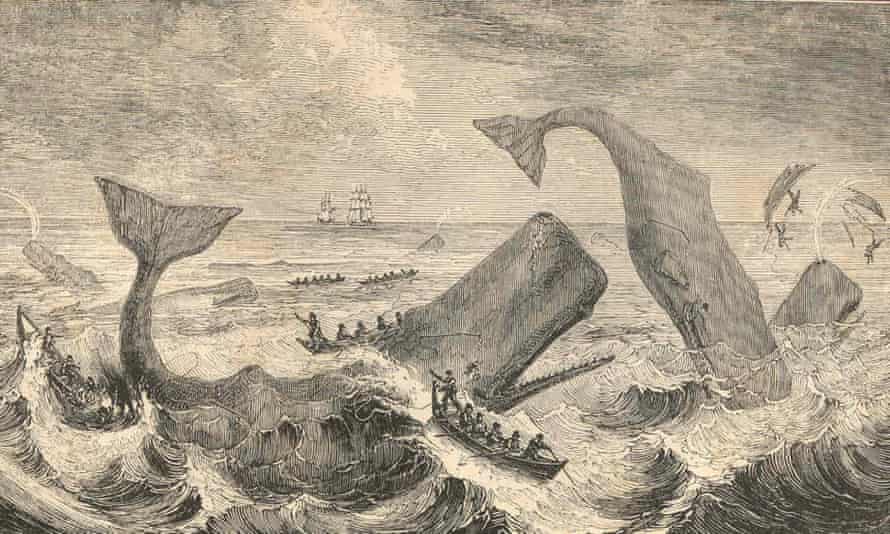
Aremarkable new studyon how whales behaved when attacked by humans in the 19th century has implications for the way they react to changes wreaked by humans in the 21st century.
The paper, published by the Royal Society on Wednesday, is authored by Hal Whitehead and Luke Rendell, pre-eminent scientists working with cetaceans, and Tim D Smith, a data scientist, and their research addresses an age-old question: if whales are so smart, why did they hang around to be killed? The answer? They didn’t.
Using newly digitised logbooks detailing the hunting of sperm whales in the north Pacific, the authors discovered that…
March 17, 2021, 5:28 AM PDT/UpdatedMarch 17, 2021, 7:25 AM PDTByWilson WongandKathryn Prociv
A dangerous outbreak of severe thunderstorms and tornadoes is forecast to threaten the South and Southeast Wednesday and Thursday, officials said.
Portions of Louisiana, Mississippi and Alabama are under “high” and “moderate” risk outlooks as large hail and damaging winds are expected to move from the southern Plains to the Southeast, according to theNational Weather Service‘s Storm Prediction Center. High-risk severe weather outlooks are rare.
Falling gas prices and a lack of maintenance may have contributed to a 40% increase in the number of methane releases from Russian pipelines in 2020, analysts say
Methane, which is released into the atmosphere through leaky gas pipes, has a global warming impact 84 times higher than CO2 over 20 years (Pic:LHoon/Flickr)
The number of methane plumes emitted from Russian gas infrastructure rose by 40% in 2020, satellite monitoring has revealed, raising concerns over the global warming impact.
Increasingly frequent methane releases from venting, flaring or leakage along two major gas pipelines came despite an estimated 14% drop in exports to Europe.
Analysis firmKayrros detected13 methane emission events around the Yamal-Europe pipeline – a 4,196 km pipeline running through Russia, Belarus, Poland and Germany – and a further 33 around the Brotherhood pipeline, 2,750-km long gas pipeline through Russia…
Lightning may have played a key role in the emergence of life on Earth.Nolan Caldwell/Getty Images
In 2016, a family in Illinois thought that a meteorite had hit their backyard. They called up the geology department at nearby Wheaton College to say that whatever struck their property had started a small fire and had left a weird rock embedded in the scorched dirt.
“Meteorites, contrary to popular belief, are cold when they hit the ground,” says Benjamin Hess, who was an undergraduate at the college but is now a graduate student at Yale University. “My professor readily figured out that that was probably a lightning strike.”
When lighting strikes sand, soil or stone, it immediately melts the materials into a glassy clump known as a “fulgurite,” or lightning rock. When geologists excavated the one in Illinois, they found something unexpected inside — an important ingredient for life that had long been thought to be delivered to early Earth by meteorites.
A report on the find, in the journal Nature Communications, suggests that this could have been a way for lightning to have played a key role in the emergence of life.Article continues after sponsor message
Most of the fulgurites that have been studied in the past were collected on beaches or deserts, says Hess, because “it’s really easy to see a glass structure sticking out of the sand.” One that is buried in the soil and potentially hidden by random debris or vegetation is harder to spot, although it might contain different minerals produced when the bolt hit something like clay.
When the researchers dug out the fulgurite in Illinois, they first saw glassy bits on its surface. Below that was a thick, tree-root-like structure extending down about a foot and a half. “It’s just entirely made of glass and has, like, burned soil on the outside of it,” says Hess, adding that the object looked like a foggy gray mass with a lot of air holes.
Hess and two colleagues at the University of Leeds analyzed the minerals inside and found one called schreibersite. “Which was very strange,” says Hess.
This reactive mineral contains phosphorus, an essential element for life. Phosphorus “really plays a key role in a lot of the basic cell structures,” says Hess. For example, it makes up the backbone of DNA.
Phosphorus was abundant in early Earth, but geologists know that it was mostly inaccessible because it was trapped inside nonreactive minerals that don’t dissolve easily in water. That led to a mystery: Where did all the phosphorus needed to make biological molecules come from?
One possibility is meteorites, which can contain reactive minerals like schreibersite. When the Earth was forming and for the first billion years or so afterward, the planet was pelted with numerous meteorites.
“So people thought, ‘Aha! It could actually be an extraterrestrial phosphorous source that provided the reactive phosphorous needed for life to form,’ ” says Hess.
But it occurred to the researchers that lighting offered an alternative source of phosphorus for the young Earth — and one that had certain advantages.
After all, meteorite strikes declined in number over time as the solar system got cleared out, and meteorite impacts can also be hugely destructive. “Lightning doesn’t destroy an entire 100-kilometer area when it strikes,” Hess points out.
The team did a kind of back-of-the-envelope calculation to see if lightning strikes really might have contributed a significant amount of usable phosphorus.
“There are a lot of things to consider,” says Hess, “like what was the dominant rock type that was being struck on early Earth? How much land might there have been? What was the atmosphere like? How much lightning would come from that atmosphere? How much phosphorus was in the rock type?”
Data from satellites and other monitors show that these days, there are over 500 million flashes of lightning a year and that about a quarter of them strike the ground.
Climate modeling suggests that when Earth formed, about 4.5 billion years ago, to when life first emerged, about 3.5 billion years ago, there could have been 1 billion to 5 billion lightning flashes every year.
“Assuming there was a fair amount of land, it’s upwards of a billion lightning strikes a year,” says Hess.
He and his colleagues believe that around the time life formed, the amount of usable phosphorus created through lighting strikes would be about the same as that provided by meteorites. “There’s a large uncertainty there, but basically we found that they are essentially similar,” says Hess.
This new idea about lightning is “pretty cool,” says Hilairy Hartnett, an astrobiologist at Arizona State University who thinks a lot about phosphorus and its role in the potential for life on other planets.
“All life on Earth requires phosphorus, from the tiniest virus to the largest organisms,” she notes.
She thinks this team made a lot of reasonable guesses about whether lightning was important for making reactive phosphorus, but it’s just hard to know and it’s clear that meteorites did deliver large amounts of the stuff.
Still, “the lightning strikes deliver more than they might have expected,” says Hartnett.
So even if meteorite phosphorus was the big deal on early Earth, she says, this means lightning strikes are now a way that planets around other stars might get usable phosphorus, even if they aren’t constantly smacked by meteorites.
“It’s really nice,” she says, “to be able to say there’s more than one path to generating phosphorous that could be available to a planet that might be able to develop life.”
(EnviroNews Nature)—One-fifth of Wisconsin’s gray wolf (Canis lupus) population is dead after hunters and trappers slaughtered more than 200 animals in a three-day, sanctioned trophy binge. Official numbers reported by Wisconsin’s Department of Natural Resources (WDNR) show the “harvest” exceeded quota numbers in every zone, resulting in almost twice the number of wolf-kills as was sanctioned. The numbers were updated on Feb. 26, 2021, and the WDNR notes they are subject to change, which means the number of wolf deaths could be even higher.
The stateopened hunting seasonon Feb. 22, receiving over 27,000 applications to participate in the wolf cull. WDNR made 2,380 harvest authorizations available for purchase and set the quota for wolves at 200. However, 81 of those wolves were allocated to the Ojibwe Tribes “in accordance…