No evidence Covid leaked from a lab but probably emerged from wildlife trade, say WHO scientists

Pandemics threat must be treated with same seriousness as terrorism, warn experts

Jane Dalton@JournoJane1 day ago 5 comments
https://www.independent.co.uk/news/world/asia/covid-cause-lab-evidence-wildlife-trade-b1815915.html?fbclid=IwAR0wLd5AygEnM06vxA8m9GLeVig5zlyQ6ZrIWoDmIcHsKb5c-XpbozNZaCA

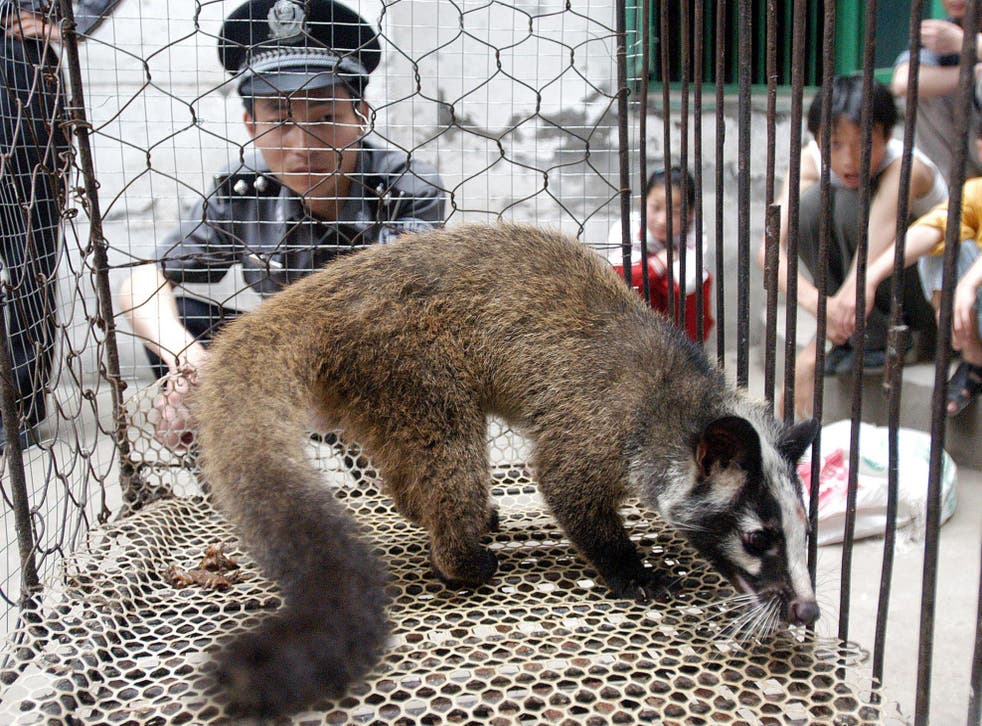
The experts believe the virus probably crossed from wildlife into farmed or domesticated animals in the Wuhan market, and from there to people
The experts believe the virus probably crossed from wildlife into farmed or domesticated animals in the Wuhan market, and from there to people (AFP via Getty Images)

https://buy.tinypass.com/checkout/template/show?displayMode=inline&containerSelector=.above-article-prompt-donations&templateId=OT5K0SE6GQ3U&offerId=fakeOfferId&showCloseButton=false&trackingId=%7Bjcx%7DH4sIAAAAAAAAAFWQy26DMBBF_8VrggDz3qEWtU0rkSopSrpzyATMwyBjA03Vf69BSavMbubcM4v7jQg9oRBt44vzECWHrzXSUEdySCmMLzOpGu_SMBMHtBldUWeKw9QBp8AyWBLxPt6vcfr2_BildzSeIJOCtmyJmb7hDRxLWa0MNZY0M3qWsgRxzMuyoGcOQXvnR9mf3BftuIOmq4mAz8BPsBcd4s3GdbEyCtLfGAoFl6Ahcd0XOdk5r8Y2dp_e8Qf6ZynhlDAxR5isaw1lpOkIzVl_Owy0pwtHw-raw7G0uT1ZY6Ue0U4RF-umbemW4enYVkfZA49yYEKx0zjXJUSNQtM1HQ_7OAh-fgGiOFSqdAEAAA&experienceId=EXEXJ3VLHDAV&widget=offer&tbc=%7Bjzx%7D0hRl93QRmnQWEMayU4HVECNTirPe62qePhDM8ZA03-tKIBO2aJ-CUudwgTb8BGWxDznyWfY0j_DZOiWsb9e3Xg&iframeId=offer-0-aIrrr&url=https%3A%2F%2Fwww.independent.co.uk%2Fnews%2Fworld%2Fasia%2Fcovid-cause-lab-evidence-wildlife-trade-b1815915.html%3Ffbclid%3DIwAR0wLd5AygEnM06vxA8m9GLeVig5zlyQ6ZrIWoDmIcHsKb5c-XpbozNZaCA&parentDualScreenLeft=0&parentDualScreenTop=0&parentWidth=1139&parentHeight=537&parentOuterHeight=607&aid=SEz5CAOYyJ&tags=article&contentSection=News&contentAuthor=Jane+Dalton&contentCreated=2021-03-12T00%3A22%3A03Z&pageViewId=km7zmn139imw6tlc&visitId=v-km7zmn1bj4r4x2wk&userProvider=publisher_user_ref&userToken=&customCookies=%7B%22_pc_show_register_prompt%22%3A%22true%22%7D&hasLoginRequiredCallback=true&width=624&_qh=182fb92b9c

World Health Organisation (WHO) scientists say they have found no evidence that Covid-19 leaked from a Chinese laboratory, and instead it was probably caused by the wildlife trade.

The four WHO experts who carried out a month-long investigation in China insisted there was nothing that proved the disease was deliberately developed.

And they called for the threat of pandemics to be treated with the same seriousness as terrorism after the 11 September 2001 attacks.

Read more

The scientists said in a Chatham House briefing that they found links between the live-animal market in Wuhan, where people first fell ill, and regions where bats had viruses.Apes At San Diego Zoo Receive COVID-19 Vaccinehttps://imasdk.googleapis.com/js/core/bridge3.446.1_en.html#goog_1418780697

Peter Daszak, a zoologist and president of EcoHealth Alliance, which works to prevent pandemics, said: “There was a conduit from Wuhan to the provinces in South China, where the closest relative viruses to [the coronavirus] are found in bats.”

Dr Daszak said the wildlife trade was the most likely explanation of how Covid-19 arrived in Wuhan.

The WHO scientists and their Chinese counterparts considered the most likely explanation was that the virus crossed into domesticated or farmed animals, he added.Please enter your email addressPlease enter a valid email addressPlease enter a valid email addressSIGN UPI would like to be emailed about offers, events and updates from The Independent.Read our privacy notice

The world will find out “fairly soon, within the next few years” what started the pandemic, he predicted. It typically takes many years to pinpoint the animal reservoir of outbreaks.

The team are due to release a report next week on the initial conclusions of their mission to Wuhan.

Read more
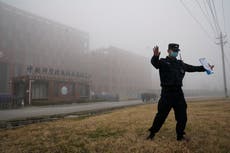
Marion Koopmans, head of viroscience at University Medical Centre Rotterdam, said they visited the three laboratories closest to the Huanan market in Wuhan, and scrutinised their protocols and research, among other issues.about:blankabout:blankhttps://bd45e420140dbb8b103b0796f2feb7dd.safeframe.googlesyndication.com/safeframe/1-0-37/html/container.htmlhttps://bd45e420140dbb8b103b0796f2feb7dd.safeframe.googlesyndication.com/safeframe/1-0-37/html/container.htmlSkip in 5about:blank✕Skip in 5about:blank

“We concluded that it’s extremely unlikely there was a lab incident,” she said.

China has faced claims that the Wuhan Institute of Virology could be the suspected source of the Covid-19 virus.

Dr Daszak called for the threat of pandemics to be treated with the same seriousness as terrorism after the 9/11 attacks. and working out where the next ones are going to come from and what it might be, whereas we do that with hurricanes and typhoons and all the rest of it,” hesaid.

He added: “After 9/11, we put in place a mechanism to track every single phone call into the US, and the minute there’s a rumour on the web or on these phone calls of an attack, the network is disrupted prior to the attack.

“That’s the kind of change or shift in thinking we need for pandemics, I believe.”

Dr Daszak said: “Let’s look at where wildlife are interacting with livestock and people, and see what is out there and try and find out what threats could emerge in future.”

Test drilling for oil in Namibia’s Okavango region poses toxic risk

Test drilling for oil in Namibia’s Okavango region poses toxic risk (msn.com)

Jeffrey Barbee  4 hrs ago


Colorado and Wyoming brace for severe snowstorm and potential blizzard conditions this weekendBrazil plunges into crisis as a second wave and deadly new variant overwhelm hospitals

The Canadian oil and gas company ReconAfrica began exploratory drilling in Namibia upstream of the wildlife-rich Okavango Delta in January. According to the company’s aerial imagery and an independent review, they don’t appear to have taken what experts say is an environmentally responsible measure to protect the local water supply from contamination.a group of giraffe standing on top of a grass covered field: Botswana. Okavango Delta. Khwai concession. Pack of African wild dogs (Lycaon pictus) looking out for prey.© Photograph by Danita Delimont, Alamy Stock Photo Botswana. Okavango Delta. Khwai concession. Pack of African wild dogs (Lycaon pictus) looking out for prey.

Namibia is a water-scarce country, and when news of the company’s project became more widespread, communities expressed concern that contaminants from drilling would seep into shallow aquifers that supply drinking water and irrigation for crops.https://www.msn.com/en-us/news/us/test-drilling-for-oil-in-namibia-s-okavango-region-poses-toxic-risk/ar-BB1ewtEC?ocid=msedgdhp

Conservationists also worry that contamination from the test drilling could affect wildlife in the vicinity—elephants, Temminck’s ground pangolins, African wild dogs, martial eagles—and in the UNESCO-recognized Okavango Delta some 160 miles downstream.

A large waste, or reserve, pit next to the first test well appears in a video that ReconAfrica posted on its website on January 10. Such pits are for storing the mud, fluids, and other materials—which may contain dangerous chemicals or be hypersaline—that come up when drilling for oil or natural gas. In British Columbia, Canada, where ReconAfrica is based, it’s standard industry practice to line these pits with an impermeable barrier that prevents chemicals from seeping into the earth and groundwater.a train is parked on the side of a dirt field: tktk© Photograph by John Grobler tktk

ReconAfrica spokesperson Claire Preece told National Geographic in October 2020 that drill cuttings would “be managed in lined pits.” She also said that “ReconAfrica follows Namibian regulations and policies as well as international best practices.” According to Namibian law, the company must “control the flow and prevent the waste, escape or spilling” of petroleum, drilling fluid, water or any other substance from the well.

In the company’s video, no lining is visible.

Namibian journalist John Grobler, who visited the site on January 23, confirmed to National Geographic that the reserve pit was unlined and had liquid pooling in it.

“From an environmental aspect this is grossly unacceptable, and from a social aspect [it] is reckless and disgraceful,” says Jan Arkert, a consulting engineering geologist based in Uniondale, South Africa, who has worked for decades on drilling-related projects. “The communities are totally dependent on groundwater for domestic and agricultural purposes, and any contamination to the aquifer will be all but impossible to contain and clean up.”

Video: Radioactive contamination (AFP)

a man and a woman looking at the camera: WH: Microsoft Exchange hack 'significant'
Associated Press Logo
a man wearing a suit and tie
FOX News Logo
Andrew Cuomo looking at the camera
FOX News Logo

Arkert says that if the company chose to line the pit now, after drilling has started, it would be complicated. It would involve multiple steps, including removing the waste already there and disposing of it at a suitable facility, preparing the underlying gravel layer to ensure it won’t puncture the liner, and then installing the liner itself, which might have to be imported. Each step, Arkert says, is time consuming and likely would take at least three to four weeks.

“It looks to me like drilling fluids from the rig are being discharged into the unlined reserve pit,” says Matt Totten, Jr., a former exploration geologist for the oil and gas industry who has worked on projects in the United States, after he examined ReconAfrica’s video and still images. “Notice the dark brown discolored areas in the pond next to the rig where drilling fluids would be discharged.”

After reviewing another aerial video from drill site published by the German news program VOX on March 4, Totten confirmed that the now very full pit still “appears unlined and likely filled with a mixture of rainwater and drilling fluids.”

ReconAfrica did not respond to multiple requests for comment about its reserve pit.

To get permission from the Namibian government to drill exploratory wells, ReconAfrica had to do an assessment of their environmental impacts. The company’s resulting report referred to a waste “pond” and noted that it would “scrape all waste that has collected in the pond and dispose of these and the pond lining at a suitable site.”

Arkert, who joined a Zoom conference on oil and gas development in Africa on February 17 hosted by the European Association of Geoscientists and Engineers, asked Scot Evans, the CEO of ReconAfrica, why the company didn’t line the pit.

Evans didn’t answer the question directly but said that in Canada the fluid “is used as fertilizer.” He added, “We are going to have a little experiment when we are done with the local [agriculture] people to introduce fertilizers to the community.”

According to Arkert, that answer “can only be described as bizarre,” because Evans is referring only to the drill fluid. But what’s particularly dangerous are naturally occurring compounds such as benzene, ethylene, toluene, and zylene, as well as radioactive water, which come to the surface if petroleum is discovered. The “brew that is stored in the unlined containment pond will be a cocktail of toxic liquid waste, fit only for disposal in a hazardous landfill site,” Arkert says.

Other experts agree. Water coming up the well when drilling into oil and gas formations “is typically saline, contains oil and grease, and can contain toxic organic and inorganic compounds, and naturally occurring radioactive materials,” says Surina Esterhuyse, a geohydrologist with the University of the Free State, in Bloemfontein, South Africa. Some of those chemicals have been proven to cause cancer, birth defects, and reproductive disorders in people, according to a 2016 study in the journal Environmental Health Perspectives.

According to a 2009 U.S. Fish and Wildlife Service report, reserve pits can contaminate farmland, streams, and drinking water sources and “can entrap and kill migratory birds and other wildlife.”

It is unclear what protocols ReconAfrica has followed for its first Namibian test well reserve pit to protect the area’s fragile ecosystem.

Wildlife Watch is an investigative reporting project between National Geographic Society and National Geographic Partners focusing on wildlife crime and exploitation. Read more Wildlife Watch stories here, and learn more about National Geographic Society’s nonprofit mission at nationalgeographic.org. Send tips, feedback, and story ideas to NGP.WildlifeWatch@natgeo.com. 

UN says Ebola in Guinea may be linked to 2014 outbreak

Exposing the Big Game's avatarThe Extinction Chronicles

UN says Ebola in Guinea may be linked to 2014 outbreak (msn.com)

2 hrs ago


Major storm moving east, will bring record-breaking snow and damaging…Brazil plunges into crisis as a second wave and deadly new variant overwhelm…

GENEVA (AP) — A top official at the World Health Organization said that a genetic analysis of the ongoing Ebola outbreak in Guinea suggests it may have been sparked by a survivor of the devastating West Africa epidemic that ended five years ago.

At a press briefing in Geneva, WHO emergencies chief Dr. Michael Ryan described the results of the genetic sequencing of the virus in Guinea as “quite remarkable.”

Scientists in Africa and Germany posted their results on a virology website on Friday, concluding that the current Ebola virus sickening people in Guinea is extremely similar to the virus that sparked the widespread West Africa outbreak that began in 2014.

“More…

View original post 272 more words

Scientists Discover 400-Year-Old Greenland Shark Likely Born Around 1620

https://googleads.g.doubleclick.net/pagead/ads?client=ca-pub-3673330609533067&output=html&h=280&slotname=6515906203&adk=1663315129&adf=3810258443&pi=t.ma~as.6515906203&w=640&fwrn=4&fwrnh=100&lmt=1615576048&rafmt=1&psa=1&format=640×280&url=https%3A%2F%2Fearthlymission.com%2F400-year-old-greenland-shark-science-discovery%2F%3Ffbclid%3DIwAR2rvxsqpxkvhLHZP36hfUzyXLq8b1Nlfl8NffI8waOea1x6yOvYToTnPls&flash=0&fwr=0&fwrattr=true&rpe=1&resp_fmts=3&wgl=1&uach=WyJXaW5kb3dzIiwiMTAuMCIsIng4NiIsIiIsIjg5LjAuNDM4OS44MiIsW11d&tt_state=W3siaXNzdWVyT3JpZ2luIjoiaHR0cHM6Ly9hZHNlcnZpY2UuZ29vZ2xlLmNvbSIsInN0YXRlIjo2fSx7Imlzc3Vlck9yaWdpbiI6Imh0dHBzOi8vYXR0ZXN0YXRpb24uYW5kcm9pZC5jb20iLCJzdGF0ZSI6N31d&dt=1615576047812&bpp=137&bdt=10365&idt=1081&shv=r20210309&cbv=r20190131&ptt=9&saldr=aa&abxe=1&cookie=ID%3D10b32d6ac4609b4c-22a5e1bedbc60051%3AT%3D1615572585%3ART%3D1615572585%3AS%3DALNI_MaE4ItI-xUOxNNOE_OCKXKWsTdRDw&correlator=3759806083945&frm=20&pv=2&ga_vid=154012911.1615572585&ga_sid=1615576049&ga_hid=1710642561&ga_fc=0&u_tz=-480&u_his=1&u_java=0&u_h=640&u_w=1139&u_ah=607&u_aw=1139&u_cd=24&u_nplug=3&u_nmime=4&adx=71&ady=287&biw=1123&bih=538&scr_x=0&scr_y=0&eid=44736524%2C21066433%2C21068083%2C31060428%2C21067496&oid=3&pvsid=4298001153230754&pem=130&rx=0&eae=0&fc=896&brdim=0%2C0%2C0%2C0%2C1139%2C0%2C1139%2C607%2C1139%2C537&vis=2&rsz=%7C%7CoeEr%7C&abl=CS&pfx=0&fu=8320&bc=31&ifi=1&uci=a!1&fsb=1&xpc=lLeOWbEbts&p=https%3A//earthlymission.com&dtd=1190

Greenland sharks are now the longest-living vertebrates known on Earth, according to scientists.

Image credit: Dive Magazine

Researchers used radiocarbon dating of eye proteins to determine the ages of 28 Greenland sharks, and estimated that one female was about 400 years old. The former vertebrate record-holder was a bowhead whale estimated to be 211 years old.

As lead author Julius Nielsen, a marine biologist from the University of Copenhagen, put it: “We had our expectations that we were dealing with an unusual animal, but I think everyone doing this research was very surprised to learn the sharks were as old as they were.”

Greenland sharks swim through the cold waters of the Arctic and the North Atlantic at such a sluggish pace that has earned them the nickname “sleeper sharks.” Image credit: Julius Nielsen

Greenland sharks are huge and can grow up to 5m in length. Yet, they grow at just 1cm a year. They can be found, swimming slowly, throughout the cold, deep waters of the North Atlantic.

The team believes the animals only reach sexual maturity when they are 4m-long. And with this new, very lengthy age-range, it suggests this does not occur until the animals are about 150 years old.

A newly tagged Greenland shark returns to the deep and cold waters of the Uummannaq Fjord in western Greenland. Image credit: Julius Nielsen

The research was made possible, in part, by the atmospheric thermonuclear weapons tests conducted during the 1960s, which released massive amounts of radiocarbon that were then absorbed by organisms in ocean ecosystems. Sharks that showed evidence of elevated radiocarbon in the nucleus of their eye tissue were therefore born after the so-called “bomb pulse,” and were younger than 50 years old, while sharks with lower radiocarbon levels were born prior to that, and were at least 50 years old or older, the study authors wrote.

The scientists then calculated an age range for the older sharks based on their size, and on prior data about Greenland sharks’ size at birth and growth rates in fish.

A Greenland shark near the ocean surface after its release from research vessel Sanna in northern Greenland. Image credit: Julius Nielsen

According to the results of the analysis – which has a probability rate of about 95 percent – the sharks were at least 272 years old, and could be as much as 512 years old (!) with 390 years as the most likely average life span, according to Nielsen.about:blank

But why do Greenland sharks live so long?

Their longevity is actually attributed to their very slow metabolism and the cold waters that they inhabit. They swim through the cold waters of the Arctic and the North Atlantic at such a sluggish pace that has earned them the nickname “sleeper sharks.” Seal parts have been found in their bellies, but the sharks move so slowly that experts have suggested that the seals must have been asleep or already dead when the sharks ate them.

The slower you go, the farther you will be.

The dark cloud hanging over all of this Covid-19 optimism

Exposing the Big Game's avatarThe Extinction Chronicles

Analysis by Chris Cillizza, CNN Editor-at-large

https://www.cnn.com/2021/03/12/_politics-zone-injection/covid-19-polling-coronavirus/index.html

Updated 10:37 AM ET, Fri March 12, 2021

(CNN)Inhis speechmarking the one-year anniversary of the Covid-19 pandemic in the United States, President Joe Biden offered these words of encouragement: “There is hope and light and better days ahead.”And he’s, largely, right! As CNN’sRyan Struyk noted Friday morning: “The United States is now averaging 1,482 deaths per day from coronavirus, the lowest daily death toll since November 30, according to data from CNN and Johns Hopkins University.” Struyk also calculates that the7-day rolling average of cases is at 53,494as of Thursday, less than half the total we were seeing in the United States just a month ago.All of the trend lines are going in the right direction. Biden’s pledge to allow everyone to sign up for a vaccination by May 1 and his promise of a return…

View original post 613 more words

China building offensive, aggressive military, top US Pacific commander says

Exposing the Big Game's avatarThe Extinction Chronicles

https://www.cnn.com/2021/03/10/asia/us-pacific-commander-china-threat-intl-hnk-ml/index.html?fbclid=IwAR3LvFQEUhdmCiv4JvWQYR9c7KAZbdAIBkJwIyMWSWkw_aWORTGF1ro8dAU

By Brad Lendon, CNN

Updated 8:54 PM ET, Wed March 10, 2021

Hong Kong (CNN)China is assembling an increasingly offensive military and expanding its regional footprint, as Beijing steps up efforts to supplant American military power in Asia, a top US commander warned Congress on Tuesday.”I cannot for the life of me understand some of the capabilities that they’re putting in the field unless it is an aggressive posture,” Adm. Philip Davidson, the head of US Indo-Pacific Command, said in testimony before the Senate Armed Services Committee.”I see them developing systems, capabilities and a posture that would indicate that they’re interested in aggression,” Davidson said.Adm. Philip Davidson, head of US Indo-Pacific CommandAdm. Philip Davidson, head of US Indo-Pacific CommandDavidson, who in the hearing defended budget requests for billions of dollars of new weaponry in the Pacific, said the increased investment was necessary to deter Chinese military ambition in the region.Content by RV ShareMillennials are…
View original post 911 more words

A ‘Dark Ages’ Of Wildlife Management Descends On The West

Exposing the Big Game's avatarCommittee to Abolish Sport Hunting Blog

IN MOJO’S THE WEEK THAT IS, WILKINSON AND SADLER DISCUSS HOW STATE LEGISLATORS ARE SETTING BACK WILDLIFE CONSERVATION FOR GRIZ, WOLVES AND OTHER ICONIC ANIMALS

https://mountainjournal.org/controversial-bills-target-wolves-and-grizzlies-in-the-american-west?fbclid=IwAR1zJpuSUG25UZjaaGqWfXNbHhk0e-nGph-mxeE7wxlIklAzbB2TMmF6xfw

byTodd Wilkinson and Tom SadlerSUPPORT USGET NEWSLETTERControversial bills moving through the 2021 Montana legislature would allow grizzlies to be killed outside the recovery zone based on the mere claim they were threatening livestock or human safety. They would prohibit bears outside the recovery zone from being relocated, and would allow black bears to be hunted with hounds, likely causing conflicts with grizzlies. Other bills have negative implications for grizzlies too. Experts say, if passed, they will reverse 40 years of bear conservation and likely reduce the possibility of bear populations from Greater Yellowstone linking up with bear populations in the northern part of the state. This photo, titled “Blondie’s Legacy” is by Thomas D. Mangelsen (mangelsen.com)

View original post 3,846 more words

Clark County urges state to ban ‘barbaric’ wildlife killing contests

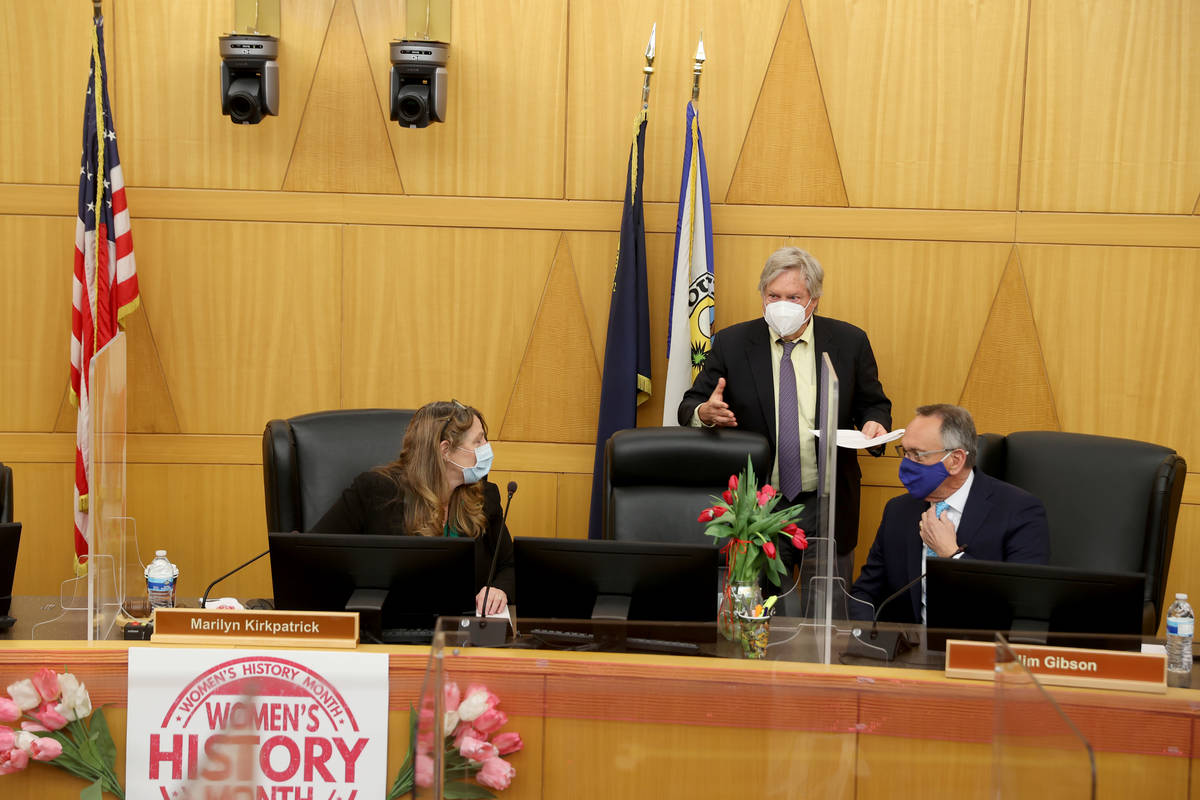
Clark County Commissioners, from left, Chairman Marilyn Kirkpatrick, Tick Segerblom and Jim Gib ...Clark County Commissioners, from left, Chairman Marilyn Kirkpatrick, Tick Segerblom and Jim Gibson during a break in a commission meeting at the Clark County Government Center in Las Vegas Tuesday, March 2, 2021. (K.M. Cannon/Las Vegas Review-Journal) @KMCannonPhotoClark County Commissioners, from left, William McCurdy II, Michael Naft, Justin Jones, Chairman ...Clark County Commissioners, from left, William McCurdy II, Michael Naft, Justin Jones, Chairman Marilyn Kirkpatrick, Jim Gibson and Tick Segerblom during a commission meeting at the Clark County Government Center in Las Vegas Tuesday, March 2, 2021. (K.M. Cannon/Las Vegas Review-Journal) @KMCannonPhotoMore StoriesNellis AFB commits land for first responder vehicle training complexFood service and hospitality workers can now get vaccinesNevada adds highest one-day total of new COVID cases in nearly a monthState: Vaccine groups not changing, despite unused appointments

By Shea Johnson 

Las Vegas Review-JournalMarch 2, 2021 – 4:21 pm   Don’t miss the big stories. Like us on Facebook. https://www.facebook.com/plugins/like.php?href=https%3A%2F%2Fwww.facebook.com%2Freviewjournal&width=105&layout=button_count&action=like&size=large&show_faces=false&share=false&height=21&appId=846558002155573

Clark County commissioners on Tuesday formally urged Nevada to ban wildlife killing contests — a form of hunting competition already barred by neighboring states that activists have castigated as “unethical,” “barbaric” and a “sick bloodsport.”

In such contests, single shooters or teams of two set out at dawn to kill as many coyotes, rabbits, bobcats or other small mammals as they can, according to activists, who say that animals are then often thrown away and that lead ammunition strewn on public lands risks being ingested by wildlife and poisoning the food chain.

Participants compete for money or other prizes, the county said, and because western states such as California, Arizona and New Mexico have already banned the practice, Nevada has recently become a destination for contest organizers.

There have been more than two dozen competitions in Nevada in recent years, at least four which have occurred in the county, according to a resolution unanimously adopted by the commission imploring the Nevada Department of Wildlife “to take immediate action” to outlaw the contests.

“I am proud to have sponsored this resolution, which will help to ensure that the public is safe from stray bullets by unethical shooters in a hurry to kill as many animals as possible and protect our state’s wildlife from inhumane practices and unnecessary slaughter,” Commissioner Justin Jones said in a statement.

Ultimately the authority to establish a ban falls on the state Board of Wildlife Commissioners, a nine-member panel appointed by the governor, and not the state’s wildlife agency.

State biologists will, however, provide scientific information requested by the Wildlife Commission when the board considers any regulatory changes, which is a lengthy and public process, Nevada Department of Wildlife spokesman C. Douglas Nielsen said.RJ POLITICSTeam coverage from Las Vegas, Carson City and DCSign up for our free RJ Politics newsletter. SIGN UP By signing up you agree to our Privacy Policy and Terms of Service. Unsubscribe at any time.

“It is not our role to determine what is acceptable to society,” Nielsen said in an email about the state agency, adding that “if the department is asked for its recommendations, they are based on science.”

Resolution supported by activistshttps://bd47ccc157bea08d92e1d5d6b4cdb75d.safeframe.googlesyndication.com/safeframe/1-0-37/html/container.html

Wildlife activists immediately praised the county’s decision, noting that it marked the first forward movement against the contests in Nevada six years after the state Wildlife Commission voted 7-1 to deny a petition seeking to end them.

“With the passage of this historic resolution to condemn the scourge of wildlife killing contests in our state, Nevada has been put on the path toward joining the bevy of other states that have already eliminated these barbaric practices,” said Annoula Wylderich, the Nevada state director for Animal Wellness Action, in a statement.

Connie Howard, the chair of conservation and public lands for the Sierra Club Toiyabe Chapter, had written a letter of support stating that “nothing is more antithetical” to the club’s mission of wildlife preservation and protection than “killing contests that glorify the killing of animals purely for blood sport with the intention of seeing who can kill the most.”

And Patrick Donnelly, the Nevada state director at the Center for Biological Diversity, underscored that there was no evidence that killing coyotes reduces human conflict or the depredation of livestock.

“We need to show respect for our native wildlife, not treat it as fodder in some sick bloodsport,” Donnelly said in a statement.

In passing the resolution, commissioners also clearly delineated a distinction between the competitions and hunting. The county, according to its resolution, “values hunting as a method of food gathering, recreation, wildlife management, and protecting private property.”

“Pro-Life” Texas Lawmaker Introduces Bill Imposing Death Penalty for Abortion

Abortion rights activists hold placards and chant outside of the Supreme Court ahead of a ruling on abortion clinic restrictions on June 27, 2016, in Washington, D.C.

BYChris Walker, TruthoutPUBLISHEDMarch 10, 2021

A white lower-case t on a black background

READING LISTENVIRONMENT & HEALTHThis Nightmare Anniversary Should Remind Us It Didn’t Have to Be This WayECONOMY & LABORBlack Workers in Alabama Aim to Slay the Trillion-Dollar Behemoth That Is AmazonECONOMY & LABORThe House Just Passed the Most Sweeping Labor Legislation of This GenerationPOLITICS & ELECTIONSBoebert, Gosar and Brooks Aided Capitol Attackers, Jayapal Says in LettersPOLITICS & ELECTIONSGOP Senator Absurdly Tries to Claim Credit for Stimulus That He Voted AgainstENVIRONMENT & HEALTHJapan Hasn’t Recovered 10 Years After Fukushima Meltdown

ARepublican lawmaker in Texas has introduced a bill that would make all abortions in the state illegal, with the punishment being the death penalty for anyone performing or undergoing the medical procedure.

Texas Republican State Rep. Bryan Slaton said in a press release that his bill would showcase how his party truly feels about the practice. “It’s time Republicans make it clear that we actually think Abortion is murder,” Slaton’s statement said. In a tweet about the proposal, Slaton also claimed the bill would “guarantee the equal protection of the laws to all Texans, no matter how small.”

Slaton’s bill, HB 3326, would charge any person who has an abortion, as well as any provider who performs the medical procedure, with assault or homicide. Those charges carry with them extreme punishments, including the death penalty in the state, and are in stark opposition to the stated “pro-life” positions anti-abortion activists say they hold.

Never miss another story

Get the news you want, delivered to your inbox every day.

  • Email

The bill would ban all abortions from the point of fertilization, and would not make any exceptions for rape or incest, though it would allow the procedure when a pregnant person’s life is at risk. The bill would also grant immunity to any individual who gives evidence or testifies against a person whom they have helped in obtaining an abortion.

The official Twitter account of the Texas Democratic Party sent out a tweet blasting the proposal.

“Texas Republicans filed a bill to abolish and criminalize abortions — potentially leaving women and physicians who perform the procedure to face the death penalty,” it said. “The right to choose is a human right. Period.”

Abortion is a favorite topic for Slaton, a freshman legislator in Texas. He previously led an effort to try to halt any legislation in the state from moving forward — including the naming of roads and bridges — until the issue of abortion was addressed.

It’s unlikely that Slaton’s bill will advance very far, as previous legislative efforts with similar goals have failed in recent years. An anti-abortion bill in 2017 failed to receive any hearings at all, and in 2019 a similar bill died in committee after several hours of public input.

But the bill is representative of a series of other bills across the nation that are seeking to impose extreme limits on abortion, and it’s possible that his proposal could go beyond those other two bills. Fourteen states throughout the U.S. have seen Republican legislators propose similar plans to ban abortion outright. It is hoped by these lawmakers that enacting these laws will lead to lawsuits, which in turn could result in the U.S. Supreme Court taking them up, and possibly overturning the 1973 Roe v. Wade abortion rights decision.

Just this week, Arkansas Gov. Asa Hutchinson, a Republican, signed into law a bill that bans nearly all abortions in the state. In a statement regarding the new law, Hutchinson expressly stated that he hoped the law would be challenged.

The abortion ban “is in contradiction of binding precedents of the U.S. Supreme Court, but it is the intent of the legislation to set the stage for the Supreme Court overturning current case law,” Hutchinson said in a statement.

Jessica Mason Pieklo, executive editor at Rewire News Group, a reproductive rights-focused media organization, noted in a tweet that the American Civil Liberties Union of Arkansas was already planning to challenge it. But Pieklo also worried over how far legal challenges would advance, particularly within conservative-leaning federal courts.

“The question is what will the Trump judges on the 8th Circuit do and what [toll] will that take on patients and providers?” she asked in her tweet.

Within the Eighth Circuit Court of Appeals, 10 of the 11 active judges are appointees of Republican presidents, including George W. Bush and Donald Trump. As recently as December, the court ruled in ways that would allow Arkansas to enact other strict measures regarding abortion, including banning the practice after just 14 weeks of pregnancy.

US Air Force is guarding against electromagnetic pulse attacks. Should we worry?

Exposing the Big Game's avatarThe Extinction Chronicles

ByEdd Gent-Live Science Contributor8 hours ago

A billowing white mushroom cloud during Operation Ivy, the first test of a hydrogen bomb, at Enewetak Atoll in the Marshall Islands.

One way to create an EMP is to set off a nuclear bomb. Here, a billowing white mushroom cloud during Operation Ivy, the first test of a hydrogen bomb, at Enewetak Atoll in the Marshall Islands.(Image credit: CORBIS/Corbis via Getty Images)

A U.S. Air Force base in Texas has taken the first steps to guard against an electromagnetic pulse (EMP) attack. But what, exactly, is an EMP, and how big is the threat?

Officials at the Joint Base San Antonio in Lackland, Texas, issued a request for bids to carry out a survey of a facility called the Petroleum, Oil and Lubrication Complex. The survey will identify any equipment that could be vulnerable to an EMP ahead of more detailed vulnerability testing, according to the request. After that, officials would figure out ways to keep that equipment safe in the event of…

View original post 995 more words