WHAT I WITNESSED INVESTIGATING FACTORY FARMS DURING THE PANDEMIC

WHAT I WITNESSED INVESTIGATING FACTORY FARMS DURING THE PANDEMIC
 By: Clément Martz  |   Reading time: 6 minutes
Out of all the countries, why did you choose Sweden? We are one of the countries with the highest animal welfare standards in the world,” the police officer asked while I was being interrogated after photographing the conditions inside a pig farm. “Is keeping pigs indoors, unable to see the daylight, crowded in tight dirty stalls while standing in their own excrement until they are sent to slaughter at 6 months of age considered high welfare standards?” I replied.
In the last year, I have been to countless Swedish farms, documenting these so-called “high welfare standards” during the pandemic. What I have witnessed and documented shows me that the way these animals are being treated is an immediate concern. Their conditions are shocking and seeing them for myself was an urgent wake-up call.

COVID-19 has affected farmed animals across the globe. Although the virus has largely been transmitted between humans, animals raised for food have still felt the consequences. 

From animals being buried and burnt alive to slowed operations in slaughterhouses and worsening conditions in the West, millions of farmed animals are also victims of this pandemic.

In Sweden like most other countries in the world, factory-farmed animals are raised for food in confined and overcrowded conditions. According to the Swedish Board of Agriculture, Sweden has 63,000 farms and over 50 percent of Swedish farms have animal production. 

Each year, Sweden produces:2.6 million pigs100 million chickens8 million egg-laying hens290,000 tonnes (over 319,600 US tons) of cow’s milk
INVESTIGATING FARMS AROUND THE WORLD 

Animal agriculture keeps hidden the daily treatment of farmed animals. Hearing—and seeing—directly from undercover investigators what they have witnessed inside factory farms is a powerful eye-opener. Here at Sentient Media, we’re making sure their stories are told:The Forgotten Victims of Factory Farming: Lex Rigby, Head of Investigations at UK nonprofit Viva!, writes that fish farming is “the world’s fastest-growing food production sector, generating over half of the fish filling our supermarket shelves.”

“As with land-based factory farms, conditions on fish farms cannot easily replicate the complexities of an animal’s natural environment—leading to increasing concerns regarding their welfare,” writes Rigby.

Later this month, Rigby will join Pulitzer Prize winner Ian Urbina and undercover investigator Pete Paxton to talk about the impacts of industrial fishing in our next Sentient Session: Reporting Life at Sea. Learn more and register here.
 What a Dairy Farm Really Looks Like: “I remember their eyelashes,” writes Natalie Blanton, recalling the calves she met in childhood in Utah, growing up around “idyllic” dairy farms—and the realizations that led her to stop consuming dairy.

“As I matured, and after enough games of hide-and-go-seek among these rows of sheds housing tiny young calves,  I started to piece together a more sinister cycle taking place. It was a gradual tugging on threads of understanding, an unraveling of a dark truth behind those happy cows on those happy milk cartons,” she writes. 
 Stepping Out From Behind the Camera: After many years spent documenting factory farming, Gemunu de Silva now leads Tracks Investigations, an organization with over 250 investigations under its belt. 

“For such a staple of the animal advocacy world, Gem and Tracks have flown surprisingly under the radar. But that is by design. Up until this year, Gem avoided doing press, leaving it to the NGOs to draw the media’s attention to the cruelties his investigations exposed. It is only as the pandemic has forced a hiatus on the majority of Tracks’ projects that Gem has begun telling the stories of his decades-long career,” writes Claire Hamlett. 
 Helping Others Expose Animal Abuse: Now leading the investigations department at Animal Outlook, Erin Wing was once an investigator too, drawn to taking action for farmed animals after experiencing trauma and abuse herself. She shares what she saw inside factory farms, including a dairy farm where, she writes, “I reached the limit of what I could endure.”

“There, brutal violence was a daily occurrence. The last effort that I felt I owed to the animals before retiring from the field for good was holding out at Dick Van Dam Dairy for a few more weeks so I could rescue a newborn calf named Samuel. I found comfort in the fact that we escaped the dark world of factory farming together,” writes Wing.
Read more from Sentient Media.

Run The Oil Industry In Reverse’: Fighting Climate Change By Farming Kelp

Exposing the Big Game's avatarThe Extinction Chronicles

March 1, 20215:00 AM ET

https://www.npr.org/2021/03/01/970670565/run-the-oil-industry-in-reverse-fighting-climate-change-by-farming-kelp

FRED BEVER

FROMLISTEN·4:044-Minute ListenAdd toPLAYLIST

Adam Baske (left) and Capt. Rob Odlin of Running Tide Technologies in the Gulf of Maine. They release rope that’s entwined with early-stage kelp, a fast growing seaweed that will soak up carbon dioxide.Fred Bever/Maine Public

In the race to stall or even reverse global warming, new efforts are in the works to pull carbon dioxide out of the air and put it somewhere safe.

One startup in Maine has a vision that is drawing attention from scientists and venture capitalists alike: to bury massive amounts of seaweed at the bottom of the ocean, where it will lock away carbon for thousands of years.

The company is called Running Tide Technologies, and it’s prototyping the concept this winter. On a recent day in the Gulf of Maine, boat captain Rob Odlin says the…

View original post 927 more words

Factory farming and global health

about 19 hours agoShare to FacebookShare to TwitterShare to Email App

https://www.irishtimes.com/opinion/letters/factory-farming-and-global-health-1.4497323

Sir, – Industrial animal farming, more commonly known as factory farming, has, according to the UN, caused the majority of infectious diseases in humans in the past decade.

In Russia, scientists have detected the first case of transmission of the H5N8 strain of avian flu to humans and have alerted the World Health Organisation. Scientists isolated the strain’s genetic material from seven workers at a poultry farm in southern Russia. The workers did not suffer any serious health consequences. While the highly contagious strain is lethal for birds, it has never before been reported to have spread to humans.

Humans can get infected with avian and swine influenza viruses, such as bird flu subtypes A(H5N1) and A(H7N9) and swine-flu subtypes such as A(H1N1). The more widely known strain of avian influenza is the H1N1, which is responsible for all the major flu outbreaks, like the 1918 Spanish flu and the 2009 swine-flu outbreak. The H5N8 is a sub-type of the influenza A virus that causes flu-like symptoms in birds and mammals. In recent months, outbreaks of the H5N8 strain have been reported in Russia, Europe, China, the Middle East and north Africa but only ever in poultry – until, that is, this latest news from Russia.

There is a timebomb called climate change with which we are all familiar. There is another, less talked-about timebomb that is ticking just as loudly, factory farming. Yet no government that I know of, anywhere in the world, is listening to it. Why is this? – Yours, etc,

GERRY BOLAND,

Keadue,

Co Roscommon.

90% of all big fish have been taken from the oceans

Exposing the Big Game's avatarThe Extinction Chronicles

Play

Space to play or pause, M to mute, left and right arrows to seek, up and down arrows for volume.

LISTEN8m 12sVolume 90%00:0000:00Image:

Getty Images

On The Science Show with Robyn WilliamsShare

Download 90% of all big fish have been taken from the oceans (11.27 MB)Download11.27 MB

It has been achieved with industrial fishing. Large boats with large nets and large fleets with satellite tracking are stripping the oceans of fish. But the most prized large valuable fish are the most fertile. So as they are removed, so is the reproductive capacity of a species. Some species such as sturgeon are almost extinct. Now more countries are involved in this industrial removal of fish. Some countries sell fishing rights in their exclusive economic zones. And this leads to overfishing. China has the largest fishing fleet and is a major player in distant water fishing.

Guest
Daniel Pauly

View original post 31 more words

Shut off the leaf blowers and restore peace to suburbia

OPINION

Leaves are not trash, and the leaf blowers create noise and air pollution.

By Peter Bahouth

https://www.dallasnews.com/opinion/commentary/2020/12/21/shut-off-the-leaf-blowers-and-restore-peace-to-suburbia/?fbclid=IwAR0FFiQswfPhYga7xMf7pw_Z3viqREzxqGjbOtjVDNr83NkxRyQqBZvsnog

8:01 AM on Dec 18, 2020 CST

My very first job was raking leaves in the fall. It was a good way to make a little money without leaving the neighborhood. The weather was cool, the leaves were trippy colors, and people were out and about before the coming semi-hibernation of winter. It was a beautiful season of red, orange and yellow, quiet but for the sound of kids jumping into huge piles of leaves.

Now, the simple and efficient rake has been replaced by the daily intrusion of loud and polluting gas-powered leaf blowers designed to blast away any leaf that dares land on a lawn. The mind-rattling racket of these machines has made being outside, working and going to school remotely, listening to someone or something, even thinking, nearly impossible. about:blankhttps://c5x8i7c7.ssl.hwcdn.net/vplayer-parallel/20210209_0916/videojs/show.html?controls=1&loop=30&autoplay=0&tracker=83863571-8b84-4d58-a827-64f927c39254&height=300&width=533&vurl=%2F%2Fa.jsrdn.com%2Fvideos%2Fdgv_dallasnews%2F20210301053120_603c7a292e165%2Fdgv_dallasnews_trending_articles_20210301053120_603c7a292e165_new.mp4&poster=%2F%2Fa.jsrdn.com%2Fvideos%2Fdgv_dallasnews%2F20210301053120_603c7a292e165%2Fdgv_dallasnews_trending_articles_20210301053120_603c7a292e165_new.jpgXFeatured on Dallas News

Advertisement

FEATURED ON DALLAS NEWS

dslogo

Surprise concert performed for homeowner activist who fought for Shingle Mountain removal

Quincy Roberts, CEO of Roberts Trucking and the man in charge of Shingle Mountain’s removal,…

Operating a gas-powered leaf blower for one hour emits smog-forming pollution comparable to driving a 2017 Toyota Camry about 1,100 miles, or approximately the distance from Chicago to Houston. Particulate matter linked to cancers, heart disease, asthma and other serious ailments, lingers in the air for days in droplets so small that the body has no way to filter them from entering the lungs. Most affected are children, the elderly and, of course, the operators of these machines.

A leaf blower is frequently the soundtrack for my day, too often the first sound I hear in the morning. The noise from these contraptions can be overwhelming. It is their unique combination of sound waves from the engine and the 200 mph blast of air it generates, that makes them so intolerable. The low-frequency waves travel farthest and produce the worst health effects, but the high-frequency waves (think dentist drill) add a grating intrusion. Unlike eyes, ears can’t shut. Studies show that noise pollution heightens stress, disrupts sleep, leads to hypertension and impairs learning.https://2c2359a808bfe6b0e9a6386ad15cacb1.safeframe.googlesyndication.com/safeframe/1-0-37/html/container.html

There is no waste in nature, and leaves aren’t litter. When autumn leaves fall, many species of butterflies, bees, fireflies, moths, ladybugs and earthworms find their winter home. The Luna moth is one of the most beautiful wild creatures that still exists close to our homes. Wrapping their cocoons in leaves provides excellent camouflage and insulation from cold temperatures. The cocoons are bright lime green and as large as four and a half inches long, and finding one is always a delight. But weekly blowing of leaf cover has substantially destroyed Luna moth habitat as well as that for fireflies and many other species. When we treat leaves like trash, we’re tossing out something other species need to survive.

Maintaining clean air and water, addressing the looming climate crisis, and protecting other species as well as ourselves should start at the neighborhood level. If we don’t encourage community responses to threats to our health and well-being, what hope do we have to take on bigger problems? We have to ask, is there value in the environment we live in, or has a leafless lawn become the new standard of our values?SPONSORED CONTENT

The Perfect Cup of Coffee for your Keurig®️ Brewer

https://2c2359a808bfe6b0e9a6386ad15cacb1.safeframe.googlesyndication.com/safeframe/1-0-37/html/container.htmlDon’t even talk to me until I’ve had my coffee! When I first heard about the Keurig coffee maker, I was thrilled. Keep your Keurig…BY 

There are around 40 million acres of lawn in the continental United States, making turf grass the single largest “crop” we grow. Let’s move on from lawns styled with a 1950s-era crewcut to more of a Beatles-style shag, using native plants that don’t require being groomed into a flat-top. Let’s leave the leaves alone once in a while.

I’ve started to hand out a Golden Rake Award, a miniature gold rake and gift card to folks I see raking leaves, to thank them for helping to keep the neighborhood a little quieter and the air a little cleaner. We each chose the issues — from the global to the personal — that we most care about. Common to all of them is the need for sanctuary in our lives, on our streets and in our homes. If given the choice, wouldn’t we all rather live in a clean, quiet neighborhood than a loud, dirty one with fewer leaves?https://2c2359a808bfe6b0e9a6386ad15cacb1.safeframe.googlesyndication.com/safeframe/1-0-37/html/container.html

Nature is not someplace to visit, it’s all around us. Even the most urbanized places are home to countless populations of wild birds, butterflies, flowers and other species. Our surroundings have much to offer in an increasingly complicated and electronic world. Nature provides us a place to think, create and de-stress. Spending time outside is rejuvenating and important to our well-being, but the persistent noise of gas-powered blowers makes it tough to enjoy the simple act of being outside, and it’s loud enough to disrupt your day, even inside your own home, a place that has become more essential than ever.

Sanctuary is being lost to the sanctity of a well-groomed lawn. With a million new gas-powered blowers sold each year, and manufacturers pushing the year-round use of leaf blowers for a variety of purposes, including to dry off pavement, it’s only getting worse. We’re not only losing peace and quiet and the quality of our air, we’re losing a whole season.

It’s time to hit the reset button and take back autumn. Buy someone a rake for Christmas, and get out in the crisp clean air and jump in the leaves.

Peter Bahouth is the former executive director of Greenpeace USA, the Turner Family Foundation and the U.S. Climate Action Network. He wrote this column for The Dallas Morning News.

https://www.dallasnews.com/opinion/commentary/2020/12/21/shut-off-the-leaf-blowers-and-restore-peace-to-suburbia/?fbclid=IwAR0FFiQswfPhYga7xMf7pw_Z3viqREzxqGjbOtjVDNr83NkxRyQqBZvsnog

Human chain of 150 volunteers guide 40 stranded pilot whales back to sea

Nina Hindmarsh and Skara Bohny22:19, Feb 22 2021

Volunteer Petra Juric of Nelson attends to a juvenile Pilot Whale, one of the 49 that were stranded.
BRADEN FASTIER/STUFFVolunteer Petra Juric of Nelson attends to a juvenile Pilot Whale, one of the 49 that were stranded.

A human chain made up of around 150 volunteers is guiding a pod of whales back out to sea in chest-deep water, after successfully re-floating them at high tide.

Roughly 38 of the 49 long-finned pilot whales that stranded Monday morning at Farewell Spit were encircled by the human chain from 6.30 pm, after being re-grouped by the volunteers.

As the high tide came in and the sun began to set behind the mountains, volunteers wearing wetsuits sat in seawater up to their necks and held the whales to stop them from swimming away.

Some were getting frisky and thrashing about, while baby whales darted around volunteers in the water, looking for their parents and family members.

READ MORE:
* Volunteers on high alert after pilot whale calf washes up on Christchurch beach
* Dead whale towed to Farewell Spit tidal flats to decompose
* Project Jonah helps volunteers prepare for strandings in Taranaki

Some volunteers had been with their whales for up to six hours, dousing them in buckets of water, digging holes around them to fill up with water, and covering them in wet sheets and towels.

ADVERTISEMENTAdvertise with Stuff

At 7.30 pm, the human chain was still slowly leading the whales back out to sea.

Department of Conservation whale stranding operations manager, Darren Foxwell, said first they had to re-float the animals and let them get their balance back.https://imasdk.googleapis.com/js/core/bridge3.444.1_en.html#goog_1189197759PauseUnmuteCurrent Time 0:31/Duration 1:17Loaded: 64.27% FullscreenNINA HINDMARSH/STUFFVolunteers are working to keep stranded whales alive until they can refloat them at high tide at Farewell Spit Whale.

“So they re-orientate, and we keep them together, otherwise there’s a risk of re-stranding if they take off on their own. 

“Then we let them go as a pod when they’ve all re-floated, and fingers crossed, they take off out to sea and don’t re-strand overnight.”

Foxwell said a local tour operator had discovered the 49 long finned pilot whales stranded at about 9.30am.

The scene was about 1.5 kilometres from the DOC carpark at the base of the spit.

“Volunteers started trickling in, and we’ve got enough for this part of the operation,” Foxwell said.

As the high tide came in on Monday evening, roughly 38 of the 49 long-finned pilot whales that had been stranded were encircled by the human chain, after being re-grouped by the volunteers.
NINA HINDMARSH/STUFFAs the high tide came in on Monday evening, roughly 38 of the 49 long-finned pilot whales that had been stranded were encircled by the human chain, after being re-grouped by the volunteers.

Foxwell said there was “rough, unofficial count” of 10 dead whales so far.

“But none have died since we’ve been here.” 

“Quite often, it might be one animal that is injured, and one of the theories is that it holds the other animals in, the tide goes out, and they get stranded.”

There were “no large adult whales [stranded] here, not like there can be”, Foxwell said.

“At high tide, we hope to have these guys refloated, orientated, and swimming out towards Separation Point.”

About 2pm, a woman who was standing close to the rear of one of the largest whales was struck repeatedly by its tail, when the animal began flapping violently in distress, breaking her ankle.

Some were getting frisky and thrashing about, while baby whales darted around volunteers in the water, looking for their parents and family members.
NINA HINDMARSH/STUFFSome were getting frisky and thrashing about, while baby whales darted around volunteers in the water, looking for their parents and family members.

The volunteer was seen crawling away and clutching her ankle, with others rushing to help, including a doctor who was also helping at the scene. 

She was driven to the base of the spit and treated by an ambulance crew.

Following the incident, DOC staff were walking around reminding volunteers to keep a safe distance from the whales, and to remember that they were “still wild animals”.

Puponga resident and volunteer, Carolina Brejchova, was caring for six whales at the site. 

65 volunteers are working to save the surviving whales after 49 stranded at Farewell Spit.
NINA HINDMARSH65 volunteers are working to save the surviving whales after 49 stranded at Farewell Spit.

“I’m just doing what I can, it’s not something I’ve done before and it’s not how I hoped to see whales. I just hope we can help them live and survive.”

Brejchova was caring for a baby whale “crying and communicating” to a larger one just a short distance away.

“There’s some sort of a bond between them, they are calling out to each other. It’s very sad.

“But as sad as it is, this kind of thing also brings people together.”

Auckland holidaymaker, Anna Taylor, was walking along the spit around lunchtime with her husband, when they saw groups of people arriving carrying buckets, bags and towels.

By 3pm seven of the 49 stranded long-finned pilot whales had died. Volunteers hope to refloat survivors at high tide at around 7pm.
NINA HINDMARSHBy 3pm seven of the 49 stranded long-finned pilot whales had died. Volunteers hope to refloat survivors at high tide at around 7pm.

“We thought it might be a stranding, so we just walked towards everyone, and used our towels [on the whales].”

It was her first whale stranding.

Taylor said they had just flipped a whale on its side. 

“Apparently they have no chance of survival if they’re on their sides, so we dug a hole and flipped it over. We just kind of dug and lots of water came up around it, which is good, but he’s blistering a bit on the tail, so we’re desperately putting our towels on and dousing it in water.”

“The baby ones are making lots of noise, it’s very sad. A few of them unfortunately, it’s too late.”

The volunteers at the scene included 50 Project Jonah trained marine mammal medics, who have completed the Project Jonah whale first-aid course.

22022021. News. Photo Nina Hindmarsh / Stuff
49 pilot whales have stranded at Farewell Spit, in Golden Bay, in February 2021.
NINA HINDMARSH/STUFF22022021. News. Photo Nina Hindmarsh / Stuff 49 pilot whales have stranded at Farewell Spit, in Golden Bay, in February 2021.

Project Jonah communications and volunteer co-ordinator Louisa Hawkes said the main concern for whales was overheating, because the whales were black, which attracted the heat, and they were covered in a layer of blubber.

“The priority is keeping them cool and wet.”

Temperatures were forecast to reach a high of 22.

Hawkes said anyone intending to help at the stranding should be prepared for the remote location and conditions. Project Jonah has a specific page of instructions for strandings in Golden Bay due to the high frequency of events in the area.

The last mass stranding at Farewell Spit was in 2017, when an estimated 600-700 whales stranded. About 400 were successfully re-floated, but approximately 250 died.

Wind power company vows to help save critically endangered California condor

Exposing the Big Game's avatarThe Extinction Chronicles

Richard Luscombe3 hrs ago


How soon might you receive a $1,400 stimulus check?Trump unleashes new threat to American democracy at CPAC

Wind power company vows to help save critically endangered California condor (msn.com)

An energy company in California is teaming up with federal wildlife officials and the Oregon Zoo in an innovative project to ease the plight of the mighty, soaring condor, a critically endangered species of vulture threatened by giant wind turbines in the Tehachapi mountains north-east of Los Angeles.a bird flying in the sky: Photograph: Marcio José Sánchez/AP© Provided by The GuardianPhotograph: Marcio José Sánchez/AP

Avangrid Renewables, which operates 126 turbines as part of its Manzana wind power project, will finance the breeding of birds in captivity to replace any that might be killed by the 252ft diameter turbine blades.

The company will be “working with a captive breeding facility to fund the breeding of additional condors for release into the wild”, according to a…

View original post 362 more words

Endangered right whale found dead off S. Carolina beach

Exposing the Big Game's avatarThe Extinction Chronicles

53 mins ago


Endangered right whale found dead off S. Carolina beach (msn.com)

MYRTLE BEACH, S.C. (AP) — A critically endangered North Atlantic Right whale was found dead over the weekend off the coast of South Carolina, more than four months after it had been spotted entangled in fishing gear.

The National Marine Fisheries Service confirmed Sunday that the dead whale was discovered in waters about 15 miles (24 kilometers) offshore from Myrtle Beach. It’s the third right whale death recorded since the rare species’ calving season began in November along the southern East Coast.

Experts estimate fewer than 400 North Atlantic right whales survive. Pregnant females migrate each winter to the warmer coastal waters off Georgia and Florida to give birth to their calves.

The whale found dead off South Carolina was an 11-year-old male that had been entangled at least since October, when it was sighted off Nantucket…

View original post 114 more words

A rooster stabbed a man to death with a knife during a cockfight

jgerstein@businessinsider.com (Julie Gerstein)  13 hrs ago

A rooster stabbed a man to death with a knife during a cockfight (msn.com)


How soon might you receive a $1,400 stimulus check?Sarah Lawrence student seen as cult victim is now chargeda person holding a bird: People place a knife to a rooster's leg before a cockfight at The Tampak Siring Temple in Bali, Indonesia on January 18, 2018. Cockfight is an old tradition in Balinese Hinduism. It is a part of the Tabuh Rah ritual, a religious purification to expel evil spirit through animal sacrifice via the blood of the roosters. Cockfights without a religious purpose are considered gambling in Indonesia. Mahendra Moonstar/Anadolu Agency/Getty Images© Provided by INSIDER People place a knife to a rooster’s leg before a cockfight at The Tampak Siring Temple in Bali, Indonesia on January 18, 2018. Cockfight is an old tradition in Balinese Hinduism. It is a part of the Tabuh Rah ritual, a religious purification to expel evil spirit through animal sacrifice via the blood of the roosters. Cockfights without a religious purpose are considered gambling in Indonesia. Mahendra Moonstar/Anadolu Agency/Getty Images
  • An Indian man died after being stabbed by a rooster he was training for cockfighting.
  • The rooster had been outfitted with a three-inch knife on its leg.
  • Though cockfighting is illegal in most countries, it continues to attract fans.
  • Visit Insider’s homepage for more stories.

A rooster fitted with a knife around its foot stabbed its owner to death during practice for an illegal cockfight in India.https://www.dianomi.com/smartads.epl?id=3533

Thangulla Satish, 45, died of blood loss after the rooster repeatedly stabbed him in the groin with a three-inch knife that had been tied around the animal’s leg, according to the Associated Press. 

Satish was among 16 people organizing the cockfight in the village of Lothunur in the Indian state of Telegana, the AP reported.

Authorities are currently searching for the other 15 organizers, who could be charged with manslaughter. They each face up to two years in prison, according to Al-Jazeera. 

Animal rights activists say the sport is especially cruel because it takes advantage of the birds’ natural survival mechanisms in forcing them to fight.

To make matches gorier, some cockfighting trainers fit their birds with what’s known as a “gaff” – a long, dagger-like knife attached to the animal’s foot. Birds often will have many of their feathers plucked out before matches to make it more difficult for their opponents to attack, according to the ASPCA.

They are also sometimes drugged with methamphetamines to enhance their aggressiveness.

Even birds that win their matches often suffer injuries so severe that they, too, are killed. 

Despite India’s Supreme Court outlawing the practice in the 1960s, cockfighting continues to be popular in many of the country’s southern states.

In the US, cockfighting is considered a felony in 42 states, though federal authorities continue to regularly break up fighting rings around the country. In August of last year, the Los Angeles Sheriff’s Department busted a ring with more than 2,000 birds, USA Today reported.

Authorities in New York – in a 2014 sting they dubbed “Operation Angry Birds” – arrested more than 70 people and confiscated more than 3,000 birds, the New York Post reported. 

This is not the first time a bird handler has been killed by a gamecock. Last year, a 55-year-old Indian man from Andhra Pradesh died after a gamecock slashed him in the neck and abdomen during a match held to mark the Hindu festival of Makar Sankranti. And in 2018, a 34-year-old man from Rajavaram, India, bled to death after a rooster gaff pierced his thigh and testicles. 

Fish and Game looks to increase wolf snare trapping in the Upper Snake Region


Jeannette Boner, EastIdahoNews.com

Outdoors
   Published at 1:12 pm, February 25, 2021  | Updated at 5:12 pm, February 25, 2021
SHARE THIS


Stock photo
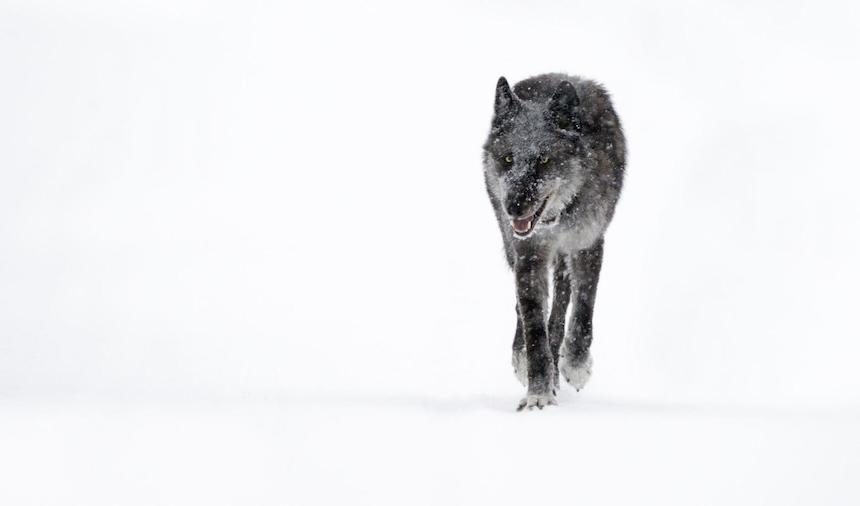
DRIGGS — The Idaho Department of Fish and Game wants to increase the public’s ability to trap gray wolves in the Upper Snake Region, specifically with snares on private and public land.
The Fish and Game proposal would also open trapping up year-round. The proposal cites the need to better control wolf depredations in the area that stretches from north of Idaho Highway 33 in Teton Valley through Island Park and into the upper northern reaches of the Idaho/Montana border. Much of the proposal was pitched by two pro-trapping organizations, the Idaho Trappers Association and the Foundation for Wildlife Management.
“We need more tools to manage wolves in Idaho,” said Rusty Kramer, the president of the Idaho Trappers Association and board member for the Foundation for Wildlife Management. “Those tools are year-round trapping and trapping on private ground where depredation is occurring. People can then protect their own property. There is so much rugged Idaho, I don’t feel like we’ll ever get a handle on the wolf population. Idaho will be a breeding ground forever, and the wolf will never be endangered.”

But Derek Goldman with the Endangered Species Coalition believes these proposals go beyond addressing wolf depredation.
“This proposal is not driven by ag producers, but these sportsman groups,” Goldman said. “This idea of the big bad wolf is a deep-seated cultural animosity toward this animal. This is about trappers wanting to kill more wolves.”

If the snaring portions of the proposal move forward, there will be more public snaring opportunities over a wide geographic area, including public and private lands north of Teton Valley into the Island Park and Henrys Lake areas and onto public lands that border Yellowstone National Park. The snares would be allowed from Nov. 15 through March 31. The proposals also increase the use of foot-hold traps from April 1 to Nov. 14 on private lands in the same area and opens up foot-hold trapping year-round in the Mud Lake area, zones 63 and 63A.
The different types of traps used are important in understanding this issue. Curtis Hendricks, a Fish and Game wildlife biologist said that in the winter, snare traps, which sit on top of the snow, are used more than foot-hold traps. But snares are also more controversial because they are lethal traps, where a foot-hold trap just holds an animal in place.
He also said there is a need for more wolf trapping because, during four of the last five years, Fish and Game have received reports of high levels of livestock killed by wolves in the Upper Snake Region.

“There is consideration to denning and birthing,” said Hendricks of the year-round trapping that would impact pups and nursing wolves. “The department does recognize the optics of (trapping during the birthing season). We are willing to see how it goes.”
According to the Fish and Game’s second annual wolf population inventory, the population was stable from 2019 to 2020. The 2020 estimate peaked with 1,556 wolves in Idaho, 10 fewer than the 2019 estimate of 1,566. Idaho is required to maintain at least 150 wolves. Last year 583 wolves were killed through hunting and trapping. That was a 53 percent increase over 2019.
Goldman doesn’t believe trapping actually helps alleviate the burdens on ranchers who also contend with other predators killing livestock. He also has concerns about how indiscriminate snares are.
“Trapping is indiscriminate,” Goldman said. “It kills anything that steps on the trap. It will catch non-target species of wildlife, including endangered animals and dogs. Some people will argue that it’s not a fair chase. With all that public land in that region, there really is potential to endanger the Yellowstone wolves,” he said adding that increased trapping also elevates the likelihood of recreational users coming in contact with a snare. “It becomes a public safety issue as well.”
Kramer recognizes there is some danger to people recreating, but it’s small, he said, adding that trapping is a legal way to control wolf populations and protect livestock.
Hendricks said the emotional arguments around wolves may never change.
“If nobody’s happy, we’re doing it right,” he said.
According to a press release issued Feb. 1, Fish and Game will be setting new seasons for upcoming deer, elk, pronghorn, black bear, mountain lion, and wolf hunts in March. Hunters can now see proposed seasons and changes and provide comments. The comment period deadline is Feb. 25. The easiest way for hunters to review proposals and weigh-in will be by visiting the big game proposals webpage at https://idfg.idaho.gov/big-game. The proposals are posted by region and separated by species within each region.