Brush Prairie business owner pleads guilty to transporting wildlife illegally taken across state, international bordersUpdated 6 hours agoTrending
Reply

SDPB | By Jackson Dircks
Published July 22, 2025 at 10:59 PM CDT
Listen • 1:59
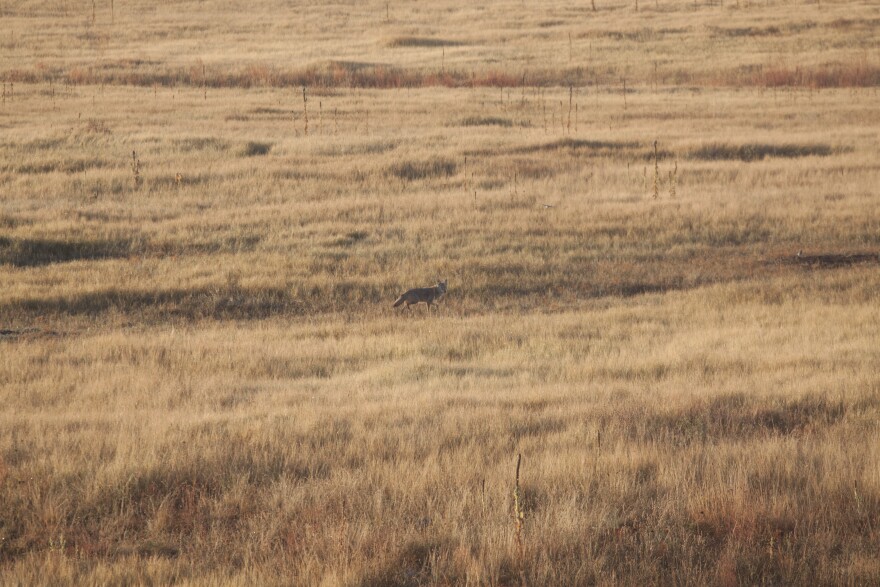
Game, Fish and Parks has failed to hit its target for trapping licenses in five out of the last six years.
While the department said some of that is out of its control, it’s important to get those numbers up.
GFP has a goal to sell more than 4,000 fur bearing licenses a year. Since 2019, it has only done so in 2021. In 2023, numbers dipped to 3,300, before bouncing back slightly to between 3,600 and 3,900.
Kevin Robling is the secretary of Game, Fish and Parks and he spoke on the numbers at the latest state Government Audit and Operations Committee meeting. He said while they haven’t hit that 4,000-license benchmark, a lot of it has to do with the markets.
“Trapping licenses are a reflection of the fur market. And the fur market right now is very poor, very poor. You might get $3 or $5 for a raccoon in prime condition. Coyotes are bringing $10, maybe,” Robling said. “You know? So, the fur market does definitely get folks more excited to buy a fur-bearer license. If fur prices are good, more folks are going to put effort into that recreational opportunity.”
He said one promising thing is that the department’s Nest Predator Bounty Program has increased youth trapping involvement in the state. The program gives participants $10 a tail per raccoon, striped skunk, badger, opossum and red fox trapped and killed.
Robling said that’s encouraging.
“That’s been a strong indication of ensuring our trapping heritage does not fade away because across this nation it is,” Robling said. “Trapping has become a less pursued opportunity.”
He added that keeping trapping and fur bearing license numbers up is vital to agriculture and GFP’s mission of wildlife management.
“But that 4,000 number isn’t like this silver bullet of we need 4,000 to manage the coyote population. We could probably use 10,000 quite honestly, you know as far as the number of coyotes we have, the number of raccoons we have. They definitely help us though manage, let’s say in this case coyotes,” Robling said. “Coyotes, we have a whole entire wildlife damage management program. Twenty-eight full time trappers that everyday they’re trying to help producers make sure they don’t lose lambs and calves in the agricultural space. We could use some more folks out there killing coyotes, harvesting coyotes.”
Robling said once license numbers decline, it’s hard to get them back up.
Monday, July 21, 2025 7:25AM
about:blank
A Lake Tahoe black bear was euthanized after officials say it had become aggressive, but one activist says humans should be held responsible.
A Lake Tahoe black bear was euthanized after officials say it had become aggressive, but one activist says humans should be held responsible.
LAKE TAHOE, Calif. (KGO) — The euthanizing of a Lake Tahoe black bear is prompting a call to action.
Officials say the bear had become aggressive and had far too many encounters with humans, but one activist says this bear would probably still be alive if humans were more responsible.
“We can’t understand why they would be just killing bears rather than holding people responsible,” said Ann Bryant, Executive Director of the BEAR League.
MORE: Activists sound off on CA bill that would bring back ‘cruel’ black bear hunting practice
The California Department of Fish and Wildlife euthanized the bear earlier this month, accusing it of years of aggressive behavior.
Bryant says the problem is more with people not getting the message.
“There isn’t a bear in Tahoe that wouldn’t open a car door that’s not locked. If there’s food in there, that’s not a crime. That’s called a soft entry,” she said. “That’s not a break-in bear. That’s not a problem bear. That’s not a nuisance bear. That is a 100% normal bear. People are not being told to lock up your trash. Secure your food. Don’t leave your car doors open.”
MORE: Number of bears being hit and killed by cars in Tahoe continues to soar
Officials say wildlife officers were responding to reports of a bear causing what was described as “extensive damage” to an unoccupied home in the Meeks Bay community. When they arrived, they immediately recognized the bear with the ear tag number 717.
In a statement, the California Department of Fish and Wildlife said: “Based on its concerning behavior, property damage, and repeated negative encounters with humans, the bear was approved for lethal removal.”
“When bears do that because people don’t get the food out and lock the doors,” said Bryant. “That’s not the bear’s fault. That’s an invitation to the bears to open the door and go in.”
Officials say it was unfortunate, but necessary to put the bear down, adding the bear’s body was left to decompose in the forest, and that its skull was taken for research purposes.
Milwaukee Journal Sentinel

The Department of Natural Resources is planning to update the Wisconsin wild turkey management plan.
The current document, titled “Ecology of Wild Turkeys in Wisconsin, A Plan for their Management,” was designed for 2015-25. It followed a DNR plan for the species written in 1996.
The update is intended to cover the next decade, said Taylor Finger, DNR game bird specialist.
But considering the success of Wisconsin’s wild turkey management program, don’t expect the next edition to have any huge surprises.
The system installed decades ago by the DNR spreads hunting pressure across time periods and geographical zones. It has resulted in high hunter satisfaction as well as provided protection of the turkey population and the birds’ annual breeding cycle.Need a break? Play the USA TODAY Daily Crossword Puzzle.
As other states have had to curtail hunter opportunity in the face of turkey population declines, Wisconsin has had no similar cuts. In fact the number of tags issued in the Badger State has gradually increased and the turkey population remains very strong.
Wild turkeys were native to Wisconsin but wiped out in the late 1800s due to unrestricted hunting and loss of habitat. The last known native wild turkey was in Lafayette County in 1881, according to the DNR.
A 1976 reintroduction of wild turkeys transferred from Missouri to southwestern Wisconsin kick-started what is widely regarded as one – if not the – most successful wildlife restorations in state history.
Wild turkeys are now found in all 72 Wisconsin counties and the DNR holds annual spring and fall hunting seasons.
The spring season has about 130,000 hunters participate, second only to deer hunting, according to DNR data. And Wisconsin often ranks in the top three in the nation in terms of spring turkey harvest.
Get the Outdoors Briefing newsletter in your inbox.
Get your weekly collection of outdoors news across Wisconsin.
Delivery: FriYour Email
Hunters registered 50,287 wild turkeys in the 2025 spring turkey hunting season, according to DNR data. The season ended May 27.
It was the fifth time the Wisconsin spring turkey harvest has topped 50,000 birds and the fifth highest seasonal kill since the DNR began a managed hunt for the species in 1983.
It was second highest spring turkey harvest in the nation, according to preliminary data from state agencies. Only Missouri, with a reported 51,018 turkeys, topped Wisconsin.
The Wisconsin DNR has performed an annual survey of turkey hunters to keep tabs on hunter satisfaction and preferences.
The 2024 survey results underscore the quality of the Wisconsin turkey hunting experience and provide the latest data point what has been a decades-long history of high hunter satisfaction.
Reflecting on the past three years of spring wild turkey hunting seasons, the majority of hunters were satisfied or very satisfied with all aspects of their season included in this survey, according to the 2024 DNR report. Highest satisfaction was expressed for access to areas they wanted to hunt (83%) and the overall quality of their hunts (73%).
One aspect that is likely to change in the updated turkey management plan is the process used for the annual drawing.
Earlier this year DNR conservation warden Jake Donar scoured license data and determined about one in four hunters chosen for a tag through the annual drawing were not purchasing their awards.
Donar shared the finding at the April 2, 2025 meeting of the DNR Turkey Advisory Committee. At least some of the issue was linked to conservation patron license buyers who automatically are entered in the drawing but then fail to buy the tag.
To help make sure such awards can be utilized by hunters instead of resulting in lost opportunities, the committee was in favor of making changes to the drawing process.
DNR data from 2022 through 2024 showed an average of 26.4% of spring turkey hunting awards went unpurchased. This spring, following a April 8, 2025 Milwaukee Journal Sentinel article on the situation, it improved to 23.2%, Donar said.
However a change in the system, in addition to education, is likely needed to drive the rate below 10%.
Finger said any decisions about changes to the drawing process would likely be made through the turkey management plan update.
“It seems appropriate that the plan would be the best avenue to discuss (this issue) and move forward,” Finger said.
Finger said the DNR is planning to host a series of public meetings beginning in late August or September to collect input for the turkey management plan update.
The timeline calls for the new plan to be written and approved in early summer 2026, Finger said. Any changes in the drawing process or other regulations related to the new plan would likely not take effect until 2027.

