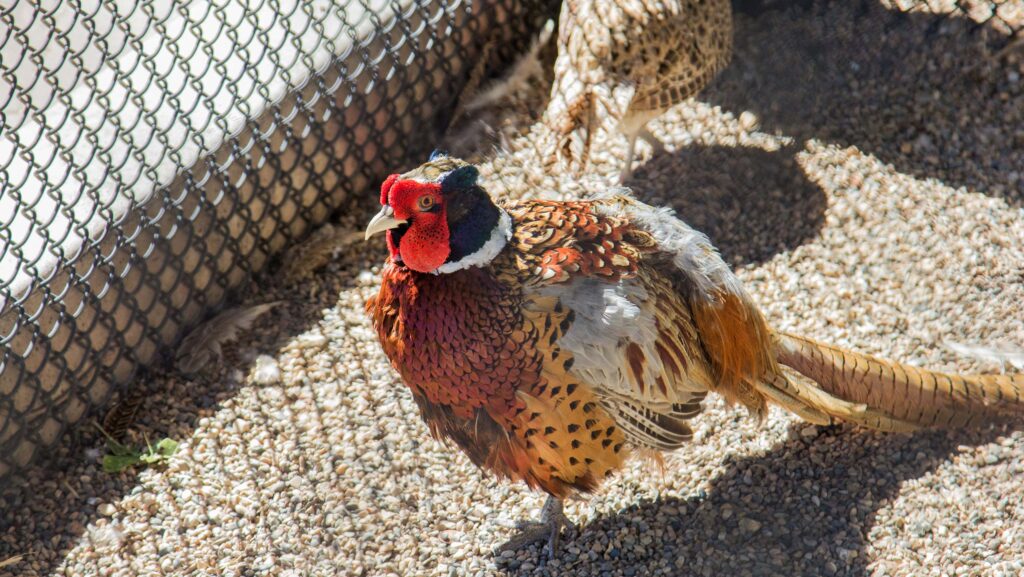
Michigan turkey season is around the corner. What to know in 2025
Reply
In addition to layoffs and hiring freezes, a ‘God squad’ can effectively veto ESA protections for endangered species
Tom PerkinsTue 11 Mar 2025 11.00 EDTShare https://www.theguardian.com/us-news/2025/mar/11/trump-wildlife-agencies-species-extinction
Donald Trump’s administration, backed by House Republicans and Elon Musk’s Doge agency, are carrying out an attack on the Endangered Species Act (ESA) and federal wildlife agencies that, if successful, will almost certainly drive numerous species into extinction, environmental advocates warn.
The three-pronged attack is designed to freeze endangered wildlife protections to more quickly push through oil, gas and development projects, opponents say.
In recent weeks, the US president has said he will assemble a “God squad”, or committee empowered to effectively veto ESA protections for species on the brink of extinction. Meanwhile, in part at the behest of Musk’s so-called “department of government efficiency”, hundreds of US Fish and Wildlife staff have been laid off, and hiring freezes implemented on hundreds more seasonal workers whom advocates say are critical to ensuring some species’ survival.

In the US House, Republicans recently held a hearing on the ESA and the Marine Mammal Protection Act, claiming the legislation needs to be revised to allow industry projects to be approved more quickly.
Wildlife advocates are girding for a fight in which species’ existence hangs in the balance.
“Scientists warn that we’re in an extinction crisis, and we ignore that at our own peril,” said Noah Greenwald, the endangered species director at the Center for Biological Diversity. “As America’s wildlife dwindles, Elon Musk is swinging his wrecking ball at the skilled and dedicated people fighting to save our plants and animals from extinction. It’s beyond idiotic.”
Congress passed the ESA in 1973, and it has saved bald eagles, grizzly bears and American alligators from extinction, among other species. Some environmentalists say it’s among the nation’s strongest environmental laws because it’s explicit, and sets clear deadlines for federal agencies to act to protect species. The law also requires most federal initiatives to ensure the action or project doesn’t threaten protected species.
Nearly 99% of species listed as endangered under the law have survived, Greenwald said, and the law rarely derails energy or development projects.
Still, the ESA’s robust provisions “drive industry bananas” and the law has long been a GOP target, said Drew Caputo, an attorney with the Earthjustice non-profit who has litigated on issues involving endangered species.
“Industry cannot stand that their ability to profit is sometimes limited by the need to protect wildlife that has been on earth for millions of years,” Caputo said. GOP and industry attacks, including bills that attempted repeals and revisions in recent years, have “failed spectacularly”, he added.
But the “God squad” could present the biggest threat so far.
“It can behave as god and decide what species exist and which don’t,” Caputo said.
The squad, officially called the Endangered Species Committee, includes seven federal agency leaders, who, in the rare instances in which a federal action of significant public or economic interest comes into irresolvable conflict with the ESA, each vote on whether the project’s benefits outweigh the protected species’ wellbeing. If five of the seven votes are in favor of a project proceeding, it moves forward, which could drive species to extinction.
The “God squad” has only been convened three times, and the only project on which it overrode the ESA was a dam, but the plans included meaningful provisions that helped at-risk cranes survive.
However, Trump seems to be proceeding without regard to the law’s protocols, and ordering action outside the squad’s scope, advocates say. In one executive order, he directed the squad to meet quarterly instead of after the petitioning process had played out, as the law requires. When there are no projects to consider, the squad should “identify obstacles to domestic energy infrastructure” related to the ESA, another order states.
“He can’t just say: ‘I hereby undo the Endangered Species Act,’” Greenwald said. “There are really specific processes for how that works.”
The president may use the squad to divert water from northern to southern California at the expense of endangered salmon, Caputo said.
Meanwhile, Doge’s cuts to the federal workforce, and Trump funding freezes, are already directly affecting staffing and the solvency of projects to preserve red wolves in North Carolina, ‘akikiki birds in Hawaii, and black-footed ferrets. Greenwald said staff at the fish and wildlife service have learned that the initial cuts that affected hundreds of jobs are just the beginning, and that Trump is planning to cut 40% of the staff.
“What Doge is doing will result in species going extinct,” Greenwald said.
On Thursday, the GOP representatives on the US House Committee on Natural Resources attempted to chart a new course of attack in which they claimed that the US supreme court’s June reversal of the Chevron doctrine that stripped power from regulators also required the ESA to be reformed and made clearer.
“There is no denying that, after half a century, both laws need improvement, and the committee intends to do just that,” Harriet Hageman, the committee chair and Wyoming US representative, said. “Changes to the statutes will significantly improve the regulatory process.”

But Caputo called the rightwing Chevron claim “legal nonsense”. He said the GOP is specifically targeting the ESA’s deadlines for federal agencies to act to protect species, as well as a provision that only allows science and the species’ survival to guide decisions. Republicans also want economic impact on industry to be factored in to the equation, Caputo said.
There’s a chance some reforms could get through with Democratic support. Congress last year passed two out of eight bills that would have weakened the law, but Joe Biden vetoed them.
But the act remains popular among the nation’s public, and that could pressure lawmakers, Caputo said.
“The industry agenda is unpopular, but the right still keeps trying,” Caputo said. “The harsh reality is that extinction means forever. People understand that.”
Eight groups yesterday called on the government to take action on 10 animal welfare issues, including banning wild boar snares and pigeon racing at sea.
“These 10 issues largely do not require new legislation or amendments and can be addressed through administrative orders alone,” Taiwan Animal Protection Monitor Network secretary-general Ho Tsung-hsun (何宗勳) told a news conference in Taipei.
The government’s actions have been “extremely limited,” despite years of advocacy from animal rights groups for better animal welfare policies and their enforcement, Ho said.

Photo courtesy of the New Taipei City Animal Protection and Health Inspection Office
Among the 10 key issues, the eight groups highlighted banning wild boar snares — formally known as compression spring snare traps, which tighten around an animal’s limb with great force when triggered.
Jerry Ko (柯元傑), convener of the Taiwan Animal Protection Monitor Network’s anti-metal traps group, said that the Central Election Commission (CEC) rejected the group’s proposal last year for a referendum on a complete ban on wild boar snares, citing concerns that it would affect the hunting rights of indigenous people and the needs of farmers in preventing crop damage caused by wild animals.
“The wild boar snare is a hunting tool that was introduced from Japan in the past decade… It is not a traditional hunting tool that indigenous people have used for thousands of years,” Ko said.
There are alternatives for preventing crop damage, citing the use of electric fences in Japan, Ko said, adding that the fences are a “humane way to coexist with wildlife.”
Showing images of animals severely injured by wild boar snares, he said that despite authorities promoting an improved snare over the past five years, the number of protected species killed has not decreased.
Six Formosan black bears and five leopard cats have died after being ensared in such devices, Ko said.
Taiwan Bird Rescue Association member Mars Chen (陳彥騰) said that the CEC also rejected a proposal for a referendum to ban pigeon racing at sea.
Chen called the commission’s reasoning “evasive” and “unconvincing.”
The CEC rejected the proposal in part because of its claim that “the true intent of the proposal cannot be understood from the content,” as stipulated in the Referendum Act (公民投票法).
“Amid decades of neglect by administrative agencies, millions — perhaps tens of millions — of racing pigeons have perished at sea,” Chen said, adding that pigeon racing on the high seas has a survival rate of just 1 to 2 percent.
The groups also called for action on eight other issues, including bolstered regulations covering animal performances, ending chaining and caging of dogs, and regulating the breeding and sale of pets other than dogs and cats.
Shreveport Times
0:00
1:32
Louisiana is set to expand its second black bear hunting season in two generations with 26 total permits to be granted and two more areas open to hunters in 2025.
Last year’s inaugural hunt in December 2025 was exclusively in the Management Area 4 with 10 bears harvested.
The Louisiana Wildlife and Fisheries Commission voted March 6 to both expand the number of permits issued by lottery in December 2025 and to include Management Area 1 (Coastal, eight permits) and Management Area 2 (Pointe Coupee, 3 permits) for hunting. Fifteen permits will be issued for Management Area 4 (northeastern Louisiana).
The season would begin on Dec. 6, 2025, and run through Dec. 21, 2025.
All successful applicants for the hunt will be required to attend a LDWF bear hunter training course. To see the complete Notice of Intent from the commission, go to https://www.wlf.louisiana.gov/resources/category/commission-action-items.
Last year’s hunt yielded perhaps the largest black in Louisiana when Deron Santiny of Lafayette landed the 696-pound male bear in Tensas Parish.
Louisiana’s black bear population all but disappeared in the 1950s and 1960s, but has recovered to include about 1,500 today and was removed from the Endangered Species List in 2016.
Louisiana’s fabled black bear became part of American culture in 1902 after President Teddy Roosevelt refused to shoot one that had been trapped and tied to a tree by members of his hunting party.
Get the Storm Watch newsletter in your inbox.
Latest news updates during the emergency.
Delivery: VariesYour Email
The episode was featured in a cartoon in The Washington Post, sparking the idea for a Brooklyn candy store owner to create the “Teddy” bear.
Today black bears roam the deep woods of the Tensas National Wildlife Refuge, Upper Atchafalaya Basin and other connecting corridors such as Three Rivers Wildlife Management Area, according to the U.S. Fish and Wildlife Service.
The bear’s Louisiana recovery was celebrated in 2015 during an event at the Governor’s Mansion that Theodore Roosevelt IV attended and the following year during a ceremony at the Tensas National Wildlife Refuge that then U.S. Interior Secretary Sally Jewel attended.
“I like to think this is partially a result of one of the greatest hunting stories in American history,” Roosevelt told USA Today Network in 2015.