Florida gives preliminary approval to controversial black bear hunt amid strong opposition
Reply

News brief
May 20, 2025
Topics
Avian Influenza (Bird Flu)Share
The Wisconsin Department of Agriculture, Trade, and Consumer Protection (DATCP) announced yesterday that the state will soon begin mandatory monthly milk sampling for avian influenza as part of the National Milk Testing Strategy required by the US Department of Agriculture (USDA).
_0.jpg)
The USDA has been phasing in states for testing based on previous detections. Wisconsin is the nation’s second-biggest dairy producer and is among the 33 states that haven’t reported any H5N1 detections in dairy cattle.
In its statement, the DATCP said that, with help from industry partners, the plan is to collect one milk sample per dairy farm each month, primarily through existing milk-quality labs, to minimize disruptions to dairy farms yet get farm-level results. Initial testing will be done by the Wisconsin Veterinary Diagnostic Laboratory, with any H5N1 detections confirmed by the USDA’s National Veterinary Service Laboratories.
In other H5N1 developments, the USDA Animal and Plant Health Inspection Service (APHIS) reported two more H5N1 outbreaks in poultry, one of them involving a commercial layer farm in Maricopa County, Arizona, that has about 2.26 million birds.
The other involves a backyard flock in Northampton County, Pennsylvania, that has 30 birds.
News brief
May 20, 2025
Topics
The Texas Department of State Health Services (TDSHS) today reported four more measles cases since its last update on May 16 in the large outbreak centered in West Texas, bringing the outbreak total to 722. So far, 92 people have been hospitalized, and the number of deaths remains at two.
.jpg)
Based on rash-onset dates, cases have been declining since a peak in mid-March. Active transmission is still under way in seven counties, mostly in West Texas. The exception is Lamar County in East Texas, which has reported 19 cases.
No new illnesses were reported from New Mexico or Oklahoma, which have reported earlier cases linked to the Texas outbreak.
In other measles developments, the Georgia Department of Public Health (GDPH) reported the state’s fourth measles case of the year, which involves an unvaccinated Atlanta resident who had recently traveled internationally.
Health officials said they are working to identify people who may have been exposed to the patient while he or she was infectious between May 10 and 18.
News brief
May 20, 2025
Topics
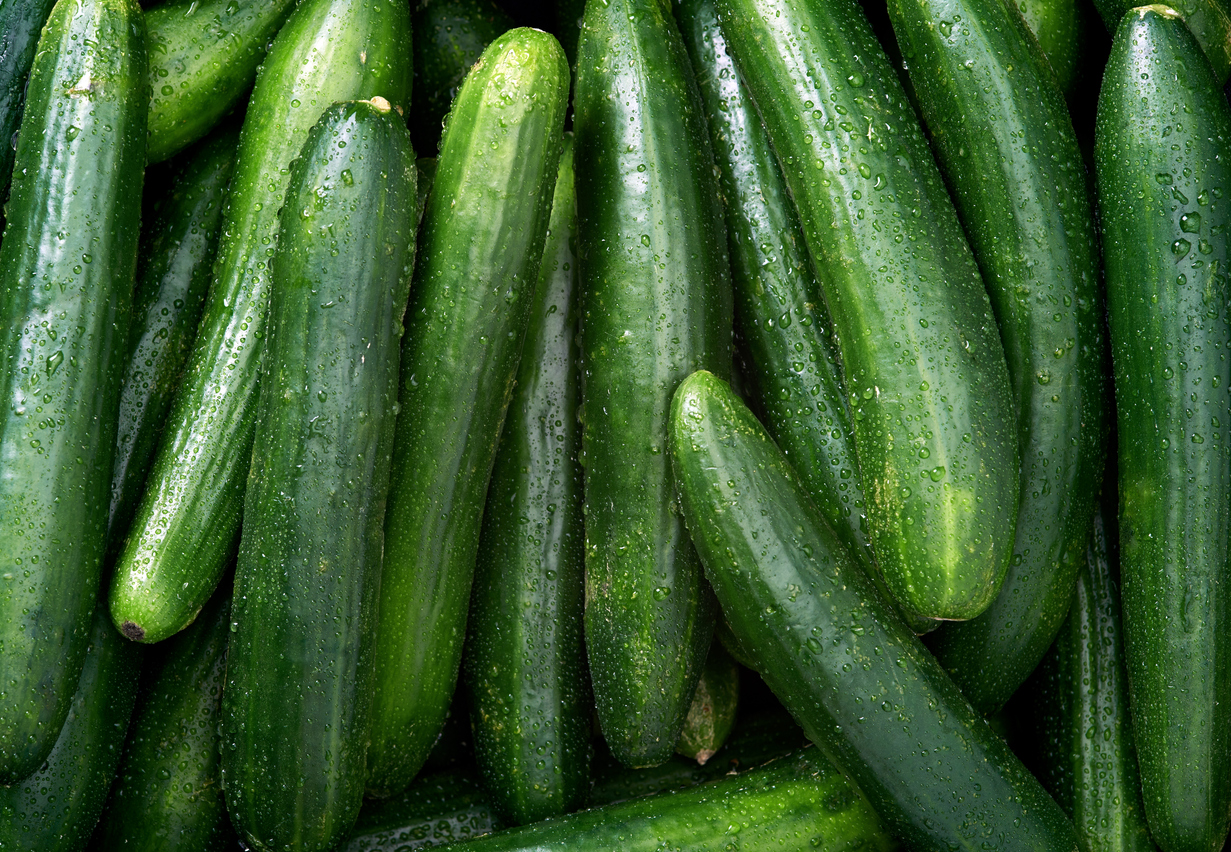
The Centers for Disease Control and Prevention (CDC), Food and Drug Administration (FDA), and public health officials in several states are investigating a multistate Salmonella outbreak in whole cucumbers.
To date, 26 people in 15 states have been sickened in the outbreak of Salmonella Montevideo infections, and 9 have been hospitalized, according to an update posted yesterday by the CDC. Seven of the case-patients reported taking a cruise ship departing from Florida in the 7 days before they became ill. Illness dates range from April 2 to April 28. The CDC says the outbreak is likely much larger, given that most people recover from Salmonella without medical care.
Of the 13 people interviewed, 11 reported buying and eating cucumbers from a variety of locations, including grocery stores, restaurants, hospitals, and cruise ships.
Epidemiologic, laboratory, and traceback data have linked the outbreak to whole cucumbers grown by Bedner Growers and distributed by Fresh Start Produce Sales to stores, restaurants, and other facilities. Both the grower and the distributor are based in Florida. FDA investigators collected an environmental sample from Bedner Growers in April that was positive for Salmonella and matched clinical samples from case patients.
Bedner Growers was also linked to a 2024 outbreak of Salmonella Africana and Salmonella Braederup that sickened 551 people in 34 states. The FDA’s April inspection of the farm was a follow-up in response to that outbreak.
The CDC and FDA say restaurants and retailers that purchased whole cucumbers grown by Bedner and distributed by Fresh Start from April 29 to May 19 should not sell or serve them while the investigation is ongoing and should notify customers of the potential health concern. Cucumbers distributed before this timeframe should be past shelf life. The cucumbers may have been sold individually or in smaller packages and labeled as “supers,” “selects,” or “plains.”
“If you have any whole cucumbers in your home and can’t tell where they are from, throw them out,” the CDC said.
By KOB
Updated: May 20, 2025 – 3:19 PM
Published: May 20, 2025 – 3:00 PM

ALBUQUERQUE, N.M. – New Mexico hunters and hikers may want to reconsider any trips they have planned near the southern border.
A spokesperson for the Department of Defense told USA Today that hunting and hiking in the new national defense area along the southern border is now banned.
KOB 4 reached out to the Department of Defense to verify that information and get further details. A spokesperson responded with a previous statement from Secretary of Defense Pete Hegseth which he made in April.
“This is Department of Defense property,” Hegseth said. “Any illegal [attempt] to enter that zone is entering a military base — a federally protected area. You will be detained. You will be interdicted by U.S. troops and border patrol working together.”
Democratic U.S. Sen. Martin Heinrich sent a letter to the Department of Defense last week with several questions on how U.S. citizens would be impacted by the new national defense area.
Today, a spokesperson for Senator Heinrich told KOB 4 there has been no formal response to that letter. Senator Heinrich issued his own response to the USA Today report in a statement to KOB 4.
“To tell New Mexicans that they will now be arrested for hiking and hunting on the land they have forged their identities on is deeply insulting and un-American,” said Senator Heinrich. “These are places where families have returned year after year to hunt quail, teach their kids how to track Coues deer, and find peace and perspective in the stillness of the desert. These landscapes hold our stories, our traditions, and our sense of belonging. We cannot and will not let this stand.”
The Trump administration transferred oversight of a strip of land along the U.S.-Mexico border last month to the military, allowing federal prosecutors to charge migrants with trespassing on military land.
A federal judge in Las Cruces dismissed dozens of military trespassing charges last week ruling there was little evidence that migrants saw any signs warning about the new national defense area.
https://metro.co.uk/2025/05/20/mad-cow-disease-confirmed-essex-farm-23118925/
Published May 20, 2025 10:29am Updated May 20, 2025 4:55pm

A single case of mad cow disease has been confirmed on a farm in Essex.
The disease causes damage to the central nervous system in cows and eventually kills them.
The government said the cow was humanely put down and there was no risk to public health or food safety because it was not going to enter the food chain.
Mad cow disease, also known as Bovine spongiform encephalopathy, is a non-contagious disease in cows which is different from ‘classical’ BSE, which is linked to contaminated feed.

00:00
02:24
Read More

Chief veterinary officer Christine Middlemiss said: ‘A single case of atypical BSE has been confirmed on a farm in Essex. The animal died on farm and was tested as part of our strict routine controls and surveillance regime.
‘Atypical BSE is distinct from classical BSE and is a spontaneously and sporadically occurring, non-contagious disease which is believed to occur at a very low level in all cattle populations.
‘This is proof that our surveillance system for detecting and containing this type of disease is working.’
According to the CDC, the first two cases of BSE were identified in cows in 1986 in the United Kingdom. The cows were likely infected in the 1970s.
The U.K. quickly became the epicentre of the outbreak. Overall, more than 184,000 cows in the U.K. died from BSE between 1986 and 2015. The outbreak was widespread, with more than 35,000 U.K. herds affected.
Cases peaked in 1993 at nearly 1,000 new cases per week. Cases decreased drastically after control measures were implemented. BSE cases are still reported occasionally, but are very rare.
Early efforts to control the BSE outbreak focused on culling (killing) sick animals to prevent them from entering the food chain.
The UK implemented the most stringent control measure – excluding animals >30 months old from the human and animal food supplies. It also included a ban on using meat from around the animals’ spinal columns since prions affect the nervous system. The programs – along with bans in other countries – have prevented additional BSE outbreaks.
Dr James Cooper, deputy director of food policy at the Food Standards Agency, offered reassurance and said: ‘There is no food safety risk.
‘There are strict controls in place to protect consumers from the risk of BSE, including controls on animal feed, and removal of the parts of cattle most likely to carry BSE infectivity.
‘Consumers can be reassured that these important protection measures remain in place and that Food Standards Agency official veterinarians and meat hygiene inspectors working in all abattoirs in England will continue to ensure that the safety of consumers remains the top priority.’
Millions of cattle were culled in the UK in the 1990s during a BSE epidemic.
There was a peak of 100,000 confirmed cases in 1992/93 and it is estimated that around 180,000 cows were affected.
To try and stop the spread of the disease at the time, around 4.4 million cows were killed.

