Agriculture Victoria declares end of H7N8 avian influenza outbreak

17h ago17 hours ago

Hens on a farm beneath a sunny sky.
A control area that was in place around Euroa has been lifted after the eradication of an avian influenza outbreak. (ABC News: Morgan Timms)

In short:

Agriculture Victoria says avian Influenza has been eradicated from infected properties in Euroa. 

It means there are no longer any restrictions on the movement of birds around the town.

What’s next?

Farmers say a policy towards encouraging more free-range farming needs to be rethought to prevent further outbreaks. 

abc.net.au/news/avian-influenza-outbreak-eradicated/105416926

Link copiedShare article

Poultry farmers are once again able to move birds across north-east Victoria without restriction after Agriculture Victoria declared an end to the latest avian influenza outbreak in the state. 

In February, detections of the H7N8 bird flu strain were found on four commercial properties near Euroa. 

The outbreak meant hundreds of thousands of birds had to be euthanised, while zones were set up that restricted the movement of birds, bird products and poultry equipment around the region.

Three chickens on the grass.
The avian influenza outbreak at Euroa has grown to three properties. (Supplied: Lauren Mathers)

Victoria’s acting chief veterinary officer Sally Salmon said work by Agriculture Victoria meant those restrictions could be lifted, and thanked the poultry industry and local bird owners for their help in eradicating the outbreak. 

“Early reporting from the first affected business meant we could act quickly, and their ongoing co-operation with all elements of the response has been a major factor in achieving eradication,” Dr Salmon said. 

She said more than 100 people had been deployed to clean and disinfect each site, as Agriculture Victoria officers visited 350 properties, took 20,600 samples, and completed 21,500 tests for the virus.

“Surveillance is key to gathering the evidence to show that the disease hasn’t spread,”

Dr Salmon said.

Free-range farming ‘increasing risk’

The Euroa incident was the second outbreak of avian influenza in a year, with the first outbreak occurring in May 2024, affecting several properties in south-west Victoria.

Victorian Farmers Federation Egg Group president and Werribee egg farmer Brian Ahmed said the end of the outbreak was welcome, and praised the work of Agriculture Victoria staff and farmers to eradicate the disease.

Image of an older man with pallets of eggs in cartons in hands.
Egg producer Brian Ahmed says increased free-range farming will lead to more avian influenza outbreaks. (ABC Landline: Tim Lee)

But Mr Ahmed said a push towards expanding free-range chicken farming needed to be re-considered because he believed it could lead to further outbreaks.

“As a farmer, I trust that the Agriculture Department has done their job and they wouldn’t have lifted those restrictions unless they were quite comfortable that everything’s been eradicated,” he said. 

But he said the next avian influenza outbreak wasn’t a matter of “if” but “when”.

“We know there will be another [bird flu outbreak]. It’s just inevitable,”

Mr Ahmed said.

“Unfortunately, government policies pushing our industry into non-cage systems with free-range [chickens] increases the risk of bird flu outbreaks.

“The free-range system was designed for small-scale farming and there’s nothing wrong with that.

“But we’re commercialising a farming system that was not designed for that, and we’re going to have disease outbreaks like this more regularly, it’s very clear.”

The caged-egg farming system is set to be phased out by 2036 under Commonwealth guidelines, but details on how the phase-out will occur are yet to be released.

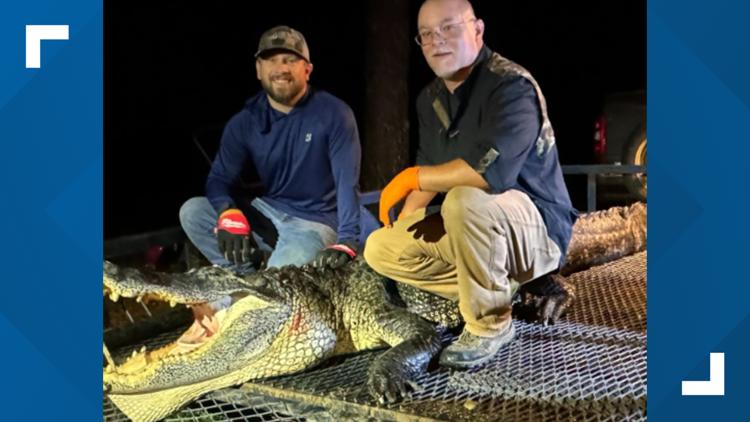
Applications for Arkansas alligator hunting license opening soon | What to know

Applications to get an alligator hunting license in Arkansas are opening soon. Here’s everything you need to know.

Credit: AGFC

Author: Elizabeth Godinez

Published: 4:48 PM CDT June 12, 2025

Updated: 4:48 PM CDT June 12, 2025

Facebook

LITTLE ROCK, Ark. — While hunting season for the largest reptile inhabiting Arkansas is still months away, anyone who wants to have a shot at a Natural State gator on any public land should get their application in soon!

According to officials with the Arkansas Game and Fish Commission (AGFC), applications for the 2025 alligator hunting season here in Arkansas will be available at 8:00 a.m. on Sunday, June 15, 2025, through midnight on Monday, July 15, 2025.

Hunters in the state will be able to choose one of 10 public land hunting areas, which are all situated in the southern half of the state.

Avid gator hunters may see a notable difference in this year’s permit hunts, as a new quota system is in place for hunters who draw a permit to hunt Millwood Lake in southwest Arkansas. 

“We have seen success rates from hunters on Millwood ranging from 25 to 75 percent the last few years, and most of the unfilled tags are the result of hunters holding out for a huge alligator and running out of time,” said Amanda Bryant, AGFC Herpetologist. “Even though our target number of alligators to be removed is unchanged, we increased the number of permits slightly to allow a few more hunters an opportunity to hunt. To ensure that we do not overharvest alligators in this public hunting area, Millwood will also have a quota in place. Hunters will need to call in or check agfc.com before hunting each night to see if the quota has been met. If the quota is reached before the season ends, hunting in Millwood will be over. 

She hopes that the addition of the quota will encourage hunters to harvest a legal alligator instead of holding out for a larger one that they may or may not find later on.

The following hunts are available for the 2025 hunting season:

Alligator Management Zone 1:

  • 12 permits for Millwood Lake (nine alligator quota)
  • Five permits for Dr. Lester Sitzes III Bois D’Arc WMA
  • Two permits for Little River
  • One permit for Lake Erling
  • Alligator Management Zone 2
  • One permit for Bragg Lake
  • Two permits for Lake Columbia
  • Alligator Management Zone 3
  • 11 permits for the Lower Arkansas River Wetland Complex (Arkansas River backwaters near Arkansas Post)
  • Two permits for Yellow Lake (Pine Bluff Arsenal)
  • Five permits for The Delta Wetland Complex

Each permit given authorizes the harvest of one alligator, which must be at least four feet long.

Alligator hunting is allowed from 30 minutes after sunset until 30 minutes before sunrise during the approved alligator hunting season dates of September 19-22 and September 26-29, 2025.

Each person who has a permit may have up to three helpers with them on the hunt, but only the permit holder is allowed to harpoon, snare, and dispatch the alligator.

Only Arkansas residents can apply for a license to hunt alligators, and they must be at least 16 years old on the day the hunt begins.

Officials say that applicants who have 18 or more AGFC violation points are not eligible to apply.

Alligator hunt applicants must pay a $5 nonrefundable processing fee at the time of their application, and all must go through an online hunt orientation before going out.

University’s peregrine falcon chick dies from bird flu

9 hours agoShare https://www.bbc.com/news/articles/cdr58enrmyko

Clarke Elsby A falcon fledging sitting in a basket. A vet's hands, wearing surgical gloves are around him.
Jack took unwell earlier in the week and his condition worsened

A peregrine falcon fledging in Glasgow has died after contracting bird flu.

The young falcon, named after the character Jack from the TV comedy Still Game, hatched on the rooftop of the University of Glasgow tower in April alongside his sibling Victor.

He took unwell at the start of the week, when volunteers at the Glasgow Peregrine Project observed him acting subdued and not eating.

After a rescue project saw Jack lifted from his nest on Wednesday, the SSPCA determined he needed to be put down to ease his suffering.

ADVERTISEMENT

More stories from Glasgow & West Scotland

More stories from Scotland

Jack and Victor’s parents, Bonnie and Clyde, have nested on the rooftop of the university tower each spring since 2022.

Jack and Victor hatched on 27 April, and initially seemed in good health.

However Jack’s condition steadily worsened after first taking ill, including not responding when Clyde attempted to feed him.

The Glasgow Peregrine Project provided updates on the bird after he first seemed unwell.

They later posted: “It is with sadness that we must report that after pulling out all the stops and effecting a rescue, Jack has passed away.

“The University of Glasgow and all the project team have monitored him through the night and worked throughout the day to put the rescue plan in place.

“Work that would ordinarily be done in a month was done in a day to expedite Jack’s care.

“The SSPCA assessed Jack and deemed that he had likely contracted bird flu and sadly, had to put him down to ease his suffering.”

The project will now carry out round the clock monitoring of the rest of the family to monitor their health.

Advertisement

Meet Glasgow’s new peregrine falcon chicks – Jack and Victor

Four falcon chicks hatch in Glasgow university tower