Professional Hunters Kill a Shocking Number of Animals in South Africa
Reply

Updated May 7, 2025 | Reviewed by Margaret Foley
A couple of days ago, I published a co-authored article titled “Dimensions of Corvid Consciousness” in the journal Animal Cognition. It is one of the first science papers on animal consciousness that doesn’t just ask whether some species is conscious or not, but actively asks the question of what their experiences consist in.
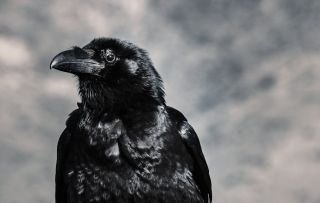
What is it like to be a crow?
Source: Tom Swinnen/Pexels
While I am a philosopher, I spent about half a year during my doctoral studies in Nicola Clayton’s comparative cognition lab, which has become famous for their investigations of the cognitive capacities of birds, and especially corvids.
Corvid, or Corvidae, is the scientific name for the family of birds including crows and ravens. Next to parrots, they are often admired for their high intelligence, something akin to “feathered apes.”
But in this post, we wanted to ask what their subjective experiences might be like, not just how smart they are. We examined five dimensions of their conscious experience that have earlier been proposed by Jonathan Birch, Nicola Clayton, and Alexandra Schnell as a means to map the experiences of other animals.
First, their sensory richness. That is, how detailed and varied the conscious senses of these birds are. While corvids have great visual capacities, it will be surprising to many that their sense of smell appears to be well developed. While there have been only a few studies on olfaction (smell) in corvids, they appear to make use of it when trying to find food.
Second, we discussed the evaluative richness of corvid consciousness. This dimension concerns the variety and intensity of emotions and moods. Consider, for instance, such states as pleasure, pain, curiosity, fear, and boredom. Corvids appear to have high emotional complexity, seemingly influenced by the negative mood of others.
Third, we examined their synchronic unity, which can be understood by virtue of how unified and integrated the experiences of these birds are. Human experience is highly integrated, but birds have fewer connections and more specializations between the halves of their brains, which could suggest more disunity, though more research is needed here to draw any confident conclusions.
Fourth, we discussed their diachronic unity. How unified are their experiences across time? Animals are often described as living in the present, but corvids engage in a lot of caching. They gather and hide food for the future. Dozens of experiments on this capacity have revealed corvids to have incredible memory capacities and the ability to plan for the future. This is suggestive that their experience is more akin to a continuous self across time.
Fifth, we tried to answer the difficult question of how much self-awareness these birds have.
California scrub-jays, a type of corvid, have been shown to re-cache their food if they are aware of others in their surroundings when they originally cached their food. This suggests that they have a theory of mind. They model the mental states of others. Furthermore, corvids have shown some success in mirror self-recognition tasks that are often used within this context.
article continues after advertisement
We discuss many more studies in the post to create a fuller picture of their experiential profile, which I can only recommend to anyone interested in the topic.
References
A collection of my writing, podcast episodes, and video material can be found here.
Written by Kathleen Doheny
7 min read
May 7, 2025 — It was the kind of news that made scientists grab their phones and start texting colleagues.
H5N1, commonly called bird flu, had been detected in cows. Scientists had been closely watching avian flu for years, worried about the potential jump to livestock. But their money was on pigs next.
This was late March 2024. Seema Lakdawala, PhD, remembers texting associates while on vacation with her family. The infection of cows “was very surprising,” said Lakdawala, associate professor of microbiology and immunology at the Emory University School of Medicine in Atlanta.
Then came another surprise: The virus was in the mammary glands. “It was thought to be respiratory,” Lakdawala said.
The news got worse in April and May: Several human cases were identified — first in Texas, then in Michigan. In July, 10 more human cases were reported in Colorado. To Kamran Khan, MD, MPH, an infectious disease specialist, that suggested that the extent of H5N1 in livestock was “probably larger and more expansive than was understood at the time.”
The numbers jumped out at the experts: between 10 thousand and 10 million virus particles per milliliter of milk. “That’s when everyone went, ‘Whoa, let’s get on calls with the CDC and the USDA,’” Lakdawala said.
The immediate response was “not very strong and is still not strong,” Lakdawala said in an interview in late April. Recent government cutbacks, she and others said, are thwarting prevention even more.
Now it’s more than a year later, and scientists are focused on two big questions:
The CDC views the risk of bird flu to the public as low. Khan agrees — for now. “The concern is that this outbreak could quickly transform into a pandemic if the virus evolved so it is capable of efficiently spreading between humans,” said Kahn, a professor of medicine at the University of Toronto and founder and CEO of BlueDot, a biothreat intelligence company.This video is from the WebMD Archive.

00:0000:00 About Transcript
WebMD’s Chief Medical Officer, John Whyte, speaks with William Schaffner, MD, about the U.S. reaching 5 million confirmed cases.
“The reality is none of us knows whether this is next week, next year, or never,” he told 60 Minutes. “I don’t think it’s never.”
As of May 6, according to the CDC, no known person-to-person spread of bird flu has occurred. But 70 cases, including one death, have been confirmed in the U.S. Of those cases, exposure was mostly from dairy herds (41 cases), followed by poultry farms (24). Two others were from animal exposure such as backyard flocks, and three had an unknown source.
When people get bird flu, the CDC says, it is most often after close and unprotected exposure to birds or other animals infected with the virus.
As of May 6, 17 states had reported outbreaks in dairy cows and 1,049 dairy herds had been affected, according to the CDC.
The virus, as it’s understood now, “clearly is not able to multiply and be transmitted person-to-person efficiently,” said William Schaffner, MD, professor of infectious diseases at Vanderbilt University Medical Center in Nashville and spokesperson for the Infectious Diseases Society of America.
But viruses mutate, which is why close monitoring is crucial. To cause an infection, a protein on a virus must bind to a receptor on the cell it wants to take over. To infect people, the virus has to attach effectively to the cells in the mucous membranes in the back of our throat, in our nose, and in the upper parts of our bronchial tubes.
Think of it as a key and lock, Schaffner said: The virus may develop the “key” to unlock the cell and bind to it.
“Right now, we know that the virus can infect and replicate inside humans,” Lakdawala said. “In addition to binding, the virus has to get out and remain infectious in the environment.” Then, infection could spread as people cough and sneeze.
What changes need to occur for person-to-person transmission? That’s unclear, Lakdawala said: “It could be a variety of mutations that need to happen.”
“There is no definitive way to determine precisely how many mutations, and which specific mutations, are necessary to trigger a pandemic,” Khan said. There are, he said, certain mutations believed to increase the virus’s ability to infect mammalian cells.
Genomic surveillance is ongoing, but the picture is incomplete, as not all cases are identified and sequenced, he said.
If the virus mutates to allow person-to-person transmission, a pandemic “could happen very rapidly,” Schaffner said, even within a few weeks to months. Lakdawala said she’d expect household transmission to occur first, then community transmission.
Consider COVID. After identification of the virus on Jan. 7, 2020, the first evidence of human-to-human transmission occurred Jan. 14. By March 11, the World Health Organization had declared it a pandemic, with more than 118,000 cases in 114 countries and 4,291 deaths.

It’s possible that immunity to the seasonal flu may protect against more severe bird flu infections. This could explain the mostly mild symptoms found in the dairy workers infected with bird flu.
Meanwhile, the government and dairy industry are keeping watch.
Also in late April, the FDA announced a pause in the milk laboratory proficiency testing program, which was an internal check on laboratories. Despite headlines to the contrary, the pause “does not impact H5N1 testing,” said Alan Bjerga, a spokesperson for the National Milk Producers Federation. The program involves a periodic review of the testing capacities of laboratories in the FDA’s network, the NMPF explained, and is not used to directly test dairy products.
The general public doesn’t see bird flu as a threat and seems to be “over” pandemic threats, researchers from the CUNY Graduate School of Public Health found in an August 2024 survey of 10,000 people, representative of the general population.
At that time, fewer than 1 in 5 knew the virus was in cows and just over a quarter knew it had the potential to spread to humans. Only 27% said they would alter their diet to remain safe, and 28% wouldn’t take a vaccine if it were available and recommended.
“We have no reason to think awareness or support for intervention would have improved since the summer,” said Rachael Piltch-Loeb, PhD, MSPH, assistant professor of public health emergency preparedness at the CUNY School of Public Health in New York, who led the study.
“Changes to public health funding, including our surveillance capacity, has inhibited our ability to even keep tracking bird flu,’’ she said. “We have limited situational awareness, and we are also not communicating with the public about the topic.” Vaccine hesitancy appears to continue to be on the rise, which is another concern, she said.
Experts recommend the following precautions.
“Around the world, under the World Health Organization, the wild bird population, domestic birds, chicken, geese, turkeys are under surveillance,” Schaffner said.
If the potential for human-to-human transmission increases, he said, “vaccines would be the single most effective way we would combat this pandemic should it occur. The template for making bird flu vaccine is in

