Sam Smith and Loch Ness expert Adrian Shine with the camera. (National Oceanography Centre via SWNS)By Talker
By Elizabeth Hunter
Ocean exploring vessel ‘Boaty McBoatface’ has accidentally discovered a camera from the 1970s – designed to snap a photo of the Loch Ness Monster.
If You’re Over 65, Try This Instead of Gutter Cleaning (It’s Genius)
LeafFilter Partner
Cardiologists: 1/2 Cup Before Bed Burns Belly Fat Like Crazy! Try This Recipe!
Health Headlines
Here’s The Estimated Cost of a 1-day Walk-in Shower Upgrade
HomeBuddy
Here’s What a New Roof Should Cost You in 2025
HomeBuddy
How Seniors Can Potentially Lower Capital Gains Tax
SmartAsset
Man Spent More Than $220k Turning an Old Plane Into His Home; Look Inside
The Decor Ideas
During a test mission, the underwater vehicle – famously named by a public poll – discovered the camera system by accident around 180m deep within Loch Ness.
The camera was likely placed in 1970 by Professor Roy Mackal of the Loch Ness Bureau and the University of Chicago and is thought to have been one of the first attempts to catch the Loch Ness Monster on film.
The National Oceanography Centre (NOC), who operated the vehicle, retrieved the camera, which was still in good condition – and they were even able to develop the film.
(National Oceanography Centre via SWNS)By Talker
Sadly, Nessie does not appear to have been captured on camera.
Adrian Shine, who set up The Loch Ness Project in the mid-1970s to investigate Loch Ness and its world-famous inhabitant, helped to identify the camera and says it was one of six deployed by Professor Mackal, with three of them lost in a gale that same year.
“It was an ingenious camera trap consisting of a clockwork Instamatic camera with an inbuilt flash cube, enabling four pictures to be taken when a bait line was taken,” he said.
“It is remarkable that the housing has kept the camera dry for the past 55 years, lying around 180 m deep in Loch Ness.”
NOC’s Autosub underwater vehicle, known popularly as Boaty McBoatface, discovered the camera when part of the mooring that had held the camera system in place got caught on the vehicle’s propellor.
The camera found by ‘Boaty McBoatface’ in Loch Ness. (National Oceanography Centre via SWNS)
High Country News’ weekly email newsletters keep you up-to-date with our latest news and investigations from across the region.Email address(Required)
Last fall, a Clallam County, Washington, resident spotted a young male cougar walking slowly through a field on the northern edge of the Olympic Peninsula. It was the middle of the day — a clear sign that something was off — and he was also skinny and weak, dragging his matted tail in the mud.
The resident called a Washington Department of Fish and Wildlife (WDFW) game warden and Mark Elbroch, puma director of Panthera, a nonprofit dedicated to protecting wild cats globally. (Cougars are also called mountain lions or pumas.) Elbroch and the warden approached the cougar, yelling and clapping to gauge the animal’s alertness. But even when they were less than 20 feet away, the cougar didn’t respond. “The cat was on its last legs,” Elbroch said. “He literally couldn’t even get out from this pasture.”
The cougar was euthanized, and his tissue samples, which were tested for a number of diseases, revealed the presence of the H5N1 strain of avian influenza, or bird flu. Less than two weeks later, another infected cougar was found dead in Clallam County.
Mild forms of bird flu are common in wild and domestic birds, but sometimes a strain circulating on a poultry or waterfowl farm mutates into a more dangerous form and spills over into wild birds. The H5N1 strain, which was initially identified in domestic geese in China in the 1990s, had infected wild birds by 2002 and reached North America in 2021.
Since then, the virus has caused the deaths of tens of millions of domestic chickens, geese, ducks and turkeys in the U.S., contributing to the rise in egg prices. As of early March, it had killed at least 50,000 wild birds, according to estimates by the U.S. Geological Survey, and been detected in nearly 400 individual wild mammals, including felines, raccoons, rodents, seals and skunks. Globally, H5N1 has killed thousands of mammals in mass mortality events, including sea lions in Peru and Chile and elephant seals in Argentina.
The virus has caused the deaths of tens of millions of domestic chickens, geese, ducks and turkeys in the U.S., contributing to the rise in egg prices.
Over the past three years, more cases of H5N1 in wild mammals have been reported in Washington than in any other Western state except Colorado and New Mexico. Before H5N1 was identified in the two Olympic Peninsula cougars, sick animals had typically lived near wild bird populations infected with the virus. The 15 harbor seals that died in 2023, for example, frequented the same beach as a flock of infected Caspian terns. “The assumption was they were scavenging carcasses or even catching and eating sick birds,” said Katherine Haman, a WDFW veterinarian.
Advertisement
But the two cougars weren’t living near any known outbreaks in wild birds or other prey species, according to the agency. Their deaths illustrate how little we know about how the disease spreads in wildlife, and how far it may have already reached.
A cougar infected with the H5N1 strain of avian influenza crosses a field in Clallam County, Washington, last fall. It was later euthanized.Courtesy of Mark Elbroch/Panthera
UNLIKE THE COUGAR in the cow pasture, Clallam County’s second victim showed no obvious signs of disease. He had been fitted with a GPS collar as part of Panthera’s Olympic Cougar Project, and Elbroch said that he looked to be “in perfect health.” Later analysis of movement data, though, revealed the cougar had started to behave differently, traveling shorter distances than previously.
Virus-carrying prey can also appear healthy. “We don’t really know which animals are carrying and which ones have been exposed and recovering,” Elbroch said.
While there were no documented H5N1 outbreaks in the area, the cougars may have eaten infected birds along the Pacific Flyway, a major north-south migration route that runs along the West Coast from Alaska to Mexico. Or they may have consumed a mammal — a raccoon, river otter, seal or sea lion — that had eaten an infected bird. Regardless of the cause, the two deaths in the same general area during the same short timespan suggest that bird flu is circulating undetected in the apex predators’ prey. “That just really highlights, to me, that this virus may be more widespread on our landscape than we know or think it is,” said Haman.
Although 70 H5N1 cases have been confirmed in humans — mostly poultry and dairy farmworkers — in the U.S., public health officials say the virus still poses a low health risk: It has not yet spread between people, and its symptoms are usually mild. But the further it spreads among other mammals, the more opportunities it will have to mutate into a form easily contracted by humans. If the virus acquires the ability to be more readily transmitted between mammals or between humans, Haman said, “we have a potential brewing pandemic.”
In December, the wildlife agency announced that the state was seeing an uptick in cases in both wild birds and mammals. So far this winter, it’s been detected in a long-tailed weasel, raccoon, harbor seal and bobcat.
If H5N1 continues to proliferate among wild birds and mammals, isolated or small populations — including threatened and endangered species, such as ferrets and California condors — will be particularly vulnerable. “Flu is … rarely considered a wildlife conservation issue,” said Justin Brown, a wildlife veterinarian and professor at Pennsylvania State University. “But with this virus, now that it causes disease in (other) wildlife, there are some conservation concerns.”
Source: National Wildlife Disease Program.USDA and state agencies; Mapping by Jourdan Ringenberg; Design by Luna Anna Archey/High Country News
FULLY UNDERSTANDING any wildlife disease isn’t easy, due to the lack of monitoring and surveillance. “There’s just so much about this virus and the epidemiology and disease ecology of it that we don’t understand, especially in wild mammals right now,” Haman said. State wildlife agencies, which are chronically short of funding, primarily rely on the public to report sick and dead wildlife, meaning the numbers could be far greater than recorded.
Regular monitoring and sampling would help researchers better understand H5N1 and its spread. “We could get ahead of avian flu right now with the right resources,” Elbroch said. After cases among dairy cows and farmworkers rose in California last fall, Gov. Gavin Newsom declared a state of emergency to free up resources for monitoring; as of February, it’s the only state to do so. Though the federal government laid out a $1 billion plan to curb bird flu in domestic poultry in late February, the Trump administration is considering cutting funding for the development of a bird flu vaccine for people.
Advertisement
If the virus acquires the ability to be more readily transmitted between mammals or between humans. “We have a potential brewing pandemic.”
Brown, who is partnering with Washington wildlife officials to continue studying the disease, plans to test blood samples collected from living wild animals for H5N1 antibodies, an indication of recovery from infection. “I think that this is a disease that will be here for the foreseeable future,” Brown said. “The challenge then is: How do we tweak our research, our surveillance and our management to now deal with this new normal?”
Make a contribution to fund independent reporting on the West
Donate $10Donate $25Other amount
If you learned something new or were moved by what you read here, help us do more of this work with your donation. We’re only able to bring this news and analysis to millions of people across the country because of readers like you. Reader contributions make up 75% of our revenue and are key to the future of healthy independent media.
Michael Moss’ 64-acre goat ranch sits on the edge of BLM land in southwestern Oregon. It’s “healthy cougar country,” he says, and he’d like it to stay that way. That’s not something you’d expect to hear from most livestock owners, but Moss is a member of Goat Ranchers of Oregon,…
The Delmarva poultry industry remains on high alert despite no new cases of avian influenza being detected in commercial flocks for over a month.
The outbreak has resulted in the culling of 1.5 million chickens on Delmarva to prevent the virus’s spread.
While the USDA compensates farmers for culled flocks, there is currently no income replacement for growers within control areas who cannot raise new flocks.
The potential use of an HPAI vaccine in the U.S. raises concerns about its impact on poultry exports.
It’s been over a month since highly pathogenic avian influenza was last detected in commercial poultry on Delmarva, but the industry is still on high alert.
“While it is definitely nice to see the snow geese beginning to migrate away from the area, there are other wild birds migrating north over the next few weeks that poultry owners need to be concerned about,” Delmarva Avian Influenza Joint Information Center spokesperson Stacey Hofmann said. “It definitely is not time to let down our guard, and biosecurity is essential in keeping flocks safe, whether it’s a poultry farm or a backyard flock.”
How many wild birds have been affected is unknown, but dead snow geese and other birds were a common sight on Delmarva beaches and nearby areas like Cape May this winter.
What is known is how badly the outbreak affected the poultry industry. So far this year, 1.5 million Delmarva chickens have been killed to stop the spread of bird flu, according to the Delmarva Avian Influenza Joint Information Center.
There have been nine instances of avian influenza on commercial Delmarva poultry farms this year. All nine control areas have been cleared, Delmarva Chicken Association spokesman James Fisher said. The affected farms are all in different stages of disinfection, with some already hosting new flocks.
The bird flu outbreak
Highly pathogenic avian influenza (also known as bird flu, H5 or HPAI) is a virus that spreads quickly through nasal and eye secretions and manure. It typically affects wild bird species, such as ducks, geese, shorebirds and raptors, but can affect numerous other animals, such as seals, cattle, cats and raccoons. It spreads easily to commercial poultry through infected equipment or the shoes and clothes of caretakers.
The HPAI outbreak began in 2022, according to the U.S. Department of Agriculture. An uptick in cases on Delmarva was noted starting in December when dead snow geese were found at Prime Hook National Wildlife Refuge in Milton.
“All indications are that each of the nine cases (on Delmarva chicken farms) came from wild birds,” Fisher says. “What it does to chickens is very different than what it does to wild birds, who can carry it but not succumb and die.”
HPAI is a major threat to the poultry industry, according to the USDA website. Once bird flu is introduced on a chicken farm, if unaddressed, most of the flock will die within a few days, Fisher said. For this reason, when HPAI is detected, the entire flock is killed.Egg prices stress restaurants: Restaurants fight to keep prices down as egg costs soar: ‘We’re dying by a thousand cuts’
Get the Daily Briefing newsletter in your inbox.
Start your day with the morning’s top news
Delivery: DailyYour Email
How bird flu is affecting the economy
According to the National Chicken Council website, over 77% of chickens affected by the outbreak nationwide have been egg-producing chickens, while only about 8% have been broilers.
Chicken prices have not gone up the way egg prices have recently. Egg prices have soared 41.1% this year, according to the USDA, and costs could go higher. A 3.4% increase in the prices of all food is also forecast.
Bird flu affects chicken growers in other ways. When a flock is culled due to bird flu, the USDA pays the grower for the lost flock, according to Fisher.
“That’s important because you don’t want a grower to be disincentivized from speaking up if they see an issue,” Fisher said.
However, when bird flu is detected on a farm, a control area is established, which means nearby growers can’t get new flocks until it’s lifted.
“There are growers who are sitting around and waiting to start making income again and there is no income replacement for them,” Fisher said.
The Delmarva Chicken Association supports the federal Healthy Poultry Assistance and Indemnification Act, proposed by Sens. Chris Coons, D-Del., and Roger Wicker, R-Miss., which would expand USDA compensation to all farmers within a bird flu control area.
In addition, about 10% to 15% of chickens grown on Delmarva are exported to other countries. Some parts of the chicken that aren’t popular here are popular in other places, like chicken paws (toes) in Asia, Fisher said.Is it safe to use bird feeders?: What to know about backyard birds and bird flu
“It’s a very important market,” Fisher said.
The poultry export market could be affected by the U.S.’s consideration of an HPAI vaccine. Some countries already use it, but in the U.S., depopulation (killing an entire flock) has historically been the primary HPAI control tool.
However, in February, the USDA approved an HPAI vaccine for limited use. It must receive full approval before it can be used on commercial poultry, according to Science magazine. However, the National Chicken Council and the “Chicken Caucus” (Coons, Wicker and other Congress members) oppose the vaccine.
The vaccine threatens the U.S. export market, a February letter from the caucus to the USDA secretary said.
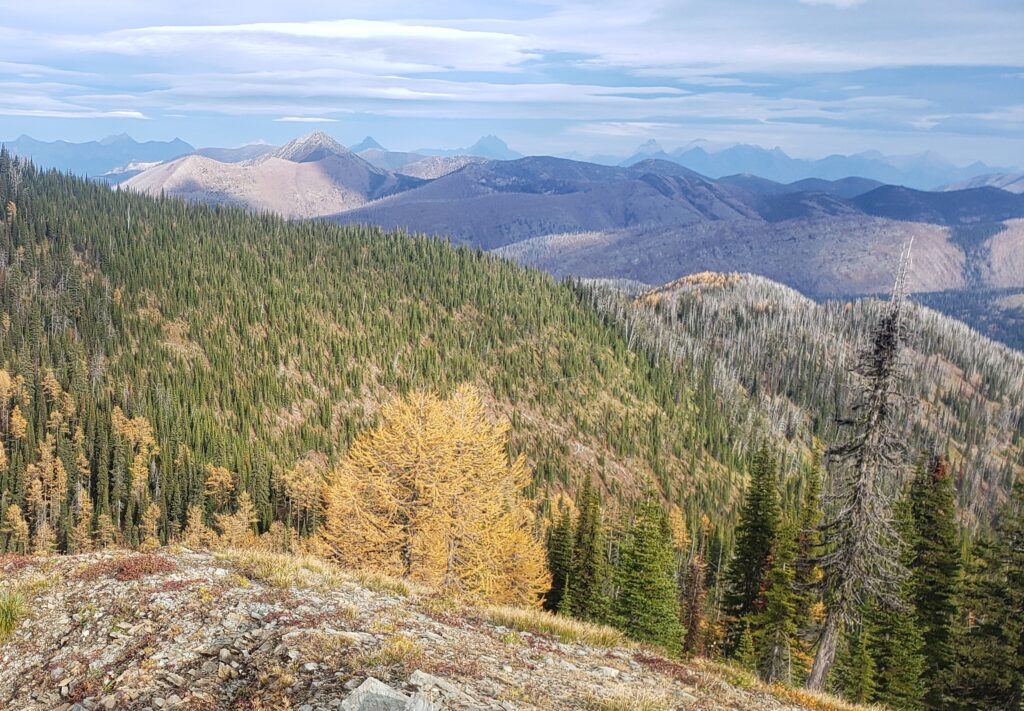
A view of the Ten Lakes Wilderness Study Area in northwest Montana. (Micah Drew/ Daily Montanan)
A Senate joint resolution urging Congress to release over a million acres of wilderness study area in Montana from consideration of inclusion into the National Wilderness Preservation System brought significant opposition this week.
Montana lawmakers can only urge federal action on these parcels of land since only Congress has the authority to classify the land.
Proponents of the resolution said it would open up the areas to more uses, like ranching and logging. Opponents argued the resolution was a full-fledged assault on public lands.
The resolution would involve a little more than a million acres.
The Wilderness Study Area Act was passed in 1977, and none of the land under consideration has been formally designated as wilderness.
Tezak believes the land should be, “returned into public lands management decisions of our local forest service and Bureau of Land Management districts, rather than their current state of being managed as a wilderness study area dictated by Washington, D.C.
The 1977 law requires a review of potential wilderness areas within five years. The resolution addresses this specifically, as well as a 2000 law that created more study areas on Bureau of Land Management land.
“The vast majority of Montana lands identified in the Montana Wilderness Study Act have never been formally recommended by the Secretary of Agriculture for inclusion in the National Wilderness Preservation System and no law has been signed by the President to designate these lands as wilderness,” the bill reads.
Opponents of the bill included Wild Montana, Montana Chapter of Back Country Hunters and Anglers, Montana Conservation Voters Education Fund, Montana Audubon, Trout Unlimited, Greater Yellowstone Coalition, and many individual residents. The Blackfeet Tribe, Fort Belknap Indian Community and the Chippewa Cree Tribe of Rocky Boy also opposed the resolution.
“We see this as a destructive attempt to undermine the hard work the localized community, including the Blackfeet Tribe, has done to protect these areas,” said Patrick Yawakie, who was representing multiple tribal communities.
Proponents for the bill included the Montana Stock Growers Association as well as several ranchers.
“We are supporters of multiple use of public lands, and know that management of WSAs can curtail livestock grazing, something our organization cares deeply about,” said Ellie Brighton, who was representing the Montana Stock Growers Association. “Many existing WSAs did not have substantial support from livestock producers, and we support a collaborative approach.”
Opponents of the bill pointed to the slow pace of the federal government for not resolving the issue.
“The problem with creating lasting solutions for WSAs is not with the locally developed collaboratives or the balanced proposals that they’ve developed,” said Noah Marion, representing Wild Montana. “The problem is with Washington, D.C., and their inability to pass legislation in a timely manner. There have been many bills in DC to resolve the status of WSAs, including one in the late ‘80s that resolved many of them. That was pocket vetoed.”