Oxfordshire: Woman films herself saving fox from hounds
Reply

https://www.aol.com/flock-crows-caw-panic-alert-220200070.html
Diana Logan
February 20, 2025 at 2:02 PM

Crows, along with ravens and magpies, as a type of bird known as corvids. They are highly intelligent, with good memories, capable of mimicking human speech, and have been known to hold grudges, as well as bring “thank you gifts” to people they like or in exchange for regular feedings.
The crows here definitely owe something to this woman, who has saved one of their flock from certain death.
The woman in this video had no idea why the crows in her house began amassing on her roof and shouting all of a sudden. She went outside to check it out and discovered that one of their flock had gotten trapped in the catchment drain of her infinity pool. After fishing him out with a rake, they watch him spread his wings on the lawn and stumble around. He still could not fly. Was he just wet and tired, or was there something else going on?
In a follow-up video, the woman explains how the poor bird needed a little extra TLC or “rehab” though she does not go into detail about precisely what this entailed. Still, they brought the crow back to the yard and let him loose from a pet carrier and he took off over the hillside, completely cured.
Related: Wildlife Rescue Center Uses Surrogate Crow Toy to Help Feed Orphaned Baby Birds
“See?” She says to his fellow birds, still waiting for him on the treetops and roof. “He’s right here.”
Though she calls the animal a crow in each video, she also says that her yard is regularly visited by him and two other “ravens”—using the terms interchangeably, though they are two different animals.
The easiest way to tell a crow from a raven is by size. Even though crows are very large birds, ravens are even larger. They also have several other notable differences. Ravens have a notable ruff of feathers around their neck, beak and head. They have a diamond shaped tail, with longer feathers in the middle, rather than a crow’s equal-length fan shaped tail. Crows let out a cawing sound, whereas ravens have a more croaking call. Crows usually gather in large groups, whereas ravens are more generally found alone, or with only one other of their kind.
Though the birds in this video are in a small group, their noises and the fan shape on their tail indicate that they are, in fact, crows.
Crows and other corvids are known for showing their gratitude to humans who help them or feed them by bringing them presents—usually shiny, human made objects that they think people will appreciate, but also small objects like pinecones, stones or even interesting leaves. This woman should keep an eye out for her thank-you gift.
February 21, 2025

Carl Banks / iStock
Share
A non–peer-reviewed study published on the preprint server bioRxiv suggests that highly pathogenic avian influenza (HPAI) virus shed in poultry droppings can be transmitted by the wind, a possibility that other experts say can’t be ruled out but is also very difficult to prove.
The report centers on a February 2024 outbreak of H5N1 avian flu among unrelated commercial poultry farms located about 8 kilometers (5 miles) apart in the Czech Republic during the 2023-24 HPAI season.
Since the latest H5N1 epidemic began in February 2022, the virus has led to the deaths of more than 150 million US birds.
The cluster was identified after avian flu killed 5,000 fattening ducks within 2 days at a basic-biosecurity 50,000-bird farm near a lake frequented by wild ducks, the probable cause of the outbreak; the rest of the poultry were culled. A week later, deadly outbreaks with a slower disease course occurred at two high-biosecurity chicken farms, where dead birds were found mainly near the barns’ air-intake vents; the entire population was culled. All farms had their own wells.
Experts hypothesize that the slower disease course in the chicken barns may be due to lower H5N1 transmissibility in chickens, waning concentrations of the virus over distance from the duck farm, or housing conditions.
The researchers, from the State Veterinary Institute Prague, used genetic, epizootiologic, meteorologic, and geographic data to reconstruct events suggesting that wind was the mechanism of H5N1 transmission between poultry on at least two of the farms. Three H5N1 strains collected from birds at all three farms were genetically identical, no large waterways were near the chicken farms, and the duck farm didn’t share staff or contractors with the chicken farms.
Our results suggest that the contaminated plume emitted from the infected fattening duck farm was the critical medium of HPAI transmission, rather than the dust generated during depopulation.
What’s more, meteorologic data revealed a breeze in the direction of the chicken farms, cloudy conditions that could have kept the sun’s ultraviolet light from killing the virus, and virus-supporting cool air. The team didn’t conduct air sampling.
“Our results suggest that the contaminated plume emitted from the infected fattening duck farm was the critical medium of HPAI transmission, rather than the dust generated during depopulation,” the study authors wrote. “They also strongly implicate the role of confined mechanically-ventilated buildings with high population densities in facilitating windborne transmission and propagating virus concentrations below the minimum infectious dose at the recipient sites.”
Lead study author Alexander Nagy, PhD, told CIDRAP News that he and his team became convinced about the role of windborne transmission in these outbreaks when they confirmed the identical identity of the H5N1 strain in the donor and recipient farms, the nearly ideal weather conditions during the transmission event, and the slow disease progression in the chicken barns characterized by feed and water consumption before clinical signs appeared.
“Additionally, the affected birds [dead chickens] were located in sections closest to the air inlets,” he said. “Finally, we excluded all other plausible explanations.”
Michael Osterholm, PhD, MPH, director of the University of Minnesota’s Center for Infectious Disease Research and Policy (CIDRAP), publisher of CIDRAP News, said airborne transmission can be very important, “meaning that that’s the most logical explanation for when you have many barns with outbreaks in one geographic area where human biosecurity cannot be implicated as a reason for transmission.”
In the past, he said, the poultry industry has been reluctant to acknowledge airborne transmission because of the implications it may have for its practices: “The industry’s reluctance to accept this possibility is not that dissimilar to what we saw with the lack of some in the medical and public health communities to recognize that SARS-CoV-2 transmission was also airborne.”
While the researchers did a very good job of laying out their hypothesis and supporting data, their conclusion should be interpreted with caution, said David Swayne, DVM, PhD, a poultry veterinarian who retired as an avian flu researcher with the US Department of Agriculture (USDA) Agriculture Research Service.
“I think we, as veterinarians who deal with avian influenza and other infectious diseases, would acknowledge that there is some airborne—and I’ll use the word dissemination—and that may lead to transmission,” he said. “But we have to be cautious to make sure people understand that it doesn’t mean that it’s the only way, nor that it’s the major way. And each individual facility is going to be different.”
Montserrat Torremorell, DVM, PhD, chair of the Department of Veterinary Population Medicine at the University of Minnesota, called the researchers’ argument for airborne transmission “compelling.”
“Meteorological conditions, timing of infection, housing conditions of the animals, susceptibility of the animal populations that became infected and the lack of other epidemiological links between the premises are supportive of airborne transmission in this case,” she said in an email.
During an avian flu outbreak in Minnesota, Torremorell collected air samples inside and outside facilities housing three infected turkey and three egg-laying chicken flocks. Air samples from five of six flocks tested positive for large quantities of H5N1 virus, all of them in the active infection stage. The negative sample was from a flock in the advanced stage of depopulation.
“The larger number of positive samples were inside the facility and at the exhaust fan (~5 m [meters; 16 feet] away from the facility), and the number of positives decreased with distance, but even with that we identified some suspects (traces of RNA material) at about 150 m and 1 km [kilometer; roughly a half mile),” she said. “Viable virus (through virus isolation) was found inside the facilities, at the outside of the exhaust fan and at about 100 m.”
David Stallknecht, PhD, professor emeritus at the University of Georgia’s College of Veterinary Medicine and a wildlife expert, said the study provides additional circumstantial evidence to several studies suggesting windborne viral spread. But he added that the mechanism of disease transmission into a poultry house is hardly ever identified, because there is no way to control for variables.
“It basically says that it could have happened, and I would not dispute that,” he said. “But to actually come down with concrete proof like you would in an experimental controlled experiment, there’s too much going on.”
“Influenza can be transmitted by a million different ways, probably many of them we don’t even know about,” he added. For example, whether the virus entered the poultry house via a raccoon, bird, person, or a person’s shoes, “those kind of details never really get resolved.”

Stallknecht said he and his team tried to research water-based avian flu transmission associated with ducks. “And we got to the point where we just had to quit because the numbers and the probabilities were so extreme,” he said. “You can’t do an experiment to pick up a one-in-a-trillion event.”
Swayne said that moving equipment and people in and out of poultry barns has to be done at a very high level of biosecurity to prevent viral transmission: “Yes, you could have movement of the virus by the wind, but it may be that it’s tracked in to the barns by the contamination around the outside, either from wild birds depositing fecal material there as they eat, spilled feed off of grain silos, etc.”
He added that just because a virus is transported via the wind doesn’t necessarily mean it will enter a barn that way. “The virus can move on particles or water droplets by the wind for a distance, and then it could land and contaminate the environment.”
Nagy acknowledged that airborne spread isn’t typically considered a primary route of infection in poultry, and windborne spread requires “a constellation of many specific conditions” that behooves further research.
“However, when all conditions align, windborne transmission becomes a feasible mode of spread and could play a more significant role than previously thought, especially in densely populated poultry areas,” he said. “The windborne route is important to consider in cases when the infection emerges in new locations without obvious links to other farms or when illness and mortality are first observed near the air inlets.”
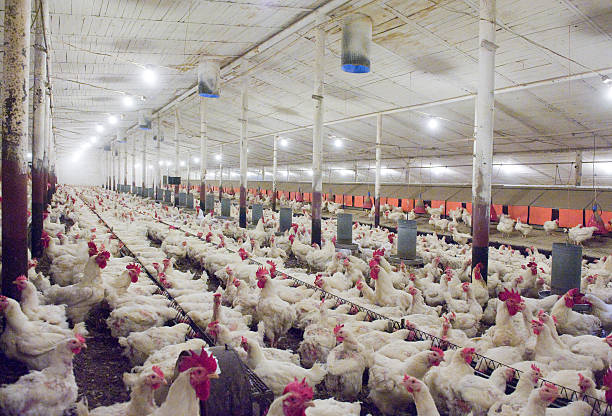
Poultry operations typically consist of confined, mechanically ventilated buildings with high population densities, a situation unlikely to change.
The windborne route is important to consider in cases when the infection emerges in new locations without obvious links to other farms or when illness and mortality are first observed near the air inlets.
Alexander Nagy, PhD
“The high demand for chicken meat and eggs, which continues to increase, does not leave much room for alternatives,” Nagy said. “Instead, it would be relevant to consider sterilization or treatment of the incoming air.”
Torremorell agrees, saying air filtration is already in use in the swine industry. “Treating the air of poultry farms is not easy, because the volume of air to be treated is very large, but the industry should explore options on how to get it done,” she said. “Adapting air treatment methods for incoming and exhausted air requires research, investment, and willingness to make changes to current farming systems.”
While the air ionization precipitators or high-efficiency particulate air (HEPA) filters could be installed, Swayne said they would be prohibitively expensive and difficult to maintain. “Generally, the cost is so high that you would only consider that in certain types of operations,” he said, such as those with high-value breeding stocks.
To try to eliminate the virus from a farm as quickly as possible, Stallknecht recommends extremely rapid diagnosis and keeping farms smaller, “having 20,000 birds on a farm, or 40,000, rather than 1 million.” Swayne said farmers should bury infected birds in a closed pit to prevent scavenging and take care to not attract wild birds by spilling feed when transferring it from a truck to a silo.
“It is very important that farmers don’t automatically default to blaming the air as the source of infection because overall the introduction of contaminated animals, fomites [contaminated inanimate objects], and people is likely to account for the larger amount of between herd transmission events,” Torremorell said. “Also, it’s important to have training, compliance and auditing programs in place.”
The significance of any windborne H5N1 spread to poultry farms is unknown at this point, and the likely limited zoonotic potential—that between animals and people—of currently circulating viral variants means that the implications for public health are probably minimal, Nagy said. In addition, people would need a much higher dose of windborne virus than a bird to become ill, Stallknecht said.
The historical resistance to considering airborne viral spread, such as that encountered with SARS-CoV-2, the virus that causes COVID-19, may be due to the usual focus on direct contact and fomites, or contaminated objects, Nagy said. Documented cases of windborne transmission are relatively rare, perhaps because demonstrating this kind of spread requires a combination of data that can be complex and resource-intensive to gather and analyze.
“To be honest, we were initially skeptical about this mode of H5N1 spread as well,” he said. “However, as the evidence has grown, our attitude has also changed.”
The study findings come as poultry farmers learned that they may get some relief from the avian-flu threat, after the US Department of Agriculture’s (USDA’s) conditional approval of a killed H5N2 vaccine to protect poultry.
Countries such as China, France, Egypt, and Mexico already vaccinate their poultry against H5N1. But the USDA must still approve its use before farmers can vaccinate their flocks.
But while H5N1 epidemics were for years ended by culling affected flocks, scientists fear that H5N1 is here to stay. If the virus is endemic, vaccination becomes even more important in preventing poultry infection and reducing viral shedding. Yet questions remain, such as the threshold for culling versus allowing the virus to burn itself out, a decision that Swayne said would likely be up to the USDA in consultation with state partners.
USA TODAY
0:19
/
0:54
Bird flu may be spreading between people and cats more than previously thought, a new federal study said.
The findings published Thursday by the Centers for Disease Control and Prevention’s weekly journal add to worries about the spread of highly pathogenic avian influenza from people to cats and vice versa.
The study looked at indoor cats who had severe illness and death in two Michigan households of two dairy workers around May where bird flu was circulating on farms. Both lived in the same county, and both took sick cats to the Michigan State University Veterinary Medical Center. The study mentioned one household where an adolescent developed a cough and other symptoms after a cat became sick, but the results were inconclusive since the teen also had additional exposure.
The findings are a cause for alarm that should be taken seriously, said Kristen Coleman, an assistant professor at the University of Maryland School of Public Health who has tracked cat deaths from bird flu, also known as H5N1.
“It’s scary to think of how much worse it could get,” Coleman, who was unaffiliated with the study, told USA TODAY. “This adds another layer of complexity in the control of this virus.”
Need a break? Play the USA TODAY Daily Crossword Puzzle.
Bird flu has been known to cause severe illness and deaths in cats, often through raw food or milk or dead birds. However, the study provides growing evidence of the threat it poses even when cats have no direct exposure to sick dairy cows or poultry.
The two cats that died, one in each household, appeared to have the same signs of respiratory and neurologic illness, according to the study, published by CDC researchers, as well as health and agriculture officials from Michigan and Michigan State University. The cats later tested positive for bird flu, also called highly pathogenic avian influenza.

The first household’s cat, the 5-year-old female, was euthanized four days after signs of illness, and the second household’s cat, the 6-month-old Maine Coon cat, died within a day of illness showing.
People in the homes also displayed symptoms of illness. Neither worker in each household received testing or antiviral medication for bird flu, and the second worker feared losing employment as a consequence of speaking with public health officials and implicating farms that provided milk, the study said.

Like pigs, cats can carry both avian and human influenza viruses. If both viruses were to appear in one host, the bird flu virus could mutate into a pathogen that’s more easily transmissible among humans. This hasn’t been the case, yet, but researchers note the study’s findings could be a cause for concern. So far, nearly 70 people have contracted bird flu, mostly among dairy and poultry workers, and one person has died, according to CDC.
The study also appears to be the same that had a graphic released on CDC’s Morbidity and Mortality Weekly Report (MMWR) before it was abruptly taken down earlier this month, as The New York Times reported. Since President Donald Trump has taken office, there have been delays in releasing MMWR reports, considered an eminent scientific publication for researchers around the world, amid cuts to health agencies.
The study is difficult to interpret how transmission is occurring among people in both households given gaps in testing, said Benjamin Anderson, an assistant professor at the University of Florida’s College of Public Health and Health Professions who researches emerging pathogens. It also speaks to a slow U.S. public health response to bird flu, which began in the Biden administration and is now under Trump.
Anderson, who was not affiliated with the study, said the study examined cases in May and testing of people presumably occurred soon after, but the MMWR only released in February.
“The delays and gaps of information are, again, highlighting just how challenging it has been to respond to this thing,” Anderson said. “We’re basically blind.”
The first worker, who didn’t directly work with animals but worked on the farm, would remove work clothes and boots and place them in an area away from the household’s indoor cats. In the first household, the worker lived with another adult and two adolescents, along with the sickened 5-year-old female cat and two other indoor cats.
Did you see?Americans may have had bird flu and not even know it, new study suggests
A day before the 5-year-old female cat would get sick, the worker had one day of vomiting and diarrhea. One adolescent in the household developed cough, sore throat, headache and muscle aches and pain six days after the 5-year-old cat had become sick. Three of the household members tested negative for influenza, but the sickened adolescent had a positive lab result for rhinovirus and enterovirus, which are different than bird flu. The dairy worker had regular contact with the sick 5-year-old cat and the sick adolescent.
Four days after the 5-year-old cat became sick, another cat had watery eyes and discharge, increased breathing and decreased appetite, though these resolved four days later. The third cat never showed signs and tested negative.
In case you missed:As bird flu continues to spread, is there a vaccine for humans?
Meanwhile, the second worker transported raw milk and reported that their job frequently had raw milk splash exposure to face, eyes and clothing without personal protective equipment. The worker would bring work clothes indoors, where one indoor cat would roll in the clothes. The worker did experience eye irritation two days before illness showed in the indoor cat.
The second household had the second worker, the 6-month-old male cat, and a second indoor cat. The second indoor cat didn’t show signs of illness and nasal swabs tested negative for virus.
The study calls for increased consideration by veterinarians for pet owners’ occupational information, as well as testing for influenza viruses, and wearing PPE.
There have been prior incidents of cats spreading bird flu to people, if rare, and not knowingly in households. In 2016, a cat in a New York City shelter spread a different bird flu virus to a person, as CDC reported. But in 2004, people at a Thai zoo had positive antibodies results for H5N1 after tigers were infected and died in captivity.
“If this was potentially happening 20 years ago, and now it’s happening in households, that’s pretty alarming,” Coleman said.
Contributing: Adrianna Rodriguez
This story has been updated with new information.

