The Latest on Bird Flu Strains and Sick Cats
Reply

Isha Bhargava · CBC News · Posted: Feb 13, 2025 3:57 AM PST | Last Updated: 31 minutes ago

Provincial police and Ontario’s Ministry of Natural Resources (MNR) are investigating after a Central Elgin family’s two pet German shepherds were shot and killed on their property behind their home during a coyote hunt.
Kaitlin Strong and her husband said the violent deaths of Hank and Mary Jane have left them distraught and feeling unsafe in their neighbourhood.
“I personally feel unsafe in my home because as far as I’m concerned, this is not just a hunting accident — it’s a public safety issue,” said Strong, who lives on a two-hectare property in the village of Belmont, about 32 kilometres south of London.
“They’re firing near houses on land they shouldn’t be on and it’s not just a safety issue for pets and pet owners. It’s also a safety issue for the entire community.”
Strong is calling on police to increase patrols in the area during hunts and MNR to enforce harsher penalties for such incidents.
Strong said she let her dogs outside to play in the woods behind her house — an area that’s part of their property — Saturday afternoon and about 15 minutes later, she heard a gunshot. She said she immediately went outside and started calling for the dogs, which normally return home after hearing her voice.

An hour later, with no sign of Hank and Mary Jane, Strong went out to the bush behind her neighbour’s open field and tried to track their paw prints. She then discovered some fresh wet blood and drag marks on the snow, and assumed it had something to do with the gunshot.
“I wondered if someone had killed a deer or coyote and spooked my dogs in the process,” she said, adding that neighbours told her coyote hunting is permitted in the rural community on Saturdays.
“At this time, we presumed both animals were alive and at large, but upon closer inspection of the drag marks, I spotted a few pieces of dog hair that resembled Hank’s.”
Strong and her husband canvassed their entire neighbourhood in search of the dogs and eventually reported the matter to Elgin County Ontario Provincial Police (OPP) and MNR, who came to the scene and collected the blood and hair samples.
On Monday, ministry officials recovered the bodies of both dogs and returned them to Strong.
Strong said she was told one man has turned himself in to police and will face charges. Police didn’t confirm that to CBC News. OPP officials directed all questions to the ministry, and said there is no threat to public safety.
The ministry declined to comment, citing the ongoing investigation, but a spokesperson said penalties are determined by legislation and the current court system, adding they are enforced by conservation officers.
The province’s general regulations tab for party hunting urges hunters to obtain permission and obey signs that prohibit hunting. The website said not all land has signs and it’s an individual’s responsibility to ask for landowner consent before entering their property.
Hunters also can’t be on private property in a group of more than 12 people if they have a firearm or other hunting devices without permission from the person living there. Penalties include tickets with set fines, one year of imprisonment or a court-ordered cancellations or suspensions of hunting licences, according to the website.

“We can never enjoy a walk through our bush again without being reminded of the horrible way in which our precious animals were taken from us,” said Strong. “It makes me feel powerless. I lost everything that day and there’s very little we can do about it.”
Strong said she has received an outpouring of support from hunting groups condemning the incident. Other pet owners in her neighbourhood are also fearful to let their animals out, she added.
“Our home is so quiet now. No more excited greetings at the front door after a long day of work, or cuddles on the couch with our babies. Our best friends and treasured family members were ripped from our lives so violently and suddenly that we will never be the same after this event.”
February112025
ConservationHuntingPublic Area and FacilitiesRecreational FishingWildlife and Fisheries CommissionTrey IlesBaton Rouge
The Louisiana Wildlife and Fisheries Commission (LWFC) approved several amendments to the 2025-26 hunting regulation notices of intent (NOI) during its February meeting Thursday (Feb. 6) in New Orleans.
The notices of intent include proposed hunting season dates and regulation changes from the Louisiana Department of Wildlife and Fisheries (LDWF) for the upcoming hunting seasons and provide for a public comment period.
Among the amendments adopted Thursday:
The Commission adopted notices of intent for the 2025-26 and 2026-27 hunting seasons, 2025-26 general and WMA hunting seasons and rules and regulations, 2026 general and WMA turkey hunting season and rules and regulations, and 2025-26 migratory bird hunting season and rules and regulations at its January meeting in Baton Rouge.
To view the full notice of intent, proposed amendments, all regulation changes and proposed hunting season dates for the upcoming hunting seasons, go to https://www.wlf.louisiana.gov/resources/category/commission-action-items.
Public comment will be accepted through 4 p.m. on March 7, 2025. It will also be accepted at LWFC monthly meetings from now through March 6. Comments may be submitted directly to Dr. Jeffrey Duguay, LDWF Wildlife Division, P.O. Box 98000, Baton Rouge, LA. 70898-9000 or 225-765-2353 or by e-mail at jduguay@wlf.la.gov.
LDWF will also hold a Zoom public meeting Feb. 26 at 6:30 p.m. To attend the meeting, go to https://wlf-la.zoom.us/webinar/register/WN_96uzly6VRwSuNhHVXznKgw.
For more information, contact Dr. Jeffrey Duguay at 225-765-2353 or jduguay@wlf.la.gov.
For the second year in a row, wolf trapping and snaring will be banned in many parts of Idaho this Spring, after a judge rejected a challenge from the state.
Ad 1 of 1
00:12
00:0000:00
Author: Jude Binkley
Published: 7:06 PM MST February 11, 2025
Updated: 7:06 PM MST February 11, 2025

BOISE, Idaho — Wolf trapping and snaring will be restricted across the majority of Idaho this Spring for the second year in a row, after a federal judge upheld a ruling that was challenged by the state.
The decision stems from a lawsuit filed by several conservation groups in 2021, who are calling the ruling a win for grizzly bear conservation. The groups, including The International Wildlife Coexistence Network argued the traps could spell trouble for the state’s vulnerable grizzlies.
“We see lots of animals that are not wolves being caught in snares and traps, including deer, elk and black bears,” Suzanna Asha Stone, International Wildlife Coexistence Network Executive Director and co-founder of the Wood River Wolf Project said. “So clearly, they’re a threat to grizzly bears as well.”
The wolf trapping restriction impacts North, Central and Eastern Idaho, hitting during the non-denning season in Spring. Conservationists say the move is crucial for the state’s protected grizzly population.
“The grizzly, they reproduce so slowly that if you lose even just a handful of them, it could end up causing the entire population to be at risk,” Asha Stone said. “So it’s really important how we evaluate, especially scientifically, how we’re using our public lands.”
Idaho Fish and Game tweaked their trapping rules after a federal judge handed down the initial decision in March 2024.
“We were obviously hoping for a different decision. We were a little disappointed,” Idaho Fish and Game Public Information Supervisor Roger Phillips said. “We’ve been trapping wolves in Idaho for over 10 years, there has never been a grizzly bear fatality, or one that we’re aware of ever caught in a wolf trap.”
The agency has seen a small dip in both wolf trapping and hunting this winter. IDFG says they do have other methods for wolf population control, and those methods could be adjusted down the road depending on how the recent trapping ruling impacts wolf populations.
“Wolves are a very polarizing animal in this state, and we’re doing our best to manage them with everybody’s interests in mind,” Phillips said.
FT. MONROE, Va.— Conservation groups today filed a petition asking the Virginia Marine Resources Commission to adopt regulations that would protect diamondback terrapins from drowning in blue crab pots.
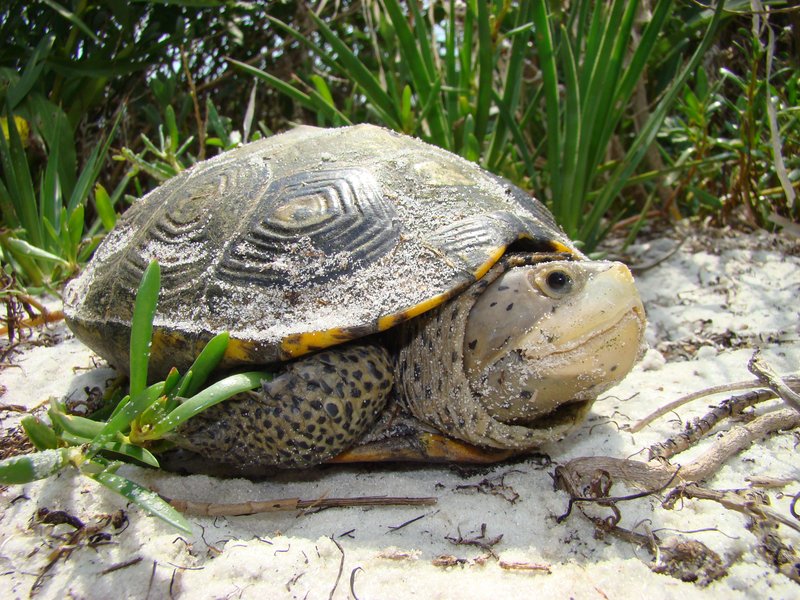
Diamondback terrapins, found along the Atlantic and Gulf coasts from Massachusetts to Texas, are the only turtles in the world that live exclusively in coastal estuaries. These estuaries are also home to blue crabs, which are trapped in crab pots. Crab pots trap and drown imperiled diamondback terrapins, who have suffered population declines of 75% across most of their range in the past 50 years.
“Diamondback terrapins are drowning in blue crab pots every day, even though there’s a simple, low cost way to prevent this ongoing tragedy, so we need action,” said Tara Zuardo, a senior wildlife advocate at the Center for Biological Diversity. “It’s time for Virginia to follow other states and take basic steps to require that crab traps don’t kill even more of these imperiled turtles.”
Today’s petition, filed by the Center for Biological Diversity, Virginia Herpetological Society, Wild Virginia and biologist Willem M. Roosenburg, Ph.D., asked the state to require bycatch reduction devices on all licensed recreational and commercial blue crab pots in near-shore waters where terrapins are frequently found. When installed on crab pot entrance funnels, these small and inexpensive devices prevent most terrapins from entering the pot, while having little to no effect on crab haul.
Experts agree that blue crab pots pose the greatest threat to diamondback terrapins, with 60,000 to 80,000 killed in active and abandoned crab traps each year. Baited blue crab pots are known to trap and drown terrapins, while fleets of traps are capable of steadily killing turtles until a population cannot sustain itself. Abandoned or lost traps — called ghost pots — can capture terrapins by the dozen.
New York and New Jersey already require bycatch reduction devices on recreational and commercial pots. Delaware, Florida, and Maryland require the devices on recreational pots.
Under state law, the commission must respond to the petition in the Virginia Register of Regulations within 14 days.
In September 2024 the Center for Biological Diversity and 20 partner organizations petitioned NOAA Fisheries to protect diamondback terrapins as endangered under the Endangered Species Act.
Background
Diamondback terrapins are known for their stunning diamond-patterned shells and speckled skin. Spending most of their lives in nearshore habitat, they live in coastal marshes, tidal creeks, mangroves, and other estuarine habitats, where they primarily feed on snails, clams, mussels and small crabs. Terrapins are potentially a keystone species in salt marshes and mangroves, helping to maintain the health of those ecosystems.
The Center for Biological Diversity is a national, nonprofit conservation organization with more than 1.7 million members and online activists dedicated to the protection of endangered species and wild places.
idfg-bpearson
Tuesday, February 11, 2025 – 12:43 PM MST
Idaho Fish and Game is holding a wolf trapper certification class during the 2025 Idaho Sportsman Show at Expo Idaho in Garden City, on Saturday, March 1, and there is still space available.
The class will be held from 1:45 p.m. to 6:45 p.m. at the Expo Idaho Western Town Conference Room, located at 5610 N. Glenwood St.
Everyone who pre-registers for this wolf trapper certification course will have their entry fee for the Idaho Sportsman Show waived for Saturday – all they will need to do is present their confirmation email at the entry gate for the Sportsman Show. Be sure to show up early and stop by Idaho Fish and Game’s booth (and everything else the show has to offer)!
You can pre-register for the class here: https://www.register-ed.com/events/view/223507
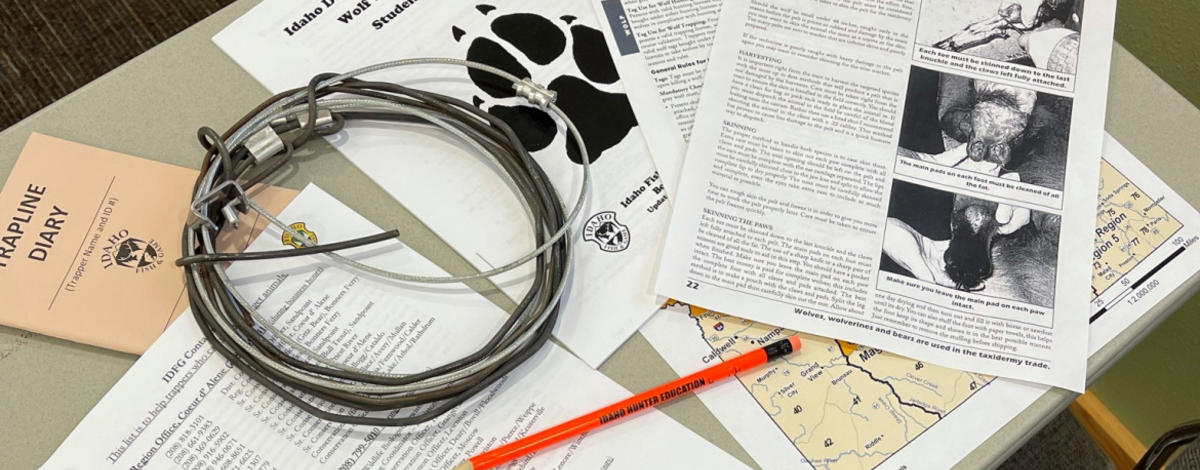
Anyone intending to trap wolves in Idaho must attend wolf trapper education prior to buying wolf trapping tags. Anyone intending to trap wolves that did NOT hold an Idaho trapping license prior to 2011 is required to take BOTH trapper and wolf-trapper education.
Class registration can be completed online, or by stopping by any regional Fish and Game office for assistance. The cost of the course is $9.75.
Wolf trapper education is taught by a certified wolf-trapping instructor who will cover wolf trapping regulations and ethics, wolf habits and behavior, trapping methods, and reporting requirements.
For more information about any of the trapper and hunter education programs in Idaho or specific classes in the Southwest Region, please contact the regional Fish and Game office in Nampa at 208-465-8465.

