𝗟𝗲𝗱𝗯𝘂𝗿𝘆 𝗛𝘂𝗻𝘁 𝘁𝗲𝗿𝗿𝗶𝗲𝗿 𝗺𝗮𝗻 𝗶𝗻 𝗰𝗼𝘂𝗿𝘁 𝗮𝗰𝗰𝘂𝘀𝗲𝗱 𝗼𝗳 𝗶𝗹𝗹𝗲𝗴𝗮𝗹𝗹𝘆 𝗸𝗲𝗲𝗽𝗶𝗻𝗴 𝘄𝗶𝗹𝗱 𝗣𝗲𝗿𝗲𝗴𝗿𝗶𝗻𝗲 𝗙𝗮𝗹𝗰𝗼𝗻𝘀
Reply

Virginia deer season opening: Safety tips from expertsPlay Video
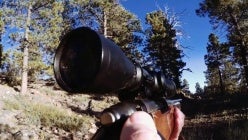
Virginia deer season opening: Safety tips from experts
NOW PLAYING
Virginia State Police identify Roanoke homicide suspect shot, killed by officer
US Representative Abigail Spanberger hosts Virginia Governor campaign stop in Roanoke
Community celebrates St. Patrick’s Day with parade and festival
Super Bowl champion visits Boys and Girls Club of Southwest Virginia in Roanoke
Roanoke community invited to meet finalist for new Star City police chief
ROANOKE, Va. – As Virginia’s general firearms deer season opens Saturday, experts are emphasizing safety measures and thorough preparation for the estimated 250,000 acres of public hunting land available.
“Whether you’re out hunting this season, getting ready to go hunt, practicing, training, or you’re starting to shoot for sport, there’s some basic firearm safety rules that really should be followed all the time,” says Mitchell Tyler, co-owner of Safeside in Roanoke.
Tyler emphasizes the four fundamental rules of firearm safety established by the National Shooting Sports Foundation (NSSF). The first rule: Always treat every firearm as if it’s loaded. “The level of respect increases, so even though you’re sure that it’s unloaded, we want to treat it as if it’s loaded because all the other things are going to help protect from an accident,” Tyler explains.

Have the day’s biggest stories arrive in your inbox every day at 8 p.m.Email AddressClick here to sign up
Rule two of the NSSF guidelines focuses on trigger discipline. “We train people about proper indexing, which is instead of having your finger around the trigger, to have your finger extended along the side of the gun before you move it onto the trigger,” says Tyler.
The third NSSF rule requires never pointing a gun at anything you don’t intend to destroy. The fourth rule emphasizes knowing your target and what’s beyond it. “We need to make sure that what’s behind our target or behind the animal is also going to be safe and so we’re making sure that we don’t see anything that could be hurt,” Tyler says.
The Virginia Department of Wildlife Resources (DWR) stresses the importance of preseason preparation, including inspecting all gear, tree stands, and safety harnesses. Hunters must communicate their plans with others, indicating hunting location and expected return time.
With muzzleloader season underway, hunters face additional challenges. Unlike factory-made ammunition, muzzleloaders introduce more variables. “With factory-loaded ammunition, you’re going to have consistent rounds from shot to shot usually,” Tyler explains. “With muzzle loaders, there’s a couple factors… rifle ammunition is made in a factory in great conditions. Muzzle loading, you’re reloading in the field.”
Visibility remains crucial for hunter safety. “We want to be able to make sure that other hunters can identify us so when they hear movement in the woods or they see movement, that they have a really top-of-mind, presence of mind that this is another hunter or someone out there,” Tyler emphasizes. The DWR requires hunters to wear blaze orange for safety.
Hunters in Patrick, Roanoke, Shenandoah, Smyth, Tazewell and Wythe counties must have deer harvested on Nov. 15 tested for chronic wasting disease (CWD). Staffed check stations will operate from 8 a.m. to 8 p.m., with refrigerated drop-off locations available.
For those hunting with hounds, additional preparations are necessary. Dogs must wear substantial collars with owner contact information, and hunters should plan to keep dogs on property where they have permission to hunt.
The DWR encourages hunters who fill their freezers to consider donating additional deer to Hunters for the Hungry through participating processors. In areas with high deer populations, doe harvest helps maintain herd health and reduce property damage.
Safeside offers firearm safety classes throughout the month. Tyler encourages hunters to have their firearms professionally inspected before the season begins, noting that many accidents happen before or after actual hunting activity.
“A lot of accidents happen with someone not out necessarily hunting actively, but the bookends of that, the before and after, where they had a firearm that was loaded,” Tyler warns. “If your firearm is unloaded, it will not go off.”
Penn Vet’s Louise Moncla has tracked H5N1 viruses in North America to better understand the role wild birds play in the current bird flu outbreak.
4 min. read

Since late 2021, a panzootic, or “a pandemic in animals,” of highly pathogenic bird flu variant H5N1 has devastated wild birds, agriculture, and mammals. Unlike previous outbreaks, aggressive culling of domestic birds has not contained it, and the viruses continue to infect a broad range of species, including wild birds and mammals rarely affected before, suggesting that transmission patterns have shifted since 2022.
Now, in a new study looking at how these viruses were introduced and spread in North America, Louise H. Moncla from the School of Veterinary Medicine and her team have found that wild birds are critical drivers of the ongoing bird flu outbreak in the United States. Their findings are published in Nature.
Highly pathogenic avian influenza (HPAI) viruses—those responsible for bird flu outbreaks—continue to pose challenges for human and animal health.
“The picture for HPAI influenza has really changed for North America and the U.S. in the last couple of years,” says Moncla. “This used to be a virus that primarily circulated in Asia, Northern Africa, and domestic birds. But in more recent years, we’ve seen increasing outbreaks across Europe, associated with wild birds, and since 2022, we’ve also had similar outbreaks in our North American birds.”
Using publicly available databases from the Canadian Food Inspection Agency, Environment Canada, the Public Health Agency of Canada, the Canadian Wildlife Health Centre, and the United State Department of Agriculture (U.S.D.A) Animal and Plant Health Inspection Service, the researchers traced the introduction and spread of highly pathogenic H5N1 viruses during the first 18 months in North America using genomic sequencing and migratory flyway analysis.
“The main conclusion from this study is that that outbreak was really different from all of the past ones we have had in North America because these viruses were spread primarily by wild migrating birds,” says Moncla. “Our data pinpoint the Anseriformes, which are ducks, geese, and swans.”
She notes that the since 2020, when an evolutionary shift occurred, H5N1 has become better adapted to infect wild birds, meaning that it can be spread much more efficiently when wild birds migrate. “This was happening in Europe—Europe had almost the exact same thing happen that we had in 2022. They just had it 2 years earlier.”
However, Moncla explains, H5N1 viruses in North America are still classified foreign animal diseases. “Our policy is based on the idea that these viruses come from elsewhere and don’t circulate continuously in our birds here,” she says. “Our study shows that this is no longer the case, and so we need to update our policy to align with this reality.”
This study also found that agricultural outbreaks were the result of repeated introductions of the virus from wild birds, says Moncla. In addition, backyard birds—populations of fewer than 1,000 domestic birds as defined by the U.S.D.A. and World Animal Health Organization—on average, were infected approximately nine days earlier than commercial poultry, suggesting these populations might serve as an early warning signal.
“These populations have a lot of different epidemiological features,” says Moncla. “The farms are smaller. They tend to have less biosecurity. These birds have a much higher likelihood of being raised outdoors with potentially more access to wild birds.”
Previous viruses transmitted really well between domestic chickens and turkeys, says Moncla, so stopping transmission in commercial farms would stop the outbreak. But transmission by wild migrating birds presents a challenge.
The solution? “A series of boring things,” says Moncla.
“We need to keep investing in biosecurity—biosecurity does work—making sure that people have good biosecurity plans, both to prevent transmission to other farms but also to prevent wild birds from interacting with their domestic birds,” she says, adding that a layered approach to encouraging adherence to these physical and/or behavioral protocols that prevent introduction of these viruses would also be needed.
“At some point we probably will need to investigate vaccinating domestic birds as a possibility,” she continues, adding that investing in novel ways to keep domestic and wild bird separated would also help reduce spillovers. Finally, continuous surveillance in wild birds, especially Anseriformes [waterfowl], would help with viral tracking and outbreak reconstruction.
“Our lab is really interested in risk modeling,” says Moncla. “If we had a better understanding of how these viruses are circulating in wild birds and the kind of degree to which different migratory birds are driving transmission, could we have something like a forecasting system for risk over time?” For example, she continues, if risk is highest in a particular region in September, people with backyard birds in that area could be told to make sure that they are adhering fully to their biosecurity plan during that month.
While Moncla says it is unlikely that the disease will ever completely go away or be solved, she says what we can do, however, “is try to manage it from getting into agricultural animals.”
Nov 12, 2025
The annual rite known as the firearm deer season kicks off at dawn Saturday morning and continues for the final two weeks of November.
Hundreds of thousands of hunters of all ages will take to the woods in the coming days in search of a trophy buck. Regrettably, if history is any kind of indicator, there is at least a chance that a number of hunters will become injured while in the field.
From time to time, some have even died while hunting.
What follows here is is a listing of “do’s” and “don’ts” for hunters in Michigan forestlands. Most of the items are of the commonsense variety:
• Wear the bright orange hunting clothing gear so you can be easily seen and not confused with a deer. Not only is it safe but it’s also required by law.
• Do not pull the trigger unless you are certain without doubt, that your target is a deer. Sounds like a no-brainer, but you would be amazed that most hunting accidents are from hunters shooting other hunters by accident.
• Check the weather forecast and dress appropriately.
• If at all possible, avoid hunting alone.
• Take care of your hunting equipment before and after the hunt.
• Leave an itinerary before you depart, including where you plan to hunt.
• Insure the land you plan to hunt is open for that purpose. Secure permissions from private landowners.
Best of luck in the coming days and weeks. And remember, safety always comes first during deer season.
5 hrs ago
By Daniel AngeliniSenior Reporter
Share

LIVE: Emergency services rush to
serious A-road crash
Fox hunting remains a divisive issue (Image: PA)
An investigation into reports of saboteurs interrupting a hunt near Swindon being dropped has led to renewed debate about fox hunting.
In January, members of the Severn Vale Hunt Saboteurs had the police called on them while they were attempting to stop what they believed was an illegal hunt in Radcot, near Faringdon.
During this incident, beagles were allegedly seen running in an open field.
However, the investigation has now been shelved unless new evidence is brought to light.
Amazon’s Worst Nightmare: Washington Shoppers Canceling Prime For This Clever HackOnline Shopping Tools | Sponsored
How Long Does $2.5 Million Last in Retirement?It may seem like a large sum to retire with, but there are many variables to consider.SmartAsset | Sponsored
If You’re Collecting Under $3950 in SS a Month: You’re Eligible for These 10 Discountssilverpenny.co | Sponsored
This decision has reignited discussions on fox hunting and the role of the saboteurs.
Many are divided on the ethics of hunting and the actions of those who seek to disrupt hunts.
Roy Mcghie said: “They shoot loads more than all the hunts put together.”
His comment reflects a common argument that hunting practices may not be as harmful as some critics suggest.
On the opposite side of the debate, David Sterratt replied: “Difference, pest control is not sickos casing a poor animal to exhaustion.”
Woodturner Cahill replied: “Hunts are cruel actions led by cruel and inhumane people who enjoy seeing animals suffer for their entertainment.”
Recommended reading
Martin Newman replied: “The hunt sabs are gathering evidence that’s led to successful prosecutions because the police aren’t actively enforcing the law.
“The hunt sabs are a brave bunch and I’m full of admiration for them. Keep upholding the law you are on the right side of history.
“The League Against Cruel Sport will shift the main focus of its activity to getting game bird shooting banned. Another barbaric ‘sport’ that has no place in a modern civilised society.”
This highlights the strong emotions on both sides regarding the treatment of animals in hunting scenarios.
Woodturner Cahill added: “Hunts are cruel actions led by cruel and inhumane people who enjoy seeing animals suffer for their entertainment.
“They should all be locked up.”
Cahill’s viewpoint expresses a belief that hunting should not be tolerated in modern society, as it promotes suffering for the sake of entertainment.
Others have pointed out the complexities of the situation.
Martin Newman stated: “The hunt sabs are gathering evidence that’s led to successful prosecutions because the police aren’t actively enforcing the law.”
He expressed admiration for the saboteurs and suggested they are fulfilling an important role in protecting wildlife.
Amanda Jane remarked: “The hunts around me always catch foxes,” reaffirming the belief that hunting continues to pose a threat to wildlife.
In contrast, Neil Fox claimed: “Hunting is a natural thing for the human race,” indicating a more traditional view on the practice.
Yoel Dovid took a different stance, stating: “Hunt sabs are ideological thugs terrorising others in some perverse form of class warfare.”
Ella Hardin expressed similar concerns, noting: “As someone who disagrees with hunts, hunt sabs are just as bad the way they will treat the horses.”
She argued that while she does not support hunting, the treatment of horses by saboteurs can sometimes lead to harm, adding: “I don’t agree with the hunt or even the hounds but no one can deny their horses are kept very well most of the time, especially considering they’re usually well off and unless you’re actually running the show like the secretary or field master they’re just regular people who paid to be there.
“Hunt sabs on the other hand, while their morals can be in the right place, their actions can actually be very dangerous for the horses.
“There’s evidence of them even harming horses and frightening them so much riders are thrown off which makes them just as bad as the people they’re protesting.”
Critics of the hunts have also raised questions about the legality of their actions.
Elaine Dargan asked: “Aren’t the ‘participants’ of the hunt breaking the law?”
In response, Paul Mycock stated: “No they are not. They are ordinary people trying to have fun on their horses.”
Richard Johnson added: “The huge majority of hunts’ members are average working class folk that graft to live.”
Peter Addison argued: “The only foxes that were ever killed by hunts (pre-ban) were the sick and lame.”
Meanwhile, Chris Noon pointed out: “It would be a waste of police time” to intervene in these scenarios, suggesting that the legal issues surrounding hunting are complex and not easily resolved.
Olivia Wolfson-Green emphasized the need for hunts to demonstrate compliance with the law.
She said: “Hunting can either wait for the inevitable Parliamentary move or it can decide to demonstrate, convincingly, that trail hunting is indeed being properly conducted.
“That means going further and faster than the steps that have been taken so far.”
Her comments imply that the future of hunting may depend on how well hunts can adapt to changing societal views and legal expectations.
Phil Rushden said: “Well done hunt saboteurs! You are good people.”
Matt Wichall said: “The Sabs continuing to do great work for our wildlife and countryside!”
 Exposing the Big Game