Fox ‘killed in hunt on school grounds’
Reply

By
Published Nov. 27, 2024, 10:26 p.m. ET
0 seconds of 0 secondsVolume 0%
That’s just clawful!
Crabs can feel pain when they are boiled alive during conventional food preparation —- as do other shellfish like lobsters, according to a new study.
Zoologists from Sweden’s University of Gothenburg performed brain scans on crabs to see how their nervous system would react to painful stimuli, according to a summary of the study.

Testing on paralyzed crabs found that the crustaceans’ nociceptors detect damaging stimuli and send signals to the central nervous system — which is definitively the feeling of pain, the study found.
The study used electrophysiological equipment to detect the innate bodily response of shore crabs while prodding them with two types of noxious stimuli, namely, mechanical/chemical and acetic.


Researchers found that the shore crabs exhibited responses in their central nervous system that indicated a standard pain response.
Every part of the shore crabs’ bodies responded to each painful stimuli, except its antennae, which only exhibited responses to chemical stimuli.
These pain principles apply not only to shore crabs but also to shellfish such as crawfish, shrimp and lobsters.
In the light of these revelations, scientists are calling for more humane culinary ways to prepare shellfish, which are conventionally boiled alive.
“We believe that the boiling of crustaceans alive should be banned and cooking techniques such as electro stunning should be applied the moment that the crustaceans are caught,” Eleftherios Kasiouras, a Ph.D. candidate at the University of Gothenberg, told the Daily Mail.
What do you think? Post a comment.
“There is more and more evidence emerging, including our research, that decapods experience pain so we should treat them as we would treat other animals,” Kasiouras explained.

Crabs are one of the only consumable creatures not protected by animal welfare laws, meaning it is legal to butcher and kill crabs.
Animal welfare organization Crustacean Compassion said that there are several unethical ways of killing decapods, including boiling, dismemberment, electrical killing, splitting, CO2 gassing, freshwater drowning and both dry and wet chilling.
Filed under
By Sam Brasch
·Nov. 27, 2024, 4:00 am
Share:
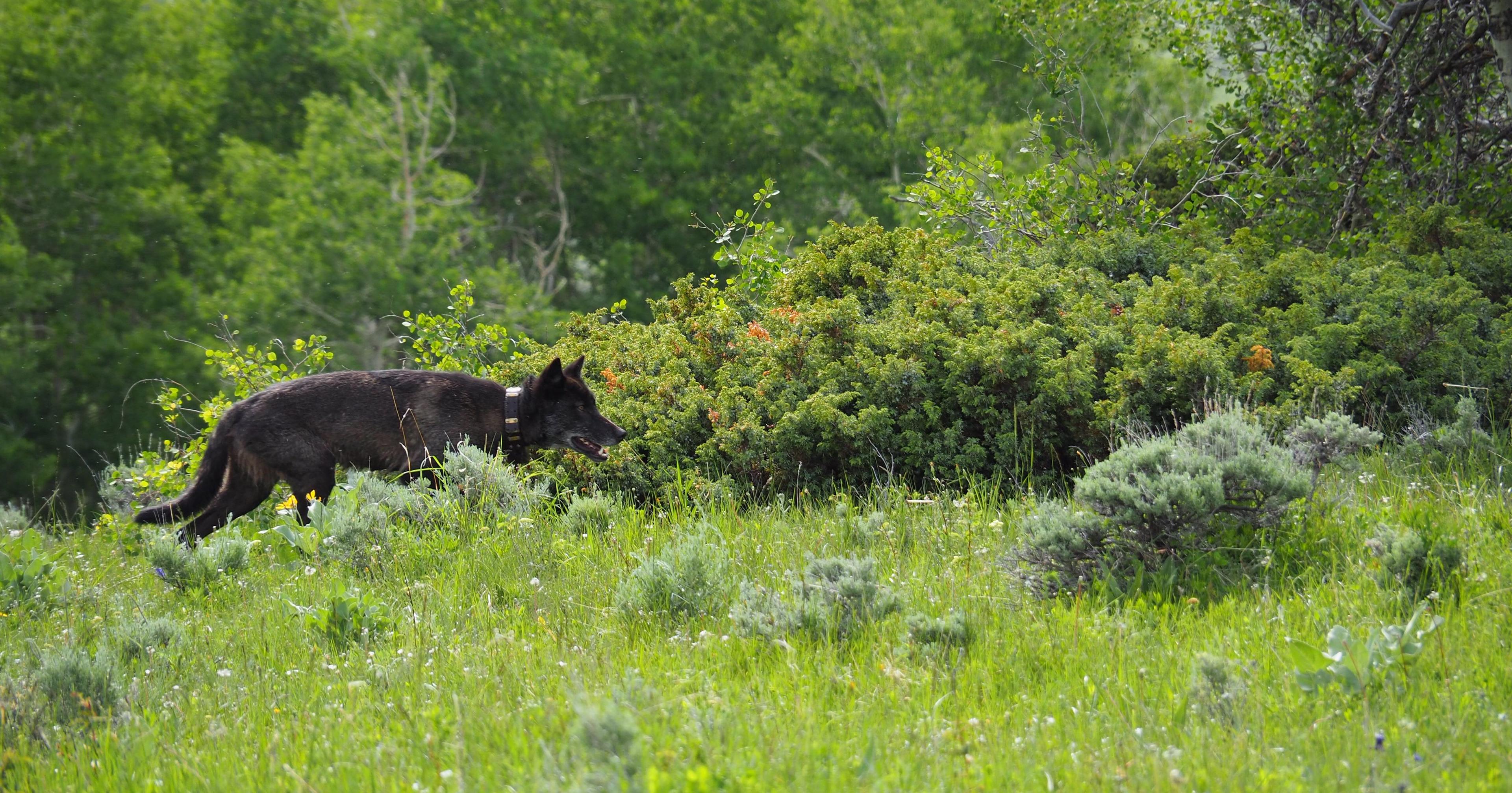
A wildlife advocacy group launched a $50,000 reward last week for information leading to the conviction of anyone who illegally kills a wolf in Colorado.
The Rocky Mountain Wolf Project — a group established by supporters of Colorado’s 2020 wolf reintroduction ballot measure — announced the program after federal investigators revealed someone likely shot a wolf reintroduced to Colorado. While it appears the animal died following a battle with another wolf, it carried a healed bullet wound on its back leg undetected by state wildlife officials who captured and released the predator last winter.
“The preponderance of evidence suggests [the wound] probably happened in Colorado because it wasn’t detected when they caught that wolf in Oregon,” said Rob Edward, president of the Rocky Mountain Wolf Project. “We just decided that was the time to launch it — because it appears somebody is out there shooting at wolves.”
Colorado is set to release a second batch of 10 to 15 wolves this winter as a part of a controversial restoration project narrowly approved by voters in 2020.
The state released an initial group of 10 wolves in Grand County and Summit County last December. Since then, three of the animals have died, but it doesn’t appear that any were killed by people.
State and federal law prohibits anyone from killing or harassing gray wolves. Ahead of the reintroduction effort, Colorado Parks and Wildlife received a special permit under the U.S. Endangered Species Act, which allows the agency to remove wolves as a management tool to protect people and livestock. Anyone else who harms a wolf could face jail time, a loss of hunting privileges and up to $100,000 in fines.
Colorado also already operates an anti-poaching reward program. Operation Game Thiefeif offers up to $500 to anyone with information about someone who poaches big game or members of an endangered species, and up to $1,000 for especially flagrant cases.
Edward, however, said his organization wasn’t convinced the state’s reward was enough to protect wolves during the first stages of the reintroduction process. To offer a greater financial incentive, the organization collected donations from private individuals and other wildlife advocacy groups, including the Wolf and Wildlife Project, the Colorado Wolf and Wildlife Center, the Sacred Wolf Foundation and the Lockwood Animal Rescue Center.
To collect the reward, Edward said people with information about wolf poaching must call the tip line for Operation Game Thief, and then tell the Rocky Mountain Wolf Project if the information leads to any formal charges filed by the state or federal government.
Edward said his organization explored offering the reward through a formal partnership with Colorado Parks and Wildlife. He said the state determined it could not directly cooperate with the wildlife advocacy group, but it hasn’t pushed back against the project.
Travis Duncan, a spokesperson for Colorado Parks and Wildlife, declined to comment on the new reward program but reiterated it’s illegal to kill a wolf in Colorado for any reason other than self-defense.
We don’t have to accept all that death and waste for a dry, flavorless bird no one likes.
Nov 27, 2024, 5:30 AM PST

A turkey arrives at the 2024 White House turkey pardon, a strange annual “song and dance of celebrating turkeys while we torture them,” as Vox’s Kenny Torrella put it last year.| Susan Walsh/Associated Press

Marina Bolotnikova is a deputy editor for Vox’s Future Perfect section. Before joining Vox, she reported on factory farming for national outlets including the Guardian, the Intercept, and elsewhere.
Support independent journalism that matters — become a Vox Member today.
On Thursday, tens of millions of Americans will partake in a national ritual many of us say we don’t especially enjoy or find meaning in. We will collectively eat more than 40 million turkeys — factory farmed and heavily engineered animals that bear scant resemblance to the wild birds that have been apocryphally written into the Thanksgiving story. (The first Thanksgiving probably didn’t have turkey.) And we will do it all even though turkey meat is widely considered flavorless and unpalatable.
“It is, almost without fail, a dried-out, depressing hunk of sun-baked papier-mâché — a jaw-tiringly chewy, unsatisfying, and depressingly bland workout,” journalist Brian McManus wrote for Vice. “Deep down, we know this, but bury it beneath happy memories of Thanksgivings past.”
So what is essentially the national holiday of meat-eating revolves around an animal dish that no one really likes. That fact clashes with the widely accepted answer to the central question of why it’s so hard to convince everyone to ditch meat, or even to eat less of it: the taste, stupid.
Undoubtedly, that has something to do with it. But I think the real answer is a lot more complicated, and the tasteless Thanksgiving turkey explains why.
Sign up here for Future Perfect’s biweekly newsletter from Marina Bolotnikova and Kenny Torrella, exploring how the meat and dairy industries shape our health, politics, culture, environment, and more.
Have questions or comments on this piece? Email me at marina@vox.com!
Humans crave ritual, belonging, and a sense of being part of a larger story — aspirations that reach their apotheosis at the Thanksgiving table. We don’t want to be social deviants who boycott the central symbol of one of our most cherished national holidays, reminding everyone of the animal torture and environmental degradation that went into making it. What could be more human than to go along with it, dry meat and all?
Our instincts for conformity seem particularly strong around food, a social glue that binds us to one another and to our shared past. And although many of us today recognize there’s something very wrong with how our meat is produced, Thanksgiving of all occasions might seem like an ideal time to forget that for a day.
In my experience, plenty of people who are trying to cut back on meat say they eat vegetarian or vegan when cooking for themselves — but when they are guests at other people’s homes or celebrating a special occasion, they’ll eat whatever, to avoid offending their hosts or provoking awkward conversations about factory farming.
But this Thanksgiving, I want to invite you, reader, to flip this logic. If the social and cultural context of food shapes our tastes, even more than taste itself, then it is in precisely these settings that we should focus efforts to change American food customs for the better.
“It’s eating with others where we actually have an opportunity to influence broader change, to share plant-based recipes, spark discussion, and revamp traditions to make them more sustainable and compassionate,” Natalie Levin, a board member at PEAK Animal Sanctuary in Indiana and an acquaintance of mine from vegan Twitter, told me.
Hundreds of years ago, a turkey on Thanksgiving might have represented abundance and good tidings — a too-rare thing in those days, and therefore something to be grateful for. Today, it’s hard to see it as anything but a symbol of our profligacy and unrestrained cruelty against nonhuman animals. On a day meant to embody the best of humanity, and a vision for a more perfect world, surely we can come up with better symbols.
Besides, we don’t even like turkey. We should skip it this year.
In 2023, my colleague Kenny Torrella published a wrenching investigation into conditions in the US turkey industry. He wrote:
The Broad Breasted White turkey, which accounts for 99 out of every 100 grocery store turkeys, has been bred to emphasize — you guessed it — the breast, one of the more valuable parts of the bird. These birds grow twice as fast and become nearly twice as big as they did in the 1960s. Being so top-heavy, combined with other health issues caused by rapid growth and the unsanitary factory farming environment, can make it difficult for them to walk.
Another problem arises from their giant breasts: The males get so big that they can’t mount the hens, so they must be bred artificially.
Author Jim Mason detailed this practice in his book The Ethics of What We Eat, co-authored with philosopher Peter Singer. Mason took a job with the turkey giant Butterball to research the book, where, he wrote, he had to hold male turkeys while another worker stimulated them to extract their semen into a syringe using a vacuum pump. Once the syringe was full, it was taken to the henhouse, where Mason would pin hens chest-down while another worker inserted the contents of the syringe into the hen using an air compressor.
Workers at the farm had to do this to one hen every 12 seconds for 10 hours a day. It was “the hardest, fastest, dirtiest, most disgusting, worst-paid work” he had ever done, Mason wrote.
In the wild, turkeys live in “smallish groups of a dozen or so, and they know each other, they relate to each other as individuals,” Singer, author of the new book Consider the Turkey, said on a recent episode of the Simple Heart podcast. “The turkeys sold on Thanksgiving never see their mothers, they never go and forage for food… They’re pretty traumatized, I’d say, by having thousands of strange birds around who they can’t get to know as individuals,” packed together in crowded sheds.
From birth to death, the life of a factory-farmed turkey is one punctuated by rote violence, including mutilations to their beaks, their toes, and snoods, a grueling trip to the slaughterhouse, and a killing process where they’re roughly grabbed and prodded, shackled upside down, and sent down a fast-moving conveyor belt of killing. “If they’re lucky, they get stunned and then the knife cuts their throat,” Singer said. “If they’re not so lucky, they miss the stunner and the knife cuts their throat while they’re fully conscious.”
On Thanksgiving, Americans throw the equivalent of about 8 million of these turkeys in the trash, according to an estimate by ReFED, a nonprofit that works to reduce food waste. And this year will be the third Thanksgiving in a row celebrated amid an out-of-control bird flu outbreak, in which tens of millions of chickens and turkeys on infected farms have been culled using stomach-churning extermination methods.

Turkeys depopulated using firefighting foam after a bird flu outbreak.Glass Walls/We Animals Media

Two baby turkeys still alive after their flockmates were culled with firefighting foam due to a bird flu outbreak in Israel.Glass Walls/We Animals Media
When I search for the language for this grim state of affairs, I can only describe it in religious terms, as a kind of desecration — of our planet’s abundance, of our humanity, of life itself. On every other day of the year, it’s obscene enough. On a holiday that’s supposed to represent our gratitude for the Earth’s blessings, you can understand why Thanksgiving, for many vegetarians or vegans, is often described as the most alienating day of the year.
I count myself among that group, although I don’t dread Thanksgiving. I’ve come to love it as a holiday ripe for creative reinvention. I usually spend it making a feast of plant-based dishes (known by most people as “sides,” though there’s no reason they can’t be the main event).
To name a few: a creamy lentil-stuffed squash, cashew lentil bake, a bright autumnal brussels sprout salad, roasted red cabbage with walnuts and feta (sub with dairy-free cheese), mushroom clam-less chowder (I add lots of white beans), challah for bread rolls, a pumpkin miso tart more complex and interesting than any Thanksgiving pie you’ve had, and rasmalai, a Bengali dessert whose flavors align beautifully with the holidays.
Vegan turkey roasts are totally optional, though many of them have gotten very good in recent years — I love the Gardein breaded roast and Field Roast hazelnut and cranberry. You can also make your own.
The hardest part of going meatless is not about the food (if it were, it might not be so hard to convince Americans to abandon parched roast turkey). “It’s about unpleasant truths and ethical disagreements being brought out into the open,” Levin said, about confronting the bizarre dissonance in celebrations of joy and giving carved from mass-produced violence.
These conversations are not easy, but they are worth having. And we don’t have to fear losing the rituals that define us as Americans. To the contrary, culture is a continuous conversation we have with each other about our shared values — and any culture that’s not changing is dead. There’s far more meaning to be had, I’ve found, in adapting traditions that are no longer authentic to our ethics and violate our integrity. We can start on Thanksgiving.

Rescued turkeys at Farm Sanctuary, an organization in upstate New York that cares for rescued farm animals, feast on a banquet of fruits and veg

