Poaching and uncivilized hunters: seven reports and a flurry of sanctions in the Cagliari area
Reply

https://imasdk.googleapis.com/js/core/bridge3.679.0_en.html#goog_1070104034Play Video
spaceplay / pause
qunload | stop
ffullscreen
shift + ←→slower / faster
↑↓volume
mmute
←→seek
. seek to previous
12… 6 seek to 10%, 20% … 60%
A wildlife nonprofit in the Poconos has confirmed dozens of snow geese in various parts of the Lehigh Valley have tested positive for H5N1, which is also known as the bird flu.
This, as the Pennsylvania Game Commission announced it suspects bird flu killed hundreds more.
“I have never seen it this bad,” Janine Tancredi said.
about:blank
Tancredi, the co-executive director of The Wilderz at Pocono Wildlife, has been spending the past few days doing the tough part of her job.
“We’re euthanizing on arrival,” she said. “We don’t really have a choice.”
She and her team found hundreds of birds already dead, she said, when they arrived to a quarry in the Nazareth area on Thursday.
“People were reporting like birds falling from the sky,” Tancredi said. “And it seems far-fetched, but because they become so neurologically disabled, they don’t know their whereabouts. They’re flying into trees. They’re flying into houses.”
She says over the past few days, over four sites in the Nazareth area, and one in the Bethlehem area, every snow goose her team has tested for H5N1 — that’s at least 35 birds — has come back positive.
“So, at the first place, there was 15 dead on arrival,” she said. “We had to euthanize one.”
Tancredi added some of the sites were private property, and owners did not want the locations to be made public, but she says residents within the areas were notified.
She also said she believes the total number of those affected is “probably more like thousands.”
Her findings came as the Pennsylvania Game Commission just announced the deaths of 200 snow geese in the Lehigh Valley are suspected to be bird flu cases.
The game commission said results are yet to be confirmed by the U.S. Department of Agriculture at its National Veterinary Services Laboratories.
Tancredi said it’s unlikely those cases are anything but the “highly pathogenic avian influenza,” as H5N1 is known, considering the game commission recovered the geese from Lower Nazareth Township in Northampton County and Upper Macungie Township in Lehigh County.
“Less than 4 miles from the location that they all tested positive,” Tancredi said.
Still, the Pennsylvania Department of Health says it, along with the Centers for Disease Control and Prevention, are “confident” the current outbreak “poses a low risk to the health of the general public.”
The Pennsylvania Department of Agriculture said the commonwealth has been on “high alert” since the outbreak that happened in 2022, and stated:
“To date, there have been no infections in…humans in Pennsylvania.”
But the virus is particularly contagious and lethal to domestic poultry, the Pennsylvania Game Commission said.
“It doesn’t matter how clean you are,” Tancredi said. “I mean, somebody can be going out there, the reality is, five times a day and cleaning their chicken coop, and it takes one bird to fly over that is contaminated and droppings and there’s exposure.”
So what should we be doing? Officials say to avoid contact with bird feces and saliva, where the virus is spread.
Tancredi said organic materials can’t be disinfected, but hard surfaces should be be cleaned with a 10% bleach solution, or what’s called Rescue Disinfectant.
If you have a dog, consider staying away from waterways, and maybe buy some dog booties on Amazon.
“I know it’s like extreme,” Tancredi said, “but would you rather avoid walking your dog for the next several months? Because this is not going to be over soon.”
If you see any dead birds or other animals — or if any look disoriented to you — officials urge you not to touch them, but to report them to the Pennsylvania Game Commission.
You can call 1-833-PGC-WILD (1-833-742-9453), or email pgc-wildlifehealth@pa.gov or use the online Wildlife Health Survey tool.
https://www.cbsnews.com/philadelphia/news/bird-flu-h5n1-delaware-geese-potential-outbreak/
By Joe Brandt
January 2, 2025 / 9:47 AM EST / CBS Philadelphia
oultry farmers and hunters in Delaware are being asked to take precautions as state officials investigate a possible bird flu outbreak among snow geese in coastal Sussex County.
The Delaware Department of Natural Resources says about 40-50 snow geese, including many at the Prime Hook Wildlife Refuge in Milton, have tested “presumptive positive” for the H5N1 avian flu.
The agency has also received calls about sick birds in the surrounding area.
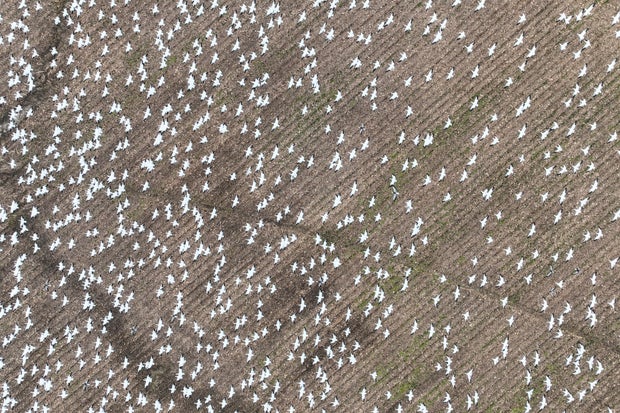
Experts say there could be 200 to 300 birds infected.
“A total count of sick birds cannot be confirmed because wild birds often get sick and die where the public cannot see them. Snow geese fly long distances, which means infected geese may die in other locations and transmit the virus to other birds, including poultry,” DDNR said.
The DDNR says anyone who finds a sick or dead wild bird should report it to the state via phone at 1-302-739-9912 between 8 a.m. and 4:30 p.m. Monday through Friday or through this online form after hours and on weekends.
The agency recommends wearing personal protective equipment like masks and gloves when dealing with any dead birds. Waterfowl hunters should take precautions, including washing and disinfecting tools.
The agency is urging poultry and livestock owners to be more vigilant in protecting their animals from the disease, including covering mortality and compost piles at all times, removing standing water, keeping waterfowl away from ponds and basins, and creating devices and strategies to keep birds from perching on ledges or entering buildings.
The Centers for Disease Control and Prevention has confirmed 66 human cases of bird flu. The first case of severe illness in an American human was reported Thursday in Louisiana, in a man over age 65 who was exposed to a backyard flock.
No confirmed human cases have been reported on the East Coast, but Delaware does have one “probable” case from an unknown source of exposure.
Experts warn that the more cases jump to humans, the greater the chance the virus could mutate.
“The concern is, the more we allow spillover into humans, the more likely at some point you might see a mutation that would allow for human-to-human transmission,” CBS News medical contributor Dr. Céline Gounder said.
Health officials have also warned against feeding pets raw pet food or consuming raw milk, as some cases of bird flu have presented in dairy cattle.
Deutsche Welle
https://www.usatoday.com/story/news/world/2017/11/27/reindeer-killings-norway-freight-trains/896895001/
0:39
/
1:31

In what has been called a “bloodbath,” a total of 106 Norwegian reindeer on their winter migration have been killed by freight trains in the north of the country since Wednesday, Norway’s public broadcaster NRK said late Sunday.
Sixty-five animals were mown down on a track on Saturday, and another 41 between Wednesday and Friday, NRK said.
The owner of the 65 dead reindeer, Ole Henrik Kappfjell, described the killings to NRK as “a senseless animal tragedy … a psychological nightmare.”
The reindeer deaths come as herders take the animals on a search for winter grazing grounds. The annual journey often proves dangerous, with many of the reindeer hit by cars or trains, or dying by drowning.
More than 2,000 reindeer were hit and killed along the same northern stretch of railway line between 2013 and 2016. One herder, Torstein Appfjell, however, told The Associated Press that the number of reindeer killed in recent incidents was “unprecedented.”
Documentary filmmaker Jon Erling Utsi, who took photographs of the dead reindeer from Saturday’s incident, called it a “bloodbath,” adding that some animals did not die directly and had to be shot to put them out of their suffering.
Norway has a reindeer population of around 250,000, with most of them living in the country’s far north.

Herders have called on the railway operator Bane NOR to install a fence along the track, but so far there has been no funding for it. According to the VG newspaper, however, the company has instructed its trains to drive more slowly in the area.
This article originally appeared on DW.com. Its content is published separately from USA TODAY.
January 2, 2025
Explore More:big story, conservation, diversity, hunting
Underrepresented groups could bring new life, and a sustainable future, to New York state’s hunting community
By David Escobar
On an icy November morning, Amanda Oldacre trekked through frozen wetland grasses behind her home in Canton under the dim glow of moonlight.
Dressed in an orange vest and full camouflage, she settled beneath a treeline overlooking a wide field, and the minutes ticked away as she awaited a chance to line up a buck in the scope of her rifle.
The Adirondack Explorer thanks its advertising partners. Become one of them.
Oldacre, 32, has been hunting in these woods for five years. Her passion for big game hunting took root eight years ago during her first-ever hunting trip when she harvested a whitetail deer in Steuben County.
“All of a sudden, this doe comes up out of nowhere and I’m by myself,” she recalled. “The adrenaline of it is a combination of fear and excitement.”
Since moving to the North Country in 2019 to teach at St. Lawrence University, Oldacre has made hunting a cornerstone of her sustainable lifestyle. The game meat she harvests and the produce she grows account for roughly three-quarters of her food supply.
Yet throughout her time in the woods, a trend has stood out.
The Adirondack Explorer thanks its advertising partners. Become one of them.
“I’m one of two women that I know that hunt,” Oldacre said. “And generally, I’m around a lot of men.”
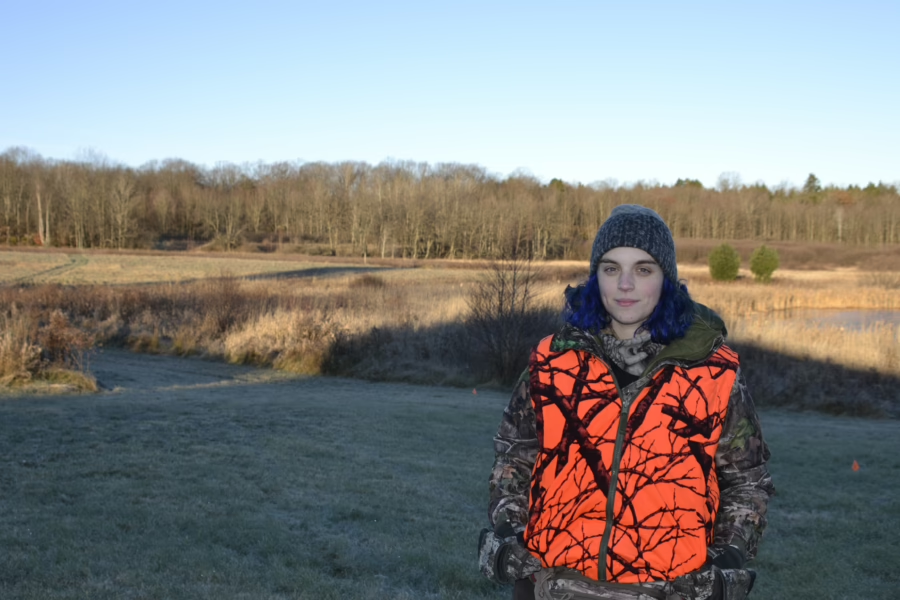
Oldacre’s experience mirrors national trends. In 1955, a survey by the U.S. Fish and Wildlife Service found that only around 4% of hunters were women. By 2022, women accounted for 22% of hunters nationwide, but they remain underrepresented overall.
Megan Plete Postol, northeast regional director for the National Deer Association and an ambassador for Artemis Sportswomen, attributes part of this gap to lingering attitudes within the hunting community.
The 35-year-old grew up in Remsen, hunting with her father in the southern Adirondacks. She remembers suiting up for a rabbit hunt with a group of her dad’s friends when one of the men upset her when he asked if it was safe for a girl to have a gun.
The Adirondack Explorer thanks its advertising partners. Become one of them.
“It’s such a tiny moment, but it felt terrible,” she said. “I would love to help other people not feel like that, or never to doubt themselves because somebody else doubted them.”

After taking a break from hunting during her teenage years, Plete Postol returned to the sport in her mid-20s. The experience showed her how many skills she had to relearn — and how challenging that process can be for beginners without guidance.
“Mentorship is crucial,” Plete Postol said. “There’s a lot of interest, and there’s just not a lot of stepping stones.”
Plete Postol has helped organize mentorship programs that pair seasoned hunters with women who are new to the sport. These programs, she said, have established safe spaces where women can learn the basics of hunting — skills like identifying a hunting spot and handling firearms safely.
The Adirondack Explorer thanks its advertising partners. Become one of them.
RELATED READING: Read an article by Megan Plete Postol about women and hunting
In the Adirondacks, embracing and educating novice hunters is only part of the equation for inclusive hunting advocates. Land access remains a significant barrier for hunters looking to enter the sport.
To use private land, hunters either must own property or secure permission from landowners. Public land is abundant in the park, but Oldacre said understanding how to safely hunt and track game on it can be daunting, especially for beginners.
Despite these challenges, the Adirondack Park’s public land offers an open opportunity for another underrepresented community: people of color.
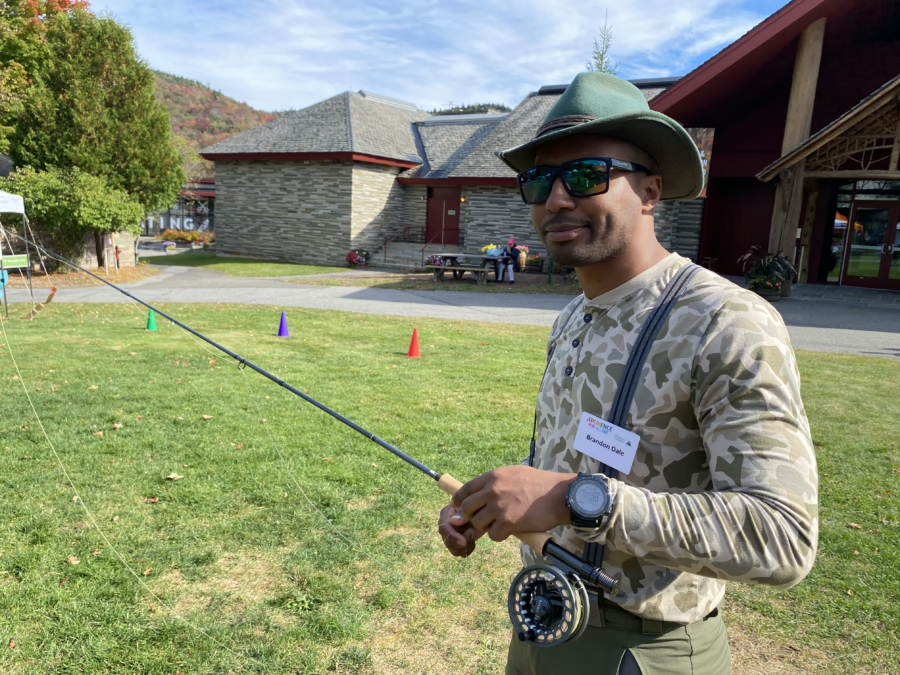
Nationwide, only 3% of hunters are non-white. Brandon Dale, New York ambassador for the organization Hunters of Color, has been working to create more inclusive fish and game opportunities across the state.
“I think a lot of people … have a desire to belong to a community,” Dale said. “If you look around and you don’t see yourself, or you don’t recognize anyone or don’t feel welcome in a community, then you’re going to eventually realize, ‘Oh, it’s maybe not my community.’”
Dale, 29, grew up in an African-American and Indigenous family of outdoorsmen in Louisiana. Now based in New York City, he facilitates mentored hunting and fishing trips for people of color living in urban areas. He said the trips give mentees hands-on knowledge of the logistics and tactics of hunting, helping participants feel a sense of belonging in the predominantly white outdoor community.
Beyond fostering inclusion, Dale has also addressed practical challenges like transportation by organizing carpools for city residents to access rural outdoor spaces.
Efforts to grow the ranks of “non-traditional” hunters are about more than representation.
The Pittman-Robertson Wildlife Restoration Act — which resulted in taxation on sporting goods like firearms, ammunition and archery equipment — generated over $23 million for New York’s wildlife restoration and conservation funds in 2023.
The amount of funding the state receives from the federal pool of money is determined by the number of hunting and fishing licenses sold. Revenue generated through hunting license sales also contributes to the state’s conservation efforts.
As the number of state-issued hunting licenses decreases, the state’s population is continuing to grow more racially diverse. Dale said both trends should serve as a wake-up call for all outdoor enthusiasts, regardless of their feelings toward hunting.
“This is literally how we fund conservation in America,” he said. “We can’t just keep reaching out to the same people.”
Locally, some fish and game clubs are adapting to these shifting demographics. Francisco “Rocky” Nogales, membership secretary for the Saranac Lake Fish and Game Club, said his organization has kept its membership dues affordable to make the club more accessible for families and young adults looking to get into hunting.
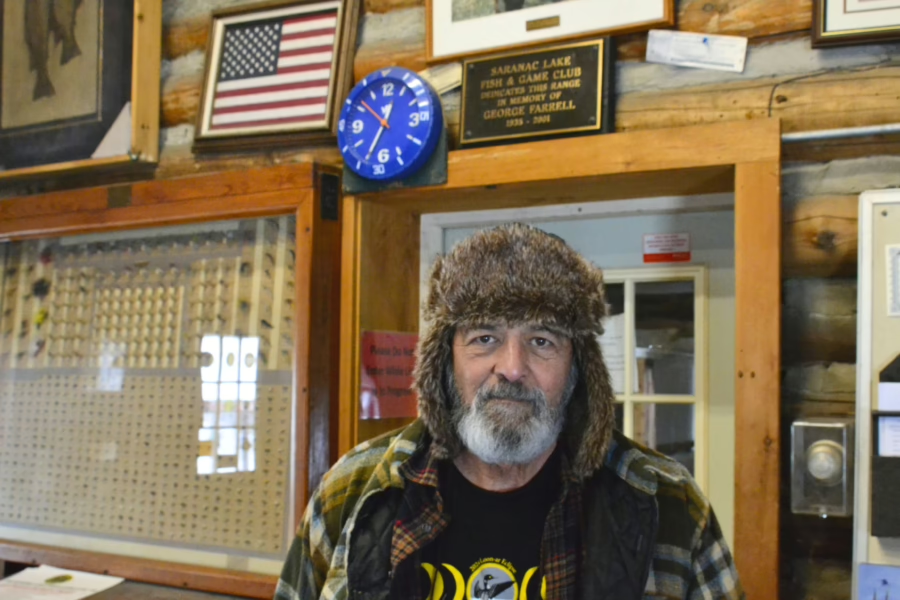
“A lot of people in this community hope that their children are brought up understanding the importance of what fish and game contribute to our environment,” he said.
The club has held fundraisers to cover fees for young people to attend Department of Environmental Conservation hunting and fishing camps, and it is revamping its website to attract younger online audiences.
Dale and Plete Postol agree that expanding the state’s hunting community will require targeting a younger, more diverse demographic.
The process will take time, but as Oldacre attests, patience is a virtue every hunter develops.

