A lawsuit challenges an Alaska program that allows killing bears as a way to rebuild a caribou herd
Reply

At dawn, when the fog rolls in over the Alpine forests, the Swiss hobby hunter lies in wait, a symbol of a supposedly ancient tradition meant to protect nature and regulate populations. But a closer look reveals that this story is a myth. Modern hunting practices in Switzerland have little to do with nature conservation.
Editorial staff , November 5, 2025
Follow Us

Around 30,000 hobby hunters are active in Switzerland.
They kill over 130,000 wild animals every year: deer, chamois, stags, wild boar, birds, and foxes.
Today’s wildlife populations are a result of human intervention. Recreational hunting doesn’t solve problems, it creates them.
The system of “population control” is in reality a cycle of intervention, overpopulation, and renewed intervention. Hunting strategies ensure that there is always enough game available to meet the culling quotas. This has little to do with natural balance.
In reality, recreational hunting is a multi-million-dollar hobby that costs tens of thousands of animals their lives every year, mostly not out of necessity, but for the thrill of killing. Forests are deliberately “managed” to ensure a sufficient supply of game to guarantee a steady stream of trophies. The supposed “culling plan” serves more to protect interests than to maintain ecological balance.
Hobby hunters claim they must intervene because natural predators are lacking. But these predators are often absent because of hunting. Foxes, lynxes, birds of prey, and wolves continue to be persecuted or hindered in many places, even though they are essential for a functioning ecosystem. Instead, humans create an artificial imbalance, which they then “regulate” with a shotgun.
Deer and stags are made scapegoats for browsing on young trees, a problem that arises primarily in overexploited monocultures, not in healthy mixed forests. And wild boars? They benefit from human waste, cornfields, and mild winters—conditions created by humans themselves.
The Swiss National Park demonstrates how wildlife populations develop when humans do not intervene. Deer, red deer, and chamois populations stabilize on their own after a few years, the forest regenerates, and biodiversity increases.
This is confirmed by international research, for example from the Bavarian Forest or Slovenia: In hunting-free areas, wild animal populations are regulated by natural mechanisms: food, diseases, predators.
Since the wolf’s return to Switzerland, one thing is clear: the traditional hunting system is faltering. According to the Federal Office for the Environment (BAFU), dozens of wolves were shot preventively in 2024, sometimes entire packs, often without any demonstrable damage.
Where predators are permitted, wildlife populations and ecosystems stabilize, and nature finds its balance. But instead of allowing this process, the wolf is fought to preserve one’s own “regulatory role”.
Many animals flee injured, only to die later from blood loss or stress. Recreational hunting is not a clean, quick death. Many animals flee injured, only to die hours later from blood loss, internal injuries, or stress. Mother animals are also often shot, while their young starve to death. This reality rarely finds its way into the public relations efforts of the hunting community, which prefers to use terms like “wildlife management,” “ethical hunting,” and “animal welfare”—words intended to obscure the true suffering.
“Ethical hunting” sounds noble, but is often a moral cover for systematic animal suffering.
The hunting lobby wields considerable influence in Switzerland. In many cantons, poorly trained amateur hunters sit on hunting commissions, advising authorities and helping to shape legislation.
This was clearly demonstrated in 2020 with the failed revision of the hunting law. The people rejected the relaxation of the shooting rules for wolves and other animals, sending a signal for greater animal and nature conservation.
Nevertheless, several cantons have since relaxed their regulations and are now authorizing “preventive” wolf shootings even before damage has occurred.
More and more people are recognizing that recreational hunting is not a natural heritage, but an anachronism. Scientifically sound wildlife management models have long demonstrated alternatives: natural regulation through predators, targeted habitat protection measures, and non-lethal methods for damage prevention.
Nature conservation means preserving life, not ending it. Those who truly fight for nature do not draw a line between “useful” and “harmful”.
The facts are clear:
Switzerland could take on a pioneering role with genuine wildlife sanctuaries, scientifically sound wildlife management, and less hunting pressure. Because true nature conservation doesn’t mean ending life, but preserving habitats.
Wild animals need peace and quiet, not bullets.
Recreational hunting in Switzerland is not a contribution to the balance of nature, but a relic from a time when humans believed that only with a rifle could they create order. But nature was in balance long before us, and it will be again when we finally stop acting as its judges.
Today we know better. Modern, ethical wildlife management relies on science, not tradition. Nature doesn’t need recreational hunters; it needs respect, space, and trust.

A hunter in Montana shot and killed two grizzlies on Wednesday near Seeley Lake in a remote area of Missoula County, Montana. The man says he shot in self-defense after the bears, and another yearling, ran at him and his hunting partner.
November 07, 20254 min read
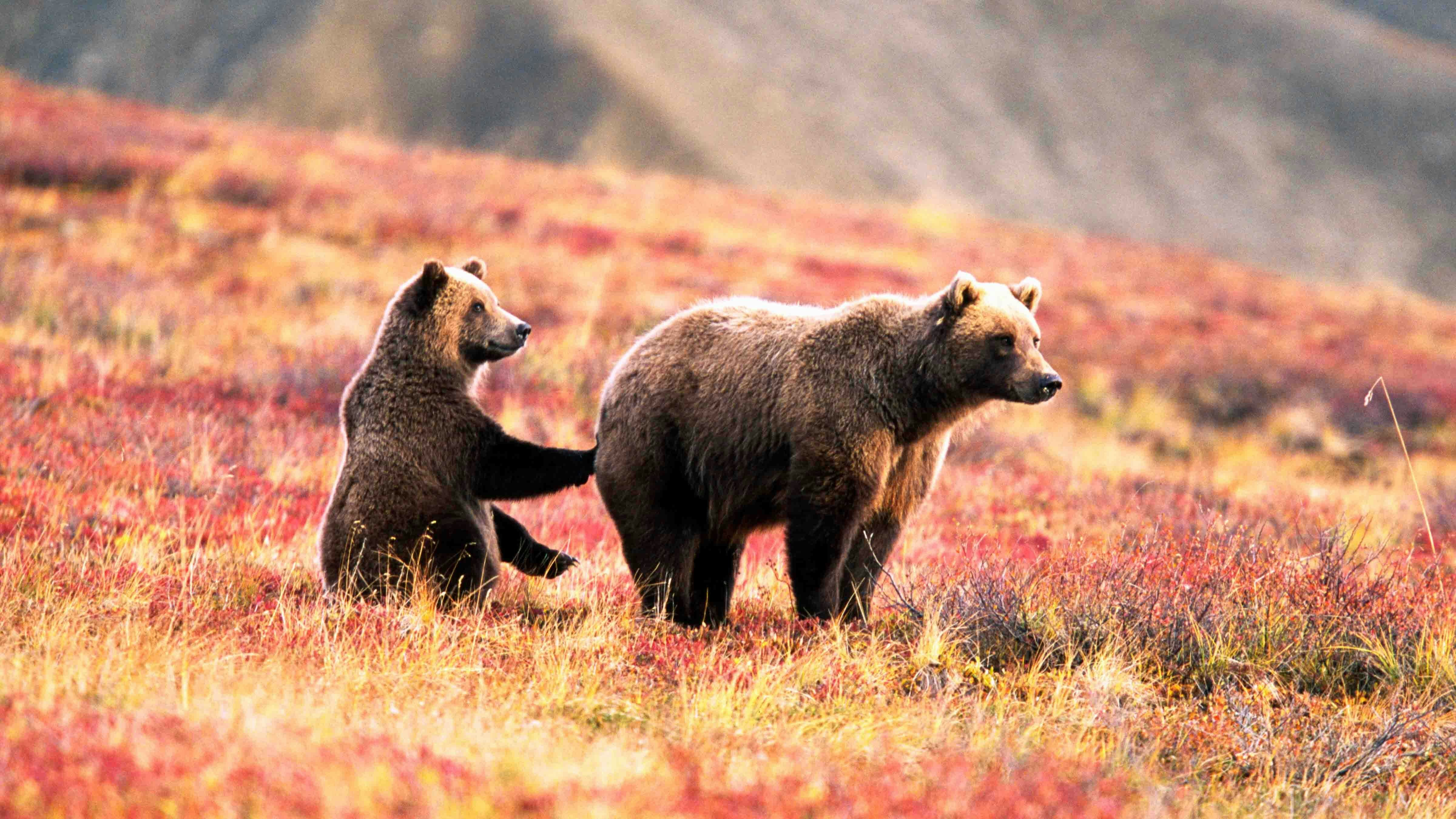
A female grizzly and one of her yearling cubs were reportedly shot and killed by a Montana hunter. The man claimed he shot in self-defense after those bears, and another yearling, ran at him and his hunting partner.
The U.S. Fish and Wildlife Service (FWS) is leading an ongoing investigation of the Wednesday incident, which happened near Seeley Lake in a remote area of Missoula County, Montana.
Grizzlies remain under Endangered Species Act protection in the Lower 48 and may not be hunted. They can, however, be legally killed in self-defense or in defense of others.

State game agencies and the FWS investigate claims of grizzlies being killed in self-defense to determine if the killings were justified.
The two hunters, who were not named in reports, told investigators that all three bears started running toward them from about 100 yards away, according to Montana Fish, Wildlife and Parks (FWP).
The hunters were hiking back to retrieve a mule deer carcass when they encountered the bears along the Pyramid Pass Trail east of Seeley Lake.
“The hunters reported that they yelled at the bears and waved their arms, but the bears continued running toward the hunters without slowing down,” FWP reports. “One hunter shot at and possibly killed two of the grizzly bears, and the third bear retreated towards the mule deer carcass.”
The hunters left the site and immediately reported the shooting as self-defense to FWP.
“The U.S. Forest Service has posted signs at the Pyramid Pass Trailhead to alert visitors of the recent bear activity,” FWP reports.
It was later confirmed that the female and one of the yearlings were killed in the shooting, FWP Missoula Region spokeswoman Vivaca Crowser told Cowboy State Daily.
“The other one (yearling) has not been seen again,” she said.
Human-bear conflicts sometimes happen near big game carcasses when grizzlies try to claim them as food sources.
It’s likely the hunters startled the female grizzly, who responded defensively, but might not have been bent on mauling the hunters, bear safety expert Kim Titchener told Cowboy State Daily.
The yearling cubs were probably just following their mother, which is normal behavior for young bears, she added.
“Bear cubs are learning from their mom what to do, and they will absolutely follow her,” said Titchener, founder of Bear Safety and More, an organization that works to mitigate human-bear conflicts in the U.S. and Canada.
“It is very unlikely that a mamma bear and her cubs were actually attacking. It was a mom likely being startled and defending her cubs after being startled by a human,” she added.
A Wyoming hunter who reported a close encounter with a female grizzly on Oct. 15 also said that bear’s cub was with her.
Celia Easton previously told Cowboy State Daily that she was rushed by the female grizzly and her cub while elk hunting near Cody.
She said the mother grizzly bit into one of her boots and pulled it off her foot, and then both bears turned and fled.
Hunting season can be a time of frequent bear-human conflicts. Hunters try to move quietly, making it more likely for them to surprise bears.
Meanwhile, bears are in a gorging phase, trying to pack on fat for winter hibernation, and carcasses or gut piles left by hunters can tempt them.

In a case that authorities ruled to be legitimate self-defense, a hunter last month shot and killed a grizzly in the Island Park area of Idaho near Yellowstone National Park.
Things have also been busy in Canada, with several people getting mauled in the past few weeks, Titchener said.
The victims include a man who died of his injuries three weeks after he was attacked, she said.
Rise for Animals, November 5, 2025
Editor’s Note: This article was updated on November 10, 2025 to reflect Rise for Animals’ receipt of records that suggest the escaped monkeys were en route to Bioqual, a contract research organization in Rockville, MD. An earlier version of this article stated the monkeys were en route to a facility in Florida, as had been reported by WIS-TV on October 28, 2025.
On Tuesday, a truck said to be carrying 21 rhesus macaques—boxed in wooden crates and shipped like cargo—flipped on a Mississippi freeway.
The crash turned several of these crates into “crumbled and strewn about” splinters. From the debris, several small (estimated 12-40 pound) prisoners managed to do what their captors feared most: break free.
But most didn’t get far.

Video footage shows monkeys sitting in and walking through grass, while law enforcement characterizes them as “on the prowl.”
After the crash, local law enforcement confirmed that “all but three of the escaped monkeys have been killed,” and boasted of having been “in contact with an animal diposal [sic] company to help handle the situation,” including by taking “the carcasses at the scene.”
But the death toll might actually be higher. A Mississippi resident has bragged about shooting one of the monkeys to death, and another monkey was claimed to have been captured by the Mississippi Department of Wildlife and Fisheries.
The rest—those “unable to break free from their cages”—were returned to the very institution that put them on the truck: Tulane University’s National Biomedical Research Center. (Later reports state that the monkeys are “now in the possession of their owner en route to their intended destination.”)
Despite direct media inquiries, Tulane has refused to say how many monkeys escaped, how many have been killed, who the monkeys “belong to” (Tulane would only state that the monkeys “belong to another entity,” though they “were taken from its research center”), who was transporting them, or where they were going.

(As the Associated Press has observed, this incident “is the latest glimpse into the secretive industry of animal research and the processes that allow key details of what happened to be kept from the public.”)
We shouldn’t be surprised. This is how the animal research industry operates: secrecy, always; transparency and accountability, never.
The 21 monkeys—chillingly referred to as “specimens” by media—were en route to another research facility. Early news coverage stated that the monkeys were being sent to an unnamed “testing facility” in Florida, but this is not supported by new public records obtained by Rise for Animals, which suggest that the monkeys were en route to Bioqual, a contract research organization in Rockville, Maryland.
Tulane is home to one of the nation’s seven, NIH-funded national primate research centers: the Tulane National Primate Research Center, which just changed its name to the “Tulane National Biomedical Research Center.” It’s a 500-acre facility “[c]omprised of grids of cages, administrative buildings and laboratories” that breeds animals for research, trades in their bodies with an estimated 500 investigators from more than 155 institutions globally….,” and itself exploits them in the name of “science.”
Public records further tell us that:
And, Tulane has also taken public heat for certain of its experiments on primates, including one in which “monkeys were spun at high rates of speed and had their vomiting rated,” one in which monkeys “lost use of their limbs” after having had their “nerves cut for an experiment on spinal cord injuries,” and one in which “human nipples were sewn onto male monkeys.”

Public records obtained by Rise for Animals show that the Tulane National Primate Research Center purchased monkeys from Alpha Genesis as recently as June of this year.
Ultimately, then—and despite the industry’s deafening silence—this crash only further pulls back the curtain on the perverse reality of animal research.
It’s an industry in which living beings are:
Institutionalized.
Forced to breed.
Stuffed into wooden boxes.
Shipped like cargo to suffer and die in experiments.
And, killed—potentially with AR-style weapons—when they dare to run . . . or just take a walk through the grass.
Your Call to Action: Call on your legislators to oppose additional funding for primate research infrastructure in the final FY 2026 appropriations bill.
 Exposing the Big Game