State Officials Cancel Squirrel Hunting Event Amid Outrage from Anti-Hunters
Reply

Oct 8, 2024, 12:27am PDT
africaAfrica
Sign up for Semafor Africa: A rapidly-growing continent’s crucial stories. Read it now.Your Email addressSign Up
In this article:

NAIROBI — Tanzanian authorities are keen on issuing more hunting permits despite mounting international pressure for the country to ban elephant trophy hunting in the areas surrounding its border with Kenya.
Legal killings of elephants for sport in northern Tanzania have risen over the last year prompting concerns over a dwindling elephant population. This has led to international conservationist groups calling for a ban on the hunting of cross-border elephants.
While elephant hunting is permitted in Tanzania, it has been illegal in Kenya since 1973. Elephants which roam freely between the border areas have traditionally been protected by a gentleman’s agreement between the two countries, but conservationists say this has been ignored in the past year.
AD
At least five elephants were legally targeted and killed by trophy hunters in northern Tanzania over the previous eight months, according to various conservation groups.
But, in a letter dated Sept. 18, seen by Semafor Africa, senior Tanzanian officials and researchers doubled down on allowing the hunting of elephants in the area. They cited human-wildlife conflicts and the economic benefits derived from hunting.
“Fourteen villagers in the Longido district and more than 500 acres of crops have been trampled,” it reads in part. “At the same time, trophy hunting brings in huge benefits, funding conservation, paying rangers’ salaries, and building water wells, schools and other critical infrastructure for the communities.”
AD
The letter’s authors, who include representatives of the Tanzania Wildlife Management Authority, Tanzania Hunting Operators Association and the MP for Longido, wrote that Tanzania has “transparent hunting regulation” geared towards protecting both wildlife and the communities living alongside them. It was addressed to the executive editor of Science Magazine.
The New York-based journal in June published a letter by more than 20 elephant biologists and conservationists calling for a stop to the hunting of elephants in the borderlands and a harmonized conservation strategy involving Kenya and Tanzania.

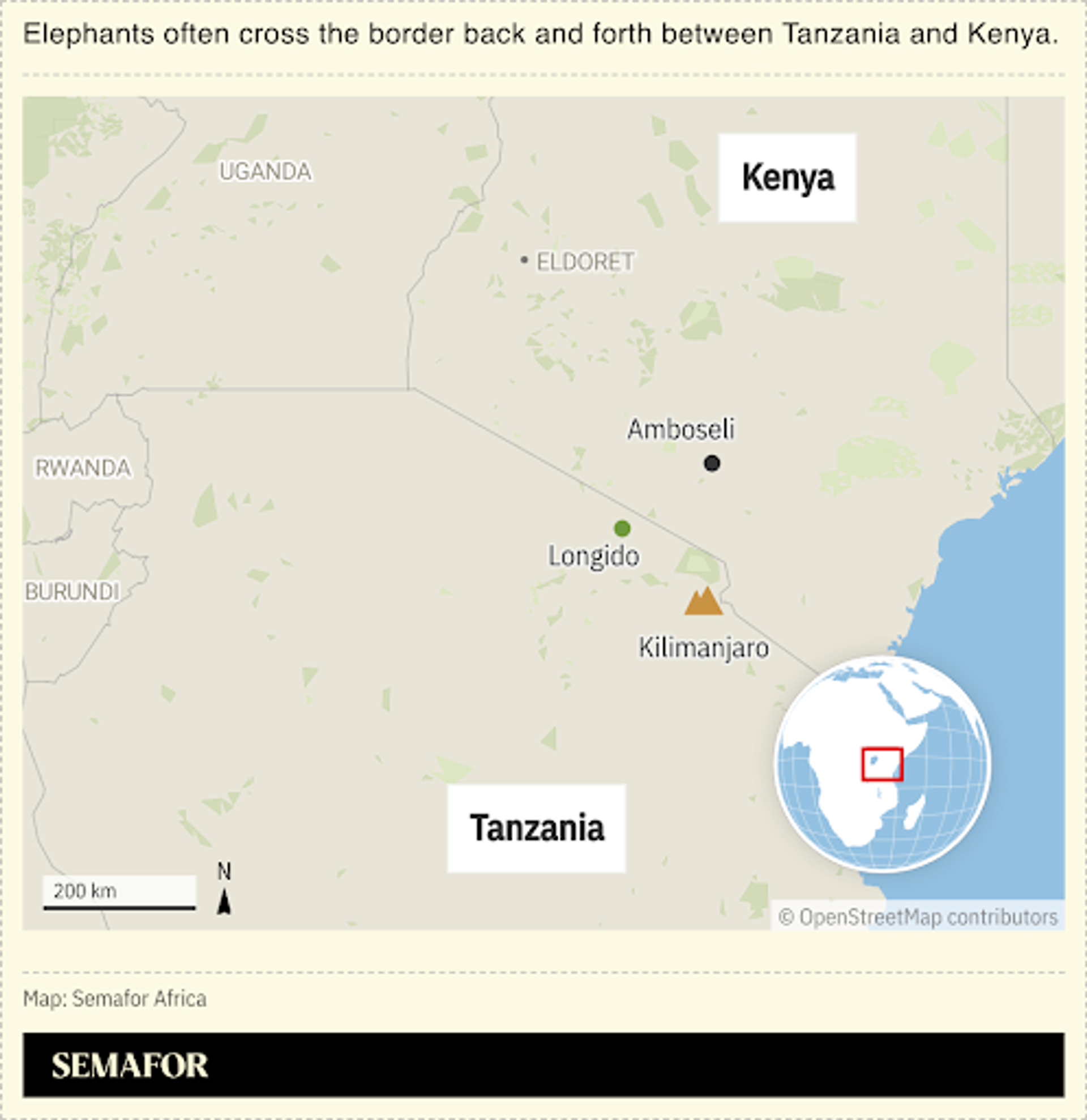
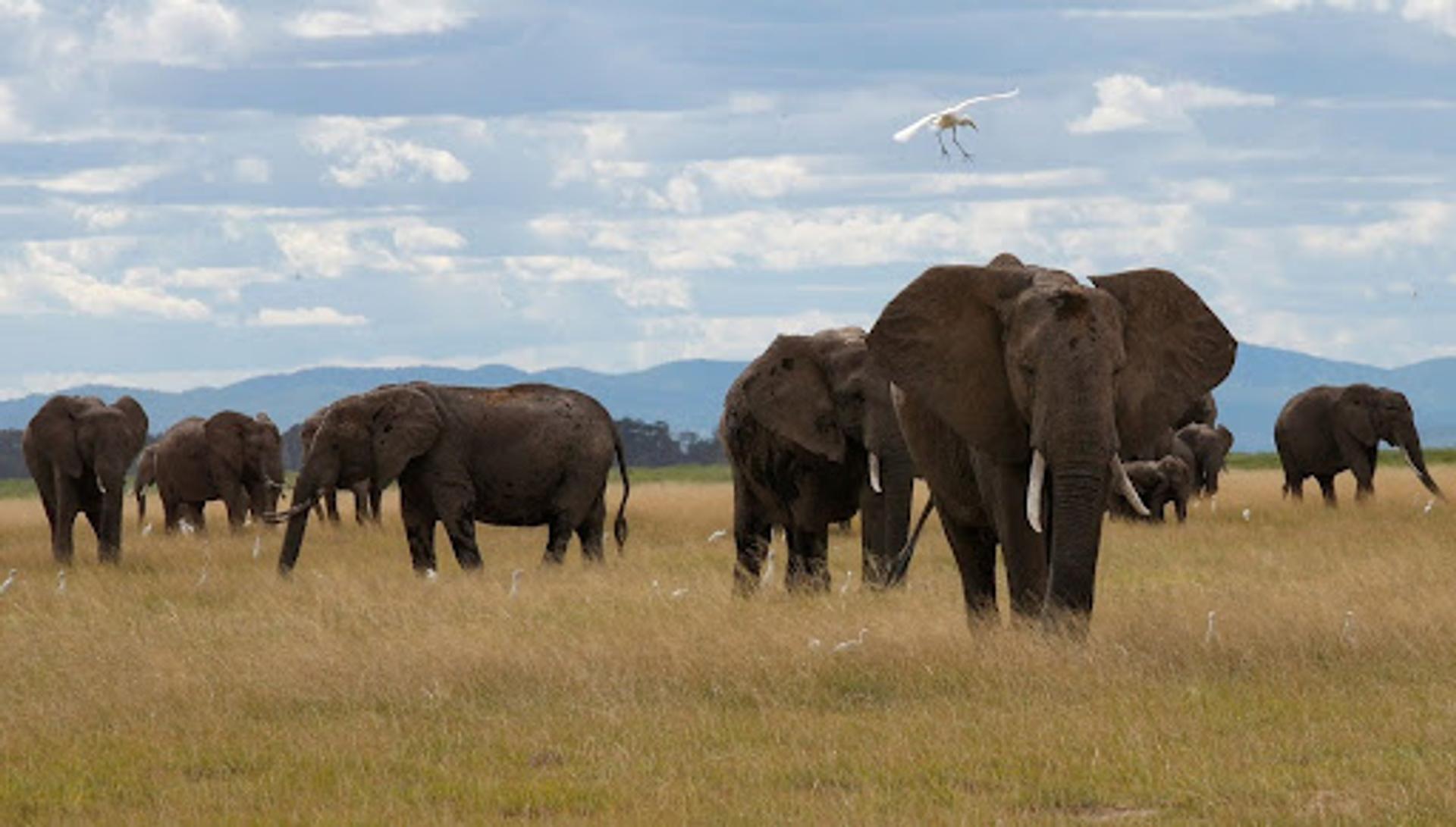
The greater Amboseli-West Kilimanjaro elephant population, spanning both sides of the Kenya-Tanzania border, is made up of approximately 2,000 individual elephants. Around 600 are males, of which 10 are super tuskers — elephants whose tusks weigh over 100 pounds each or touch the ground.
AD
In their letter, Tanzanian officials criticized Science magazine for failing to publish various responses submitted by Tanzanian researchers to the call by conservationists to stop elephant hunting in northern Tanzania. They accused the magazine of discrimination.
“The original letter you published, written predominantly by white authors, none of whom come from Tanzania (many instead from the Global North), only told one side of the story,” they insisted.
In response Science magazine told Semafor Africa that it had received numerous letters in response to a published letter calling for an end to elephant hunting in Tanzania and would not have space to publish all but would be publishing a subset of them.
A spokeswoman for the magazine also pushed back at suggestions of discrimination. “The Science family of journals is very focused on elevating the voices and concerns of authors based in Africa, through efforts including research, commentary, and news.”

Unlike Kenya, Tanzania’s embrace of hunters has led to the development of a booming trophy hunting industry in the country. In 2022, Tanzania’s trophy hunting industry generated a reported 63.03 billion Tanzanian shillings ($23 million).
Earnings from hunting permits are a significant revenue source for the government. Hunting licenses cost around $60,000 a year, with additional fees for hunting elephants and lions.
Communities seriously affected by human-wildlife conflict could also be more likely to support hunting. However, the killings of elephants by hunters and the supposed economic benefits may not be sustainable in the long term. according to conservationists. They project that the remaining 10 super tuskers in the area could be dead in three years.
Kenya’s wildlife conservation strategy, anchored on tourism as opposed to trophy hunting, would also be affected by a dwindling elephant population in the famed Amboseli region. It is therefore important for authorities in both countries to devise effective joint strategies for conservation in the borderlands.

Authorities in Zimbabwe last month decided to cull up to 200 elephants to help feed local communities facing acute hunger after the country’s worst drought in four decades. It would be the country’s first elephant culling since 1988 and take place in Hwange, Mbire, Tsholotsho and Chiredzi districts. Authorities said the culling would help towards decongesting the country’s main parks which can only sustain 55,000 elephants but the country is home to 84,000.

In April, the president of Botswana threatened to send 20,000 elephants to Germany in a dispute over conservation, reported the BBC.
Police are offering a reward of up to $20,000 for information about the suspect.
ByJon Haworth 
Thursday, October 10, 2024 10:01AM

about:blank
A California sea lion was fatally shot on Bolsa Chica State Beach in Orange County, and a reward is now being offered to find the person responsible.
Federal officials are hunting for a suspect who they say shot and killed a 2-year-old sea lion while it was lying on a California beach, authorities said.
The National Oceanic and Atmospheric Administration’s Office of Law Enforcement is now offering a reward of up to $20,000 after the incident — which took place at Bolsa Chica State Beach in Orange County, California, on Aug. 7 — when the male California sea lion was found injured but alive between lifeguard stations 22 and 23 with a “fresh gunshot wound in its back,” according to a statement from the NOAA released on Wednesday.
“The Pacific Marine Mammal Center in Orange County rescued the male sea lion, but it died from its injuries the following day,” NOAA officials said.
Law enforcement is now actively seeking information on the person who shot the animal and any other details surrounding its shooting.
“The Marine Mammal Protection Act prohibits the harassment, hunting, capturing, or killing of sea lions and other marine mammals,” officials said. “However, the law allows for non-lethal methods to deter marine mammals from damaging private property, including fishing gear and catch, if it does not injure or kill an animal.”
Like all marine mammals, the California sea lion is protected under the Marine Mammal Protection Act which has helped their population to continue increasing since at least 1975, after protections were put in place under the MMPA.
“California sea lions are easy to view in the wild, but this puts them at higher risk of human-related injuries and death. Feeding or trying to feed them is harmful and illegal, because it changes their natural behaviors and makes them less wary of people and vessels,” the NOAA said. “They learn to associate humans with an easy meal and change their natural hunting practices-for example, they take bait catch directly off fishing gear. Sometimes they fall victim to retaliation (such as shooting) by frustrated boaters and fishermen.”
Anyone with information about the sea lion shooting should call NOAA’s 24/7 enforcement hotline at (800) 853-1964.
https://www.msn.com/en-us/weather/topstories/carbon-removal-no-solution-if-world-overshoots-warming-target-scientists-say/ar-AA1rYeSN?ocid=msedgdhp&pc=ENTPSP&cvid=da65ea348fb448f7bf11af0668db399f&ei=21

Follow
898.4K Followers
Story by David Stanway
• 35m • 2 min read
FILE PHOTO: Smog is seen in this general view of the Upper Silesian Industrial Region from Bedzin, near Katowice, Poland, December 5, 2018. REUTERS/Kacper Pempel/File Photo© Thomson Reuters
By David Stanway
SINGAPORE (Reuters) – Even greater efforts to strip carbon dioxide from the atmosphere will fail to avert climate change catastrophe as rising global temperatures threaten to cross a key threshold of 1.5 degrees Celsius (2.7 degrees Fahrenheit), scientists said on Wednesday.
The Intergovernmental Panel on Climate Change (IPCC) has said carbon dioxide removal (CDR) could help slow warming by reducing greenhouse gas already accumulated in the atmosphere, and even temperatures, especially if 1.5 C is exceeded.
However, even if removing carbon dioxide works, it can do nothing to mitigate other aspects of climate change, from sea level rises to changes in ocean circulation, scientists said in research published in the journal Nature on Wednesday.
“Even if you’ve brought temperatures back down again, the world we will be looking at will not be the same,” said Carl-Friedrich Schleussner of Austria’s International Institute of Applied Systems Analysis, one of the paper’s authors.
The research showed cutting temperatures from their peak could also prove harder than anticipated even if CDR is scaled up, particularly as melting permafrost and shrinking peatlands release methane and drive further warming.Related video: The world’s first farm of mechanical CO2 absorbing trees (Innovative Techs)
about:blank
Loaded: 3.99%Play

Current Time 0:00
/
Duration 5:00Quality SettingsCaptionsFullscreen

The world’s first farm of mechanical CO2 absorbing treesUnmute
0
CDR refers to a range of techniques that extract and store away CO2 already in the atmosphere, including natural solutions such as forests and ocean algae, as well as new technologies that filter carbon dioxide from the air.
Existing CDR capacity takes about 2 billion metric tons of CO2 out of the atmosphere every year, but that figure must rise to about 7 billion to 9 billion tons to meet the world’s climate goals, a separate research report said in June.
Yet there are limits to how much new forest can be planted and how much CO2 can be permanently sequestered, while current technologies are expensive, said Joeri Rogelj of Imperial College London, another co-author of the paper in Nature.
“If we are starting to use land exclusively for carbon management, this can strongly conflict with the other important roles of land, be it biodiversity (or) food production,” he told a briefing.
VyagerThe Hyundai Palisade SUV Costs Next To Nothing (Take A Look)
Even the most optimistic emissions reduction scenario in the IPCC’s latest assessment report, published last year, factored in the possibility of a small overshoot of 0.1 C.
Reversing that would require the removal of about 220 billion tons of CO2, while an overshoot of 0.5 C – also consistent with the IPCC’s best-case scenario – would need more than a trillion tons removed, Rogelj said.
“The risks the world exposes itself to (from) an overshoot are much larger than acknowledged,” he said.
“Only through ambitious emissions reductions in the near term can we effectively reduce the risks from climate change.”
Follow
898.4K Followers


