New study challenges popular beliefs about ancient mammoth hunts
Reply

On July 21, 2024, Paul Watson was ambushed and arrested in Nuuk, Greenland. But this is not the first time he has faced injustice, nor will it deter us from our mission. How did we get here? Let’s go back to February 11, 2010. Two crewmembers on the Japanese whaling vessel, Shonan Maru 2, fired pepper spray at four anti-whaling activists in an inflatable boat. The wind turned their weapon back on them, but they claimed that a glass stink bomb injured them instead. That incident, based on distorted facts, became the first of many charges against Paul. To see footage of the actual event filmed by Animal Planet by helicopter, click here. Charge #1. Bodily injury (§204 of the penal code) Anyone who injures the body of another is liable to imprisonment for up to 15 years or a fine of up to 500,000 yen. On February 15, 2010, New Zealand citizen Peter Bethune cut a small net in order to board the Shonan Maru 2. Peter Bethune gained entry onto the whaling ship to request reimbursement from the Japanese Captain who rammed his vessel, the Ady Gil, (formerly Pet Bethune’s vessel called EarthRace) on January 6th 2010, slicing it in two and ultimately causing it to sink. To see footage of the attack on the Ady Gil and its crew, click here. Charge #2. -Intrusion into boats and ships (§ 130 of the Penal Code) and damage to property (1) Any person who intrudes into the home of another or into the houses, buildings or boats or ships under the surveillance of a person and does not leave these places when requested to do so by the authorised person shall be liable to a term of imprisonment not exceeding three years or a fine not exceeding 100,000 yen. Despite the destruction of his ship, Peter Bethune was sent to prison in Japan and served a suspended sentence (4 months in jail, 2 year suspended sentence and deportation). Under duress, Peter confessed that Paul Watson ordered him to board the ship—a claim he later retracted, revealing the coercion he faced in Japanese custody. This fabricated confession added a conspiracy charge against Paul. Charge #3. Conspiracy: If two or more persons commit an offence together, all persons are considered to be the main offenders. From 2010 until May 2012, Paul traveled freely. But suddenly, Japan’s influence led to his arrest in Germany. A decade-old warrant from Costa Rica, driven by Japan, sought to silence him. Yet, the charges were dismissed, and Paul resumed his fight for the oceans. Fast forward to July 21, 2024. Paul is arrested once more, this time by Denmark, under Japan’s influence. It’s clear that Japan’s obsession with revenge outweighs any concern for justice. Their whaling practices were exposed to the world by Animal Planet’s TV show Whale Wars, and their retaliation is to persecute the man who brought their illegal Antarctic whaling operations to light. Japan’s latest accusation claims Paul conspired to impede commerce. Yet, Japan claimed at the International Court of Justice (ICJ) that its whaling activities in Antarctica were authorized under Article VIII of the IWC Convention, which provides for each Contracting Government to issue special permits for whaling involved in scientific research. So which is it, research or commerce? Their contradictory claims only highlight the truth: these charges are baseless and politically motivated. Furthermore the ICJ at the Hague determined Japan was whaling illegally in Antarctica, a suit filed by the Governments of Australia and New Zealand. Paul Watson is a symbol of our collective resolve, and his imprisonment will not stop us. This year, Japan built a new killing machine, the Kangei Maru, aimed at whaling in the Southern Ocean Whale Sanctuary. We cannot and will not allow this to happen. We will not rest until whaling is banned globally. We fight not just for ourselves, but for our children, our grandchildren, our great grandchildren, and our planet. For the Oceans, The Captain Paul Watson Foundation We urge you to show your support for Captain Paul Watson by sending letters to his current location at Anstalten Prison c/o Paul Watson in Nuuk, Greenland, DK-3900. Your words could bring a ray of hope in these challenging times and reinforce the fight for marine conservation. DONATE TODAY |
idfg-jjackson
Wednesday, August 28, 2024 – 3:29 PM MDT
Hunters can donate one fully-feathered wing from each upland game bird they harvest in a variety of ways.
With archery season and many upland game bird seasons upon us, the Idaho Department of Fish and Game is once again asking hunters to provide wings and CWD samples from game they harvest. Here’s what you need to know.
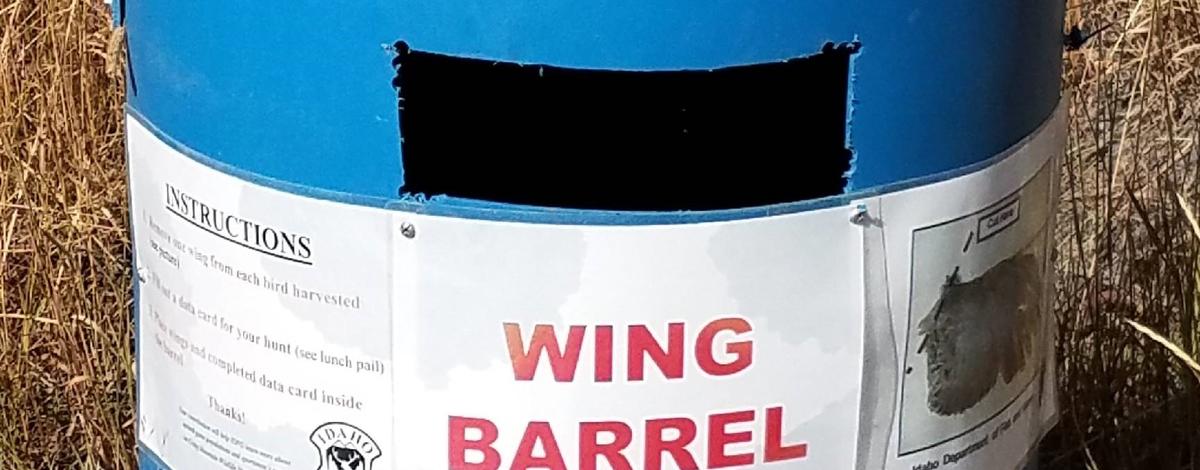
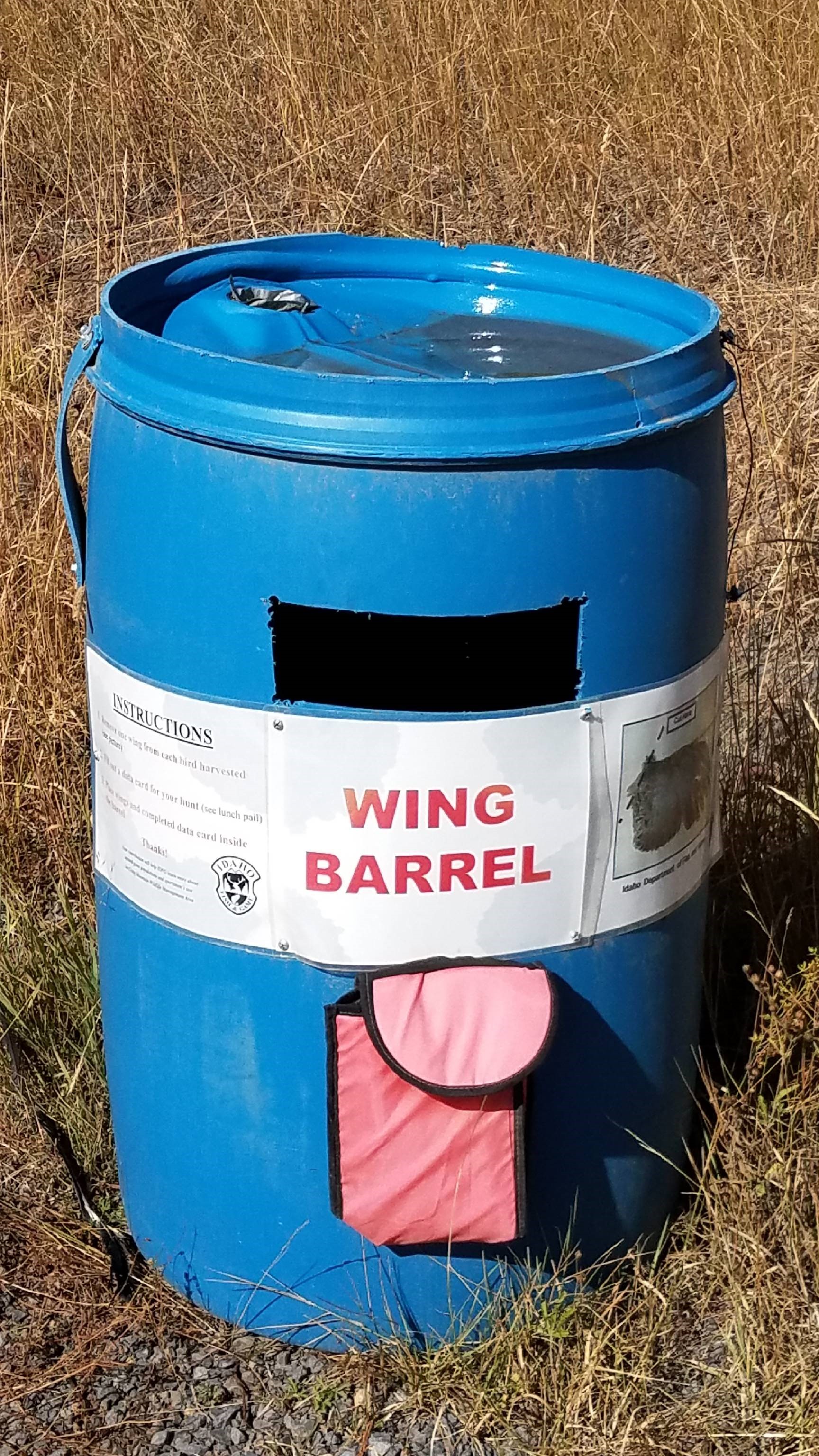
Hunters can donate one fully-feathered wing from each upland game bird they harvest in a variety of ways. They can drop their wings off at department-run check stations or in “wing barrels” located at popular access routes throughout the hunting season.
Because check stations and wing barrels sometimes miss upland bird hunters, Fish and Game uses a mail-in wing program to increase the number of sage and sharp-tailed grouse wings that are submitted. Many hunters who purchased a sage/sharp-tailed grouse permit will receive a packet in the mail with specific directions and a pre-paid return envelope. Sage-grouse and sharp-tailed grouse hunters who did not receive a mail-in wing envelope and are unable to locate a wing barrel site, but still wish to participate, should contact their nearest regional Fish and Game office for more information.
Since juvenile and adult birds molt their wing feathers differently, biologists can use this information to estimate chick production that year. For sage-grouse, biologists can even tell if an adult female successfully produced chicks that year. In addition, the percentage of juveniles and adults wings collected can provide information on production rates. All of this information can provide insight into the status of various game bird populations and helps Fish and Game improve management.
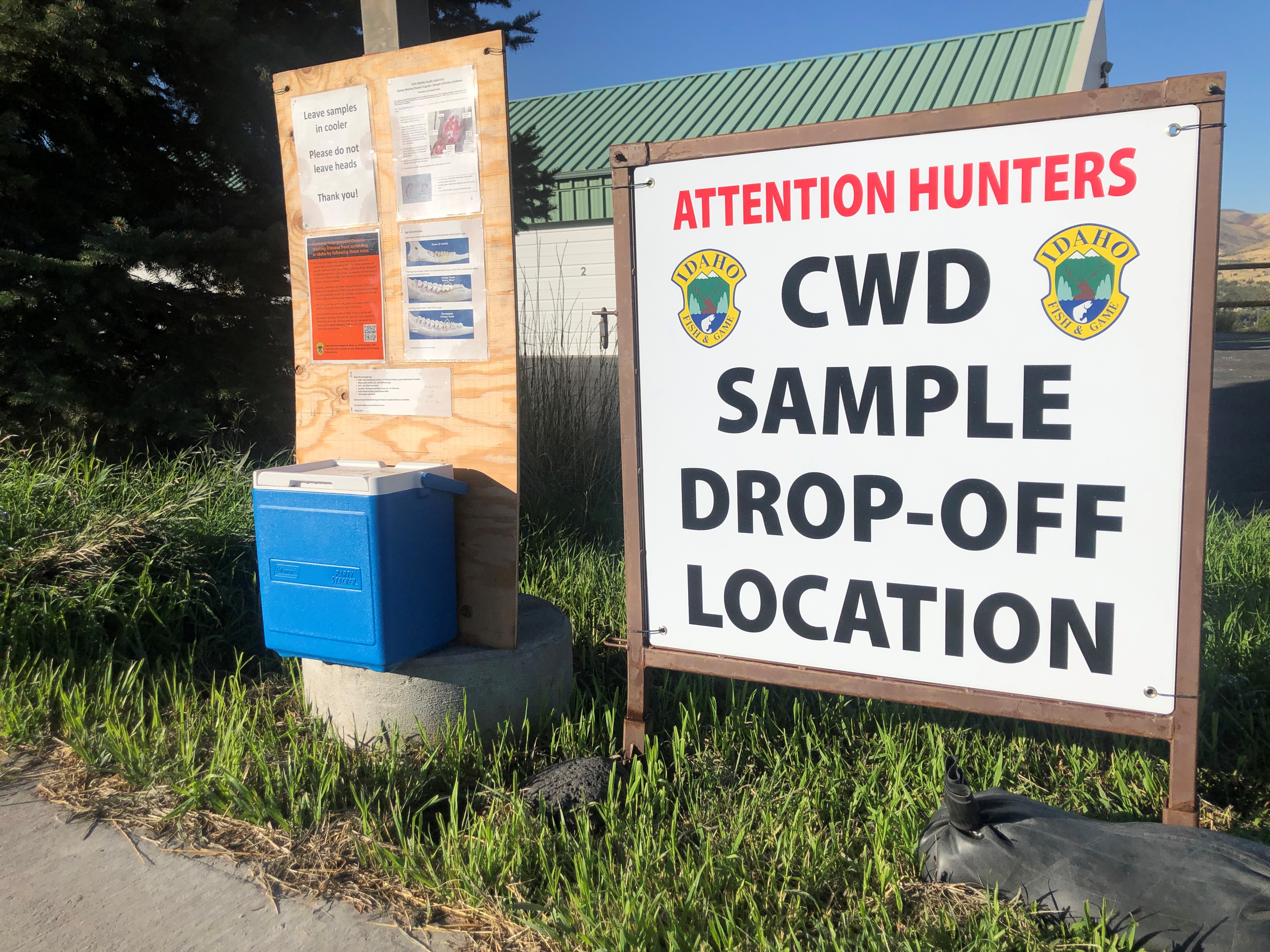
Hunters who would like their harvested deer, elk, or moose tested for chronic wasting disease (CWD) have a few places to submit samples from check stations to regional offices to drop-off locations statewide.
Currently, in the Southeast Region, there is one CWD drop-off location at the Fish and Game regional office located at 1345 Barton Road in Pocatello. Big game hunters can drop off their tissue samples from their deer, elk, or moose using the instructions and materials provided at the regional office location—even after hours or on weekends. Hunters can also request assistance with sample collection at the regional office during normal business hours. Testing is free.
Additional CWD sample drop-off locations will be established around the Southeast Region as soon as Oct. 1.
Information about CWD, including how to collect samples, and where to submit them by region can be found on Fish and Game’s CWD webpage https://idfg.idaho.gov/cwd.
CWD, which has been detected in Idaho, is a contagious and fatal neurological disease that affects deer, elk, and moose populations. There is no cure for this fatal disease.