Saudi police arrest 3 for illegal hunting, arson
Reply


For Immediate Release, July 8, 2024
| Contact: | Cynthia Moss, Amboseli Trust for Elephants (Kenya), +254-722-208762, cmoss@elephanttrust.org Joyce Poole, ElephantVoices (Norway), +47-456-64564, jpoole@elephantvoices.org Keith Lindsay, Amboseli Trust for Elephants (UK), +44-776-7747091, wklindsay@gmail.com Tanya Sanerib, Center for Biological Diversity (US), +1-206-3797363, tsanerib@biologicaldiversity.org |
Population Subjected to Trophy Hunting for First Time Since 1994
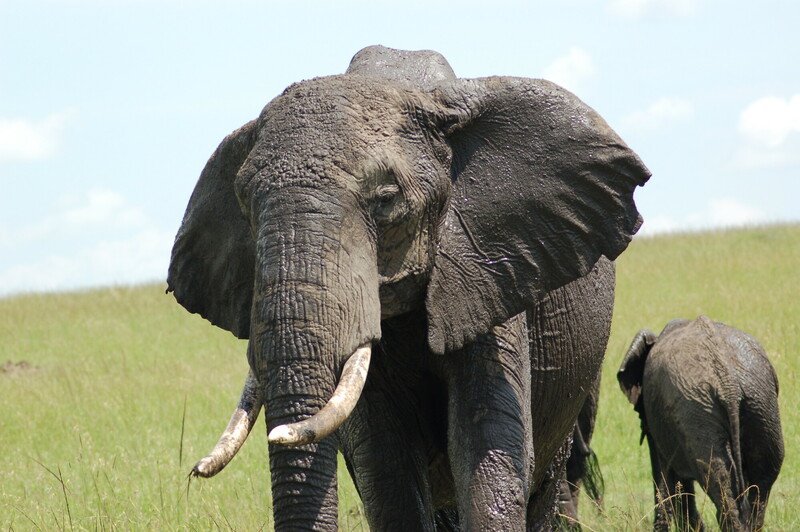
WASHINGTON— Conservation groups and scientists filed a petition with the United States government today to stop U.S. hunters from importing elephant trophies from the famed cross-border Amboseli-West Kilimanjaro elephant population inhabiting Kenya and Tanzania. For 30 years this longest-studied elephant population was safe from trophy hunters but now some of the world’s most iconic male elephants are at risk of being killed in the Tanzanian portion of their range if trophy hunting is allowed to continue.
Today’s petition to the Interior Department and the Fish and Wildlife Service seeks a permanent rule banning U.S. trophy imports from the Amboseli-West Kilimanjaro elephant population. The petition was filed by Amboseli Trust for Elephants, ElephantVoices and the Center for Biological Diversity.
Over the past nine months, five mature males have been killed by trophy hunters. At least two of them qualify as “super-tuskers,” with one or more tusks weighing 100 pounds. Among the five killed, only one has been identified — an elephant named Gilgil. In an unprecedented practice, all the carcasses were burned and some were also buried, presumably to prevent identification of the animals.
“Singling out male elephants with large tusks takes away the natural elements of competition and survivorship, allowing younger, less tested, perhaps less vigorous males to reproduce,” said Cynthia Moss, director of Amboseli Trust for Elephants. “A population that is hunted becomes unnatural because humans are choosing who should pass on his genes and who should not, who should live and who should die.”
Prior to the latest killings, no males from the Amboseli-West Kilimanjaro population had been shot for their tusks since 1994, when four were killed. Following that incident, an informal agreement was reached between the two countries to protect the population from hunting on the Tanzanian side of the border. Kenya does not permit trophy hunting.
“These magnificent prime breeding males hold immense sustainable biological, economic and cultural value while alive, but their contribution to both human and elephant societies ends once they’re killed,” said Joyce Poole, scientific director at ElephantVoices. “As the largest importer of elephant trophies from Tanzania, the U.S. could greatly help protect these elephants by preventing the importation of tusks from this unique population.”
A U.S. trophy hunter from Texas killed one of the elephants in the recent hunts, and it’s likely others from the United States have been involved as well. The U.S. is the largest importer globally of elephant trophies from Tanzania. Shutting down the U.S. market could go a long way toward protecting these elephants from trophy hunters’ bullets.
“Seventy percent of Africa’s elephants are in transboundary populations and hunting should not be carried out without first considering whether it harms the resources of a neighboring country, particularly when wildlife policies differ as in the case of Kenya and Tanzania,” said Keith Lindsay, collaborating researcher Amboseli Trust for Elephants. “This view is shared by elephant conservation organizations and by international agreements, such as the Convention on Migratory Species.”
Scientists estimate there are only 20-25 remaining mature males from the population that spends time in Tanzania and have intact tusks. Removal of these mature bulls is detrimental to the Amboseli-West Kilimanjaro population. Those males are preferred by females for breeding, needed for social structure and cohesion, help perpetuate the unique large-tusked genes in the population, and are a huge draw for photo-seeking tourists in both Kenya and Tanzania.
Researcher Cynthia Moss began studying the Amboseli elephants 51 years ago, selecting the population because it was well-protected. Research by Moss and her colleagues has formed the basis of much of what’s known today about elephants, including the recent study finding that elephants use names for each other.
“My heart is breaking for these elephants and the scientists who know them like family. I’m enraged that anyone would allow members of this cherished and famous population to be shot down for sport,” said Tanya Sanerib, international legal director at the Center for Biological Diversity. “I hope the U.S. government is courageous enough to protect this population in perpetuity before it’s irrevocably decimated by trophy hunters.”
The International Union for Conservation of Nature’s 2020 reassessment of elephants judged that African savanna elephants are endangered.
The Center for Biological Diversity is a national, nonprofit conservation organization with more than 1.7 million members and online activists dedicated to the protection of endangered species and wild places.
Humans were responsible for the extinction of large mammals.
7 Jul, 2024
Share
https://www.techexplorist.com/human-hunting-played-decisive-role-extinction-large-mammals/85977/

For decades, the question has loomed large: what caused the extinction of numerous species of large mammals, birds, and reptiles over the past 50,000 years? Defined as animals weighing at least 45 kilograms or megafauna, a minimum of 151 mammal species vanished during this period, based on the discovered remains.
The megaherbivores – land-dwelling herbivores weighing over a ton – suffered the most significant blows. Fifty thousand years ago, 57 species of megaherbivores existed, and today only 11 remain. The surviving 11 species have also experienced severe population declines, although not to the point of complete extinction.
https://googleads.g.doubleclick.net/pagead/ads?gdpr=0&client=ca-pub-2193378085051599&output=html&h=280&slotname=7973686665&adk=3476290762&adf=538743465&pi=t.ma~as.7973686665&w=336&abgtt=6&lmt=1720355208&format=336×280&url=https%3A%2F%2Fwww.techexplorist.com%2Fhuman-hunting-played-decisive-role-extinction-large-mammals%2F85977%2F&wgl=1&uach=WyJXaW5kb3dzIiwiMTUuMC4wIiwieDg2IiwiIiwiMTI2LjAuMjU5Mi44NyIsbnVsbCwwLG51bGwsIjY0IixbWyJOb3QvQSlCcmFuZCIsIjguMC4wLjAiXSxbIkNocm9taXVtIiwiMTI2LjAuNjQ3OC4xMjciXSxbIk1pY3Jvc29mdCBFZGdlIiwiMTI2LjAuMjU5Mi44NyJdXSwwXQ..&dt=1720390577854&bpp=1&bdt=2731&idt=1103&shv=r20240702&mjsv=m202406270101&ptt=9&saldr=aa&abxe=1&cookie_enabled=1&eoidce=1&prev_fmts=0x0&nras=1&correlator=3685792981174&frm=20&pv=1&ga_vid=115781301.1720390578&ga_sid=1720390579&ga_hid=1339601463&ga_fc=1&u_tz=-420&u_his=1&u_h=864&u_w=1536&u_ah=816&u_aw=1536&u_cd=24&u_sd=1.25&dmc=8&adx=370&ady=1164&biw=1521&bih=714&scr_x=0&scr_y=103&eid=44759842%2C31084867%2C44795921%2C95330411%2C95331833%2C95332924%2C95334511%2C95334529%2C95334565%2C95334578%2C31084996%2C31084186%2C31078663%2C31078668%2C31078670&oid=2&pvsid=1511998762217714&tmod=1626922522&wsm=1&uas=0&nvt=1&ref=https%3A%2F%2Fwww.google.com%2F&fc=1920&brdim=0%2C0%2C0%2C0%2C1536%2C0%2C1536%2C816%2C1536%2C714&vis=1&rsz=%7C%7CoeEbr%7C&abl=CS&pfx=0&fu=0&bc=31&bz=1&psd=W251bGwsbnVsbCxudWxsLDNd&nt=1&ifi=2&uci=a!2&btvi=1&fsb=1&dtd=1111
A research team from the Danish National Research Foundation’s Center for Ecological Dynamics (ECONOVO) at Aarhus University has now reached the conclusion that human hunting led to the extinction of many of these vanished species.
During the late Pleistocene period, spanning from 130,000 to 11,000 years ago, significant changes in climate had a profound impact on the global distribution of both large and small animals as well as plants. It is noteworthy that while these dramatic climate shifts led to the extinction of numerous large animals, particularly the largest ones, smaller animals and plants were not as significantly affected.
Interestingly, previous ice ages and interglacial periods occurring over the past few million years did not result in the same selective loss of large animals. Although the onset of glacial periods did lead to widespread extinctions in certain regions, such as trees in Europe, large animals did not experience selective extinctions during these periods.
https://googleads.g.doubleclick.net/pagead/ads?gdpr=0&client=ca-pub-2193378085051599&output=html&h=280&slotname=4963725292&adk=1914873513&adf=3937417003&pi=t.ma~as.4963725292&w=747&abgtt=6&fwrn=4&fwrnh=100&lmt=1720355208&rafmt=1&format=747×280&url=https%3A%2F%2Fwww.techexplorist.com%2Fhuman-hunting-played-decisive-role-extinction-large-mammals%2F85977%2F&fwr=0&fwrattr=true&rpe=1&resp_fmts=3&wgl=1&uach=WyJXaW5kb3dzIiwiMTUuMC4wIiwieDg2IiwiIiwiMTI2LjAuMjU5Mi44NyIsbnVsbCwwLG51bGwsIjY0IixbWyJOb3QvQSlCcmFuZCIsIjguMC4wLjAiXSxbIkNocm9taXVtIiwiMTI2LjAuNjQ3OC4xMjciXSxbIk1pY3Jvc29mdCBFZGdlIiwiMTI2LjAuMjU5Mi44NyJdXSwwXQ..&dt=1720390577855&bpp=1&bdt=2732&idt=1134&shv=r20240702&mjsv=m202406270101&ptt=9&saldr=aa&abxe=1&cookie_enabled=1&eoidce=1&prev_fmts=0x0%2C336x280&nras=1&correlator=3685792981174&frm=20&pv=1&ga_vid=115781301.1720390578&ga_sid=1720390579&ga_hid=1339601463&ga_fc=1&u_tz=-420&u_his=1&u_h=864&u_w=1536&u_ah=816&u_aw=1536&u_cd=24&u_sd=1.25&dmc=8&adx=164&ady=2016&biw=1521&bih=714&scr_x=0&scr_y=186&eid=44759842%2C31084867%2C44795921%2C95330411%2C95331833%2C95332924%2C95334511%2C95334529%2C95334565%2C95334578%2C31084996%2C31084186%2C31078663%2C31078668%2C31078670&oid=2&pvsid=1511998762217714&tmod=1626922522&wsm=1&uas=0&nvt=1&ref=https%3A%2F%2Fwww.google.com%2F&fc=1920&brdim=0%2C0%2C0%2C0%2C1536%2C0%2C1536%2C816%2C1536%2C714&vis=1&rsz=%7C%7CoEebr%7C&abl=CS&pfx=0&fu=128&bc=31&bz=1&psd=W251bGwsbnVsbCxudWxsLDNd&nt=1&ifi=3&uci=a!3&btvi=2&fsb=1&dtd=1139
“The large and very selective loss of megafauna over the last 50,000 years is unique over the past 66 million years. Previous periods of climate change did not lead to large, selective extinctions, which argues against a major role for climate in the megafauna extinctions,” says Professor Jens-Christian Svenning. He leads ECONOVO and is the lead author of the article. He adds, “Another significant pattern that argues against a role for climate is that the recent megafauna extinctions hit just as hard in climatically stable areas as in unstable areas.”
Ancient humans were skillful hunters, capable of effectively targeting and consuming the largest mammal species. Their hunting activities resulted in a significant reduction in the populations of these large animals. Vulnerable due to their long gestation periods, low offspring production, and extended time to reach sexual maturity, these large animals were greatly affected by human activities.

The analysis further indicates that human hunting of mammoths, mastodons, and giant sloths was widespread across the globe. The extinction of these species occurred at varying times and rates globally but consistently followed the arrival of modern humans or cultural advancements among humans in Africa.
https://googleads.g.doubleclick.net/pagead/ads?gdpr=0&client=ca-pub-2193378085051599&output=html&h=280&slotname=9450419862&adk=931025259&adf=1686182040&pi=t.ma~as.9450419862&w=336&abgtt=6&lmt=1720355208&format=336×280&url=https%3A%2F%2Fwww.techexplorist.com%2Fhuman-hunting-played-decisive-role-extinction-large-mammals%2F85977%2F&wgl=1&uach=WyJXaW5kb3dzIiwiMTUuMC4wIiwieDg2IiwiIiwiMTI2LjAuMjU5Mi44NyIsbnVsbCwwLG51bGwsIjY0IixbWyJOb3QvQSlCcmFuZCIsIjguMC4wLjAiXSxbIkNocm9taXVtIiwiMTI2LjAuNjQ3OC4xMjciXSxbIk1pY3Jvc29mdCBFZGdlIiwiMTI2LjAuMjU5Mi44NyJdXSwwXQ..&dt=1720390577856&bpp=1&bdt=2733&idt=1158&shv=r20240702&mjsv=m202406270101&ptt=9&saldr=aa&abxe=1&cookie_enabled=1&eoidce=1&prev_fmts=0x0%2C336x280%2C747x280%2C365x155%2C300x600&nras=1&correlator=3685792981174&frm=20&pv=1&ga_vid=115781301.1720390578&ga_sid=1720390579&ga_hid=1339601463&ga_fc=1&u_tz=-420&u_his=1&u_h=864&u_w=1536&u_ah=816&u_aw=1536&u_cd=24&u_sd=1.25&dmc=8&adx=370&ady=3573&biw=1521&bih=714&scr_x=0&scr_y=724&eid=44759842%2C31084867%2C44795921%2C95330411%2C95331833%2C95332924%2C95334511%2C95334529%2C95334565%2C95334578%2C31084996%2C31084186%2C31078663%2C31078668%2C31078670&oid=2&pvsid=1511998762217714&tmod=1626922522&wsm=1&uas=0&nvt=1&ref=https%3A%2F%2Fwww.google.com%2F&fc=1920&brdim=0%2C0%2C0%2C0%2C1536%2C0%2C1536%2C816%2C1536%2C714&vis=1&rsz=%7C%7CoeEbr%7C&abl=CS&pfx=0&fu=0&bc=31&bz=1&psd=W251bGwsbnVsbCxudWxsLDNd&nt=1&ifi=4&uci=a!4&btvi=4&fsb=1&dtd=3726
The extinction of species has occurred on all continents except Antarctica and across various ecosystems. Even species capable of adapting to different environments have disappeared, indicating that their extinction cannot be solely attributed to climate changes.
The researchers point out that the loss of these megafauna species has significantly impacted ecosystems, leading to changes in vegetation, seed dispersal, and nutrient cycling. Their disappearance has resulted in significant changes in ecosystem structures and functions.
“Our results highlight the need for active conservation and restoration efforts. By reintroducing large mammals, we can help restore ecological balances and support biodiversity, which evolved in ecosystems rich in megafauna,” says Jens-Christian Svenning.
Journal reference:

