Scientists warn: The grey seal hunt is too large
Reply

USA TODAY
https://www.usatoday.com/story/news/nation/2024/03/15/peta-white-house-easter-egg-roll-potatoes/72987597007/
AD
0:14
SKIP
https://imasdk.googleapis.com/js/core/bridge3.629.1_en.html#goog_780272868

PETA is not a fan of the White House rolling chicken eggs during its annual Easter Egg Roll. That’s why the animal rights nonprofit is now recommending first lady Jill Biden replace the “cholesterol bombs” with potatoes.
PETA’s argument against using eggs is that “potatoes are cheaper and healthier than eggs and leave birds in peace,” the nonprofit said in a recent news release.
“Children love animals and would be sad to learn that the eggs used for fun and games at the White House come from tormented hens whose lives are spent in cages that afford them less space than a standard sheet of typing paper,” PETA President Ingrid Newkirk said in the release. “Easter should be a time of renewal and joy for all sentient beings—and that means hens, too.”
Replacing eggs for the event would please everyone who does not support “filthy factory farms,” the nonprofit said.

Potato health benefits:Everything you need to know about your favorite food.

The nonprofit sent a letter Monday full of potato puns to first lady Jill Biden explaining how unethical using eggs is during the annual event.
“I’m writing on behalf of (PETA)… to respectfully suggest an appealing way to modernize the White House Easter Egg Roll—one that would be truly inclusive and welcomed by every tot who doesn’t eat eggs for religious, cultural, or environmental reasons or because they object to the way animals, including hens whose reproductive systems are exploited for eggs, are raised and killed these days,” the letter reads.
PETA’s letter said the White House using eggs promotes “the deleterious factory farming and slaughter industries,” so initiating the “annual White House Potato Roll” would be more appropriate.
“Easter is not a time of renewal or joy for chickens on egg factory farms,” the letter reads. “It can take up to 36 hours in typically hellish conditions for a hen—who spends her entire life in a cage smaller than a letter-sized sheet of paper—to produce just one of the thousands of eggs slated to be used at the White House Easter Egg Roll.”
Are banks, post offices, UPS and FedEx open on Easter 2024? What to knowAre grocery stores open Easter 2024? See details for Costco, Kroger, Aldi, Whole Foods, moreWhat stores are open Easter 2024? See details for Target, Walmart, Home Depot, TJ MaxxWhere to find Stanley Easter tumblers now that they’ve sold out‘Fun and nostalgic’: The PEEPS Sweet Suite is now taking visitors. Take a peek inside.

PETA wants to change tradition:Groundhog Day’s Punxsutawney Phil should be replaced? PETA: ‘He is not a meteorologist’
By replacing eggs with potatoes, the White House would not be exploiting “any sentient beings,” but rather, encouraging “empathy and kindness to animals while supporting potato farmers in the U.S.,” according to PETA’s letter.
PETA’s letter further encourages the use of potatoes by detailing how they are “the most popular vegetable in the country” and safer to dye allowing for “spudtacular traditional activities” — including rolling, seeking and decorating them.
“You could even hold potato sack races and games of hot potato,” the nonprofit’s letter reads.
The White House has an opportunity to start a “new Easter tradition” amid increased egg prices and the “worst avian flu outbreak in history,” which led to almost 82 million birds being slaughtered, PETA’s letter said.
By Sascha Pare
published yesterday
Unpasteurized milk samples and throat and nose swabs from cows on U.S. dairy farms have tested positive for bird flu, marking the second known cases in ruminants in the U.S.
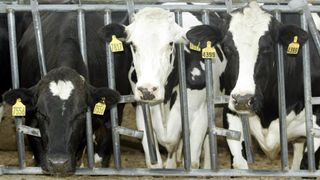
In a first, bird flu was recently detected in cows on U.S. farms. (The pictured cows are not among those infected.) (Image credit: Bloomberg / Contributor via Getty Images)
Dairy cows on farms in Texas and Kansas have tested positive for bird flu in the first known cases in cows in the U.S., and likely the world. Cows in New Mexico are also thought to have been infected, but they have not yet been tested.
Three weeks ago, the cows became sick with a cold-like illness, The Associated Press reported. The animals were producing less milk than usual, their appetites decreased and they appeared lethargic.
Unpasteurized milk samples and throat and nose swabs showed that the cows were infected with the H5N1 strain of highly pathogenic avian influenza, the Texas Animal Health Commission announced Tuesday (March 26). This strain is known to cause outbreaks in wild and domesticated birds and to occasionally infect people.
Always Keep A Bread Clip In Your Wallet When Traveling, Here’s WhyLifeHack Guru
The announcement comes a week after the first U.S. cases of bird flu in goats (Capra hircus) were reported. The goats were sharing a pasture and water source with ducks and chickens that were infected with bird flu on a backyard farm in Stevens County, Minnesota, according to a report by the World Organisation for Animal Health.
The spread of bird flu to goats “highlights the possibility of the virus infecting other animals on farms with multiple species,” Brian Hoefs, the Minnesota state veterinarian and executive director of the Minnesota Board of Animal Health, said in a statement released March 20.
Related: Bird flu wipes out over 95% of southern elephant seal pups in ‘catastrophic’ mass death
Based on the new results from Texas, officials think the dairy cows were likely infected by wild birds. The tests did not detect any changes to the bird flu virus that would make it more transmissible to humans, the AP reported.
Get the world’s most fascinating discoveries delivered straight to your inbox.Contact me with news and offers from other Future brandsReceive email from us on behalf of our trusted partners or sponsorsBy submitting your information you agree to the Terms & Conditions and Privacy Policy and are aged 16 or over.
In outbreaks of bird flu in poultry, officials have had to cull entire flocks to control the spread of the virus. By contrast, the cows that tested positive for bird flu appeared to recover without treatment within seven to 10 days, experts told the AP.
The virus infected about 10% of lactating dairy cows in the affected herds. As such, the situation “doesn’t look anything like the high-path influenza in bird flocks,” Michael Payne, a food animal veterinarian and biosecurity expert at the University of California, Davis, told the news agency.
RELATED STORIES
—1st known ‘highly pathogenic’ bird flu cases in Antarctic could threaten penguins
—‘Parrot fever’ outbreak in 5 European countries kills 5 people
—Highly pathogenic bird flu behind ‘unusual deaths in cats’ in Poland, WHO says
Only milk from healthy animals on the affected dairy farms will enter the food supply. The U.S. Department of Agriculture considers the risk to people low and noted in a statement that pasteurization, which is required for milk sold through interstate commerce, kills viruses and bacteria.
So far, H5N1 bird flu has been reported in 48 mammal species, including foxes, skunks, raccoons, seals and polar bears. “It was probably only a matter of time before avian influenza made its way to ruminants,” which include hooved, cud-chewing mammals like cattle, goats and sheep, Payne said.
There are no reported cases of bird flu being transmitted from nonhuman mammals to humans in the U.S. to date, according to the Minnesota Board of Animal Health. There have been rare cases of the infection spreading from birds to people. Any risk of infection is limited to people who have direct contact with infected animals, experts told the AP.
By Christopher Weber, The Associated Press
Posted March 26, 2024 4:13 pm.
Last Updated March 26, 2024 5:13 pm.
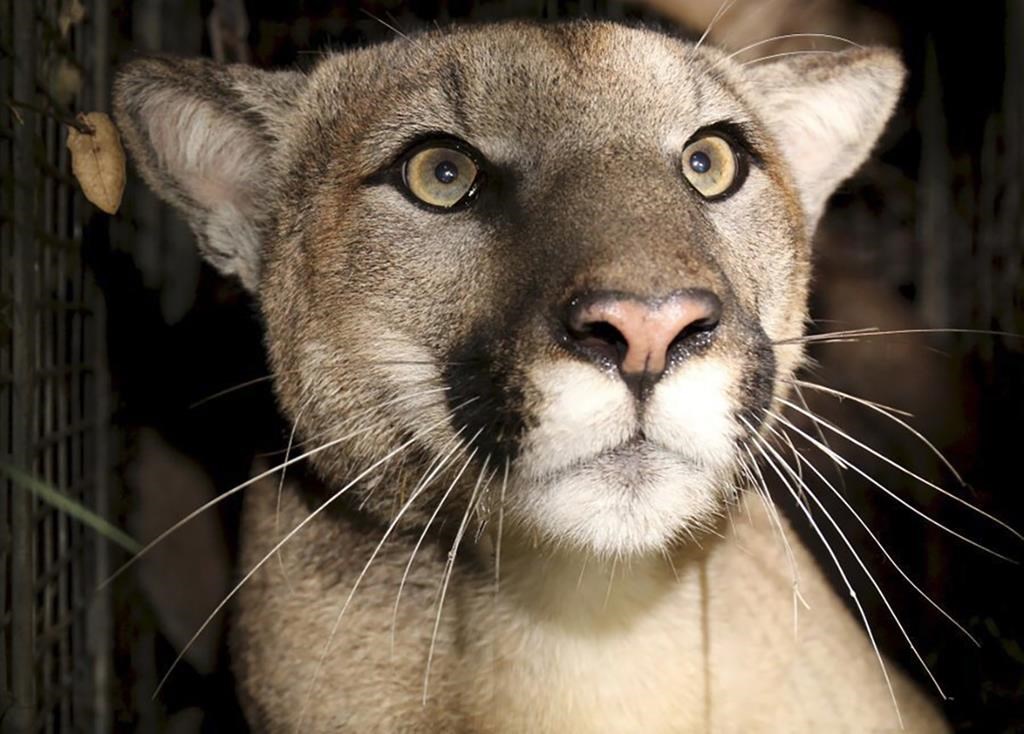
LOS ANGELES (AP) — If hikers, bikers, campers, hunters and other outdoor enthusiasts haven’t encountered a mountain lion while in the California wilderness, they might know somebody who has.
The big cats that can weigh more than 150 pounds (68 kg) live in diverse habitats across the state, including inland forests, coastal chaparral, foothills and mountains. It’s not uncommon to spot a cougar near a trail, at a park or even in a backyard while they’re out hunting prey such as deer, raccoons, coyotes and occasionally pets.
But attacks on humans — like the one that recently killed a man and seriously wounded his brother — are rare. The mauling last weekend was the first fatal encounter with a mountain lion in the state in two decades.
Since 1890, there have been fewer than 50 confirmed attacks on people in California, and only six ended in deaths, according to the state Department of Fish and Wildlife. While the prospect of attacks on people is frightening, humans kill far more cougars than the other way around.
Taylen Robert Claude Brooks, 21, was killed Saturday in a remote area northeast of Sacramento. His 18-year-old brother, Wyatt Jay Charles Brooks, survived the attack and is expected to recover after multiple surgeries.
Their family said the brothers from rural Mount Aukum were hunting for shed antlers when they noticed the mountain lion along the edge of a dirt road in El Dorado County. As they were taught growing up, the young men raised their hands in the air to appear larger, shouted and threw a backpack at the lion in an attempt to scare it away, a family statement said.
Instead of retreating, the cougar charged and took the younger brother to the ground by his face.
“While Taylen beat on and yelled at the lion, Wyatt was able to wrestle the lion to the ground with him on top of the lion. The lion began clawing at Wyatt’s midsection causing Wyatt to release his grip. At that point, the lion released Wyatt, got up and charged Taylen, biting Taylen in the throat and taking Taylen to the ground,” the statement said.
His face severely lacerated, Wyatt Brooks continued to beat on the big cat in a futile attempt to get it to release his older brother. Eventually he ran back toward their car to find cell service and call 911.
The previous fatal encounter with a cougar was in 2004 in Orange County, according to a verified list kept by the wildlife department.
Last year, a mountain lion pounced on a 5-year-old boy as he ran ahead of his family on a coastal hiking trail near Half Moon Bay. The big cat pinned the boy to the ground but didn’t bite him, and ran away when the child’s mother charged the animal. In September 2022, a 7-year-old boy escaped major injuries after he was bitten by a cougar while walking with his father at a park near Santa Clarita, north of Los Angeles.
Up the coast in Washington state, a woman was riding her bike on a trail with a group last month when she was attacked by a mountain lion. The woman and her friends were able to fight the animal off, but she suffered injuries to her face and neck.
Meanwhile, mountain lion deaths on California roadways are a common occurrence, and are tracked as part of a two-decade study of the animals by the National Park Service.
In January, a female mountain lion dubbed F-312 by researchers died after being struck by a vehicle while trying to cross the same Orange County highway where one of her cubs was killed.
Scientists have been studying the lions since 2002 in and around Southern California’s Santa Monica Mountains to determine how they survive in a fragmented and urbanized environment.
The most famous cougar in the study, who became a kind of unofficial Los Angeles mascot, was P-22. After crossing two heavily traveled freeways and making his home in LA’s urban Griffith Park — home of the Hollywood Sign — P-22 became a symbol for California’s endangered mountain lions and their decreasing genetic diversity.
P-22’s journey inspired a wildlife crossing over a Los Angeles-area highway that will allow big cats and other animals safe passage between the mountains and wildlands to the north. The bridge is currently under construction. P-22 was euthanized in December 2022 after sustaining injuries possibly caused by car.
Christopher Weber, The Associated Press
Drone footage captured in 2019. Credit: Sea Shepherd Conservation Society
Seascape: the state of our oceans
Inexpensive and easy to use, drones are proving invaluable for activists monitoring illegal fishing, hunting and deforestation – as well as keeping tabs on zoos and aquariums
Seascape: the state of our oceans is supported by

About this contentTue 26 Mar 2024 05.00 EDTShare
Late last year, UrgentSeas received an anonymous tip from a former employee at the Miami Seaquarium about animal tanks away from public view. The advocacy group went to investigate.
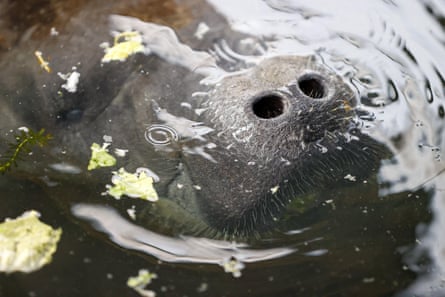
In November, they posted a short clip of what they found by flying a drone over the property: an elderly manatee living alone in a decaying private pool. Within a month, the clip had been watched millions of times and the outcry had grown so intense that the US Fish and Wildlife Service moved the manatee, Romeo, and his mate, Juliet, to a sanctuary.
Over the past decade, drones have become irreplaceable tools in activist and conservation circles. In 2013, the animal rights group Peta (People for the Ethical Treatment of Animals) launched a drone campaign tracking illegal bowhunting in Massachusetts.
Since then, drones have been used to record factory farm pollution in the American midwest, sea lice outbreaks in Icelandic salmon pens, and deforestation in the Brazilian Amazon. Drones are popular because they’re relatively cheap, easy to use and extend a person’s range in difficult or inaccessible terrain. They also provide a bird’s-eye view of the scale of an issue, such as an oil spill or illegal logging.
Drones are a perfect way to study something without putting yourself in harm’s way
Simon Ager, Sea Shepherd
When it comes to marine mammal captivity, the aerial perspective can be invaluable, exposing the cramped conditions and the constrained life for the animals inside the tanks.
In some cases, the drones capture the secret lives of animals hidden from view, such as Romeo the manatee in Miami. “This is the footage people need to see to realise how cruel captivity really is,” says the drone pilot who shot the footage at the Miami Seaquarium, and who prefers to remain anonymous.
Another early adopter of drones is Sea Shepherd. The marine conservation group started filming illegal, unreported and unregulated (IUU) fishing in international waters. As technology improved, drones have become quieter and stealthier, says Simon Ager, a longtime volunteer with Sea Shepherd. This is critical for sneaking up on ships and capturing crimes in progress, he adds.
“In my experience, drones have been beyond effective because you can never get close enough to a ship that’s got some illegal activity going on. They spot us coming and then they’ll just turn and burn, over the horizon, and you’ve got nothing to go after these guys,” Ager says.

Off Mexico and Ecuador, Ager recorded tuna fishers pulling up nets tangled with unintentional bycatch, such as sharks, and dumping miles of fishing line in the water, which snags and kills more marine life. Off the Galápagos Islands, he tracked a vast fleet of Chinese squid-fishing ships with a night-vision drone. That campaign exposed rampant environmental and human rights abuse on board, including slave labour and the dumping of unwanted catch.
Drones also allow activists to safely distance themselves from the risky situations they’re filming. During one campaign to save the critically endangered vaquita porpoise in the Gulf of California, cartel-funded fishers shot Sea Shepherd’s drones out of the sky and hurled molotov cocktails at their ship.
“Conservation can be a very dangerous occupation to be in and there are more environmentalists killed every year,” says Ager. “Drones are a perfect way to study something without putting yourself in harm’s way and then decide whether it’s worth the risk.”
You don’t do it obviously. You hide in a bush sometimes. You watch for cars. It’s kind of like a mission
Anonymous drone pilot
The high seas are a largely lawless frontier where rules and regulations are flagrantly broken. It’s a different legal landscape on land, where activists use drones to film zoos and aquariums. The UrgentSeas pilot says that she uses an app to determine where drones are permitted and tries her best to follow the appropriate laws.
“Flying these drones, you don’t do it obviously,” she says. “You don’t go and stand outside the facility and send your drone over. You hide in a bush sometimes. You watch for cars. It’s kind of like a mission.”
After the drone footage of Romeo went viral last November, the Miami Seaquarium filed for a protective order against Phil Demers, the co-founder of UrgentSeas. The move was part of a larger lawsuit the aquarium filed against the animal activist in May 2023, alleging defamation, public nuisance and trespassing – much of it by flying drones and recording the property.
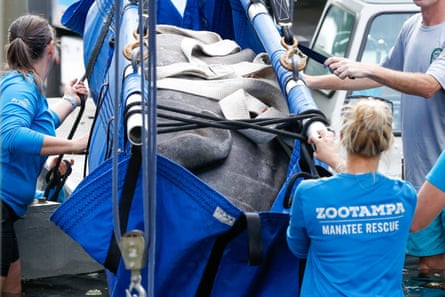
The Miami Seaquarium did not respond to several requests from the Guardian for comment but has said in the legal complaint that Demers “has repeatedly, and without authorisation, flown an unmanned aerial vehicle over [Seaquarium’s] property during regular business hours”.
As a relatively new technology, drones still exist in a legal grey area. “The question of drones, laws and privacy is a new question,” says Benjamin Christopher Carraway, a lawyer at the Animal Activist Legal Defense Project in Colorado and Demers’s attorney. There are a few state torts and statutes regarding drones, but he hasn’t seen much case law work its way through the courts yet.
Activists argue that drones are necessary for free speech and democracy, but opponents say that they infringe on privacy and, in the case of aquariums and zoos, disturb animals, customers and staff.
Carraway hopes that any drone laws will treat the conflicting concerns in a nuanced way. “The whole concept of drones requires a lot of updating in the law and it begs this other question, which is the balancing of privacy, which is a legitimate interest versus the public’s right to know.”
The trial involving Demers and the Miami Seaquarium is set for May, but it’s doubtful the facility will still be in business by then. The death of the orca Lolita last year and the report of the living conditions faced by Romeo have ratcheted up public pressure on the already beleaguered aquarium. On 7 March, Miami-Dade county issued an eviction notice, ordering the aquarium’s operator to vacate the county-owned property by 21 April.

“The Dolphin Company has repeatedly fallen short of meeting the contractual obligations of their lease,” said the Miami-Dade county mayor Daniella Levine Cava. “From failing to maintain the premises in good condition, to failing to demonstrate that they can ensure the safety and wellbeing of the animals under their care, the current state of the Miami Seaquarium is unsustainable and unsafe.”
Every month, UrgentSeas receives five or six tips from whistleblowers, most of whom are former or current staff at zoos and aquariums around the world. According to Whale & Dolphin Conservation USA, there are now 56 orcas in captivity globally.
UrgentSeas plans to document every facility by drone (though the group discourages supporters from flying drones themselves). “It’s the drones that can show you everything,” says the anonymous UrgentSeas pilot. “But it comes with a lot of risks.”

