It’s Confirmed. A Major Atlantic Ocean Current Is Verging on Collapse.

ENVIRONMENT13 February 2024

https://www.sciencealert.com/its-confirmed-a-major-atlantic-ocean-current-is-verging-on-collapse
ByTESSA KOUMOUNDOUROS

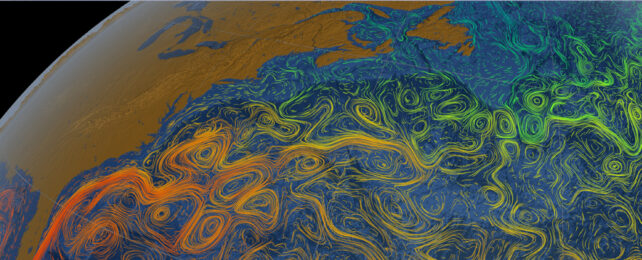
swirls of red, yellow and green across map of the AtlanticCurrents closer to the ocean’s surface dancing across the Atlantic, colored according to sea surface temperature. (NASA/Goddard Space Flight Center)

Last year a concerning study suggested one of Earth’s major ocean currents is racing towards collapse. Unfortunately, new data now backs that up.

“The temperature, sea level and precipitation changes will severely affect society, and the climate shifts are unstoppable on human time scales,” the authors of the latest study warn in an article for The Conversation.

https://9efe1a0adc3d4e8976cef1ccede95ff5.safeframe.googlesyndication.com/safeframe/1-0-40/html/container.html

That’s a terrifying prospect, and one of the most important parts of the new study is an early warning system, identified by Utrecht University oceanographer René van Westen and colleagues.

This glimpse into the future could provide the world with at least some capacity to prepare for what’s to come.

“We were able to develop a physics-based and observable early warning signal involving the salinity transport at the southern boundary of the Atlantic Ocean,” Van Westen and team explain.

The Atlantic Meridional Overturning Circulation (AMOC) is a large system of ocean currents that transfers warm salty water northward. This water cools on its winding journey north, which makes it denser. As the cold water sinks, water from other oceans is pulled in to fill the surface, driving the circulatory system back down south again.

AMOC has been slowing down significantly since the mid-1900s.

With increasing contributions of freshwater from melting glaciers and greater rain, concentrations of salt in the sea water drop, and the saline water becomes less dense, disrupting the sinking process and weakening the entire physical cycle.
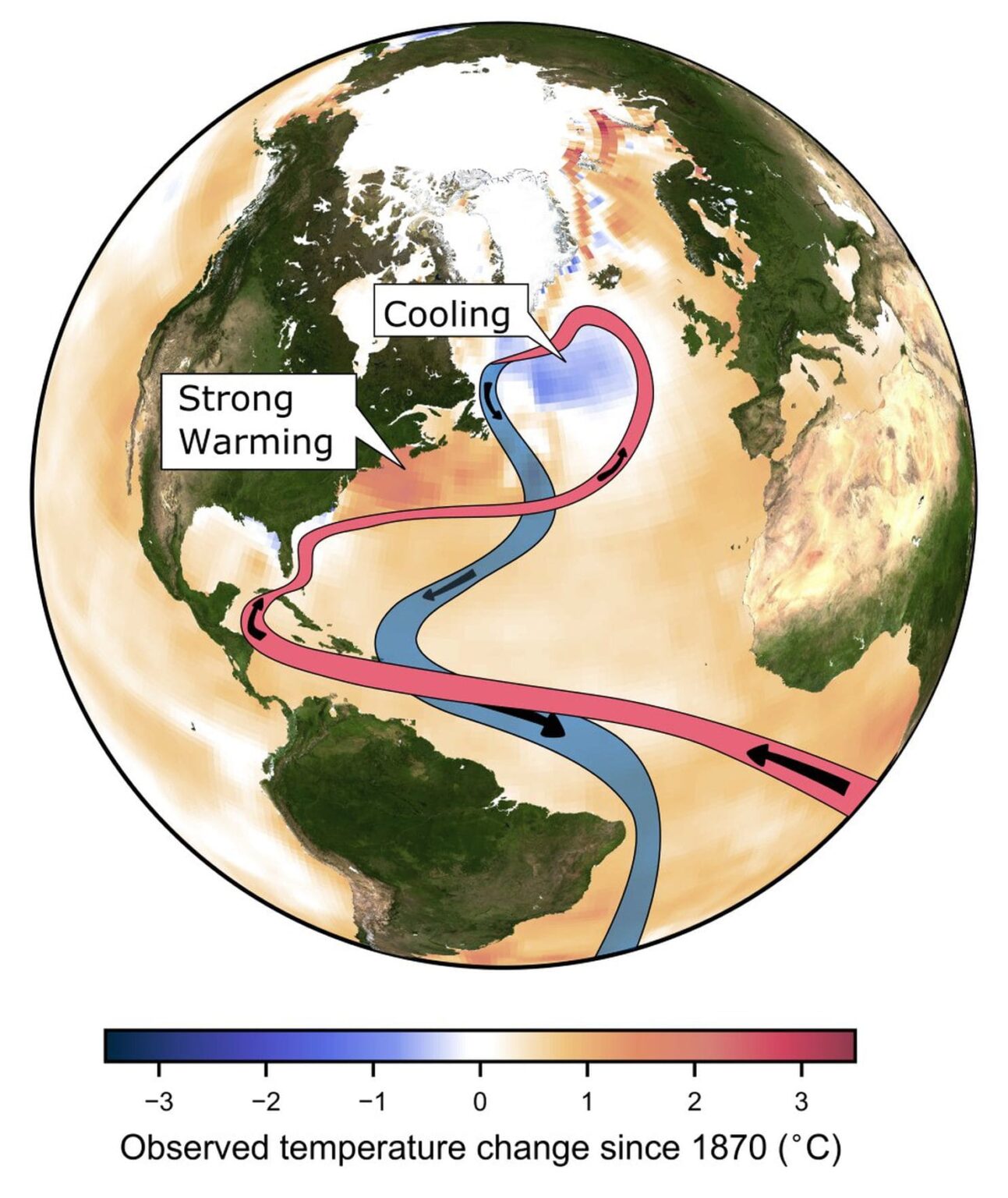
Diagram of the AMOC on map of atlantic with red line and arrows pointing north in red turning blue as it returns south
The AMOC circulates water vertically as well as laterally. The blue blob of cooling in the North Atlantic betrays the system’s slowing. (Caesar et al., Nature 2018)

Now, by modeling these ocean systems, van Westen and colleagues have found a way to detect when the AMOC ‘tipping point’ is near: the decline in salinity will slow down at the southernmost boundary of the Atlantic.

“Once a threshold is reached, the tipping point is likely to follow in one to four decades,” say the authors.

AMOC has only been directly monitored since 2004, so it has not been long enough to understand the full trajectory of the current slowing trend. As a result, scientists have been using indirect indicators like salinity levels to try and fill in their knowledge gaps.

Van Westen and team have yet to amalgamate all the factors to accurately predict when the AMOC collapse will occur, but they believe that catastrophic moment is a lot closer than many current simulations suggest.

The new modeling explores the freshwater-induced tipping point itself, rather than trying to predict its timing. But the resulting data suggests AMOC is a lot more sensitive to changes than most climate models have accounted for.

https://9efe1a0adc3d4e8976cef1ccede95ff5.safeframe.googlesyndication.com/safeframe/1-0-40/html/container.html

“The new study confirms past concerns that climate models systematically overestimate the stability of the AMOC,” Potsdam University climatologist Stefan Rahmstorf, who was not involved in the study, explained for RealClimate.

AMOC impacts much of Earth’s climate, so it is one of the tipping elements in Earth’s climate system that researchers are most concerned about. Collapse of the AMOC happens cyclically over a million-year scale, and based on past occurrences, we know the Arctic should extend south during this time, leading to decreased temperatures in northwestern Europe by up to 15 °C, disrupting tropical monsoons and heating up the Southern Hemisphere even further.

The chain of reactions that follow will severely impact entire ecosystems and global food security.

“The new study adds significantly to the rising concern about an AMOC collapse in the not too distant future,” Rahmstorf told the Associated Press. “We will ignore this at our peril.”

This research was published in Science Advances.

Opinion: Avian influenza outbreak exposes the betrayal of our values

We bail out poultry producers, allow cruel killing methods and incentivize crowded operations that risk another pandemic

Since 2022, more than $715 million has gone to bail out companies that lost birds to avian influenza. Often the methods used to end animals' lives, while expedient, cause prolonged suffering.
(Getty Images/iStockphoto) Since 2022, more than $715 million has gone to bail out companies that lost birds to avian influenza. Often the methods used to end animals’ lives, while expedient, cause prolonged suffering.

By CRYSTAL HEATH

February 10, 2024 at 5:00 a.m.

Growing up in Northern California’s rural agriculture country, like all kids in my neighborhood, I was a member of 4-H. I learned how to raise goats, spin wool, work with horses and show dogs. One of the most important lessons we learned was that good animal stewardship meant providing your animals with food, water, shelter, a life worth living, and a quick and painless death. If your animals became sick, you had a duty to take care of them. Honoring that responsibility was the least we could do for the animals we benefited from and who had no choice in the matter. Treating animals poorly reflected poorly on your character and would hurt your business, too. 

Today, animals raised in modern intensive facilities are kept hidden away from public view. Corporations are no longer beholden to the same moral code I grew up with. Production efficiency takes precedence above animal stewardship, and callousness towards animals, the community and the environment is rewarded instead. 

The recent outbreak of highly pathogenic avian influenza has brought the modern industry’s sociopathy to light. When animals get sick, the methods used to end their lives, while expedient for the corporation, cause prolonged suffering for the animals. 

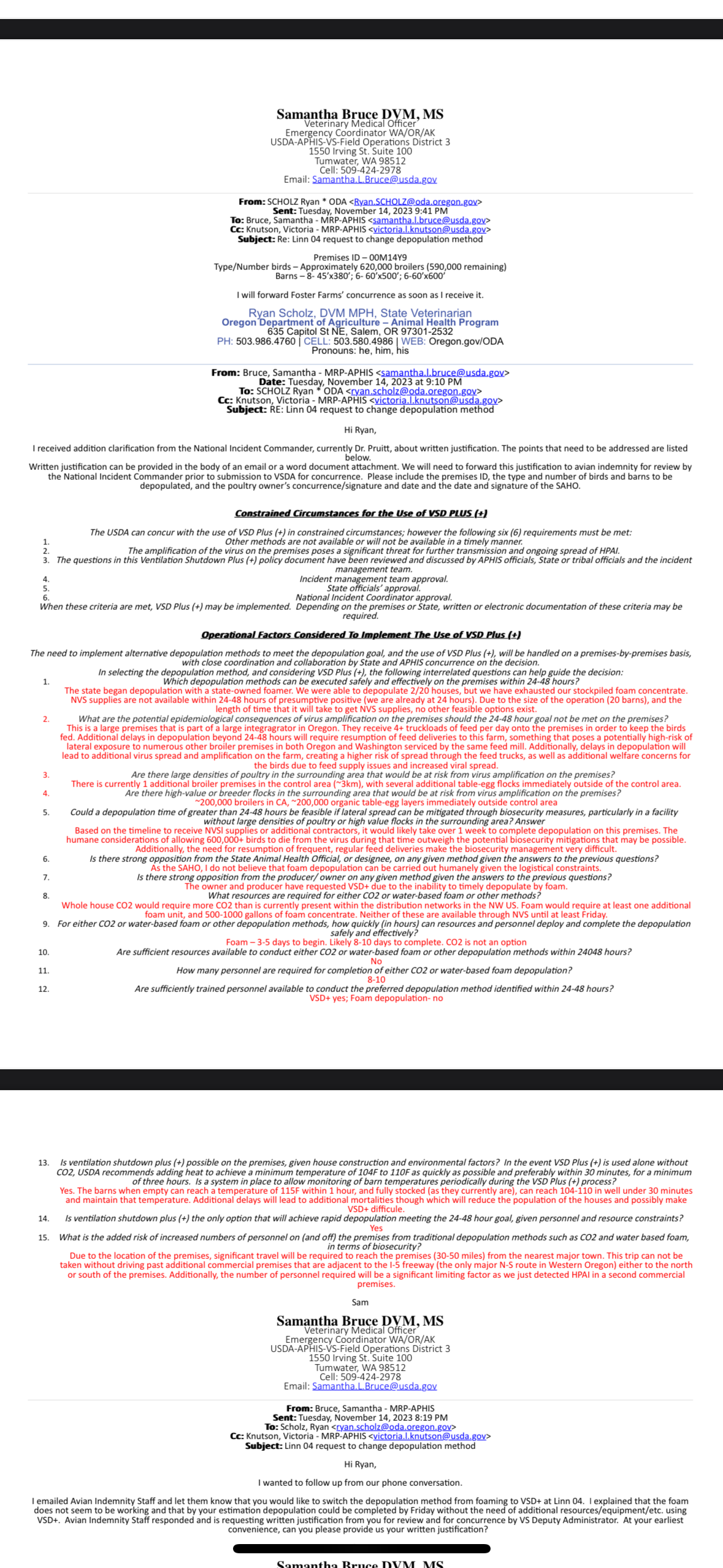
Recently, a Petaluma cage-free egg producer, known for touting their high welfare practices, resorted to ending the lives of their birds by sealing up in buildings and pumping in heat until the birds inside eventually die of heatstroke, in a process known as ventilation shutdown plus (VSD+). It is as bad as it sounds. All species experience similar effects of heat stroke, including shock, gastrointestinal bleeding and sloughing, vomiting, respiratory distress, organ damage, and internal bleeding. But birds have an anatomic cooling system called the rete mirabile ophthalmicum that protects the brain from increases in body temperature, meaning that they suffer for a prolonged period of time from the effects of the heat without losing consciousness. 

RELATED ARTICLES

Yet we bail out wealthy producers — whether we buy from their businesses or not. Since 2022, more than $715 million has gone to bail out companies that lost birds to avian influenza, including many that killed their birds using VSD+. Jennie-O Turkey Store received more than $85 million in bird flu bailout money while their parent company, Hormel Foods, recorded net sales surpassing $12.1 billion in 2023. Tyson Foods took more than $29 million while CEO Donnie King received more than $13 million in compensation. The top 10 companies took over 41% of the total indemnity payments, and many of them failed to put plans in place to use less cruel, American Veterinary Medical Association “Preferred” methods of ending the lives of their animals. 

These production practices not only harm animals, they perpetuate an ever-escalating arms race against nature that threatens the health of our own species and might even cause the next pandemic. Recent work out of the Harvard T.H. Chan School of Public Health explains how “high-density livestock operations can serve as an opportune environment for spillover from wild animals into livestock or as incubators for pandemic influenza strains. … Large pig and poultry farms are where the genetic re-assortment needed to source pandemic influenza strains may most likely occur.” Yet, we incentivize the companies that create such conditions.

https://imasdk.googleapis.com/js/core/bridge3.619.0_en.html#goog_1043475414

https://imasdk.googleapis.com/js/core/bridge3.619.0_en.html#goog_1043475415

https://imasdk.googleapis.com/js/core/bridge3.619.0_en.html#goog_1043475416Top Stories00:1400:48No longer Mr. Irrelevant, 49ers’ Brock Purdy is more than ‘Mr. Perfectly Fine’Man charged in stabbing of Burlingame hospital employeeLabor unions split among candidates vying to replace Skinner in state SenateWarriors coach Steve Kerr is taking advice from his son, NicholasTheatreWorks takes its latest show on the road to audiencesBig San Jose regional shopping mall is slated to be sold by mid-yearOn second straight day, suspects arrested in Berkeley Apple store theftsLabor unions split among candidates vying toreplace Skinner in state Senate

The mass killing of animals via heatstroke should not be accepted as an unchangeable fact. We must stop incentivizing sociopathy and cruelty and instead support slaughter-free farmers and businesses that embody the values current intensive slaughter-based production systems lack: responsibility and compassion. It isn’t just selfless, though. It turns out that by protecting the animals, we protect our own species, too. 

Dr. Crystal Heath is a veterinarian from Berkeley and executive director of Our Honor, a non-profit organization that supports animal professionals in advancing ethical policies.