Spennymoor resident banned from part of Yorkshire
Reply

MPRN | By Rick Pluta
Published October 14, 2025 at 11:15 PM EDT

An animal rights group is asking the Michigan Court of Appeals to order an unlawful imprisonment hearing for seven chimpanzees at a private zoo in the Upper Peninsula. A three-judge panel heard Tuesday from the plaintiff, the Washington-based Nonhuman Rights Project, in the first-of-its-kind case in Michigan.
The organization, which seeks to expand legal protections for animals to more closely mirror civil rights for human beings, wants the appeals court to order a lower court to determine whether the habeas corpus rights of seven chimpanzees at the DeYoung Family Zoo are being violated.
In this instance, the Nonhuman Rights Project is challenging the dismissal of its claim by the Menominee County Circuit Court. The group says the apes deserve constitutional habeas corpus protections because they behave similarly to humans when subjected to captivity.
The appeals judges questioned how a court decision would be applied if the Nonhuman Rights Project prevails.
“What standard do we apply that would keep out, I think, what we would all obviously think are not subject to habeas relief: viruses, bacteria, insects, snakes — I hate snakes,” said Judge Brock Swartzle. “… Where do we draw the line?”
Nonhuman Rights Project attorney Jake Davis said thfat question is premature because all the groups is seeking is for the lower court to hear its arguments.
“All we are asking you is for an opportunity to see if these chimpanzees can potentially achieve their liberty, and I think that’s well within the purview of this court,” said Davis.
The group wants the chimpanzees moved from the Upper Peninsula to a nature preserve with conditions more like their natural habitat. The DeYoung Family Zoo did not present arguments at the appeals court or respond to a message seeking comment.
| It’s the Moment of Truth for Barred Owls in the U.S. SenateThe fate of these raptors hangs not just on the actions of 100 U.S. senators, but the constituents who make their voices heard By Wayne Pacelle If Congress does not put the kibosh on the scheme to kill nearly half a million North American barred owls — purportedly to ease competition between them and spotted owls, who are look-alike cousins — it will set a cancerous precedent. The deadly idea will spread. Our U.S. Fish and Wildlife Service (FWS) will start down the path of targeting and killing native species because they compete with threatened and endangered species. This will turn the very essence of the Endangered Species Act on its head. The law, enacted in 1973, was designed to limit “taking” of rare species by humans. It is unlawful for people to “harass, harm, pursue, hunt, shoot, wound, kill, trap, capture, or collect, or to attempt to engage in any such conduct” targeting a threatened or endangered species. The law was not designed to stop animals from competing with other animals, or even from chasing or harming other animals. It was not designed to stop competition for food or nesting sites, or impede other normal behaviors between dozens of native species in complex ecosystems. Competition is precisely the point of natural systems. If the barred owl plan is allowed to proceed, the next step for the FWS might be to start killing great horned owls, since — unlike barred owls — they actually predate on spotted owls. Perhaps next, the agency will start targeting sandhill cranes because they compete with highly endangered whooping cranes. And maybe it won’t be limited to birds. If a mountain lion encroaches on the habitat of an endangered wolf, will the agency start killing mountain lions in an attempt to control such natural behavior? Make no mistake, what the FWS is proposing to do with this barred owl kill is a novel misuse of the Endangered Species Act. And its proposal to kill barred owls, in this instance, is 1,000 times bigger than any prior effort by any government in the world to kill birds of prey. The Plan Is Unprecedented in Other Ways The “Barred Owl Management Strategy,” in the text of its plan, describes opening 14 units of the National Park Service for people to shoot North American barred owls. Crater Lake National Park, Olympic National Park, Yosemite National Park, and 11 other iconic sites will be turned into nighttime shooting galleries to hunt down the nocturnal owls. The plan is a prescription for the accidental shooting of spotted owls. Why and how? Because barred owls and spotted owls are just about the same size, they have the same silhouette, and they have very similar coloring. Heather King, an extraordinary owl photographer and videographer, told me in an interview recently that she’s been “studying owls for 15 years, and owl lovers as well as nature enthusiasts constantly tell me of an owl they saw, and when I question them, they almost always misidentify the species.” This Kill Plan Is Patently Unworkable In a letter to Congress, Kent Livezey, a former U.S. Fish and Wildlife Service biologist and author of 14 peer-reviewed papers on owls, wrote that he does not believe that “spending more than 1 billion dollars to kill almost one-half million barred owls is worth the carnage, expense, precedents, and distraction from what is the more-important issue: protection of biodiverse old-growth forests.” Livezey calls the plan a “never-ending, bloody game of Whack-a-Mole.” Dr. Bill Lynn of Clark University, an ethicist hired by the FWS to design the Barred Owl Stakeholder Group, noted that “[b]arred owls will experience tremendous loss of life indefinitely, but this will do nothing to stop the decline of the spotted owl.” Prof. Daniel Blumstein, from the Department of Ecology and Evolutionary Biology at UCLA, observed that “[i]t is likely impossible to eliminate competition across a wide swath of spotted owl range by killing barred owls. The area is too vast, and there are no barriers to entry to dispersing barred owls.” And Dr. Mark Davis, DeWitt Wallace Professor of Biology at Macalester College, said “[i]t is impossible to exterminate all the barred owls in a region, and even if it were possible, they would be rapidly replaced by owls immigrating from the eastern and northern populations.” Dr. Eric Forsman, who Livezey notes is the dean of forest owl biologists, told the Seattle Times: “Control across a large region would be incredibly expensive, and you’d have to keep doing it forever, because if you ever stopped, they would begin to come back.” Unconscionable Cruelty, Unscalable Economics Livezey observes that “a $4.5 million grant from the National Fish and Wildlife Foundation to the Hoopa Valley Tribe to kill 1,500 barred owls places the cost at $3,000 per owl,” translating into an overall project cost of $1.35 billion to kill the 450,000 owls as proposed. And that figure assumes costs don’t rise as owls become warier over time. “Costs would increase due to artificial selection because some barred owls may witness the shooting of their mate, escape, learn to stay away, and teach their young to do so,” he notes. “Virtually all occupied spotted owl territories include and are surrounded by many pairs of barred owls,” he adds. “If barred owls were shot in one area, other barred owls would move in and replace them.” Owls Need Your Help Right Now. Today. Killing owls to save owls makes no sense. It is not progress. It is a diversion, cooked up by a small set of players within the timber industry to distract from the more serious threat to spotted owl habitats posed by some timber harvesting practices. It’s a bait and switch. I pose a simple question to anyone at the FWS, whether the one run by the Biden team last year or the Trump team now: what bird species in the world have ever been put at risk by a different native bird species? The answer is none. Nada. It just doesn’t happen. The designs of nature are seamless. In the industrial age, it’s only the hand of man that has put species on the precipice of extinction or pushed them over the edge. Any day now, the U.S. Senate is expected to take up S.J. Res. 69, a resolution that would nullify the FWS’s costly, unworkable, and inhumane plan to kill barred owls. More than ever, we need you as a citizen advocate. Please write to your two U.S. senators and urge them to vote “YES” on S.J. Res. 69 to stop the barred owl massacre. And please forward my letter and this exhortation to 10 friends and ask them to reach their lawmakers, too.TAKE ACTION S.J. Res. 69 is about so much more than protecting North American barred owls. It’s about halting a gross misuse of the Endangered Species Act, with the FWS turning it from a shield to protect native wildlife into a sword to kill native wildlife. That was never the purpose of the Endangered Species Act. The FWS is morphing before our eyes into a wildlife-killing agency resembling the dastardly work of USDA’s so-called Wildlife Services’ program, which kills upwards of four million animals a year, mostly birds, mainly as a subsidy to different private industries. And given the urgency of this policy issue, let me make one more ask of you: Please also call your senators and tell the receptionist that you want your U.S. Senator “to vote YES on S.J. Res. 69 and you do not want the government to wage war against North American owls.” Here’s the phone number: (202) 224-3121. Send a group email. Ride through the town center. Shout from the rooftop. So much is at stake. Wayne Pacelle is president of Animal Wellness Action and the Center for a Humane Economy and a two-time New York Times best-selling author. |
| Dear Friend, The U.S. Fish and Wildlife Service (FWS) has set into motion a grim, ghoulish plan to kill more than 450,000 North American barred owls — an unprecedented assault on a species long protected under the Migratory Bird Treaty Act. We are committed to stopping this plan. And that’s why we need your help to pass H.J. Res. 111 and S.J. Res. 69, to halt this misguided and inhumane scheme by the federal government to wage war on these native owls. In opinion pieces and interviews with the press, I’ve hammered on the practical arguments against the kill plan: it has a potential price tag exceeding a billion dollars, it’s doomed to fail because the “control area” is too vast and surrounded by other barred owls who will simply repopulate the area, and it’s cruel beyond measure. Today, with the help of an extraordinary young woman who’s devoted her life to understanding owls and spreading that understanding across North America, I want to remind everyone what’s really at stake: the lives of extraordinary, intelligent, and loving creatures. I have conducted an interview with Heather King — known as “Thee Owl Queen” — and you can read the full interview with her on our website here. But in this letter, I want to give you a flavor of what she said. Over the past 15 years, Heather has devoted thousands of hours of fieldwork to studying owls in the forests of Ontario and Quebec. She has become one of the most recognized owl photographers and videographers in the world, dazzling hundreds of thousands of followers with her close-up glimpses into the private lives of owls. Here are just a few of the observations she shared in our in-depth discussion about owls and the importance of stopping the FWS’s assault on them:“Out of all the owls I’ve observed and filmed over the last 15 years, barred owls hold my heart in a way no others do. A bonded pair is truly lifelong—they preen one another, duet, and reaffirm their bond not only during nesting but throughout the year. I will never forget watching a mother preen her chick for 20 minutes straight, returning every time he cried out in distress. It was love expressed so purely that I wept as I filmed it.”“Every adult killed [at the behest of the U.S. government in this plan] represents not just one death, but often an entire brood of young left to starve, to be picked off by predators, or to die frightened and alone.”“I’ve been studying owls for 15 years, and even experienced bird lovers constantly misidentify them. People tell me of an owl they saw, and when I probe, they almost always get the species wrong. Now imagine arming novice shooters with a half-hour training course. There’s no way they’ll consistently distinguish between barred owls, spotted owls, or their hybrids.”“This [barred owls colonizing forest areas where shooting and removals have occurred] is why killing cannot restore balance. The owls will always return, because they are not invaders, they are survivors. Their dispersal is not a flaw; it’s the very mechanism nature gave them to ensure their species endures.”“Targeting great horned owls — as some might logically propose next — would be disastrous and unworkable, creating a never-ending, cruel campaign against our native owl species.”“As apex predators, barred owls help regulate rodent populations, offering natural pest control that reduces crop damage and the potential spread of disease — ecological services that benefit both the environment and human communities.”“If I had a billion dollars to spend on owls, I would not spend a dime on bullets. Every dollar should go into life, not death. Into renewal, not erasure.”Heather’s perspective on owls and her recognition of why the FWS’s plan is so deeply wrong reminds us that owls are not invaders or bullies; they are individuals, and these individuals make up families. They show loyalty, tenderness, resilience, and intelligence. They enrich our forests and our lives. To turn shotguns on them in the name of conservation is not only wrongheaded, it betrays the very ideals of protecting wildlife. We are pressing lawmakers now to stop this plan before owls start dropping from the sky and from the canopies of the trees they call home. But we cannot do it without your voice. Take action now: Urge Congress to cosponsor and pass H.J. Res. 111 and S.J. Res. 69 | |||
For the owls, |
President Animal Wellness Action |
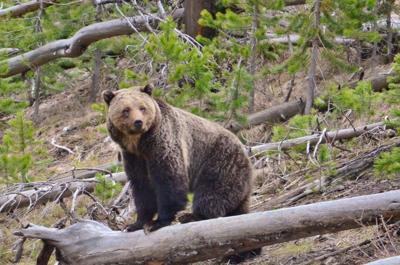
BIG SKY — Three archery hunters are uninjured after two recent encounters with grizzly bears in the Taylor Fork region south of Big Sky.
The first encounter involved two hunters on Sept. 29. They were hunting in the vicinity of a known elk carcass when they saw a grizzly bear. To make their presence known, the hunters yelled at the bear. The bear reportedly came toward the hunters, and they each fired once with handguns. Both the bear and the hunters left the site without further incident.
javascript:false
javascript:false
javascript:false
javascript:false
javascript:false
about:blank
Montana Fish, Wildlife & Parks staff learned of the encounter on Oct. 1, and after interviewing the hunters, determined it was unlikely the bear was injured.
(AP Photo/Charlie Neibergall, File)
HEALTH
BY Rachel Ryan Wisconsin
PUBLISHED 11:15 AM ET Oct. 09, 2025
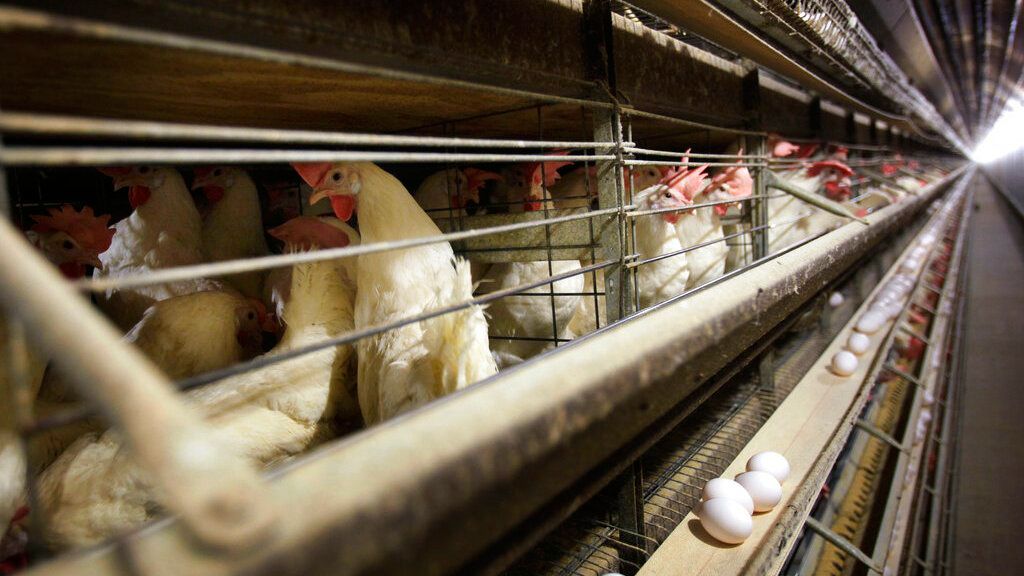
MADISON, Wis. — All poultry-related events have been suspended in four counties due to the bird flu, the Wisconsin Department of Agriculture, Trade and Consumer Protection (DATCP) announced.
DATCP said it’s to prevent further spread of the virus.
Events such as poultry shows, exhibitions, swap meets and movements of poultry to other events in Jefferson, Waukesha, Walworth and Rock counties will be suspended until Dec. 31, 2025.
DATCP also encouraged poultry owners to keep their birds indoors to prevent contact with wild birds, if possible.
Jefferson County has been largely affected by the avian flu, with another large flock at a poultry farm having an outbreak at the end of September. The farm had 3,078,734 poultry birds and was expected to be “depopulated” to prevent further spread. Another farm in the same county also had a large avian flu outbreak in March 2022.
The first whooping crane died last month from the flu.
Bird flu is highly contagious and often deadly to affected poultry. It can be spread when coming in contact with an infected bird or “commingling with wild birds or their droppings, equipment or clothing worn by anyone working with the animals.”
Here are some symptoms to watch out for, according to DATCP:
 Exposing the Big Game