Fourth Sonoma County poultry flock hit by bird flu with latest case making for California’s largest single outbreak this season
Reply

Reuters
December 12, 20232:23 PM PSTUpdated a day ago
Dec 12 (Reuters) – Egg producer Cal-Maine Foods (CALM.O) said on Tuesday it had temporarily ceased production at a facility in Kansas after some of the flock tested positive for avian flu.
The company said highly pathogenic avian influenza (HPAI) had affected about 684,000 laying hens, or nearly 1.6% of its total flock.
Cal-Maine said these detections do not present an immediate public health concern and are not a threat to the food supply, according to the U.S. Department of Agriculture (USDA).
Advertisement · Scroll to continueReport this ad
It also said that no known HPAI risk associated with eggs were currently in the market and no eggs have been recalled, adding that there were no positive tests for HPAI at any other company locations to date.
Shares of the company were down marginally at $48.80 in extended trading following the news.
More than 72.5 million chickens, turkeys and other birds have been wiped out since the U.S. avian flu outbreak began in February 2022, according to the USDA.
Advertisement · Scroll to continue
U.S. cases in commercial poultry flocks have increased since October 2023, with experts blaming wild birds for spreading the disease. Kansas had not reported an outbreak in a commercial flock since February 2023, U.S. data shows.
Other large egg-laying operations have also been hit. Ohio confirmed last week that a commercial layer farm with 2.6 million birds was infected and said the birds were being culled.
Dec 11, 2023 at 11:11 AM EST00:56
What Is Bird Flu And What Are Its Symptoms?
https://www.newsweek.com/poulty-eggs-ban-hong-kong-chicken-trade-us-1851308
Poultry and eggs from several parts of the U.S. have been slapped with a ban by worried officials in Asia who want to stop the food entering Hong Kong “to protect public health.”
The ban, which comes just two weeks before Christmas, will be a blow for some poultry farmers, who will no longer be able to export their products to the special administrative region of China. Western foods are often enjoyed over Christmas in Hong Kong, where Western and Chinese influences are uniquely fused, and roast turkey or goose is often served to mark the holidays.
Authorities said the ban, which affects poultry from certain areas across five U.S. states, was instigated as the result of an outbreak of bird flu (the H5N1 virus) in parts of Europe. The U.S. avian influenza has been sweeping the globe. Besides the death and culling of infected birds, it is also responsible for the deaths of other animals that contracted the virus, such as cats, sea lions, and mink.
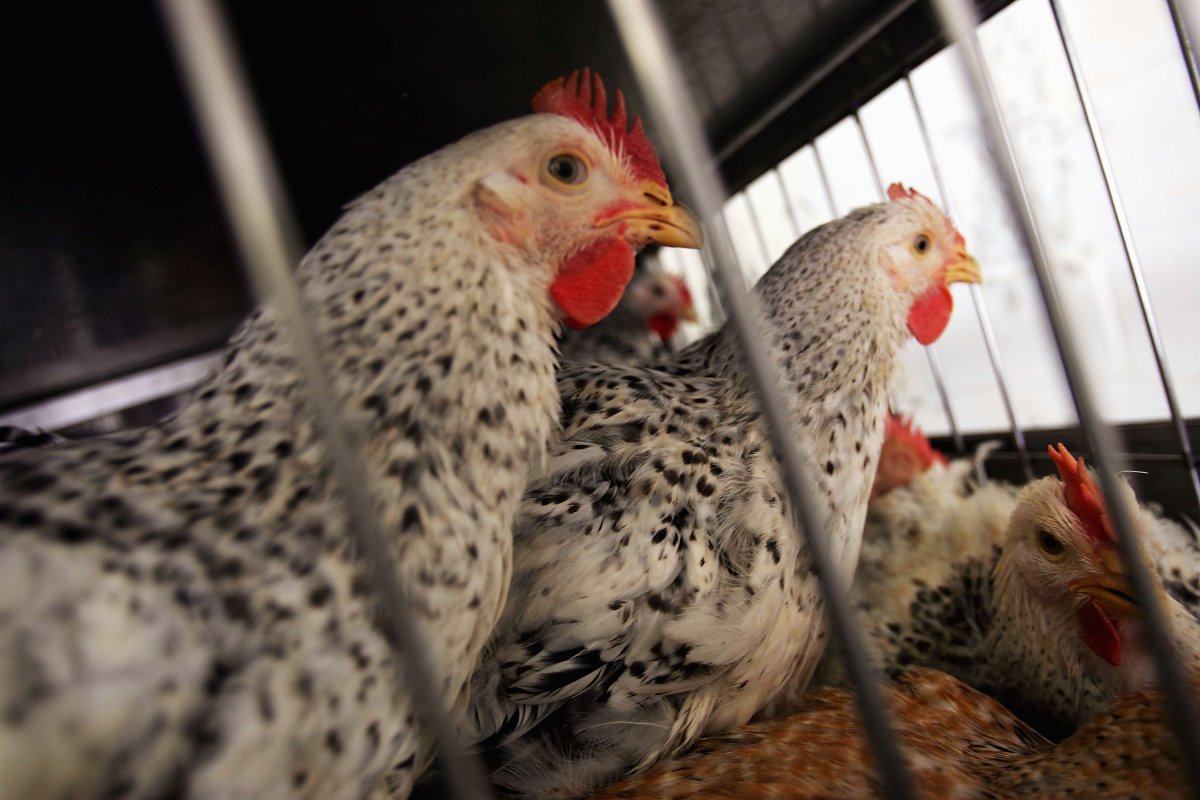
The suspension of trade effected by Hong Kong comes despite experts insisting that humans can’t contract avian influenza from properly cooked poultry or eggs. The U.S. Centers for Disease Control and Prevention (CDC) said, “It is safe to eat properly handled and cooked poultry and poultry products in the United States. The proper handling and cooking of poultry and eggs to an internal temperature of 165˚F kills bacteria and viruses, including bird flu viruses.”
Nevertheless, Hong Kong’s Centre for Food Safety (CFS) of the Food and Environmental Hygiene Department announced on Monday “that in view of notifications from the World Organisation for Animal Health (WOAH) about outbreaks of highly pathogenic H5N1 avian influenza in areas in Poland, the United Kingdom, and the United States, the CFS has instructed the trade to suspend the import of poultry meat and products (including poultry eggs) from the relevant areas with immediate effect to protect public health in Hong Kong.”
 NEWSLETTER
The Bulletin
Your daily briefing of everything you need to know
READ MORE
The affected areas hit by the ban in the U.S. are: Stanislaus County and San Benito County in California; Barron County in Wisconsin; Johnson County in Arkansas; Darke County in Ohio; and Bent County in Colorado.
Hong Kong has also suspended trade with the East Devon District of Devon County in the U.K., and the Goleniowski District of Zachodniopomorskie Region in Poland.
A CFS spokesman said, according to the Census and Statistics Department, Hong Kong imported about 21,470 tonnes of chilled and frozen poultry meat and about 57.11 million poultry eggs from the U.S. in the first nine months of this year.
But, discussing the temporary suspension of some imports, he added: “The CFS has contacted the Polish, British, and American authorities over the issues and will closely monitor information issued by the WOAH and the relevant authorities on the avian influenza outbreaks. Appropriate action will be taken in response to the development of the situation.”
Sign up for Newsweek’s daily headlines
Newsweek has reached out to the U.S. Department of Agriculture seeking further information and comment.
The CDC says that the transmission of bird flu to humans can occur, but “usually after close contact with infected birds,” meaning people working on poultry farms hit by an outbreak or anyone interacting with wild birds are more likely to be affected than the general public.
A human suffering from bird flu may suffer a fever, cough, sore throat, difficulty breathing, eye irritation, headaches, body aches, and diarrhea, and will need to be treated with anti-viral drugs, the CDC said.

