Deer hunting season poses as risk for heart attacks
Reply

Nov 07, 2023 at 3:53 PM ESTPauseUnmute
https://www.newsweek.com/cat-tail-meanings-1841724
Current Time 0:11
/
Duration 0:21
Loaded: 100.00%QualityFullscreen
50 Cent Impressed by Elderly Woman at Concert
SEO Content WriterFOLLOW
0
Have you ever known a cat whose temperament could change on a dime? One moment they’ll crawl into your lap, purring affectionately. The next, they’ll lash out with a paw and dash away.
Your best clue about your cat’s moods could be their tail.
Cats use several strategies to communicate with their humans, including body language. One of the best ways to read your cat’s mood is to look at their tail.
Newsweek spoke to Carlo Siracusa, associate professor of animal behavior at the University of Pennsylvania, about the meaning behind cats’ tails.
Cats can’t tell us how they’re feeling. It can be annoying when we’re not sure if they’re happy or upset with us, or worrying when they can’t tell us if they’re sick.
 NEWSLETTER
The Bulletin
Your daily briefing of everything you need to know
Understanding your cat’s tail language can help you improve your relationship with your companion. It can also help you identify health concerns before they get out of control.

Cats are happy when their tails point straight up or have a slight curve.ISTOCK/GETTY IMAGES PLUS
“An upward or upright tail, with or without a hook, is typically a sign of positive emotions and precedes a safe and friendly interaction,” Siracusa said.
This is the ideal tail position you want to see when you get home. If your cat is running towards you with their tail straight up like this, it means they’re happy to see you. Or just happy you’re about to refill their food bowl.
Sign up for Newsweek’s daily headlines
If your cat’s tail is hooked in the shape of a question mark, that’s another positive indication. This is a variation on the straight-up tail position.
Treat this the same way you would treat a straight-up tail. It’s a good sign and means that you’re doing something your cat likes.

Cats will rub up against you and wrap their tails around your leg when they want attention.ISTOCK/GETTY IMAGES PLUS
This is another positive indicator. Cats use their tails for expression, so if they wrap their tail around you, treat it like a handshake. When your cat does this, it means they feel comfortable getting close to you.
Cats may also wrap their tails around your leg when they rub up against you. They do this to spread pheromones and mark you as their human. It’s a way of getting your attention when they want affection or food.
“A relaxed tail position that does not move much is usually indicate of a low emotional arousal,” Siracusa said. “For example, when a cat is just moving from point A to point B and does not want to communicate any specific emotion.”
Cats often use their tail language like we use speech or body language. Sometimes you just don’t have anything to say, and cats are the same way. Don’t read too much into a relaxed tail.
READ MORE ABOUT CATS
If your cat has their tail—and possibly their whole body—low to the ground, it’s a sign they’re scared or anxious. Cats do this when they want to avoid being seen or caught.
Many cats do this when it’s time to go to the vet. Especially if they don’t like the cat carrier very much.
If your cat consistently has its tail and body low to the ground and there are no frightening stimuli nearby, that could mean they are in pain. Talk to your veterinarian and mention your cat’s body language as your reason for concern.

Cats puff their tails up to look bigger when they’re agitated.ISTOCK/GETTY IMAGES PLUS
This is probably the most well-known declaration in cat tail language. A puffed-up tail means your cat is extremely agitated.
Cats instinctually puff their tails up in dangerous situations to appear bigger and more frightening to other cats and potential predators. If their tail is puffy at home, that probably means you’ve done something to alarm them.
If your cat is moving their whole tail back and forth quickly, that’s a sign that they’re emotionally aroused. This isn’t necessarily a bad thing—those emotions could be positive or negative—but it is a sign that you should be especially gentle and avoid doing things that would upset your cat in this state.
“I would approach with caution a cat that is so emotionally aroused,” Siracusa said, “in particular if the entire tail is moving from one side to the other with very fast ‘slaps’.”

Cats will swish their tails back and forth when they’re focused and alert.ISTOCK/GETTY IMAGES PLUS
“Slower movements of the tail, that may not involve the entire length of it, may mean an increased focus and not necessarily aggression,” Siracusa said. “For example, before a cat pounces when playing.”
Your cat might do this when you bring out their favorite toy. It’s common behavior for cats who are excited and ready to play.
If your cat starts twitching their tail, it probably means they’re upset with you. They might be annoyed with how you’re touching them or just done with you for now.
The best thing to do in this situation is to give your cat some space. Respect their boundaries and let them seek you out when they’re ready for attention again.
“Cats’ body language, including tail language, is pretty universal,” Siracusa said. “However, individualities have to be considered always.”
You know your cat best. Take what you’ve learned about the general meanings behind cats’ tails and apply it to them. Consider things like:
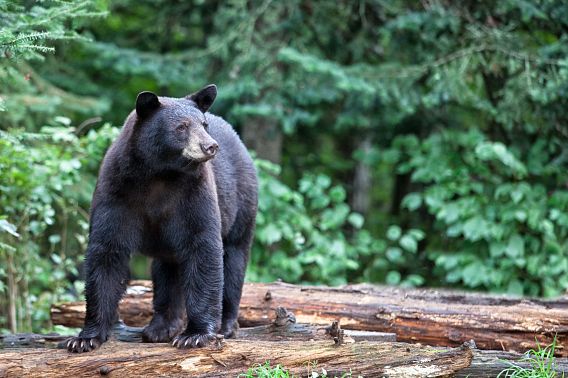 Wisconsin bear hunters harvested 2,922 bears during the 2023 black bear season, a marked decrease from the 4,009 bears harvested last year.Photo credit: iStock /LynnBystrom
MADISON, Wis. – The Wisconsin Department of Natural Resources (DNR) today announced preliminary results for the 2023 bear season. The 2023 bear season harvest is well below the recent annual average of approximately 4,000 harvested bears, representing the lowest yearly bear harvest since 2008.
Wisconsin bear hunters harvested 2,922 bears during the 2023 black bear season, a marked decrease from the 4,009 bears taken by hunters last year. This decline was observed across the state, as the bear harvest fell short of respective targets in all management zones.
Similarly, statewide hunter success dropped to 23%, down from the recent 5-year average statewide hunter success rate of 32%. Hunter success rates in individual zones varied from about 60% in Zone A to about 5% in Zones E and F.
“This fall saw a remarkably high acorn crop across much of the state, and this abundance of natural food typically results in reduced hunter success rates as hunters’ baits are less effective,” said Randy Johnson, DNR Large Carnivore Specialist. “Almost all of the anecdotal reports I heard from bear hunters this fall mentioned the incredible abundance of acorns and other natural foods in the woods. It is difficult to predict when these bumper acorn crops will occur, but when they do, the impact on bear hunting is unmistakable.”
Harvest data indicates Zones A and B, in the northern and northeastern parts of the state, were less impacted than other areas, with hunter success rates closer to average at 59% and 50%, respectively. Zone C, located in the central part of the state, fell well short of its harvest target, with below-average hunter success rates as well. Similarly, in the northwestern area of the state, Zone D saw well below-average harvest and hunter-success rates. The drop in Zone D is likely due, at least in part, to recent management actions intended to reduce bear populations in this area, combined with the abundance of natural foods available this fall. Finally, Zones E and F, encompassing most of the state’s southern areas, saw declines in average hunter success rates and total harvest.
Zone-specific preliminary registration information is as follows:
| Zone | Harvest Target | Preliminary Harvest | Percentage of Target Harvested | Licenses Issued | Hunter Success Rate |
| A | 1,075 | 1,028 | 95.6% | 1,730 | 59% |
| B | 850 | 744 | 87.5% | 1,495 | 50% |
| C | 600 | 379 | 63.1% | 3,000 | 13% |
| D | 1,800 | 657 | 36.5% | 4,035 | 16% |
| E | 200 | 96 | 48.0% | 2,000 | 5% |
| F | 50 | 18 | 36.0% | 500 | 4% |
| Statewide Total | 4,575 | 2,922 | 63.8% | 12,760 | 23% |
| *These preliminary data do not include bears taken via agriculture damage tags, the Learn to Hunt program or tribal harvest. | |||||
The 2023 bear season ran from Sept. 6 to Oct. 10. Hunters were awarded 12,760 bear hunting licenses through the license lottery system. Nearly 138,000 people applied for a bear hunting license or preference point for the 2023 season, setting a record for the number of applicants. A full breakdown of the 2023 bear license drawing and license wait times is available on the DNR website.
“Interest in bear hunting continues to grow in Wisconsin and across the nation,” said Johnson. “We encourage hunters to review management zone boundaries, season frameworks and license wait times as they make their hunting plans for the coming years.”
Bear permit applicants must apply at least once during any period of three consecutive years to retain their accumulated preference points; otherwise, all accumulated preference points will be lost.
Hunters wishing to obtain a license or preference point for the 2024 season are encouraged to apply through Go Wild before the Dec. 10 deadline.
Wisconsin has a thriving and expanding bear population, estimated at approximately 25,000 individuals. The resident bear population’s range covers more than half the state, with concentrations in the forested regions of northern and central Wisconsin, with a continued trend of slow southward expansion.
Hunters play an important role in bear management by providing critical data from every harvested bear. This data informs the DNR’s population models to track trends, achieve management objectives and ensure a healthy bear population.
Visit the DNR’s Bear Hunting webpage to learn more about black bear hunting, ecology and management in Wisconsin.