Black bear hunting about to be legal in New Jersey
Reply

More than 100 birds had to be put to sleep after a ‘devastating’ outbreak at a Sussex animal rescue centre.
By Sam Morton
Published 8th Sep 2023, 12:15 BST
Updated 8th Sep 2023, 13:09 BST
Worthing-based Wadars animal rescue has launched an emergency appeal following the outbreak of a deadly avian influenza virus this summer – which resulted in the closure of its wildlife unit and clean-up costs in the region of £25,000.
Director of operations, Tracy Cadman, said: “Having cared for them for many weeks, our worst fears were confirmed after we contacted Defra (the Department for Environment, Food and Rural Affairs) in order to discuss our concerns about the health of a small number of birds.
“Defra visited the same day and took samples, and we later received the devastating news that the samples had tested positive for avian influenza, and as a result, the 100 plus birds in our care would need to be culled.
“What is even more heartbreaking is that we were told that our PPE and biosecurity levels were very good, but still this happened.”
A strain of avian influenza was found in a group of captive birds in West Sussex, with the county council urging poultry keepers – in the Ferring area of Arun – to contact Trading Standards.
Housing and movement restrictions for birds were put in place by the Department for Environment, Food and Rural Affairs (DEFRA) after the discovery of the strain, named H5N1.
Tracy added: “As I’m sure you can imagine, this horrific situation has hit both our staff and voluntary team members extremely hard, especially colleagues who had worked tirelessly day in, day out with the birds and other wildlife in our care.
“People who had direct contact with the birds were given a ten-day course of antiviral medication as the disease can, in rare cases, transfer to
humans, and we have also been providing support for the team to enable people to talk through what happened and how it might have affected them.”
Since the outbreak, Wadars said its staff have been working closely with Defra and specialist contractors in order to put in place the ‘rigorous programme of cleansing and disinfection’ that is ‘necessary to eliminate this disease’.
“Due to the intricacies of the cleansing programme and the highly infectious nature of the disease, the painstaking work could take up to three months to complete at a likely cost of around £25,000,” a spokesperson for the charity said.
‘Throughout the crisis’, the wildlife helpline and mobile wildlife rescue service has continued to operate and is on track to have responded to more than 1,400 calls for help from members of the public by the end of the year.
Wadars has also continued to find forever homes for a range of companion animals, which were not affected by the outbreak.
Tracy said: “The money that this bird flu outbreak is costing the charity is what would otherwise be spent on the dogs, cats, rabbits, guinea pigs and other small animals in our care as well as our community-based wildlife rescue work.
“We are appealing to people in the community that we serve to help us recoup some of that money by donating to our emergency appeal. Please help us to recover from this awful ordeal and thank you in advance for any support that you can give.”
To donate to the Wadars Emergency Appeal, either send a cheque made payable to ‘Wadars’ to Wadars, Hangleton Lane, Ferring, West Sussex, BN12 6PP, or via the Wadars JustGiving page.

Worthing-based Wadars animal rescue has launched an emergency appeal following the outbreak of a deadly avian influenza virus this summer Photo: Sam Morton / Sussex World
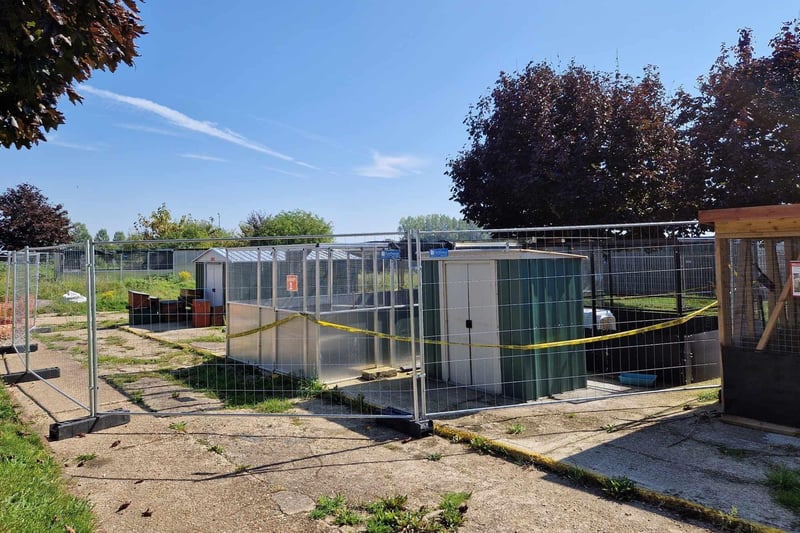
Since the outbreak, Wadars said its staff have been working closely with Defra and specialist contractors in order to put in place the ‘rigorous programme of cleansing and disinfection’ that is ‘necessary to eliminate this disease’. Photo: Sam Morton

Wadars has also continued to find forever homes for a range of companion animals, which were not affected by the outbreak. Photo: Sam Morton

To donate to the Wadars Emergency Appeal, either send a cheque made payable to ‘Wadars’ to Wadars, Hangleton Lane, Ferring, West Sussex, BN12 6PP, or via the Wadars JustGiving page. Photo: Sam Morton
by Jeni Nybo09/07/2023 1:25 p.m.
UPDATED: 09/07/2023
You’ve likely heard of avian influenza, also known as bird flu. We’ve had cases in Pierce County in recent years in backyard flocks and wild birds.
Washington State Department of Health (DOH) issued a news release last week about recent cases in the Puget Sound, including at the Port of Tacoma.
Bird flu doesn’t pose a major risk to you and me, but it could harm our wild and domestic bird populations and our pets.
Know what to look for—and what to avoid.
Bird flu is a Type A flu virus. These viruses occur naturally in wild aquatic birds, but can also infect poultry like chickens, turkeys, pheasants, ducks, and geese.
Bird flu viruses rarely infect people but can affect those who have had close contact with infected birds.
Since January 2022, a strain of H5N1 avian influenza has been circulating in wild birds around the world. It also infected domestic poultry, including commercial and backyard flocks, and other wild and domestic mammals.
No treatment is available for wild species and most birds that become ill with bird flu will die from it.
You can take simple steps to reduce the potential risk of spreading bird flu to your pets, poultry, family, and friends.
Make sure you see all our updates. Sign up for blog and other notifications and follow us on Facebook, Twitter and Instagram to get our latest reliable information.
The video embedded below, along with the draft script, can be viewed on the Nature Bats Last Substack account. Comments are enabled on Substack with a paid subscription.
https://www.youtube.com/embed/UnRDIzAoh44?enablejsapi=1&autoplay=0&cc_load_policy=0&cc_lang_pref=&iv_load_policy=1&loop=0&modestbranding=0&rel=1&fs=1&playsinline=0&autohide=2&theme=dark&color=white&controls=1&

Latest Peer-Reviewed Journal Article:
Guy R. McPherson, Beril Kallfelz-Sirmacek, James Massa, William Kallfelz, and Ricardo Vinuesa, June 2023, Results in Engineering: “Environmental thresholds for mass-extinction events.”

ScienceAlertFollow
Story by Tessa Koumoundouros •15h
EPA Report Cover© Provided by ScienceAlert
Forty years ago this month the US Environmental Protection Agency (EPA) released a grim report warning us of the coming perils if we did not act on climate change.
“Agricultural conditions will be significantly altered, environmental and economic systems potentially disrupted, and political institutions stressed,” they predicted in a report published in September, 1983.
Hot Springs Top Places to Stay
After decades of negligent procrastination by leaders and malicious corporate obfuscations on climate change we’re now witnessing many of their predictions become a reality to an uncannily prescient degree.
Titled “Can we delay greenhouse warming”, the report estimated temperatures would hit 2 °C higher than before the Industrial Revolution by 2050. If our current trajectory continues with only small levels of mitigation as it has for the last four decades, we’re still on track.
“Substantial increases in global warming may occur sooner than most of us would like to believe,” the report stated.
The scale of the impacts so far this year have certainly been a shock, even for those of us paying attention. Record after record continues to be smashed, from the intense heat in our skies and oceans altering atmospheric currents leading to the staggeringly fierce fires and floods and loss of ice from Earth’s north and south poles, decimating countless wildlife from fish to penguins.
All this is at just 1.1 °C degrees of warming. Delays in Earth’s complicated biophysical system means another 0.4 °C is already locked in.
 Related video: Earth Reached Record Greenhouse Gas Emissions In 2022 (The Weather Channel)
and it turns out it’s not doing so great.
Loaded: 81.39%Play
Current Time 0:04
/
Duration 0:44Quality SettingsCaptionsFullscreen

Earth Reached Record Greenhouse Gas Emissions In 2022Unmute
0
If we hit 2 °C as predicted, we’ll likely have to endure consequences of a collapsed Atlantic ocean circulation, extinction of coral ecosystems, and a loss of nutrition in our food as well as further yield decreases.
Even 40 years ago it was clear we couldn’t simply innovate our way out, with the EPA pointing out CO2 scrubbers were not a viable mitigation strategy. Despite continuing to use up a massive proportion of mitigation funding in the decades since, there’s still no breakout advance in this area. Geoengineering also remains too much of an uncertain risk, making much vaunted techno fixes as fictitious as ever.
Relying on a technological fix is still “tantamount to ‘Electrifying the Titanic’, as if this would melt the icebergs,” University of British Columbia ecologist William Rees recently argued in a review of our current situation.
Instead, even back in the 1980s research suggested ecology-based strategies like growing forests, now broadened to rewilding, held the most promise outside the energy sector. The science supporting rewilding has only grown, but the window is fast closing for this solution too. All while we allow the exact opposite to occur: the continued decimation of forests in both wealthy and developing countries.
The EPA’s report concluded banning coal and oil was the most effective way to prevent the oncoming disasters, which also remains true. If we’d successfully weaned ourselves off fossil fuels by the year 2000, warming by 2100 would have halved from 5 °C to 2.5 °C, they estimated. The report accurately predicted why this would not be politically or economically feasible, including corporate greed and lack of cooperation between nations.
Despite this missed opportunity it’s still not too late to reduce future impacts, as every fraction of a degree will save lives.
Thankfully our small mitigation efforts so far have at least made the EPA’s 5 °C by 2100 prediction unlikely, but our current path still could lead to over 4 °C, which we absolutely do not want to leave our future children or grandchildren to face.
This will mean obliterating the lives of a billion people, not to mention all the entire species we’ll take down with us.
“A soberness and sense of urgency should underlie our response to a greenhouse warming,” the EPA report concluded, and this remains truer now than ever.


