How Microplastics In The Brain Could Have The Power To Change Our Behavior
Reply

DR. BECCY CORKILL
Custom Content Manager
 3Comments
 33Shares

Back in 1893, Belgian paleontologist Louis Dollo developed the principle that, once a structure is lost in evolution, then it is lost forever. It basically treats evolution like a one-way street and that evolution is not reversible. This simple concept became known as Dollo’s law. However, the law may not be as simple as you might think.
https://imasdk.googleapis.com/js/core/bridge3.587.0_en.html#goog_473463730
https://imasdk.googleapis.com/js/core/bridge3.587.0_en.html#goog_1380056587
https://imasdk.googleapis.com/js/core/bridge3.587.0_en.html#goog_1400729763 Top Stories00:0201:06


 Harvard Team Claims They Have Recovered Pieces OfAn Interstellar Object
Some scientists have broken down Dollo’s law even further into two parts.
The first point seems simple enough. What gets more complicated is the second point, as with the development of new genetic methodologies, the thought that random genetic mutations cause some genes to be lost forever is becoming more doubtful. This means that old genetic pathways could be reactivated to reacquire characters or genes that are switched off can be switched on again.
For the second part of Dollo’s law to occur, it is presumed that this accumulation of mutations takes time, and during this time features could be re-expressed and could lead to the short-term reacquisition of some features.
Scientists have found wonderous natural examples that seem to go against at least the first point of the law, and this breakage may be more common than people think.
One case is of the lizards who re-evolved to lay eggs, after previously evolving to give birth to live young. The Liolaemus lizard is a species that lives in colder climates, and to keep their offspring warm, they evolved internal gestation. Scientists found that when some Liolaemus species moved down to colonize the lowlands, where it was warmer, they seemed to start laying eggs again – seemingly, breaking Dollo’s law while they are at it.
This was not just unique to this type of lizard. The common lizard Zootoca vivipara also seemed to go from birthing live young to producing eggs.
There was one study that found that the ancestral wrist bone seemed to make a comeback in the lineage leading to birds.
There were some dinosaurs that liked to walk on all fours. This meant that they needed strong wrists to support their weight, and one bone was called the pisiform. When dinosaurs began to walk on two legs, the bones in the wrist changed and the pisiform seemed to disappear, or there was no trace left in the fossil record.
As one group of dinosaurs evolved into birds, the wrist changed again and went from being straight to bent and hyperflexible, which allowed the birds to hold wings against their body. The birds developed a different type of wrist bone called the ulnare.
Investigating both the fossil record and modern bird embryos, researchers saw that the ulnare bone was present early in the development, but not in grown birds. However, there was a certain bone present in the adult form, which turned out to be the missing pisiform, that seemed to have emerged again.
Parasites are entirely dependent on the host, and once they become a parasite there is often no going back. Unless they are a dust mite, that is.
Dust mites are teeny tiny arachnids that are often living beside us in cushions and carpets. They are also organisms that have a free-living lifestyle. So, it was a surprise when scientists discovered that the house dust mite evolved from permanent parasites of warm-blooded vertebrates.
Despite Dollo’s attempt to simplify the world around him. There are plenty of examples found in nature that go against it.
All “explainer” articles are confirmed by fact checkers to be correct at time of publishing. Text, images, and links may be edited, removed, or added to at a later date to keep information current.
World NewsEdited by Amit ChaturvediUpdated: August 30, 2023 3:40 pm IST
https://www.ndtv.com/world-news/turkish-family-walking-on-all-fours-baffles-scientists-4342204

The members of the family use the palms of their hands in a “bear crawl”.
A family living in Turkey has baffled scientists studying the evolution of humans. Certain members of the Ulas family walk on all fours, which had not been observed in fully-grown adults before this discovery. This unusual behaviour was first documented in a 2006 BBC documentary titled ‘The Family That Walks on All Fours’. The video shows the members of the family using the palms of their hands in a “bear crawl”. A scientific paper has also been published, giving details about the family.
The BBC quoted Professor Humphrey, from the London School of Economics (LSE), as saying that four sisters and one brothers were born with the unusual trait that could yield clues to why our ancestors made the transition from four-legged to two-legged animals.
Unfortunately, a sixth member of the family, who also had the characteristic, died.

PlayUnmute
Loaded: 0.16%Fullscreen
“I never expected that even under the most extraordinary scientific fantasy that modern human beings could return to an animal state,” Professor Humphrey said on 60 Minutes Australia.
“The thing which marks us off from the rest of the animal world is the fact that we’re the species which walks on two legs and holds our heads high in the air,” he explained.
“Of course, it’s language and all other sorts of things too, but it’s terribly important to our sense of ourselves as being different from others in the animal kingdom. These people cross that boundary,” added the expert.
Promoted
Listen to the latest songs, only on JioSaavn.com
https://www.jiosaavn.com/embed/playlist/1134548194
A study by researchers at Liverpool University said that the children at the centre of the study had skeletons with more resemblance to apes than humans and a shrunken cerebellum, said New York Post.
Post a commentProfessor Humphrey later said that a physiotherapist later and equipment used to help them walk on just two feet, which led to significant improvements in mobility.
Published Tue, Aug 29 202312:07 PM EDTUpdated 2 Hours Ago
https://www.cnbc.com/2023/08/29/bill-gates-climate-change-cause-people-are-least-aware-of.html
SHAREShare Article via FacebookShare Article via TwitterShare Article via LinkedInShare Article via Email

U.S. philantropist Bill Gates speaks during the Global Fund Seventh Replenishment Conference in New York on September 21, 2022.
Ludovic Marin | AFP | Getty Images
Bill Gates has spent years, and billions of dollars, working to combat climate change.
The billionaire’s foundation has invested vast sums in various climate tech solutions while regularly raising the alarm about the leading contributors to climate change, like the greenhouse gas emissions stemming from major energy and manufacturing companies burning fossil fuels at prodigious rates.
But, according to Gates, most people are still unaware of the role played by one of the biggest contributors to climate change: agriculture, specifically methane emissions from livestock and fertilizers.
“Of all the climate areas, the one that people are probably least aware of is all the fertilizer and cows, and that’s a challenge,” Gates recently said on the latest episode of his podcast, “Unconfuse Me.”
The topic came up because Gates was in conversation with musician and director Ahmir “Questlove” Thompson, who, like Gates, also happens to be an early investor in several plant-based food startups, such as Impossible and NotCo.
Thompson, who is from Philadelphia, even recently partnered with Impossible to create a plant-based cheesesteak that counts former president Barack Obama as a fan, he told Gates.
Thompson told Gates he was won over by plant-based foods’ ability to mimic the taste of real meat, among other products: “Something told me plant-based is going to be the future … and I want to be the person that plants the seed,” he said.
While plant-based foods have won support from those looking for alternatives to products made from animals, Gates said that he started backing plant-based food ventures because of their potential to combat climate change.
“I came to it more from that climate angle,” he said.
Gates has pointed out in the past that the agricultural industry contributes roughly 24% of the world’s greenhouse gas emissions, with much of that stemming from methane emissions from livestock and fertilizer used to cultivate crops, according to data from the U.S. Environmental Protection Agency.
In fact, if cattle “were a country,” Gates wrote in 2018, “they would be the third-largest emitter of greenhouse gases [in the world].”
In his 2021 book, “How to Avoid a Climate Disaster,” Gates wrote that effectively combating climate change will take people being willing to commit to new ideas, like switching to electric cars and synthetic meats.
That same year, Gates argued that wealthy countries that have the resources to do so “should move to 100% synthetic beef” in order to meaningfully reduce global emissions from livestock, he told the MIT Technology Review.
“You can get used to the taste difference, and the claim is they’re going to make it taste even better over time,” he said at the time. “Eventually, that green premium is modest enough that you can sort of change the [behavior of] people or use regulation to totally shift the demand.”
Plant-based meat sales still represent just a small percentage of the total meat market, and even Gates admits it will be difficult to convince enough people to stop eating real meat to make a significant difference.
One issue is that the still relatively new products are currently more expensive than real meats. Still, Gates has a positive outlook that plant-based meat companies will continue to improve their products, and reduce their costs, helping them to eventually become more popular.
That’s why Gates and his foundation have financially backed plant-based and lab-grown meat startups such as Impossible, Beyond Meat and Upside Foods. He’s also backed Neutral, a carbon-neutral food startup. Speaking to Thompson about the plant-based meat startups, like Impossible, Gates said that “they’re doing well, but a lot of people want him to make [the product] even slightly better.”
“They have a good roadmap, so I’m optimistic,” he said.
After avian influenza killed 21 endangered California Condors, government officials are testing a vaccine that could protect the massive scavengers from infection
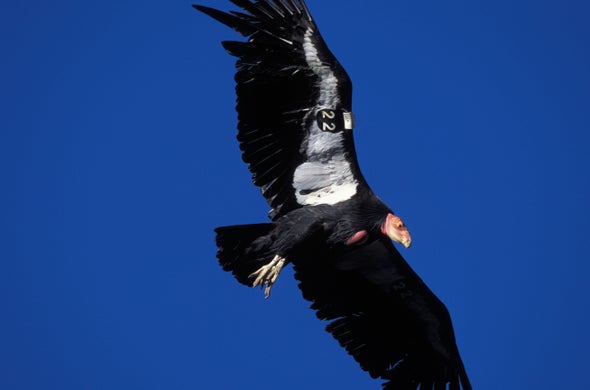
The threat of avian influenza became real for Ashleigh Blackford in March. Three years after the world took drastic steps to slow the spread of a different respiratory virus, she found herself living a twisted version of that experience—this time with the nearly 600 iconic birds she oversees as California Condor coordinator at the U.S. Fish and Wildlife Service.
California Condors (Gymnogyps californianus) are North America’s largest wild birds—and are among the most endangered. In 1982 there were just 22 of the birds left. Conservationists captured and bred them to painstakingly claw the birds back from the brink of extinction. At the beginning of this year, there were 561 California Condors, more than half of which lived in the wild across several western U.S. states. But this spring, as March turned into April and more birds got sick, the species’ success looked imperiled.
“It was [like], ‘We’ve lost five birds today. We lost two more,’ and it just kind of felt like it was snowballing on us,” Blackford says of the losses. Many of these were condors that had roosted in Arizona’s Vermilion Cliffs, the same place where captive-bred birds were first released in 1996. By the end of spring, avian influenza had killed 21 condors out of the flock that soars over Arizona and Utah—and Blackford says the outcome could have been much worse.ADVERTISEMENT
Now the FWS has begun testing an avian influenza vaccine in the iconic birds in hopes of eventually inoculating every living condor against the disease, which experts fear may come roaring back as temperatures drop this fall.
Avian influenza comes in two varieties. Traditionally, wild birds have been known to carry low-pathogenicity avian influenza, which is typically asymptomatic, whereas highly pathogenic avian influenza is usually found in poultry. But in Europe a highly pathogenic strain became epidemic in numerous species of wild birds by 2021, and the strain reached the U.S. the following year. By now that strain has likely killed millions of wild birds, experts estimate.
“This is very different from what we’ve seen historically [from avian influenza],” says Samantha Gibbs, lead veterinarian at the FWS Wildlife Health Office. “I don’t think it’s just going to disappear.”
And while dead Caspian Terns (Hydroprogne caspia), Mallards (Anas platyrhynchos) and Red-tailed Hawks (Buteo jamaicensis) are bad news, none of those animals are as rare as the California Condor. “With a really nice, big population that’s healthy, we may lose a number of birds, but we would feel like they could bounce back,” Gibbs says. “We just don’t have that bench strength with the condors.”
Condors are particularly vulnerable to avian influenza because of how they live, says Jonathan Hall, a wildlife ecologist at Eastern Michigan University, who specializes in the massive birds. Like humans, “they really interact with each other quite a bit, so that makes this disease much more easily communicable,” he says. “We’re talking about animals that live in extended family groups and kin networks.”ADVERTISEMENT
Blackford says the flock that suffered from the virus this spring may have inadvertently cultivated it in cool, damp cliff-bound sanctuaries where they raise their chicks. “I think we had some little petri dishes in our nest caves that unfortunately had a greater impact on our population than if they had known to social distance,” she says.
Unlike more plentiful species, condors are confronting avian influenza with the cards stacked against them. The mighty birds struggle to maintain their numbers because, like humans, they mature slowly and then reproduce at a low rate; they naturally lay just one egg every year or two. Although conservationists have found ways to increase that rate slightly in a captive breeding program, every bird remains precious.
“They’re on this growth trajectory, but it’s slow going, and it’s really expensive, and condors are clearly not at a level where they’re self-sustaining,” says Jacqueline Robinson, an evolutionary geneticist at the University of California, San Francisco, who has studied the birds’ genome. “This loss of so many individuals in such a short time is a pretty big setback for them on that road to once again being a wild, free-ranging, self-sustaining population.”

Desperate for anything that could protect the condors, the FWS reached out to the U.S. Department of Agriculture to ask for permission to test an avian influenza vaccine in the birds. “We didn’t know if there would be a vaccine even available,” Gibbs says. “Because no birds have ever been vaccinated against highly pathogenic avian influenza in the U.S., we didn’t think it was a high probability.”
After some discussion, the USDA authorized the FWS to use a vaccine developed from a killed virus found in a Gyrfalcon (Falco rusticolus) in the mid-2010s, Gibbs says. But the USDA was reluctant to release a vaccine that could end up being used in poultry because there’s no way to differentiate between such domesticated birds that have been infected with avian influenza and those that have been vaccinated for it. The agency included strict constraints on the condor program to ensure none of the vaccine makes its way to poultry and imperils the $5-billion export market for the latter birds.ADVERTISEMENT
“There are very tight controls on the way we use and administer the vaccine,” Gibbs says. “It’s akin to using controlled substances, like ketamine.” For example, only a certified veterinarian can administer the vaccine, and each vial must be destroyed within 24 hours after it is opened, she says.
Once the condor team had the precious vaccine in hand, the first step was to test it on 20 Black Vultures (Coragyps atratus), which are not endangered, to check for any negative side effects. Now condors are receiving the shot, and 20 birds have been fully vaccinated as of August 25, according to the FWS. Although poultry vaccines are typically administered in two doses, the agency is testing how effective it is to give both the prime shot and the booster in one injection, compared with the usual strategy.
How does one vaccinate a 20-pound bird with a nine-foot wingspan and a hooked beak that is often found slicing through an animal carcass? Blackford says experienced condor wranglers are accustomed to using one hand to clamp the beak shut while using the other to hold the bird. A second person does the injecting—down near the bird’s hip, Gibbs says.
With the initial doses doled out to the trial condors, the FWS is now monitoring the birds and preparing to measure antibody levels to the virus in their blood beginning next month. “Step one was safety, step two is efficacy, and then step three will be ‘What’s the practicality in the wild flock?’” Blackford says.
She says that if all goes well, she and her colleagues hope to plan a rollout strategy by, perhaps, October to protect all the condors before spring migration starts. Then the team will look into giving the birds annual boosters, which Blackford says she hopes can easily fit into the yearly health checks the team already conducts. During these checks, each bird is vaccinated for West Nile virus—a mosquito-borne pathogen that also threatens them—and has blood drawn to check for lead exposure from hunters’ ammunition in mammal carcasses that the massive scavengers eat.ADVERTISEMENT
Those standard health checks are a testament to the effort people have poured into keeping condors in the sky. And while Blackford says she’s grateful to have a path toward protecting her charges from avian influenza, she would rather it wasn’t necessary.
“Our goal is not to always touch every condor every year—it’s to not touch them, to not be able to capture them because they’re so wild and so self-sufficient,” Blackford says. Unfortunately, entering that next phase of recovery will require changing human behavior, not just neutralizing a virus, she says, because hunters’ use of lead bullets remains condors’ biggest threat.
“I think it’s a lot easier to combat the avian flu issue because it’s much more straightforward,” Hall says. “The ongoing threats that condors face, really primarily because of the way that the environment has changed over the last 500 years on this continent due to colonization—that’s a much harder issue to address.”

