
Reply
Category Archives: Uncategorized
Pope warns against potential dangers of artificial intelligence
Finland’s THL issues warning about risks of bird-flu outbreak at fur farms
Marine heatwave off Oregon coast considered ‘extreme’ by NOAA
The big idea: should we bring extinct creatures back to life?
DNR abruptly pauses logging on federally aided hunting lands while it works to meet concerns
Extinction alert issued over critically endangered vaquita
Fur farms are breeding grounds for disease and a public health threat. It’s time to shut them down
Experts say the risk of COVID and “bird flu” H5N1 outbreaks outweigh the benefits of these cruel facilities
By MATTHEW ROZSA
Staff Writer
PUBLISHED AUGUST 6, 2023 1:59PM (EDT)
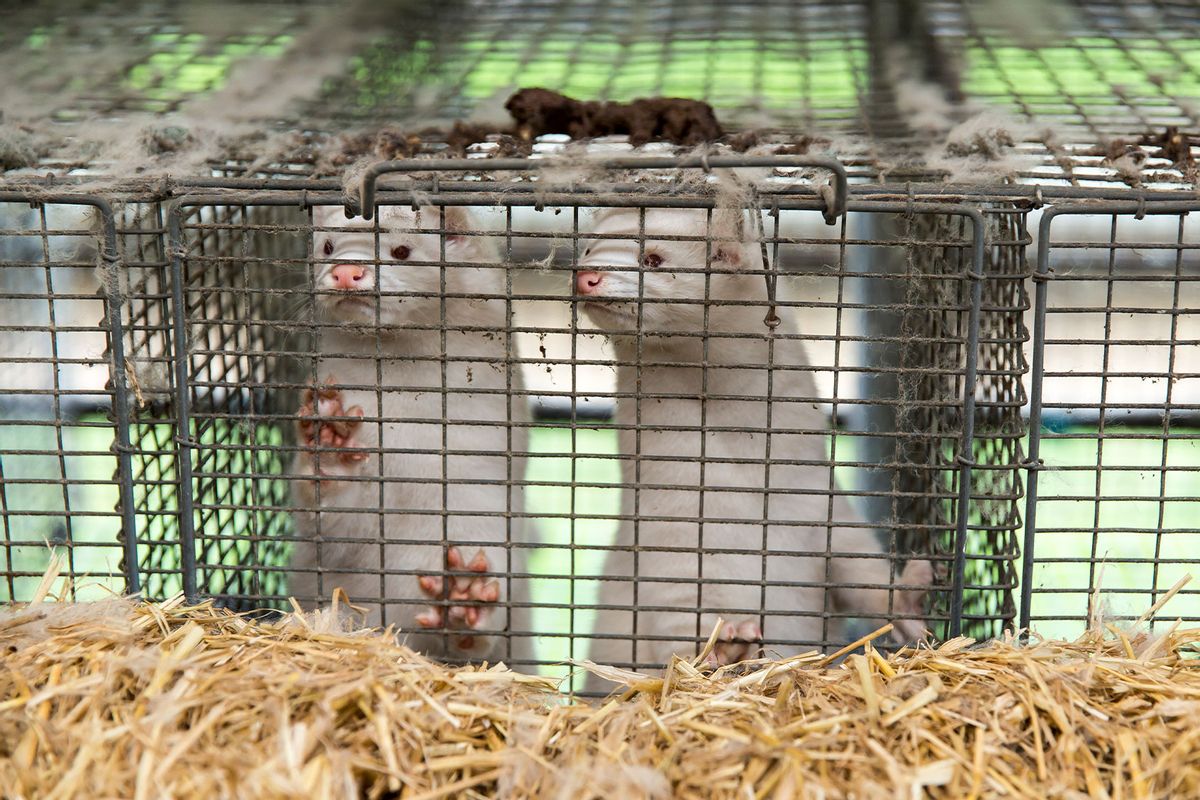 Minks at farmer Stig Sørensen’s estate where all minks must be culled due to a government order on November 7, 2020 in Bording, Denmark. (Ole Jensen/Getty Images)
In early August 2023, Finland’s food authority ordered three of the nation’s fur farms to slaughter 50,000 of their animals. The purpose was not to create new fur coats, but to stop a virus: the H5N1 influenza strain, also known as “bird flu,” which had been detected on those farms. Because Finland and Norway are already facing an H5N1 outbreak, their governments are being especially cautious, aware that fur farms — in particular, mink farms — are notoriously potent incubators for dangerous diseases.
In a worst case scenario, H5N1 or another virus could mutate in a mink and infect a human — and this is why many experts believe fur-producing facilities such as mink farms should be abolished.
According to Dr. James Keen, an expert on zoonotic diseases who studied outbreaks as a senior scientist at the U.S. Department of Agriculture, the threat posed by facilities like mink farms is simply too grave.
“Mink fur farming (as well as raccoon dog and fox fur farming) should be banned for both humane and zoonotic disease risk reasons.”
Advertisement:
“There is a valid reason to be concerned about bird flu H5N1 creating a mutant viral strain with pandemic potential in people,” Keen told Salon by email. “Farmed mink in both Spain and Finland have now been shown to become infected with bird flu H5N1. More fur-farmed mink outbreaks will surely follow. Mink fur farming (as well as raccoon dog and fox fur farming) should be banned for both humane and zoonotic disease risk reasons.”
Related
Zombie mink, infected escapees, and COVID outbreaks: How mink farms became a political flash point
Keen noted how farmed mink tend to fare very poorly, fighting each other and engaging in acts of cannibalism and self-mutilation due to the intense stress of living in cramped, densely populated conditions.
“You cannot separate the inhumane conditions of factory fur-farmed mink from their susceptibility and propensity to acquire and spread infectious diseases to other mink, wild animals, or people,” Keen said. “Mink are not just more susceptible to COVID-19 and bird flu H5N1 on a molecular level, they also get sick more than other animals because of their high density, high-stress farm environments to which they are genetically, behaviorally, and physiologically maladapted.”
Advertisement:
“Mink fur farming (as well as raccoon dog and fox fur farming) should be banned for both humane and zoonotic disease risk reasons.”
It is easy to find anecdotes supporting Keen’s observation about cruelty on mink farms. Speaking to Salon in 2021 about his experiences growing up on a mink farm, Scott Beckstead — who is now director of campaigns for animal wellness action at the Center for a Humane Economy — recalled one mink with a beautiful bluish coat that literally died from terror.
Advertisement:
“The foreman pulled out this sapphire female, and she struggled and she screamed,” Beckstead told Salon, describing an incident that occurred in one of the last years that he visited his grandfather’s southern Idaho mink farm. “Then she went limp. She literally died. There is no doubt that she was terrified. She had watched what was happening to the mink next to her. I think, honestly, the only explanation is that she died of sheer terror.”
Even without the horrid living conditions weakening their bodies and minds, however, farmed mink would still be unusually disease prone because of what Keen earlier described at the molecular level.
“Mink are highly susceptible to respiratory viruses, which we know pass back and forth between mink and the humans working at fur farms,” Lori Ann Burd, environmental health director at the Center for Biological Diversity, wrote to Salon. “The crowded conditions they exist in at fur farms, and the close contact and handling that are part and parcel of these operations are ideal for disease transmission.”
Advertisement:
Want more health and science stories in your inbox? Subscribe to Salon’s weekly newsletter The Vulgar Scientist.
“Mink are highly susceptible to respiratory viruses, which we know pass back and forth between mink and the humans working at fur farms.”
Keen broke down the exact science of why mink are so disease-prone. From an evolutionary standpoint, mink in the wild “are solitary carnivores. Carnivores have an inherent susceptibility to becoming infected with, but not clear, bacterial and viral infections, making them pathogen carriers.” Carnivorous mammals like mink have inherent deficiencies in their immune systems that allow them to carry zoonotic diseases (those that spread between humans and animals) for long periods of time without killing them.
Advertisement:
“These parasites and pathogens can then be transmitted to other susceptible animals and people,” Keen pointed out. “Keeping large numbers of farmed carnivores crowded together on industrial ‘farms’ creates perfect conditions for the pathogens to be carried, to amplify their numbers, and, perhaps most importantly, to mutate into more dangerous variants.”
Keen also broke down how some nations have been far better than others in addressing the public health crisis posed by the ongoing existence of mink farms.
“As far as I can tell, there have been two types of responses to COVID-19 outbreaks and zoonotic risk in fur-farmed mink,” Keen observed, including “vigorous serious” responses such as those “in Denmark, the Netherlands, France, Spain and most EU countries where there has been mandatory testing, active surveillance and monitoring of mink and mink farmers, including euthanasia of infected herds and temporary or permanent shutdown of the farmed mink with farmer compensation.”
We need your help to stay independent
Subscribe today to support Salon’s progressive journalism
Advertisement:
Yet if the Finnish government’s recent actions are any indication, there may be more of a public push to finally shut them down. Certainly there is major action occurring in the United States on that front. For example, the Center for Biological Diversity is pushing for legislation such as the Mink VIRUS Act, a piece of legislation the environmental group says is slowly gaining momentum. The bill would prohibit farming mink for their fur and compensate the farmers for their lost livelihoods.
Read more
about mink farms
A Second American Civil War?
Heat, humidity kill hundreds of US cattle during world’s hottest month
TOM POLANSEK
August 7, 2023 at 3:07 AM
https://www.aol.com/heat-humidity-kill-hundreds-us-100741784.html?guccounter=1

By Tom Polansek
CHICAGO (Reuters) – Hundreds of cattle died in Iowa from extreme heat and humidity in late July, the state and livestock producers said, as the world recorded its hottest month ever.
The deaths show the toll of severe weather on farm animals and food production. The losses further trim the U.S. cattle herd, which is already the smallest in decades after drought drove ranchers to slaughter more cows due to a lack of pasture to feed them.
While not massive in number, producers said the recent deaths were unusual. Cattle also died from heat in Kansas and Nebraska, state officials said.
Iowa’s Department of Natural Resources told Reuters it received a request on July 31 “to dispose of approximately 370 cows that died due to heat in western Iowa recently.”
Gary Vetter, who raises cattle in western Iowa, said he worked to protect local herds but about 53 cattle died at three of his neighbors’ feedlots during the last week in July.
“They just start dropping and there was nothing you could really do about it,” Vetter said. “I’ve never seen anything like it.”
Heat is usually most dangerous for the heaviest cattle that weigh more than 1,000 pounds (450 kg), but temperatures and humidity spiked so high that even lighter 700-pound cattle died, Vetter said.
In Carroll, Iowa, near Vetter’s farm, the heat index climbed to 117 degrees Fahrenheit (47 degrees Celsius) on July 28, the National Weather Service said.
Two hundred miles away (322 km), in the northeastern Iowa city of Riceville, Bob Noble said two of his cattle died in different pens, the first deaths he has linked to heat in years. The 1,100-pound to 1,200-pound carcasses will be composted.
“They just couldn’t handle the extra stress of the heat and humidity,” said Noble, president of the Iowa Cattlemen’s Association.
Iowa is the fifth largest cattle-producing state and had 630,000 cattle in feedlots on July 1, according to the U.S. Department of Agriculture.
The USDA offers disaster assistance that may help compensate producers whose cattle died.
Kansas received a request for disposal of 50 cattle due to heat stress this summer, said Matthew Lara, spokesman for the Kansas Department of Health and Environment. Last summer, the state had at least 2,000 cattle deaths when an early June heat wave caught producers off guard.
In Nebraska, phones started ringing at the state’s Department of Environment and Energy on July 26 or July 27, spokeswoman Amanda Woita said. On the line were “informal phone calls from producers who have experienced cattle deaths due to heat,” she said, without providing death tolls.
Nebraska feedlots house 2.3 million cattle, while Kansas feedlots have 2.4 million cattle.
To prevent losses, Kansas State University in June updated an online weather tool, Kansas Mesonet, to use National Weather Service forecasts to predict comfort levels for cattle a week ahead of time.
Previously, the tool provided day-of weather data, said Christopher “Chip” Redmond, a meteorologist and manager of Kansas Mesonet.
“By then it’s too late,” he said.

