Group of men in court over January 2025 hare coursing
Reply


1.9M Followers
Story by Vishwam Sankaran
• 3mo •
2 min read
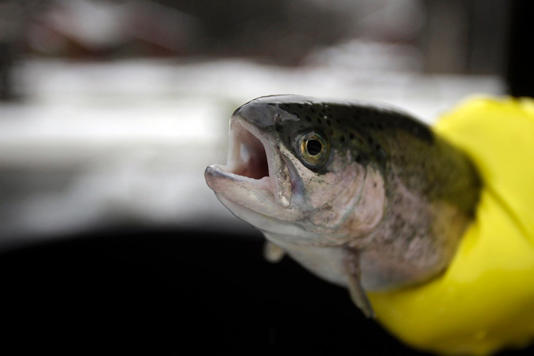
Rainbow trout© AFP via Getty
Fish like the rainbow trout suffer 2 to 20 minutes of excruciating pain while they are harvested and killed for food, according to a new study.
The research, published in Scientific Reports, reveals the hidden pain of fish during slaughter and offers solutions to improve their welfare.
Make Your Everyday Easy – All-New Charging Experience – See Customer Ratings & Reviews


Researchers hope the findings can help improve the welfare of up to 2.2 trillion wild and 171 billion farmed fish killed every year for human consumption.
In the study, scientists focussed on a common method of slaughtering fish called air asphyxiation. Animal welfare groups have flagged this method, which involves depriving fish of oxygen, as inhumane given the significant amount of time they take to lose consciousness in this process.
about:blank
Current Time 0:03
/
Duration 0:22

Freaky fish
0
Researchers found that rainbow trout endured an average of 10 minutes of intense pain during this process, with estimates ranging from 2 to 22 minutes depending on factors like fish size and water temperature.
“Based on a review of research on stress responses during asphyxiation, we estimate 10 min of moderate to intense pain per trout,” they wrote.
Only $39 To Get All TV Channels?
The study cautioned that chilling fish in ice slurry after being caught could cause an even greater burden of pain. “By slowing down metabolic processes, lower temperatures may extend the time to unconsciousness,” it noted.
Looking at other interventions, researchers found that if implemented properly, electrical stunning could avert 1 to 20 hours of moderate to extreme pain experienced by fish for every US dollar spent on slaughtering them.
Another method called percussive stunning, which involves dealing a blow to an animal’s head with special devices, could kill fish quickly without much suffering but faced “implementation challenges”, researchers said, adding that other pre-slaughter practices like fish crowding during transport might cause even greater suffering.
The study also highlights the use of the Welfare Footprint Framework, a method to quantify animal welfare by estimating the total time they spend in various states of suffering or well-being.
Worst Car Insurance Companies for Overcharging (Is Yours On The List?)
It uses time-based values to subjective experiences for direct comparisons between different animal welfare interventions.
“The Welfare Footprint Framework provides a rigorous and transparent evidence-based approach to measuring animal welfare and enables informed decisions about where to allocate resources for the greatest impact,” Wladimir Alonso, an author of the study, said.
“These findings provide transparent, evidence-grounded and comparable metrics to guide cost–benefit decisions and inform slaughter regulations and practices in trout.”
The Independent is the world’s most free-thinking news brand, providing global news, commentary and analysis for the independently-minded. We have grown a huge, global readership of independently minded individuals, who value our trusted voice and commitment to positive change. Our mission, making change happen, has never been as important as it is today.
In an ongoing effort to protect migratory birds, forest rangers in Ha Tinh Province, north-central Vietnam, in coordination with local authorities, have launched extensive inspections and confiscated thousands of illegal bird-hunting tools and decoys.

Since the migratory bird season began in early September, patrols have reported many illegal bird hunting cases in several coastal communes of the province.
In Co Dam Commune, rangers observed locals setting up foam stork decoys, building makeshift bushes along the coast, and planting adhesive sticks to trap migratory birds flying along the coastline.
This illegal activity persists each year, when migratory birds seek refuge in coastal areas.
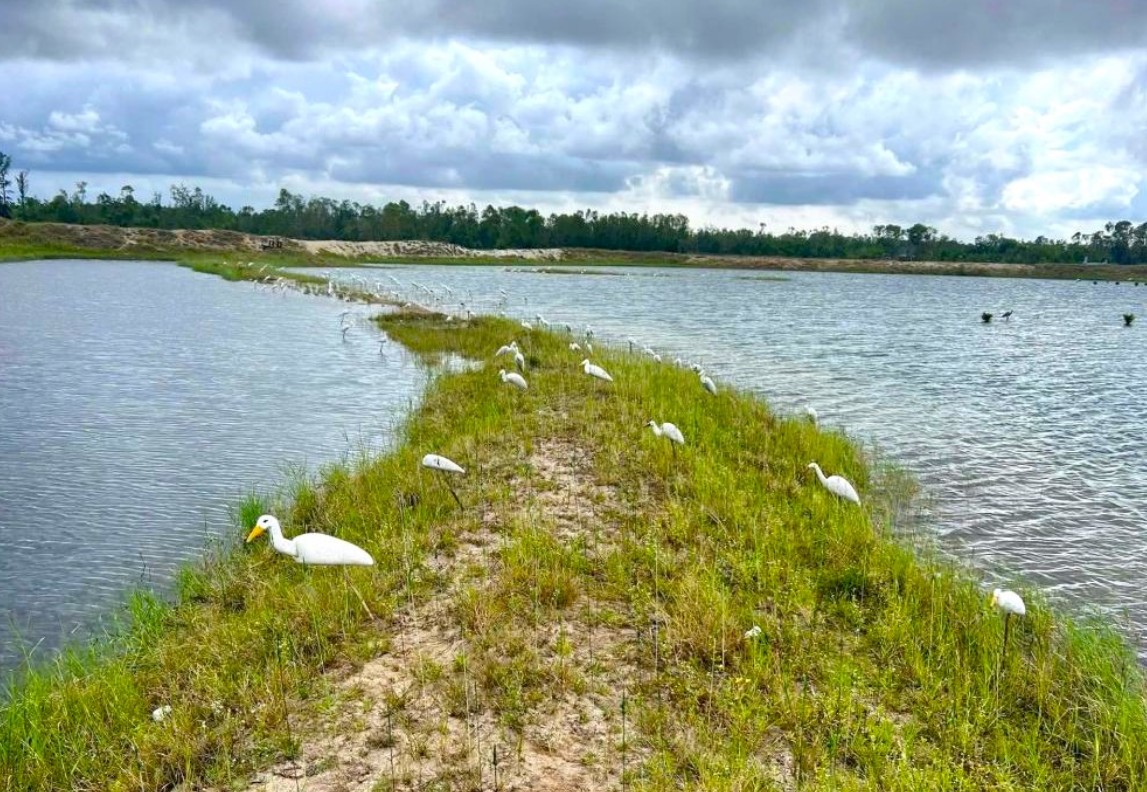
Kieu Dinh Linh, head of the Hong Linh-Nghi Xuan Forest Protection Unit, said that the issue remains widespread despite consistent enforcement.
Since early August, forest rangers have tightened control over migratory bird hunting and purchase, he said.
So far, rangers and taskforces have confiscated 596 foam stork decoys, 800 adhesive sticks, and eight kilograms of bird-trapping glue, while destroying over 7,300 illegal trapping tools.
Moreover, dozens of live birds have been rescued and released back into nature.
In parallel with enforcement, local officials are ramping up public education campaigns to raise awareness of conservation laws and the ecological importance of migratory birds.
In Thach Khe Commune, local police have been conducting regular patrols and reminding residents of the legal ban on hunting, trapping, and purchasing wild birds.



Pennsylvania Game commissioners, at their recent quarterly meeting, voted preliminarily to give all mentored hunters – including those under 7 years old – deer harvest tags. But there was disagreement on the board and the vote was 6-3.
Commissioner Dennis Fredericks, who was in the minority, explained why he voted “no,” sounding a little like our letter writers.
“Our family has very much enjoyed the mentor program, but I’m not convinced that exposing these kids at an early, early age is the right thing to do for them psychologically,” he said.

“From what I’ve seen and heard from other people that I’ve talked to – and believe me, I’ve spent a lot of time in the southwestern part of the state talking to hunters – and to be honest with you, I could not find one person who’s in favor of this regulation as proposed, where the age limit drops to zero.”
Fredericks pointed out that the commission’s game wardens don’t support giving very young children deer tags, presumably because photos of four-year-olds posing with downed deer on social media makes hunters and the agency look bad.
“I think we have the best law enforcement people in the country, and I have made it my business to talk to all of my wildlife conservation officers – I refused to call them game wardens – and I talked to the sergeants and I’ve talked to the regional supervisors … and there’s just no support for the regulation as it’s written here to drop the age.”
The commissioners have to OK the change at another meeting for it to be a regulation. I think they should call it “tags for tots.”
MORE COVERAGE FROM PENNSYLVANIA OUTDOOR NEWS:
Invasive flathead catfish now the apex predator in Pennsylvania’s Susquehanna River
Pennsylvania Game Commission tracking EHD spread across state
All mentored hunters under age 7 may get tags
* We lost one of the very best journalists covering the outdoors Aug. 28 when Ad Crable died. He was 72. You’ve seen his stories on these pages more than a few times. He was outdoor editor for the Lancaster New Era for decades and more recently a feature writer for Chesapeake Bay Journal.
During much of that time, he handled free-lance assignments for publications I’ve edited, and I came to regard him as one of the very best news writers focusing on the outdoors in the business. He was one of very few capable of covering hunting and fishing issues, environmental controversies, agriculture public policy making, and he had a knack for writing about nature, science and our sports.
He was a talented professional storyteller with uncommon skill and integrity whom I greatly respected. I knew I could always rely on him. He was my friend – I miss him.
– We’ve had some feedback on our story on the front page of the last issue, headlined, “Making a Hunting Video? On Public Land, Hit Pause?” Like us, readers are amazed that state and federal agencies say they have policies requiring permits for making and marketing such productions – but can’t articulate them. In some cases, there are even so-far-unspecified fees involved.
Talked with one reader who seemed frustrated with me because I couldn’t provide more information. I assured him – and I want to tell you – the problem is with the government agencies, not us. Seems like they see it as an undeveloped revenue stream, but they obviously haven’t thought it through. Seems greedy to me …
– The Boone and Crockett Club recently announced the findings of a comprehensive study on poaching in this country. The research determined that only about 5% of poaching incidents are detected, leaving a stunning 95% that are either undetected or unreported nationally.
I asked the Game Commission whether its law enforcement experts thought that sobering figure held true in Pennsylvania, or whether it was worse or better. On short notice, they couldn’t say.
 Exposing the Big Game