New Details Revealed About the 25-Year-Old Experienced Hunters Who Were Found Dead in Southern Colorado
Reply


12.9K Followers
Story by Ariana St Pierre, WGME
• 6mo •
2 min read
Personalize


12.9K Followers
Story by Ariana St Pierre, WGME
• 6mo •
2 min read
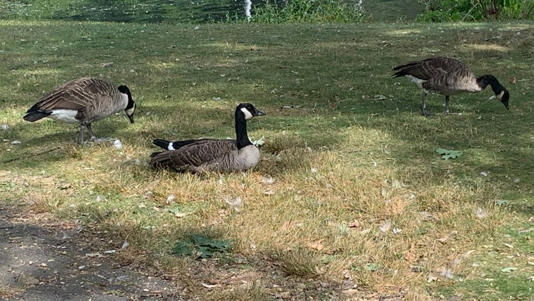
Dead geese found in Ogunquit believed to have had avian flu
OGUNQUIT, Maine (WGME) — About 25 dead geese and ducks have been found on Ogunquit Beach this week, and officials believe they died from avian flu.
The birds were removed and disposed of on Wednesday following proper health and safety protocols, according to town officials.
Officials say preliminary assessments suggest the deaths may be attributed to avian influenza.
Key considerations in home construction.

Earlier this week, a group of dead ducks were found on Short Sands Beach in York. Officials also suspect avian flu to be the cause of their deaths.
Officials say there have been over a dozen cases this year alone between Kittery and just north of Portland.
“Bird flu is here, it’s highly contagious among birds, particularly waterfowl, and so picking up those dead birds at the beach the other day, we want to dispose of them properly so that bird flu doesn’t spread further,” Maine Inland Fisheries and Wildlife Communications Director Mark Latti said.
Officials across the country are tracking the disease, with the latest government data showing the current outbreak is responsible for the death of at least 100 million birds.
The Maine Department of Agriculture, Conservation, and Forestry has elevated the risk level for avian flu to “high.”
Recommendations for Mainers:
about:blank
and safety protocols across the country.
Current Time 0:11
/
Duration 0:42

Dead geese found in Ogunquit believed to have had avian flu
0
Portland firefighters battle three-alarm blaze on Munjoy Hill overnight
Brunswick honors 9/11 heroes with annual run by Travis Manion Foundation
Portland commemorates 250th anniversary of historic Burning of Falmouth event
Reviewed by Steve Fink
Research led by Kristen K. Coleman (University of Maryland)
Sep 18, 2025•2 comments
Fact CheckedVerified
Share:

(Photo by Felipe Caparros on Shutterstock)
Save this article
Enter your email address and we’ll send it straight to your inbox
TULARE, Calif. — A California family watched their four beloved cats get sick one by one last fall. Two of them didn’t make it. But the other two survived after their veterinarian made a bold decision to treat them with the same flu medicine doctors give to people.
The cats had caught H5N1 bird flu, the virus that’s been tearing through dairy farms and chicken coops across America. Now it’s jumped into people’s homes, putting millions of pet cats at risk.
The family’s story, published in the medical journal One Health, shows how quickly this virus can spread from barns to living rooms. And it offers the first real proof that cats can beat this disease if they get help fast enough.
The trouble started in Tulare, California, where dairy farms and suburban neighborhoods sit side by side. The family lived less than a mile from farms dealing with bird flu outbreaks. The husband sold hay to local farms, visiting them regularly for work.
Dr. Jacob Gomez, the veterinarian who ended up treating the cats, knew something was wrong when the first two cats died so quickly. But when he called state and federal agriculture officials for help, nobody called back. “Due to the current demand from the food animal sector, feline outbreak calls were not returned and no treatment or testing options were provided,” the study notes.
Gomez was on his own with dying cats and no playbook to follow.
The first cat to get sick was an indoor-only pet who suddenly became too weak to walk around. Despite being up to date on all his shots, he died at an emergency animal hospital. A few days later, another cat from the same house got sick with identical symptoms and also died, even with supportive care.
By then, Gomez suspected bird flu. When the family brought in their third cat, running a high fever and barely responsive, the veterinarian decided to take a chance.

With no official guidance and no time to waste, Gomez prescribed Tamiflu, the antiviral drug people take for regular flu. He gave the cat the human dose, twice a day for ten days, along with fluids and fever reducers.
Within a week, the cat was eating again and back to his normal self. When the fourth cat arrived with similar symptoms the next day, Gomez used the same treatment. That cat also recovered completely.
Months later, blood tests confirmed what Gomez suspected. Both surviving cats had developed strong immunity against H5N1. One cat showed exceptionally high protection levels, while the other had moderate but still robust immunity. Both cats stayed healthy and active, with their protection lasting at least three to four months after getting sick.
Cats can catch H5N1 in several ways that make them particularly vulnerable. They might eat infected birds or mice, drink contaminated milk, or simply breathe in virus particles. Even indoor cats aren’t safe since the virus can hitchhike into homes on shoes, clothing, or other items from farms or markets.
Bird flu has already surprised scientists by infecting seals, bears, foxes, and other mammals that weren’t supposed to be at risk. Now cats are joining that list, and each new species gives the virus more chances to change and potentially become more dangerous to people.
The problem is that nobody’s really watching for bird flu in household pets. All the surveillance focuses on commercial farms, creating a blind spot where infections in family cats could go completely unnoticed.

 Exposing the Big Game