Inslee, 5 Fish and Wildlife Commissioners Sued

 By Andy Walgamott  June 14, 2023  HEADLINES  0 Comments

An Evergreen State sportsmen’s organization has filed a lawsuit against Governor Inslee and five of his appointees to the Washington Fish and Wildlife Commission and seeks to replace them with vetted and more hunter- and angler-friendly members.

GOVERNOR JAY INSLEE, WASHINGTON FISH AND WILDLIFE COMMISSION CHAIR BARBARA BAKER AND COMMISSIONERS JOHN LEHMKUHL, TIM RAGEN, MELANIE ROWLAND AND LORNA SMITH ARE NAMED IN THE WASHINGTONIANS FOR WILDLIFE CONSERVATION LAWSUIT, FILED TODAY IN THURSTON COUNTY SUPERIOR COURT. (STATE OF WASHINGTON)

In court papers filed today, Washingtonians for Wildlife Conservation says that Inslee’s quintet has skewed the citizen panel out of its legislatively mandated balance, making it “heavily weighted towards members involved in environmental activism, predator conservation, and former researchers employed by governmental agencies.”

The nonprofit alliance of sportsmen’s, gun club, fishing and other groups wants the appointments of Chair Barbara Baker of Olympia and Commissioners John Lehmkuhl of Wenatchee, Tim Ragen of Anacortes, Melanie Rowland of Twisp and Lorna Smith of Port Townsend to be declared unlawful and for Governor Inslee to be ordered “to comply with his statutory duties and consult with organized representatives of hunters and fishers in selecting replacement Commissioners.”

The lawsuit was filed in Thurston County Superior Court and WWC is being represented by Lane Powell PC, a Seattle-based law firm that recently successfully sued Inslee over his appointments to another state commission.

In that case, which was resolved last December, the Governor’s Office was ordered to name two new members to the State Building Code Council after Inslee was found to have “ignored builder group recommendations and instead named two of his own picks,” according to the Associated Press. He was also ordered to pay $70,000 after one of his staffers “made a material false statement in a sworn court declaration by saying one of Inslee’s nominees had been put forward by another building trade group, when he had not,” AP reported.

This particular filing over Inslee and the Fish and Wildlife Commission in part takes issue with a number of statements some of the commissioners made before state senators during their confirmation hearings and elsewhere to illustrate their “inability to satisfy the statutory requirements for appointment and their duties as Commissioners,” which include maximizing fishing and hunting opportunities.

WWC cites Baker’s difficulty in saying the word hunting – she used “shooting things” before senators last winter.

“No sportsperson would describe harvesting game as “shooting things,” the lawsuit states.

Smith dodged a question from lawmakers about the decline in hunting in Washington and didn’t address their concerns around promoting hunting and fishing, it says, while Baker openly told senators, “Right now, we have so little truly wild areas left that we don’t need to be recruiting or retaining anybody to go out there,” words that undercut WDFW’s and conservation’s critical R3 – recruit, retain, reactivate – efforts.

And during a commission meeting, Lehmkuhl characterized cancelling the limited-entry spring black bear hunt as a “‘value issue’ about ‘what’s legitimate,’” according to the lawsuit.

It states that in appointing commissioners, Inslee is “obligated” by the Revised Codes of Washington, passed by the legislature, to maintain a balance of members that represent different interests and have been recommended by groups like WWC, but states that the governor “failed to solicit the input of any organization representing hunters and conservationists.”

That came up in early 2021 with the appointments of Smith and former commissioner Fred Koontz, and heads were scratched when Ragen, Lehmkuhl and Rowland came aboard in early 2022.

In contrast, the recent appointments of retired state and tribal biologists Woody Myers of Spokane and Stephen Parker of Yakima was termed by the Washington Chapter of Backcountry Hunters & Anglers a “step toward Commission balance and sound management of state resources” that was “heartening” to see.

Still, when Inslee installed Myers and Parker, he also “knowingly replaced a Commissioner known to represent the interests of hunters and conservationists” – Spokane’s Kim Thorburn – according to the lawsuit.

All said and done, it states “the Governor appointed a controlling majority of Commissioners who have stated that their priority is non-consumptive use and who have acknowledged hostility to expanding consumptive [opportunities], and who have cited ‘values’ not found in the statue as justifying disregarding clear statutory commands.”

Touching on RCW 77.04.020 which states in part “wildlife management in the state of Washington shall not cause a reduction of recreational opportunity for hunting and fishing activities,” the lawsuit declares the five members “not qualified to sit on the Commission and are incapable of carrying out their statutory duties.”

It asks the court to issue a judgement “determining that the Challenged Commissioners unlawfully hold their positions as Commissioners of the Washington Department of Fish and Wildlife, and should be restrained from acting in that capacity, and excluded from office in forfeit.”

Whether the lawsuit goes anywhere or not remains to be seen, but it’s another example of the hunting and fishing world taking pages out of preservationists’ thick courtroom playbook.

In another case filed this year, Commissioner Smith is being sued by the Sportsmen’s Alliance Foundation for concurrently serving on a county planning commission. She’s being represented on the taxpayer’s dime; a Governor’s Office spokesman said they believed her county position wasn’t a disqualifying one, but a ruling is expected later this month.

In this hook-and-bullet reporter’s recollection, and outside of the ever-litigious Wild Fish Conservancy, it didn’t used to be like this with the Washington Fish and Wildlife Commission. In the not too terribly distant past, a lot of decisions members made were unanimous and things were far, far less acrimonious.

But there appears to be a lot more to play for and a lot more at stake as predator advocates increasingly used the courts and Inslee to attack WDFW management, and recently agitators got state lawmakers to use a Ruckelhaus Center review of the agency in hopes of “reforming” it, i.e., possibly creating a new mandate. Meanwhile, Baker et al are pushing a controversial new draft Conservation Policy for WDFW that has tribal comanagers and venerable organizations like Rocky Mountain Elk Foundation sounding alarms.

It’s not very pretty, I’m not really a huge fan of any of it, but in today’s world it is what it is.

And that is going to have to be all the time I have for this tonight.

10 Vegan Stocks Billionaires Are Loading Up On

Insider Monkey

Aima Zaheer

Mon, June 12, 2023 at 8:14 AM PDT·10 min read

In this article:

  • HAIN-1.29%
  • CELH-0.21%
  • BG+2.37%
  • FIZZ+3.85%
  • MGPI+0.65%

In this article, we will take a look at the 10 vegan stocks billionaires are purchasing. If you want to skip our detailed analysis of the industry and its growth prospects, go to the 5 Vegan Stocks Billionaires Are Loading Up On.

Vegan food refers to food that is free from any animal products or by-products, including meat, poultry, fish, dairy, eggs, honey, and other animal-derived ingredients. Veganism is a lifestyle and dietary choice that aims to avoid animal exploitation and promote ethical, environmental, and health considerations. According to Statista, the size of the global plant-based food industry is set to compound at an annual growth rate (CAGR) of 18.6% from a size of $29.4 billion in 2020 to $161.9 billion by the end of this decade. The rapid increase in the growth of the global vegan food industry has been associated with several potential health benefits, including a reduced risk of heart disease, cancer, and other diseases. Furthermore, the growth of the lactose-intolerant population is anticipated to provide a boost to the global vegan food industry in North America and Europe as consumers are looking for alternative products. On the other hand, increased awareness regarding animal rights, an increase in disposable incomes, and evolving lifestyles are seen to be the key growth drivers in the Asian Pacific region. According to a study published by the Journal of the American Medical Association (JAMA), people who adopt vegan food have a higher life expectancy as opposed to people who live on a meat-based diet. As a result, health-conscious customers are adopting vegan food, benefiting the leading plant-based food stocks.

In addition to this, the higher emergence of zoonotic diseases like COVID-19, avian influenza (bird flu), Ebola Virus Disease, and Lyme in recent times has accelerated the switch towards vegan food and boosted the popularity of vegan ETF. The US Vegan Climate ETF (VGEN) holds the distinction of being the first fund to focus on vegan investments. The changing preferences are also playing in favour of notable plant-based penny stocks such as Tattooed Chef, Inc. (NASDAQ:TTCF) and Komo Plant Based Foods Inc. (OTC:KOMOF). According to Euromonitor, around 40% of consumers around the world are limiting the consumption of animal-based foods as of 2021. Vegan food is also attributed to having a lower carbon footprint compared to animal-based food. Livestock farming, especially cattle, is a significant contributor to greenhouse gas emissions. As per the Food and Agriculture Organization (FAO) of the United Nations (UN), global livestock is responsible for generating 14.5% of all greenhouse gas emissions.

Innovation in the Vegan Food Market

The positive outlook of the vegan food industry can be comprehended by the rising popularity of plant-based fast food restaurant chains like Slutty Vegan. The venture was started in a ghost kitchen in Atlanta, Georgia, by entrepreneur Pinky Cole in early 2018. Within a few months, Slutty Vegan established its physical presence by opening up a food truck. Soon after, it opened its first permanent location in the Big Peach and has now expanded its footprint to Brooklyn, Gwinnett, and Dallas. The business has been able to raise $25 million in series A funding at a valuation of $100 million. The restaurant has gained a significant following for its delicious vegan comfort food. The name “Slutty Vegan” is meant to challenge stereotypes and redefine the perception of vegan food. The menu at the restaurant features a variety of plant-based burgers.

Furthermore, the Minneapolis, Minnesota-based retail giant Target Corporation (NYSE:TGT) also launched a private label brand called Good and Gather, targeted towards vegan food consumers. The brand provides a variety of plant-based products that are clearly labelled as vegan or plant-based. These include items such as fresh fruits and vegetables, plant-based milk alternatives, vegan snacks, canned goods, grains, and more. The brand has grown its annual sales to more than $2 billion in a brief period since its launch in 2019. Some of the best vegan stocks capitalizing on the expanding industry include Kellogg Company (NYSE:K), Tyson Foods, Inc. (NYSE:TSN), and Archer-Daniels-Midland Company (NYSE:ADM).

10 Vegan Stocks Billionaires Are Loading Up On

Nejron Photo/Shutterstock.com

Our Methodology

We used Insider Monkey’s exclusive database of billionaire-owned stocks to shortlist the best vegan stocks with the highest number of billionaire investors as of the first quarter of the year. We have included companies with significant exposure to the vegan food industry. The best vegan stocks have been ranked in ascending order of the number of billionaires holding a stake in them. We have also included information regarding the total number of hedge fund investors in these companies as of Q1 2023.

10 Vegan Stocks Billionaires Are Loading Up On

10. The Hain Celestial Group, Inc. (NASDAQ:HAIN)

Number of Billionaire Investors: 7

Dollar Value of Billionaire Holdings: $26,546,311

Number of Hedge Fund Holders: 18

The Hain Celestial Group, Inc. (NASDAQ:HAIN) is a Boulder, Colorado-based food company that is heavily focused on producing and selling a wide range of natural and organic food products, including plant-based snacks, dairy alternatives, and other vegan-friendly food items.

In a note issued to investors on May 10, Brian Holland at TD Cowen assigned The Hain Celestial Group, Inc. (NASDAQ:HAIN) stock a target price of $22 along with an Outperform rating. Experts believe that the appointment of Wendy Davidson as the Chief Executive Officer (CEO) and President of The Hain Celestial Group, Inc. (NASDAQ:HAIN) in January 2023 has been beneficial for the corporation. Davidson’s extensive consumer packaged goods (CPG) experience has helped The Hain Celestial Group, Inc. (NASDAQ:HAIN) streamline its operations more efficiently.

Madison Funds shared its stance on one of the best vegan stocks in its Q4 2022 investor letter. Here’s what the firm said:

“Stock selection was the poorest for us in this sector. Two stocks in particular – The Hain Celestial Group, Inc. (NASDAQ:HAIN) and Scott’s Miracle-Gro (SMG) – while big winners for us in 2020 and 2021, hurt the portfolio in 2022.

While both companies were so-called COVID beneficiaries (businesses that benefited from consumers staying home and spending on their homes during COVID), we felt they possessed certain additional drivers that would maintain their fundamentals into 2022 and beyond. Hain, for example, has a strong portfolio of organic health and wellness brands that target a higher-end demographic. As strong as their brands are, there is ample room for growth. Put simply, there are channels of distribution like Costco and Walgreens that their brands don’t currently serve, but we believe eventually will. Furthermore, we believed HAIN’s portfolio had pricing power to pull them through this inflationary period.

While we were largely correct on both counts, we underestimated the challenges they faced in their European business (40% of revenue), which overshadowed their success in North America. Entering 2022, HAIN’s stock had just hit a 5-year high of $45. However, the good times were short-lived as Russia invaded Ukraine early in 2022, sending energy prices materially higher in Europe. Although HAIN has a #1 or #2 market share in their brand categories, they could not withstand the economic shock from the war. The pressures on Hain’s European business came from multiple fronts: Rising energy prices skyrocketed their manufacturing and transportation costs. Essential ingredients for their products, like sunflower oil, became scarce as Ukraine is a key exporter of grains. The pressure on energy prices exacerbated an already weakened U.K. consumer due to BREXIT. And finally, the structure of the grocery market in the U.K. led to a delay in price increases. All of these factors weighed heavily on earnings and cash flow. Although we reduced our position size in the early summer, the stock took considerable punishment. As we enter the new year, HAIN’s European business has stabilized considerably. Natural Gas prices have meaningfully corrected, bringing relief not just to their costs but to the U.K. consumer.”

9. Celsius Holdings, Inc. (NASDAQ:CELH)

Number of Billionaire Investors: 8

Dollar Value of Billionaire Holdings: $97,884,998

Number of Hedge Fund Holders: 24

Celsius Holdings, Inc. (NASDAQ:CELH) is a Boca Raton, Florida-based company that specializes in the production and distribution of fitness and energy drinks. The company has a portfolio of vegan-friendly products that are kosher and sugar-free as well.

On June 2, Peter Grom at UBS increased the price target on Celsius Holdings, Inc. (NASDAQ:CELH) stock from $130 to $160 and reiterated a Buy rating. The analyst sees Celsius Holdings, Inc.’s (NASDAQ:CELH) next phase of growth to be driven by international markets.

As of Q1 2023, 8 billionaire investors held a stake worth over $97.8 million in one of the best vegan stocks.

8. National Beverage Corp. (NASDAQ:FIZZ)

Number of Billionaire Investors: 8

Dollar Value of Billionaire Holdings: $200,652,737

Number of Hedge Fund Holders: 12

National Beverage Corp. (NASDAQ:FIZZ) is a Fort Lauderdale, Florida-based beverage company that owns various popular brands like LaCroix, Shasta, and Faygo. The LaCroix line of sparkling water products is vegan, and its ingredients include carbonated water and natural flavours without any animal-derived ingredients. Meanwhile, some of the Shasta and Faygo soda flavours are vegan as well.

Of the 943 hedge funds in Insider Monkey’s database, 12 funds reported owning a stake in National Beverage Corp. (NASDAQ:FIZZ) at the end of Q1 2023. National Beverage Corp. (NASDAQ:FIZZ) has secured eighth place on our list of the best vegan stocks billionaires are purchasing.

7. MGP Ingredients, Inc. (NASDAQ:MGPI)

Number of Billionaire Investors: 9

Dollar Value of Billionaire Holdings: $30,338,235

Number of Hedge Fund Holders: 25

MGP Ingredients, Inc. (NASDAQ:MGPI) is an Atchison, Kansas-based company that produces and supplies various food and beverage ingredients, including alcohol, proteins, starches, and other speciality ingredients. MGP Ingredients, Inc. (NASDAQ:MGPI) primarily focuses on supplying ingredients to other manufacturers and businesses. The company’s Proterra series is a line of plant-based proteins that replicate the feeling of consuming meat when rehydrated. The product line is kosher-certified and produced from non-genetically modified organisms (GMO) wheat.

MGP Ingredients, Inc. (NASDAQ:MGPI) is also considered one of the best vegan stocks to buy, as 9 billionaire investors reported owning a stake in the company at the end of Q1 2023.

6. Bunge Limited (NYSE:BG)

Number of Billionaire Investors: 9

Dollar Value of Billionaire Holdings: $109,687,892

Number of Hedge Fund Holders: 37

Bunge Limited (NYSE:BG) is a Chesterfield, Missouri-based agribusiness and food processing company involved in the production, processing, and distribution of agricultural products. Bunge Limited (NYSE:BG) operates in various sectors of the food industry but is primarily known for its involvement in the sourcing and processing of agricultural commodities such as grains, oilseeds, and sugar. The company offers various plant-based proteins that are derived from canola, faba, pea, and soy and considers faba protein as an ideal ingredient for vegan cheese brands.

In addition to Bunge Limited (NYSE:BG), Kellogg Company (NYSE:K), Tyson Foods, Inc. (NYSE:TSN), and Archer-Daniels-Midland Company (NYSE:ADM) are also among the best vegan stocks billionaires are purchasing.

Click to continue reading and see the 5 Vegan Stocks Billionaires Are Loading Up On. Suggested Articles:

Disclosure. None: 10 Vegan Stocks Billionaires Are Loading Up On is originally published on Insider Monkey.

https://finance.yahoo.com/news/10-vegan-stocks-billionaires-loading-151403941.html

Mexico says mass bird deaths likely caused by El Niño’s hotter waters

Exposing the Big Game's avatarThe Extinction Chronicles

Reuters

June 16, 20231:47 AM PDTUpdated 13 hours ago

https://www.reuters.com/world/americas/mexico-says-mass-bird-deaths-likely-caused-by-el-nios-hotter-waters-2023-06-15/

Authorities investigate death of hundreds of birds on Pacific coast, in Mexico
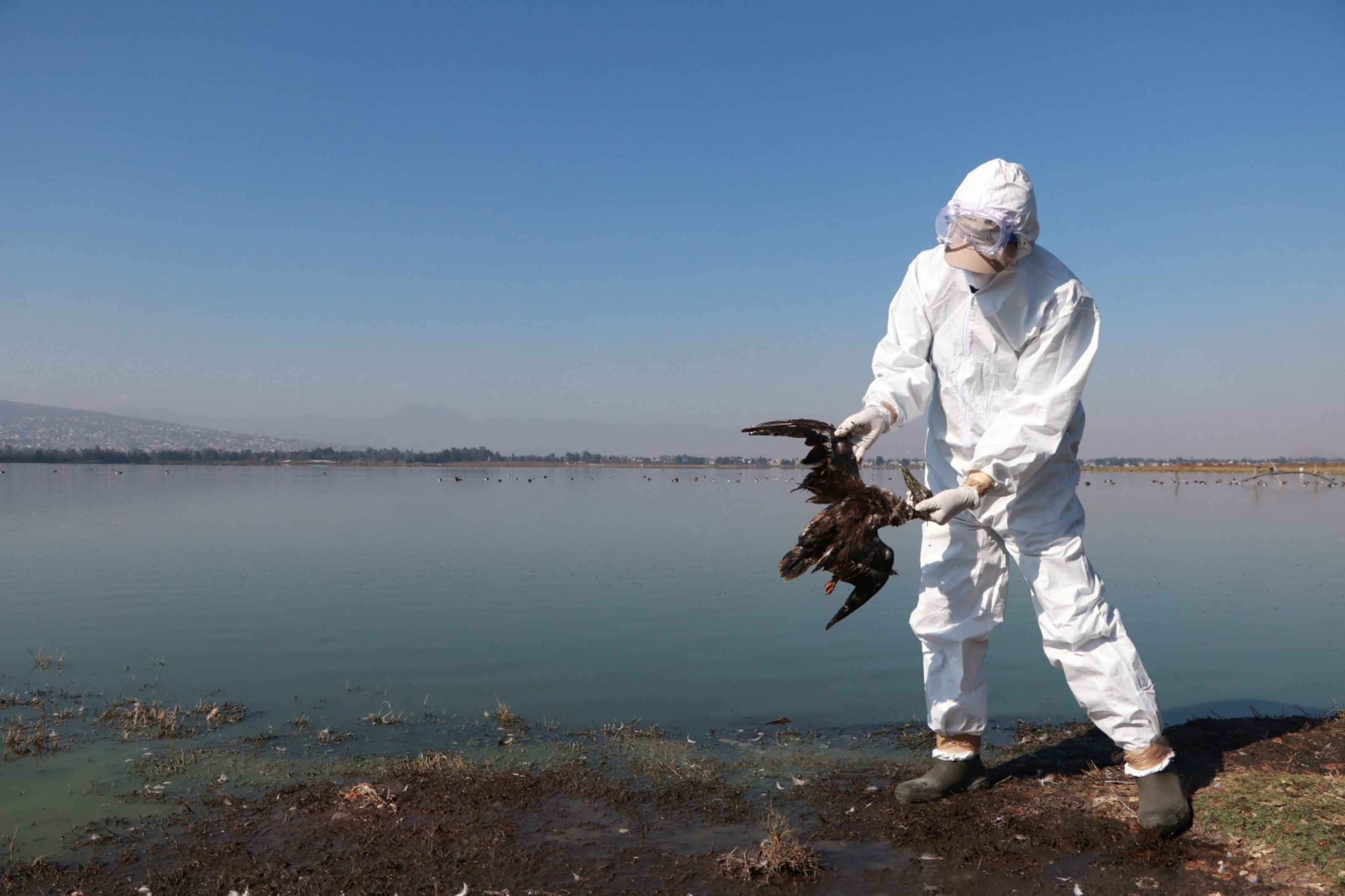
A technician of the National Service of Health, Safety and Agrifood Quality (Senasica) holds a dead bird while the Mexican government investigates the death of hundreds of birds on the Pacific coast, in Mexico with an undisclosed location, in this undated handout picture released on June 10, 2023. Mexican Government/Handout via REUTERS/File Photo

MEXICO CITY, June 15 (Reuters) – The deaths of hundreds of wild birds along Mexico’s Pacific coast were likely caused by the El Niño climate phenomenon, local authorities said on Thursday, as the country and its surrounding oceans face an intense heat wave.

Some 300 wild birds of various species were found dead over the weekend along the coasts of Mexico’s western states of Chiapas, Oaxaca, Guerrero, Michoacan, Jalisco, Sonora and Baja California Sur.

Advertisement · Scroll to continue

Report this ad

Authorities had initially suspected bird…

View original post 197 more words

Humans Have Pumped Enough Groundwater to Change the Tilt of the Earth

The Libyan Desert as viewed from space.
The Libyan Desert as viewed from space. NASA

By pumping groundwater, humans have shifted the distribution of the water on Earth enough to alter the planet’s tilt, a new study finds.

https://e360.yale.edu/digest/groundwater-depletion-earths-axis

Previous research estimated that, between 1993 to 2010, humans pumped more than 2 trillion tons of groundwater. That water flowed to cities and farms before emptying out to sea, raising global sea levels by around a quarter of an inch, the study suggested.

New research finds evidence of this shift in the changing position of the Earth’s rotational pole — the point around which the planet spins. Comparing a computer model of the rotational pole with observed changes in its position, scientists found that the pole’s recent drift could not be fully explained without the effect of groundwater pumping.

From 1993 to 2010, they determined, humans redistributed enough water to move the rotational pole roughly 31 inches. The findings were published in the journal Geophysical Research Letters.

“I’m very glad to find the unexplained cause of the rotation pole drift,” Ki-Weon Seo, a geophysicist at Seoul National University and lead author of the study, said in a statement. “On the other hand, as a resident of Earth and a father, I’m concerned and surprised to see that pumping groundwater is another source of sea-level rise.”

ALSO ON YALE E360

As Sea Levels Rise, Will Drinking Water Supplies Be at Risk?

OPINION: Alaska’s recent brown bear massacre is a historic disgrace

Exposing the Big Game's avatarCommittee to Abolish Sport Hunting Blog

ByRick Steiner

Updated: 23 hours agoPublished: 1 day ago

https://www.adn.com/opinions/2023/06/15/opinion-alaskas-recent-brown-bear-massacre-is-an-historic-disgrace/

A younger bear crosses Mikfik Creek as it runs from a large male brown bear in the McNeil River State Game Sanctuary on the Alaska Peninsula. (Bob Hallinen /Anchorage Daily News)

The state of Alaska’skillingof 94 brown bears (including cubs), five black bears and five wolves last month in Southwest Alaska, shooting them from helicopters, is a historic national and global disgrace. This certainly must be one of, if not the, largest kill of predators by state agents in such a short time in state history — another black eye for Alaska around the world. There will almost certainly be backlash for Alaska. There should be. Alaska’s lethal predator control (Intensive Management) program, as currently practiced, is widely regarded as unscientific, unnecessary, ineffective, costly, unethical, inhumane, and controversial.

It is difficult to buy the state’s argument that such a slaughter was…

View original post 719 more words

Henry Kissinger warns US and China on ‘precipice’ of WW3 as Blinken heads for Beijing

Exposing the Big Game's avatarThe Extinction Chronicles

Daily Express US

Daily Express USFollow

Story by Matthew Dooley•2h ago

Daily Express US

Henry Kissinger warns US and China on ‘precipice’ of WW3 as Blinken heads for Beijing

Was this content a good use of your time?

Your feedback will help us improve the product

They don’t have a workforce that can keep up with

Loaded:100.00%Play

Current Time0:01

/

Duration1:02QualitySettingsCaptionsFullscreenUnmute

View on Watch

China and the US are headed for war if current tensions continue, according to former Secretary of State Henry Kissinger.

“On the current trajectory of relations, I think some military conflict is probable,” he toldBloomberg.

The 100-year-old former diplomat added: “But I also think the current trajectory of relations must be altered.”

Tensions have soared between Beijing and Washington, particularly over the issue of Taiwan which China sees as an integral part of its territory.

Kissinger added that the US and China would need to…

View original post 290 more words

Putin issues chilling WW3 warning as Kremlin ally is ‘ready to use nukes’

Exposing the Big Game's avatarThe Extinction Chronicles

Daily Express US

Daily Express USFollow

Story by Aurora Bosotti•3h ago

Daily Express US

Putin issues chilling WW3 warning as Kremlin ally is ‘ready to use nukes’

Was this content a good use of your time?

Your feedback will help us improve the product

Because the process.

Loaded:100.00%Play

Current Time0:02

/

Duration0:21QualitySettingsCaptionsFullscreenUnmute

View on Watch

More videos

Vladimir Putin is threatening the nuke the world once again as a close ally confirmedRussiastands ready to use devastating missiles if necessary.

Putin announced shortly after the start of his “special operation” in Ukraine last year that his nuclear arsenal was on high alert and could be deployed immediately if necessary.

Russian Foreign Ministry spokeswoman, and close Putin ally, Maria Zakharova reiterated Moscow is prepared to use nuclear weapons to defend…

View original post 507 more words

The world’s oceans are extremely hot. We’re about to find out what happens next.

Exposing the Big Game's avatarThe Extinction Chronicles

Vox.com

Vox.comFollow

Story by Umair Irfan • 4h ago

WEATHER FORECAST

Winthrop58°F

Huge blooms of sargassum seaweed have emerged in the Atlantic Ocean amid record-high water temperatures.©Joe Raedle/Getty Images

On Wednesday June 14, the surface of the North Atlantic Ocean reached an average temperature of73 degrees Fahrenheit.

That may sound like a pleasant day at the pool, but it’s actually a record high, and it will have global consequences. The average for this time of year, over the past three decades, is 71 degrees Fahrenheit. That two-degree difference reflects a gargantuan amount of extra energy stored in the ocean. The Atlantic has been riding a wave ofextreme heat since last year. And as summer sets in, the temperature will climb.

“This is an incredibly unusual year,” saidGabriel Vecchi, a climate scientist at Princeton University. “A warm Atlantic tends to have a lot of…

View original post 1,405 more words

Focused Campaigns versus Closed Circle Campaigns: What Would a Chicken Say?


United Poultry Concerns <https://www.UPC-online.org>
15 June 2023


Thinking Like a Chicken Podcast – News & Views!
 
In today’s podcast I discuss the advantages versus the disadvantages of
Single-Issue Campaigns for animals, including the difference between
Focused Campaigns and Closed-Circle Campaigns and why this difference
matters. Please join me.
 
 
*Listen to the Podcast
<https://www.upc-online.org/podcasts/230616_focused_campaigns_versus_closed_circle_campaigns-what_would_a_chicken_say.html#podcast>*
 
 
Transcript
 
*Focused Campaigns versus Closed Circle Campaigns: What Would a Chicken
Say?*
Hello, and thank you for joining me today. I’m Karen Davis, the founder and
president of United Poultry Concerns, a nonprofit organization that
promotes compassion and respect for chickens, turkeys, ducks, and other
domesticated birds. Today’s podcast reflects an article I wrote a few years
ago in response to the claim by some members of the animal advocacy
community that what they call “single-issue” campaigns blocks the
advancement of animal liberation and veganism.
 
So I am in Brooklyn, New York on a fall day looking at a stack of crates on
the sidewalk filled with live chickens. Sickened by this sight, do I, as an
animal rights activist, just skip over the chickens and proceed to tell
anyone who will listen to Go Vegan?
 
What if a passerby is upset about the chickens crammed in the crates
without food, water or shelter, and asks what can be done to help them? Do
I simply say that these particular chickens are suffering for a sacrificial
ritual, then move on to note that the ritual, while totally cruel, is no
worse than what chickens go through in slaughterhouses every day, urge the
person to Go Vegan and proceed to expound the philosophy of Abolition or
Nothing?
 
Will ignoring the chickens in front of our eyes advance the abolition of
all animal abuse better than if we paid attention to these particular
victims who are helplessly suffering right in front of us?
 
For some Abolitionists, all campaigns focusing on particular animals- in
this case chickens used for a brutal sacrifice – frustrate the ultimate,
worldwide goal of Abolition, Animal Rights, and Veganism. (Veganism most
broadly is a philosophic and practical commitment to justice, compassion,
and nonviolence.) My organization, United Poultry Concerns, promotes the
compassionate and respectful treatment of domesticated birds with a focus
on birds in the agribusiness sector. Does our focus hamper efforts to
liberate all animals from all forms of oppression everywhere on the planet?
 
A point to consider is that every category of animal, animal abuse, and
advocacy can be called “single issue,” whether the category is Chickens,
Farmed Animals, Furbearing Animals, Aquatic Animals, Rodeos, SeaWorld, Save
the Elephants, Vivisection, or other categories.
 
Campaigns on behalf of specific human groups have been waged throughout
history. Was the campaign to end Apartheid in South Africa a “single-issue”
campaign that thwarted the overall effort to liberate people everywhere
from legalized discrimination? What about the women’s movement or the civil
rights movement or the LGBTQ movement in America? Aren’t they “single
issues” within the universal drive for social justice? And do they not
break down further into specific campaigns for voting rights, equal
opportunity in education, housing, sports, and employment?
 
If so, then we must ask whether addressing a particular category of animals
or animal abuse necessarily precludes advocacy on behalf of all animals.
Does focusing on chickens prevent me from putting their suffering within a
broader range of issues? My experience as a Chicken Rights activist for 33
years, since 1990, says that one can develop the skills to do this while
pursuing specific objectives.
 
One can, because a focused objective and the Big Picture are not separate.
Cockfighting, for example, is one “detail” within the larger dimension of
staged animal fights within the broad category of using animals for
entertainment. Using animals for entertainment is part of an entire system
of animal abuse in which the individuals of other species are defined by
humans as property, objects, commodities and resources, without dignity or
rights.
 
Paradoxically, instead of a “detail” versus “dimension” divide (“single
issue” versus Big Picture), the dimensions are in the details and vice
versa, similar to the paradox of individuality and ecology. “I am in the
world, the world is in me,” is how the philosopher Alfred North Whitehead
summarized the cosmic interaction between the Unit and the Ubiquity.


*Closed Circle Campaigns*
That said, not all single issues are the same. Some are closed circles. An
example of a closed circle approach to helping animals is where one group
of exploited animals is used as bait to win funding and favor for another
group. A fundraiser for dogs and cats featuring a chicken dinner,
reassuring your member of Congress that while you oppose experimenting on
animals you have no objection to hunting, fishing or eating them – this
type of advocacy is a closed circle. By contrast, even though United
Poultry Concerns focuses on the plight of birds in the food industry, we
would not hold a fundraiser featuring a lobster dinner or raffle a fur coat
to raise money for our chicken sanctuary. We would not lobby Congress for
chickens at the expense of other animals.


*Thinking Like a Chicken*
Every campaign for animals provides an opportunity to promote the goal of
animal liberation. I like the term animal liberation better than abolition
because animal liberation is a positive sounding goal that highlights the
animals themselves. It’s easy for the animals to disappear in closed-circle
discourse about Ideology and Food. Exclusive use of the word VEGAN can get
in the way of the animals’ faces, their experience, their particular
situation. As animal advocates, we cannot let this happen.
 
In a debate about single issue campaigns, prompted by an Abolitionist
critique of the Alliance to End Chickens as Kaporos
<http://www.endchickensaskaporos.com/> (a project of United Poultry
Concerns), Alliance cofounder, Rina Deych, of Brooklyn, New York, wrote:
“While I completely agree that veganism should be promoted, I do not agree
that so-called single issue campaigns and the promotion of veganism are
mutually exclusive. In fact, many people (including myself) became vegan
after becoming sensitized to the individual issues. Not all of us can
relate to the concept of tens of billions of animals being slaughtered for
food. For many of us, it becomes a reality when we see one animal suffering
(and, hopefully, ultimately being saved). It’s harder to block out that one
image than one of a sea of animals we can conveniently blur into one blob
and tuck away into our unconscious mind and ignore.”
 
The poet William Blake said that we must learn to see the universe in a
grain of sand. Similarly, animal activists must strive to insinuate vegan
advocacy and animal liberation into all of our efforts to help nonhuman
animals. We must advocate passionately for the ultimate goal of Animal
Liberation – and we must advocate with equal justice, passion and
conviction, and do the very best we can, for *these birds, this bird* who
is alive in the flesh, just like ourselves, in the here and now. *These
birds, this bird* needs and deserves our focused attention, our immediate
help, even as we work to liberate all animals from the tragedy of misery
and oppression that we have brought to them.
 
I hope you’ve enjoyed today’s podcast and that you will share it with your
social media network. Please join me for the next podcast episode of *Thinking
Like a Chicken – News & Views!* And have a wonderful day.
 
 
KAREN DAVIS, PhD is the President and Founder of United Poultry Concerns, a
nonprofit organization that promotes the compassionate and respectful
treatment of domestic fowl including a sanctuary for chickens in Virginia.
Inducted into the National Animal Rights Hall of Fame for Outstanding
Contributions to Animal Liberation, Karen is the author of numerous books,
essays, articles and campaigns. Her latest book is *For the Birds: From
Exploitation to Liberation: Essays on Chickens, Turkeys, and Other
Domesticated Fowl* published by Lantern Publications & Media.
 
—
United Poultry Concerns is a nonprofit organization that promotes
the compassionate and respectful treatment of domestic fowl.
Don’t just switch from beef to chicken. Go Vegan.
https://www.UPC-online.org/ http://www.twitter.com/upcnews
https://www.facebook.com/UnitedPoultryConcerns
 
View this article online
<https://www.upc-online.org/podcasts/230616_focused_campaigns_versus_closed_circle_campaigns-what_would_a_chicken_say.html>

Residents on alert for one of nature’s weirdest phenomena

Exposing the Big Game's avatarThe Extinction Chronicles

Metro

MetroFollow

Story by Katherine Fidler•1h ago

WEATHER FORECAST

Kilauea60°F

The Kilauea volcano in Hawai’i is erupting (Picture: Reuters)©Provided by Metro

At this moment in Hawai’i, the volcano Kīlauea is erupting. Red hot lava is bubbling up into its Halemaʻumaʻu crater, one of many along its range.

But while the lava isn’t expected to flow anywhere near residents, they have been warned to look out for another hazard thrown up byvolcanoes– Pele’s hair.

No, it isn’t named afterthe footballer, but Pele the Hawai’ian goddess of volcanoes and fire. Nor is it actually hair.

The curious phenomena occurs when molten lava is spat out of a volcano at high speeds and stretches apart as it cools, forming golden, hair-like strands of volcanic glass.

When the lava is not travelling as fast it can form Pele’s tears, small droplets of the same volcanic glass.

‘Pele’s hair…

View original post 251 more words