Suspected human avian flu cases in Navapur trigger mass screening of frontline workers
Reply

by Captain Paul Watson
The official planetary human population is officially said to be 8 billion of us, give or take a few hundred million. The exact number is unknown.
What does this mean aside from the fact that there were only 3 billion people on the planet the year that I was born and it has more than doubled in one generation? Will it keep expanding despite the fact that we have exceeded the carrying capacity of our species. The cost of our expansion is the removal of the carrying capacity of all other species.
I am presently sitting on a boat on a river connected to an ocean that exists as a thin layer of moisture on the outside of a relatively small rock somewhere inside an outer remote spiral arm of the Milky Way galaxy. This little blue and white ball of spinning mud is orbiting an average yellow star and sharing the experience with a diversity of wondrous living fellow Earthling beings, including some seven billion silly little monkeys just like me and you.
The latest estimates from the star gazing scientist crowd is that there could be as many as sixty billion possible inhabited planets in our galaxy alone. And of course there is an infinity of possibilities of life evolving elsewhere. So many unknown beings, completely oblivious to us, spread across the vast expanse of the universe. And of course we are also oblivious to not only extraterrestrial life but we are pretty much oblivious to most non-human life on our little planetoid careening through the cosmos.
For the last few thousand years we humanoid monkey creatures i.e. primates have been having one hell of a party at the expense of practically every other species on the planet. We don’t treat many of them with respect or even mild consideration, even the ones that look like us, like for example, the chimps and the apes or even those with larger more complex brains like whales and dolphins. In fact we give most other species very little thought even when we’re eating them or using them to work for us. We tend to give them more thought when we’re killing them for pleasure or simply because we don’t like them.
For the most part we, the hairless monkeys, well relatively hairless anyhow, give little thought to where we came from, who we are, or where we are going. We are content as long as there is something to eat and drink, something to buy, another monkey to copulate or play with, or we have enough of a variety of stimulants and entertainment devices and the opportunity to throw balls around together.
We monkeys on the spinning mud ball by the way absolutely love anything to do with a ball. We like to throw balls, catch balls, kick balls, hit balls or better yet we love to watch other monkey creatures like ourselves throw balls, catch balls, kick balls and hit balls. Nothing gets a Homo sapiens more excited than the image of some ball passing between two posts, being tossed into some hoop or smacked with a stick into some distant hole in the ground. Some are partial to knocking a little dimpled ball through the open mouth of some moving clown, and past the little windmills. I mean it makes about as much sense as the bigger version except the smaller version is more amusing and less expensive and does not waste as much land.
We go through life believing that we monkeys are the pinnacle of creation, in fact some of us think there is even a big angry all powerful monkey in the sky who created us in his own image. … Continued on Paul Watson’s Facebook page …



News brief
May 15, 2026
Topics
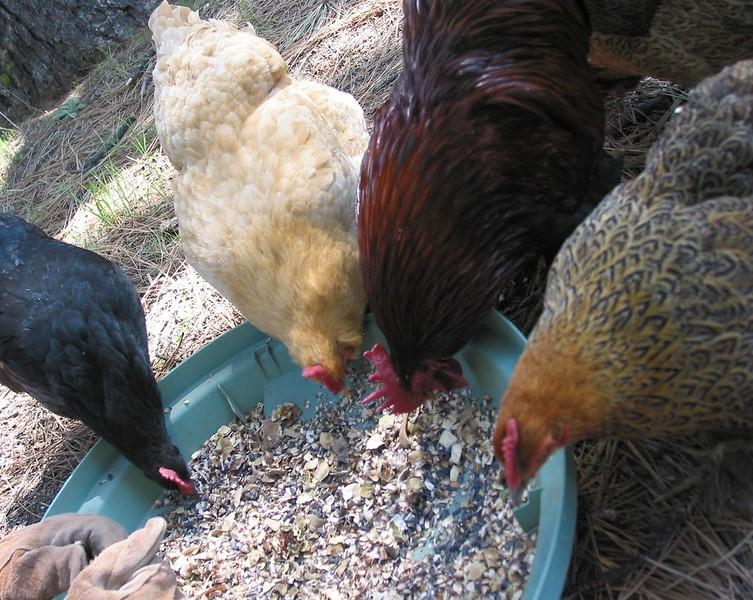
While most respondents to a survey of US backyard flock owners had heard of avian influenza, about one third didn’t know the signs or symptoms of infection in birds or people, highlighting the need for risk messaging and educational resources.
The online survey was conducted by the Centers for Disease Control and Prevention (CDC) in collaboration with state and agricultural officials from July to December 2025. The aim was to learn more about flock owners and their knowledge, attitudes, and practices surrounding the H5 strain of avian flu that has affected millions of US poultry. Of 638 respondents, about half had an advanced degree.
Since 2024, three avian flu cases have been confirmed in people in the United States who own backyard birds, the authors noted.
The findings were published yesterday in Morbidity and Mortality Weekly Report.
In total, 69% of respondents kept small flocks of mainly chickens, 71% indicated that they had no veterinarian to consult about their flock, and 54% said that wild birds could access their flock or its food or water. Respondents were generally experienced flock owners, with 29% having owned their flocks for at least 10 years, and 48% for three to 10 years.
Education of backyard flock owners by health partners regarding signs and symptoms of avian influenza can help flock owners keep their flocks, themselves, and their families healthy.
Although 94% of owners were aware of avian flu, one third didn’t know the signs or symptoms in birds or people. About 90% knew the recommended precautions to take when handling sick or dead birds and said they were willing to use some types of personal protective equipment (PPE). A higher level of knowledge about avian flu was tied to increased intent to use PPE.
In total, 58% of respondents said that at least one person in their household was at increased risk for flu complications because of age, pregnancy, or underlying conditions.
“Education of backyard flock owners by health partners regarding signs and symptoms of avian influenza can help flock owners keep their flocks, themselves, and their families healthy,” the researchers wrote.
Mark Poloncarz just vetoed a new Erie County law that would have let 12 and 13-year-olds hunt big game (including deer) under adult supervision.
Author: Tommy Gallagher (WGRZ)
Published: 5:03 AM EDT May 16, 2026
Updated: 5:03 AM EDT May 16, 2026

BUFFALO, N.Y. — Erie County Executive Mark Poloncarz vetoed legislation Friday that would have allowed children ages 12 and 13 to hunt big game, including deer, under adult supervision
The county executive cited safety concerns despite no recent hunting-related child deaths reported in New York.
RELATED: Youth hunting bill introduced in Erie County Legislature
The law had been passed by the Erie County Legislature and would have expanded hunting access to younger participants under the supervision of a licensed adult.
In explaining his decision, Poloncarz said that while New York has not seen a death involving young hunters in recent years, deadly accidents involving children have occurred elsewhere. County legislators previously said they plan to seek a supermajority vote in an effort to override the veto.
“If they override this veto and a child dies in the future, my conscience will be clear knowing I did everything I could to try to prevent that tragedy,” Poloncarz said.

