Monsoonal showers and thunderstorms continue across the Southwest, portions of California, the Great Basin and into the Intermountain West.
“As we pause the clock at 3 p.m. this afternoon, right like clockwork, Nevada, Arizona, New Mexico and even Utah seeing these afternoon and evening thunderstorms,” FOX Weather meteorologistBritta Merwinsaid. “As we get closer to 10 p.m., they kind of run themselves out, and we are nice and quiet throughout the overnight hours.”
Long-range forecasts show no end to the pattern anytime soon. Daytime heating and overabundant moisture will help trigger widespread scattered thunderstorms each day into next week, the FOX Forecast Center said.
Lowcountry deer hunters in South Carolina have an opportunity to harvest a male deer still in velvet when the season opens Aug. 15. Provided/Kenneth Cordray
The opening day for hunting white-tailed deer is only days away.
While many of South Carolina’s approximately 200,000 deer hunters will choose to bypass the Aug. 15 opener for private lands in the Lowcountry in anticipation of cooler fall weather, there are plenty of hunters anxious to cash in on an opportunity seldom found in other states.
That’s the opportunity to harvest a deer in “velvet.”
Every year, male deer shed their antlers in late winter and begin to grow new ones during the summer. During this growth period, the new antlers contain nerves and blood vessels and the hairy skin looks much like velvet.
New detections of Highly Pathogenic Avian Influenza tied to backyard poultry flock; marks the 10th Montana flock affected during this year’s wave of infectionsBY BEACON STAFFAUGUST 9, 2022
State livestock officials have confirmed detections of bird flu in a backyard poultry flock in Flathead County, providing the latest evidence that this year’s wave of Highly Pathogenic Avian Influenza (HPAI) continues to march across the United States.
On July 24, the Montana Department of Livestock (MDOL) announced a positive detection of HPAI at a Flathead County residence, marking the 10th HPAI affected Montana flock linked to this year’s wave of U.S. infections, which have been traced to seasonal migrations of wild birds. Nationally, nearly 400 poultry flocks have been diagnosed with HPAI this year.
“With over two months since our last case of HPAI in the state, we had hoped that avian influenza was…
MEXICO CITY (AP) — They call him “El Jefe,” he is at least 12 years old and his crossing of the heavily guarded U.S.-Mexico border has sparked celebrations on both sides.
A new, highly pathogenic form of avian flu has been sweeping through wild bird populations across the Northern hemisphere. The unprecedented levels of mortality seen in some species of seabirds have left conservationists extremely concerned about the disease’s long-term impacts.SHARE VIA:
As we emerge from the most devastating impacts of the COVID-19 pandemic, another pandemic has been wreaking havoc on wild bird populations throughout the northern hemisphere. A new, deadly and highly pathogenic form of avian influenza (bird flu) is rapidly circulating across a wide range of species, devastating populations and leaving conservationists significantly concerned about its long-term ramifications. Over 400,000 dead wild birds have been recorded over the last year – a vast underestimate given only a fraction of birds are tested – from over 2,600 outbreaks in non-poultry birds, over twice the amount as the previous large waves of avian influenza…
Get full access to Outside Learn, our online education hub featuring in-depth fitness, nutrition, and adventure courses and more than 2,000 instructional videos when you sign up for Outside+Sign up for Outside+ today.
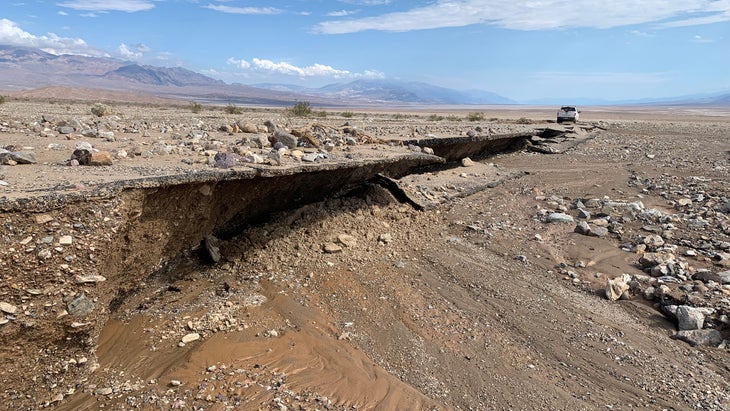
Death Valley National Park’s roads remain closed this week after the park received 1.46 inches of rain on Friday—about 77% of the park’s average annual rainfall—trapping 1,000 people inside of the park.
Debris from the flooding buried about 60 vehicles were buried by debris. Visitors began theirexodusfrom the park on Saturday with law enforcement escorts.
In response to the incident the park’s superidentendent, Mike Reynolds,stated: “Death Valley is an incredible place of extremes.”
Former President Donald Trump speaks at CPAC in Dallas on Saturday.Lev Radin / Sipa USA via AP
Aug. 8, 2022, 6:42 PM PDT
By Dennis Aftergut, former federal prosecutor
At the Conservative Political Action Conference in Texas on Saturday, former President Donald Trump dropped another tease that he will soon announce he is running for president in 2024. “We will make America proud again. We will make America safe again. And we will make America great again,” he told the CPAC audience. “I ran twice, I won twice … and we may have to do it again.”
Don’t doubt that he will.
The FBI raid on Trump’s Mar-a-Lago home in Palm Beach, Florida, on Monday seems like it would put the brakes on the former president’s political ambitions. But if anything, dramatic actions against him by the Justice Department, in this case tied to classified information Trump allegedly took with him from the White House, according to an NBC source familiar with what happened, is only likely to grease those ambitions further. Trump’s denial of the outcome of the 2020 election before his CPAC fans indicates he doesn’t feel bound by any legal reality — and, in fact, being the subject of a criminal investigation could even fuel his campaign.
Any fear he has of losing has surely been displaced by a more serious one: doing time. Trump must pine for the Justice Department’s shield from prosecution that the presidential seal affords.
Trump may believe that an indictment could help his political profile, promoting his longtime campaign theme of being an aggrieved martyr. Already he’s been able to raise tremendous sums based on telling his core supporters there’s an election conspiracy that denied him re-election; actual proof of criminal targeting under the Biden administration could be catnip to these followers.
Even if Trump were convicted before the 2024 election, it wouldn’t likely be much before. He would almost surely be out on bail, still running for the presidency and claiming that the verdict would be reversed on appeal. As of late July, Trump remained the leading choice for the Republican presidential nomination, with about 50% support, according to the RealClearPolitics poll average and almost every individual poll that shows him with massive double-digit leads over his closest competitor.
Indeed, despite some naysayers, all signs still point to a Trump run. We ignore them at our peril — doing so means losing precious time both reminding Americans of the “clear and present danger” to our Constitution that he poses and preparing for how best to defeat him.
First among those arguing Trump won’t run again was Michael Cohen. Trump’s former lawyer — who knows the man as well as anyone — said in November: “His fragile ego cannot stand to be considered a two-time loser.” Cohen’s observation seemed sensible then. And since then, polls and focus groups have shown that at least some Republican voters may be tiring of Trump, so there’s some risk he could lose the Republican nomination before he even gets to November 2024.
There could also be a financial reason to throw in the towel. Trump has been raising hundreds of millions on his “big lie claims,” which Cohen called “a big grift.” Cohen predicted that if Trump ran, he would be “like the boy who cried wolf” — losing twice would cost him many donors’ belief that the same “stolen election” lightning had struck him twice and, with it, their financial support.
Under federal law, if he is formally running, his $103 million Save America PAC can contribute only $5,000 to his campaign. And the Republican National Committee has said that if he runs, it must stay neutral among Republicans and stop covering hefty legal bills related to a separate probe by the New York state attorney general.
Some savvy observers of the White House scene agree with Cohen. In April, Salon columnist Brian Karem came to the same conclusion, relying heavily on the last reason — Trump’s desire to keep raising money. That was also the primary reason Slate editor Jeremy Stahl cited last week in a provocative piece titled: “Hear Me Out — Trump Won’t Run Again.”
But Monday’s FBI search only underscores why those considerations won’t likely win out. In recent weeks, we’ve witnessed an avalanche of evidence from the House committee investigating the events of Jan. 6 about Trump’s potential criminality leading up to and on that fateful day. Even before Monday’s search, we saw news of an accelerating Justice Department investigation considering whether Trump attempted to overturn the 2020 election.
Hence, any fear he has of losing has surely been displaced by a more serious one: doing time. Trump must pine for the Justice Department’s shield from prosecution that the presidential seal affords. And as for Trump’s ability to continue tapping funds from his PACs and using RNC money for some of his legal fees, should he formally announce his candidacy, never doubt his ability to find legal arguments for continuing on as he always has and paying fines for violations if he gets caught. And once the presidency is won, are your people going to enforce the rules against you?
As for Cohen’s assertion that Trump would surrender his credibility if he lost a second time, where’s the evidence that his fans would disbelieve his inevitable claim that he actually won? Indeed, isn’t the risk to his moneymaking apparatus greater if he drops the prospect of returning to the White House? His political relevance would be outshone by that of those who pick up the torch, while his name could be in the headlines predominantly for his entanglement with the law.
Finally, there is the siren call Trump hears of trying to vindicate his 2020 loss and having the power to seek revenge — particularly against a Justice Department that is upping its investigation of his activities. Given all these factors, whatever legal jeopardy he may be in, expect a Trump announcement soon after the midterms saying he intends to be the first president to have ever had an election stolen and lived to win four years later.
Secret Service and Palm Beach police are seen in front of the home of former President Donald Trump at Mar-a-Lago on August 8, 2022, in Palm Beach, Florida.
Climate change is killing giant sequoias in numbers that portend ecological disaster unless radical action is taken to reverse the impacts of the climate crisis. Sequoias, once deemed “unburnable,”…
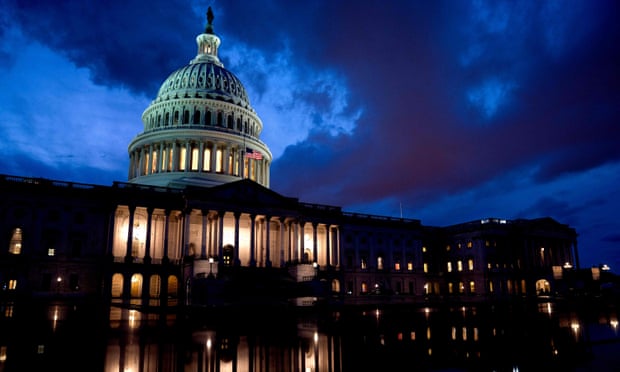
If signed into law, it would be the first major climate legislation to be passed in the US, which is historically responsible for more greenhouse gas emissions than any other country.Photograph: Stefani Reynolds/AFP/Getty Images
Nina LakhaniClimate justice reporter in New YorkTue 9 Aug 2022 05.00 EDT
The landmark climate legislation passed by the Senate after months of wrangling and weakening by fossil-fuel friendly Democrats will lead to more harm than good, according to frontline community groups who are calling onJoe Bidento declare a climate emergency.
If signed into law, the Inflation Reduction Act of 2022 (IRA) would allocate $369bn to reduce America’s greenhouse gas emissions and invest in renewable energy sources – a historic amount that scientistsestimatewill lead to net reductions of 40% by 2030…