I’d Love to Change the World

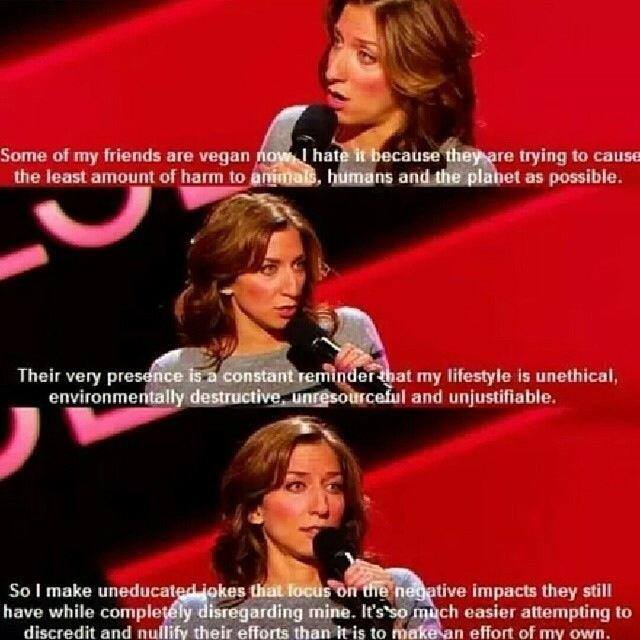
I’ve been told that I’m not helping anything by being vegan; that I wasn’t going to be able to stop all the horrible things going on by taking a stand against animal consumption.

10151358_495324630593354_7512005859880238928_nThat’s a depressing thought, especially if you’re aware of the current holocaust happening all around us. Humans are slaughtering 6 million animals per hour. 20,000 more will die in the time it takes you to read these sentences! That’s a holocaust of farmed animals every 60 minutes. And that’s not counting fish, lobsters, shrimp, oysters, clams, krill or other sea life. But I’m not fooling myself, I know it would take a concerted, allied effort to stop these atrocities.

Even if I never saw positive results from promoting veganism in my short lifetime, there are other reasons for not eating animals. For me, veganism is about choosing not to add to the suffering our fellow Earthlings endure every day for the human appetite; it’s a form of dissent against the extreme cruelty millions of animals undergo so humans can have their steak and eat it too.

Veganism is my protest against the insanity of factory farming; against the existence of battery cages, cattle feedlots, industrialized dairies, veal crates, hog farming, commercial fishing, whaling, sealing, fur trapping, bow hunting, predator control, contest hunts, culling, derby killing and every other form of exploitation our species inflicts on the non-humans citizens of the world.

I might not be able to change the world, but at least I don’t have to be complicit in institutionalized animal cruelty. Non-human animals might hold little value to most people, but the laissez-faire acceptance of brutality and suffering will eventually come back on Homo sapiens and help facilitate the demise of the species.

In the immortal words of Woodstock headliners, Ten Years After:

“I’d love to change the world

But I don’t know what to do

So I’ll leave it up to you”

why

Wolves Don’t Kill For Sport

This picture backs up number nine in the Top Ten Retorts to Hunter Fallacies

9) Animals kill other animals, so we can too.
That’s an example of what’s known as the naturalistic fallacy—the notion that any behavior that can be found in nature is morally justifiable. But wolves and other natural predators need to hunt to survive, humans don’t—for them it’s nothing more than a thrill kill. Human beings have moved beyond countless other behaviors such as cannibalism or infanticide, so why can’t some people tear themselves away from hunting?

10172782_486237174810952_1604406170771652512_n


Baby Steps Won’t Get Us There In Time

[In the end, the author of this lengthy article proposes what she earlier disparaged as “baby steps.”]

What if Everyone in the World Became a Vegetarian?

Vegan burgers with sweet potato and chickpeas.
Treating yourself to vegan burgers with sweet potato and chickpeas isn’t just a delicious indulgence; it could help save the planet.

Photo by Elena Veselova/Thinkstock

The meat industry is one of the top contributors to climate change, directly and indirectly producing about 14.5 percent of the world’s anthropogenic greenhouse gas emissions, and global meat consumption is on the rise. People generally like eating meat—when poor people start making more money, they almost invariably start buying more meat. As the population grows and eats more animal products, the consequences for climate change, pollution, and land use could be catastrophic.

Attempts to reduce meat consumption usually focus on baby steps—Meatless Monday and “vegan before 6,”passable fake chicken, andin vitro burgers. If the world is going to eat less meat, it’s going to have to be coaxed and cajoled into doing it, according to conventional wisdom.

But what if the convincing were the easy part? Suppose everyone in the world voluntarily stopped eating meat, en masse. I know it’s not actually going to happen. But the best-case scenario from a climate perspective would be if all 7 billion of us woke up one day and realized that PETA was right all along. If this collective change of spirit came to pass, like Peter Singer’s dearest fantasy come true, what would the ramifications be?

Advertisement

At least one research team has run the numbers on what global veganism would mean for the planet. In 2009 researchers from the Netherlands Environmental Assessment Agency publishedtheir projections of the greenhouse gas consequences if humanity came to eat less meat, no meat, or no animal products at all. The researchers predicted that universal veganism would reduce agriculture-related carbon emissions by 17 percent, methane emissions by 24 percent, and nitrous oxide emissions by 21 percent by 2050. Universal vegetarianism would result in similarly impressive reductions in greenhouse gas emissions. What’s more, the Dutch researchers found that worldwide vegetarianism or veganism would achieve these gains at a much lower cost than a purely energy-focused intervention involving carbon taxes and renewable energy technology. The upshot: Universal eschewal of meat wouldn’t single-handedly stave off global warming, but it would go a long way toward mitigating climate change.

Continued: http://www.slate.com/articles/health_and_science/feed_the_world/2014/05/meat_eating_and_climate_change_vegetarians_impact_on_the_economy_antibiotics.html